
Attractions
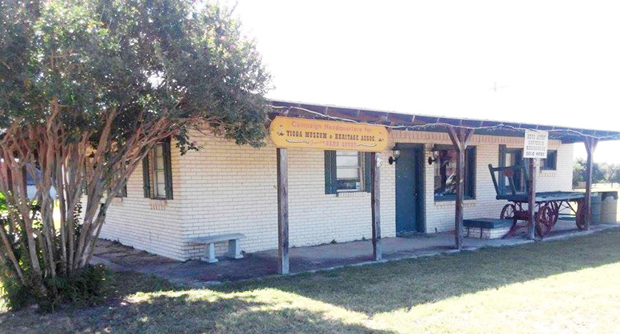
The Birthplace and House of the Singing Cowboy

By Savannah Magoteaux
With Christmas just behind us, the sounds and jingles of the season’s holiday songs still ring in some ears. More than likely you heard the old-time rendition of Rudolph the Red-Nosed Reindeer, sung by Gene Autry. That song is the second all-time best-selling Christmas single, boasting sales in excess of $30 million. Although Autry wasn’t the author of that song – that honor belongs to writer Robert May – he did pen another well-known Christmas song, Here Comes Santa Clause.
As an Oklahoman who lives in the southern part of the state, I’d always assumed Gene Autry was born in the town that bears his name, Gene Autry. Located just to the northwest of Ardmore, it’s home to a little more than 100 people. The town had originally been named Lou, then Dresden, then was followed by Berwyn, but was finally renamed Gene Autry in 1941.
To read more pick up a copy of the February 2019 NTFR issue. To subscribe call 940-872-5922.
Adapted from the article by Judy Wade for NTFR
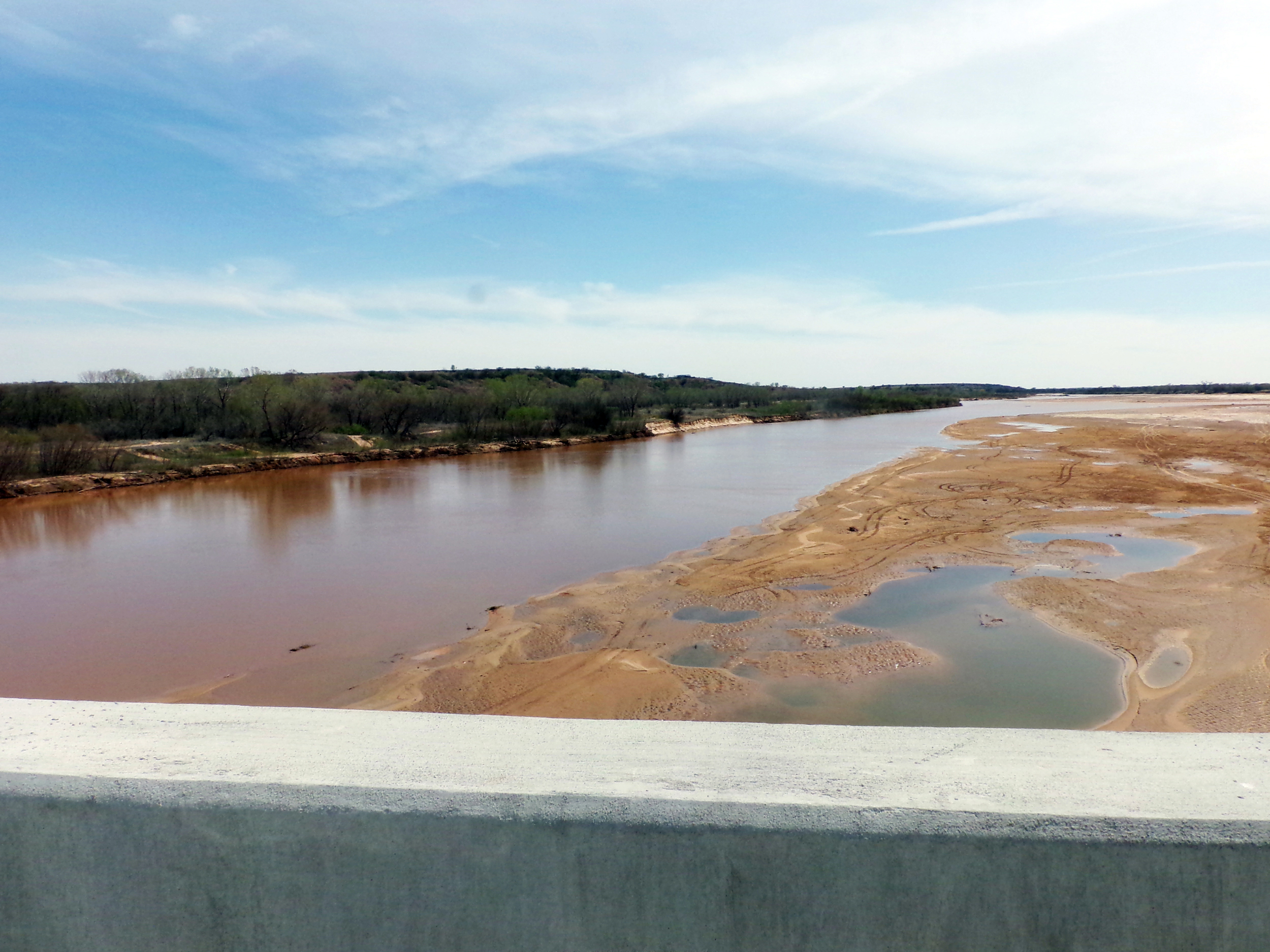
Most days, the Red River doesn’t look like much.
It drifts along the Oklahoma–Texas line, wide and sandy, broken by bars and bends that make it feel more like a boundary than a threat. But that calm can be misleading. When the rains come hard enough, the Red River has a history of reminding people exactly what it’s capable of.
One of those reminders came in 1908.
As recorded by J. M. Dyer in History of Jefferson County, rains fell in what he described as “deluge proportions.” Cow Creek and Beaver Creek near Waurika swelled beyond their banks, pushing water downstream into the Red River. From there, the situation escalated quickly.
Dyer wrote that the river ran out of its banks “throughout its entire reach” as it moved toward the Mississippi River basin. With nowhere for the excess water to go, it backed up into tributaries like Cow and Beaver creeks, pushing floodwaters back toward the communities that fed them.
Waurika took a direct hit.
Water ran two to three feet deep down Main Street. The American Hotel, located just west of where the courthouse now stands, reportedly showed a high-water mark of three feet. Farmland disappeared under water. Homes were overtaken. What had been dry ground turned into a moving sheet of muddy current.
Transportation didn’t stand a chance. The Chicago, Rock Island and Pacific Railroad tracks were washed out from Sugden to north of Ryan, and water backed up as far as the depot in Ryan. Communities like Sugden were effectively cut off for days.
And it didn’t end there. Flooding continued to trouble the region for years, though not always at the same scale.
Holding Back a River
By the mid-20th century, efforts to control the Red River began to take shape.
The construction of Denison Dam, completed in 1943, created Lake Texoma. The project provided hydroelectric power, water storage, and recreation, while also helping reduce flooding downstream.
However, it’s worth clarifying one point: Denison Dam primarily controls flooding below the dam. It has limited impact on upstream tributaries like Beaver Creek, which meant areas around Waurika still faced significant flood risk.
That led to another major project.
In 1963, the U.S. Army Corps of Engineers began work on a dam northwest of Waurika. The result was Waurika Lake, completed in 1980. The roughly 10,000-acre reservoir was designed to provide municipal water, irrigation support, recreation, and—most importantly—flood control for the surrounding area.
The Flood of 1984
Even with those improvements, the Red River proved it could still cause trouble.
In the fall of 1984, heavy rains across western Oklahoma and Texas sent large volumes of water racing toward the river. This time, Waurika itself fared better. The dam and improved drainage systems did what they were built to do, protecting much of the town from the kind of flooding seen in 1908.
But not everything was spared.
On the Texas side of the river, floodwaters spread outward for nearly half a mile in places. Pastures and cropland were inundated. Livestock losses were reported. Fences disappeared. Debris—from propane tanks to round bales of hay and entire trees—floated downstream beneath the Highway 79 bridge.
The bridge held. The road did not.
A section of Highway 79 just south of the Red River bridge was washed away, forcing travelers to detour through either Burkburnett or Terral. The reroute added roughly 55 to 65 miles for anyone trying to reach Wichita Falls. Repairs took months.
A River That Doesn’t Forget
Today, the Red River has returned to its usual pace, winding its way southeast toward Lake Texoma and beyond. On the surface, it looks harmless again.
But history says otherwise.
Flood control projects have made a difference, especially for towns like Waurika. Still, the river’s behavior depends on rainfall, terrain, and timing—factors that can line up in a hurry. When they do, the Red River can rise fast and spread wide, just as it did more than a century ago.
It’s easy to look at it now and see a lazy river.
It’s harder—but more accurate—to remember that it isn’t.
By Shannon Gillette
The Salt Creek Prairie with its rolling natural grasses and rampant wildflowers was a deceptive backdrop to the most dangerous prairie in Texas. Located in the northern section of Young County, the prairie absorbed an abundant amount of blood, shed from the battles between the encroaching white man and the Indians desperately trying to hold on to their home lands.
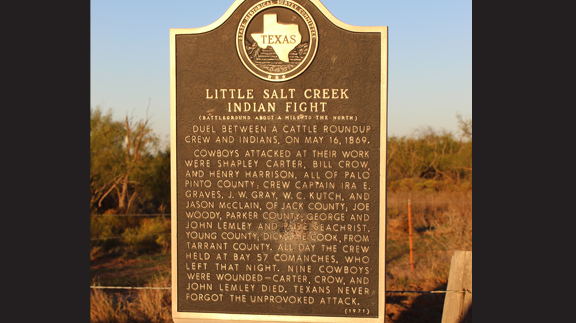
The Salt Creek Prairie was the location of several encounters between the Kiowa, Comanche and the area ranchers. The Indian Raid of Elm Creek on Oct. 13, 1867, resulted in the death of seven ranchers, five former Confederate Soldiers, the kidnapping of six women and children and the theft of 10,000 head of cattle. On May 18, 1871, the prairie witnessed another massacre when the Warren Wagon Train was hit by Kiowa under the command of Satanta, Satank and Big Tree. Seven members of the wagon train were murdered and forty-one mules stolen. But perhaps one of the bloodiest encounters was the Salt Creek fight on May 16, 1869.
Eleven cowboys under the watchful eye of their foreman, Captain Ira Graves were in the process of rounding up about five hundred head of their cattle about five miles southeast of present day Olney, Texas. The ranch hands were William Crow, John and George Lemley, C. L. Carter, Jason McClain, W. C. Kutch, J. W. Gray, Henry Harrison, Rube Secris, Joe Woody and a former slave known as Dick. They had noticed signs of recent Indian activity and were vigilant as they gathered the herd together. Each was armed with cap and ball six shooters. They had pointed the cattle towards the ranch and had made about four miles headway when they noticed a few more head grazing in the distance. Graves sent Carter and Kutch to gather them up. They had advanced about two miles when they spotted a large band of Indians approaching fast. Carter and Kutch could have taken cover in the sparse timber, but realized they would be leaving their companions in serious danger. The two groups met in the middle and tried to take cover in a small ravine that drained into the Salt Creek. The shallow-make shift fox hole offered very little protection.
The Indians attacked again and again. Arrows rained down on the cowboys in a continuous stream of painful blows. They attacked and retreated and attacked and retreated, but each time were met with volleys of gunfire from the small group of ranch hands. Each time the Indians retreated, they conferenced with their leader, who had stationed himself on a small hill away from the battle. After six hours of the constant onslaught, Graves developed a plan. When the Indians retreated, he ordered his men to stand and wave as wildly as they possibly could. The band of Indians, numbering over fifty strong, retreated for a final time, leaving the small band of cowboys alone.
As the dust settled the ranch hands evaluated their losses. In Kutch’s personal account given several years later, he described the aftermath: “Wm. Crow had been dead for several hours, and C. L. Carter had a severe arrow wound in his body, and had been also painfully injured with a rifle ball. John Lemley was mortally wounded in the abdomen with an arrow; J. W. Gray had been twice struck with rifle balls, once in the body and one in the leg; W. C. Kutch had two arrow heads in his knee and one in his shoulder; Jason McClain had been twice wounded with arrows; Rube Secris had his mouth badly torn, and his knee shattered; Geo Lemley had his face badly torn, and an arrow wound in his arm; and Ira Graves and Dick were also wounded.” Harrison was sent to Harmison Ranch for help.
The exhausted and wounded cowboys braved a very long and frightful night. With great relief, the morning hours brought the welcome sight of an incoming wagon. The rescuers patched the wounded as well as they could and sent word that doctors were needed desperately. The doctors did not arrive until a full twenty-four hours later. Carter passed away the next day from the injuries received during the battle. Two years later, McClain died while on another cattle drive. The cause of his death was blamed on the substantial injuries incurred on that fateful day in 1869.
While today the prairie grasses still wave and the wildflowers bloom in gorgeous arrays of colors nestled between cactus and mesquite, the blood shed is a distant memory. On crisp spring mornings it is easy to picture the deadly predicament that the cowboys faced.
This article originally appeared in the January 2016 issue of NTFR.
On The Road With Dave Alexander
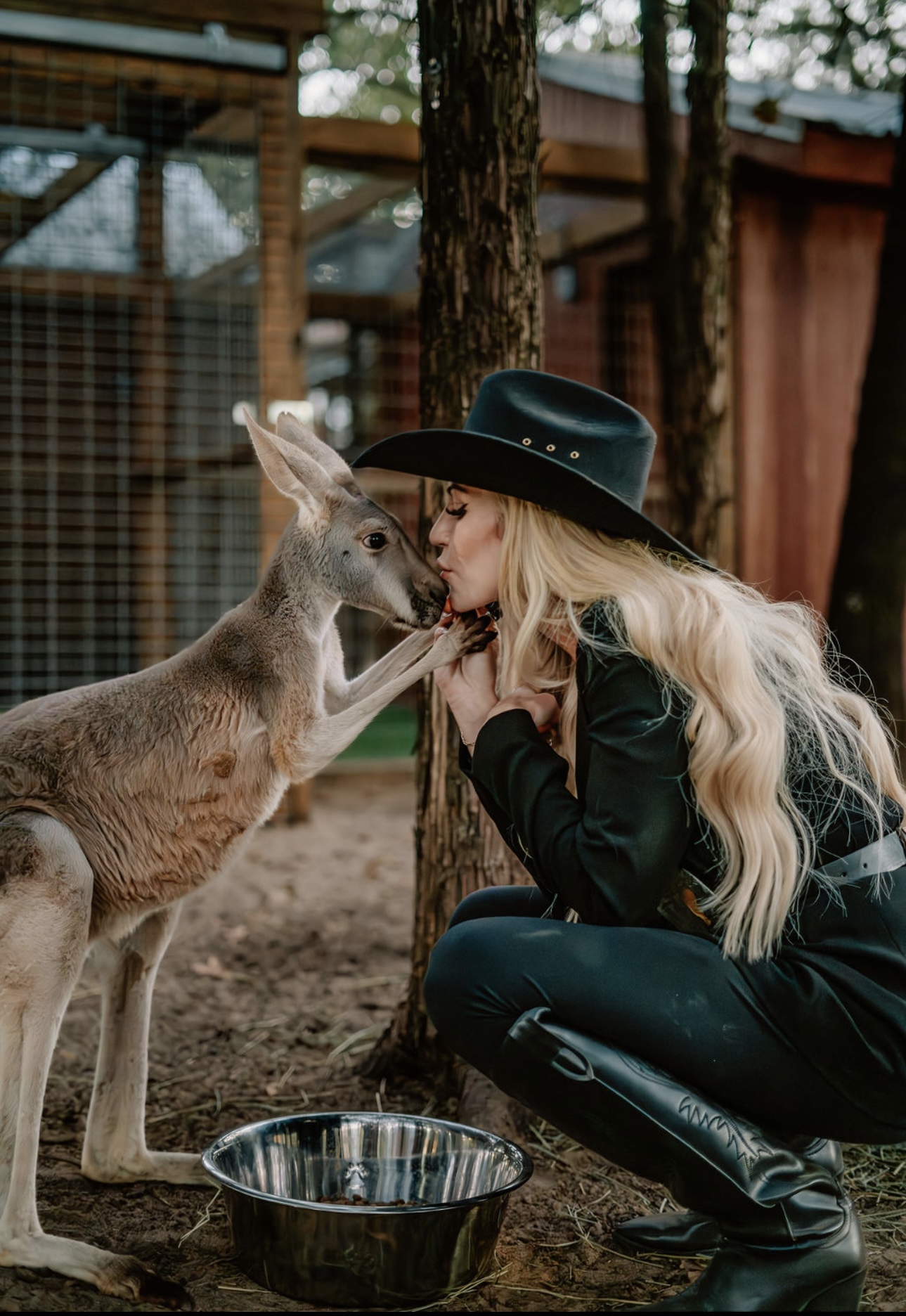
Rarely will you find an event center that includes a music venue, a steakhouse and a wildlife refuge all rolled into one.
Oak Meadow Ranch has been welcoming guests for over two decades with one thing in mind, your complete happy experience.
The Chef Dinner and Exotic Animal Experience includes a four-course meal followed by a hands-on experience with exotic animals.
You can catch up with Dave at the Birthplace of Western Swing Festival in Fort Worth, Texas on November 7, or at the Irving Symphony Orchestra in Irving, Texas on November 9. To read more about his experience at Oak Meadow Ranch, pick up a copy of the October edition of North Texas Farm & Ranch magazine, available digitally and in print.
To subscribe by mail, call 940-872-5922.




-

 Country Lifestyles4 years ago
Scott & Stacey Schumacher: A Growth Mindset
-
 Country Lifestyles10 years ago
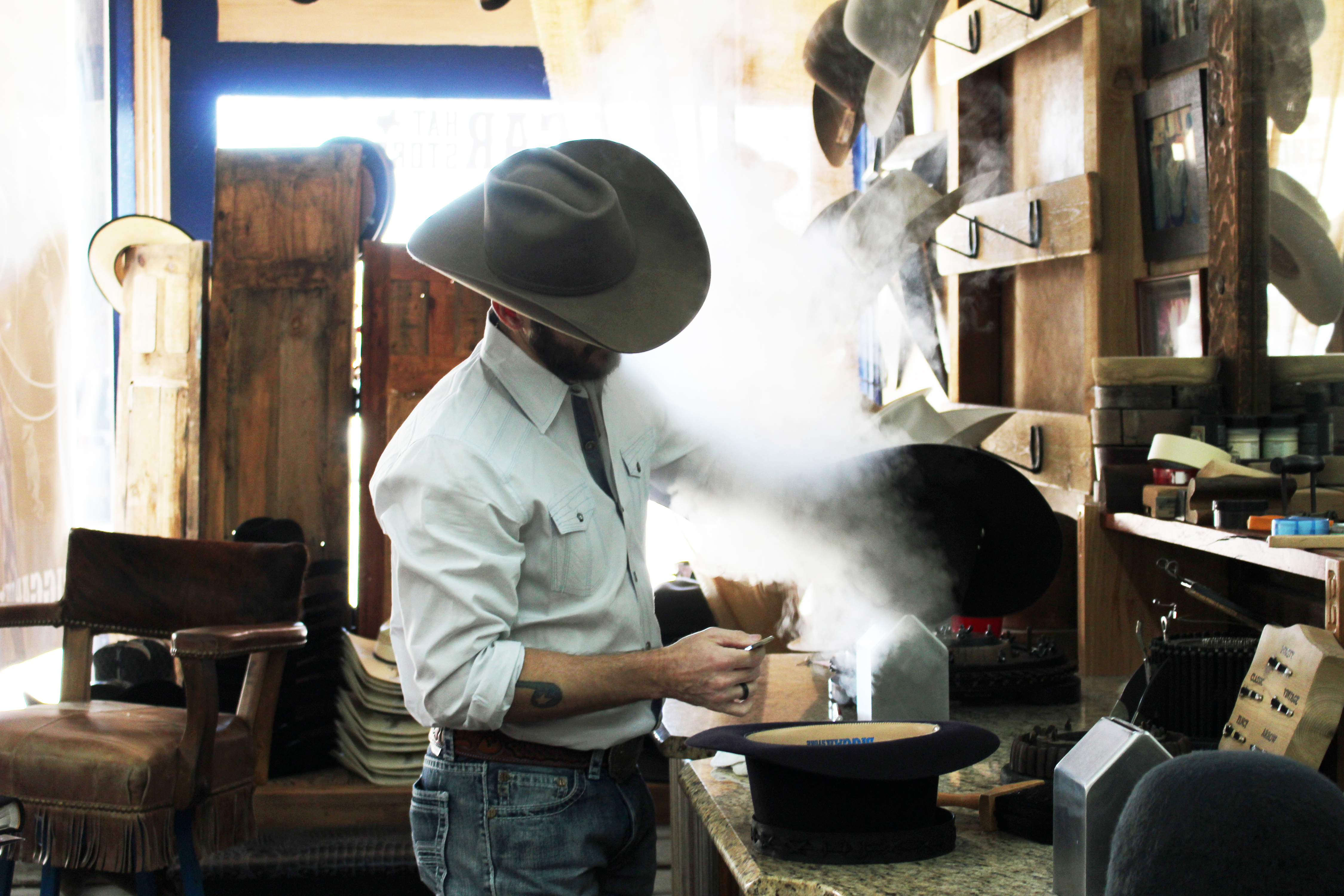
Style Your Profile – What your style cowboy hat says about you and new trends in 2017
-
 Horsefeathers12 years ago
Mount Scott: Country Humor with David Gregory
-
 Country Lifestyles10 years ago
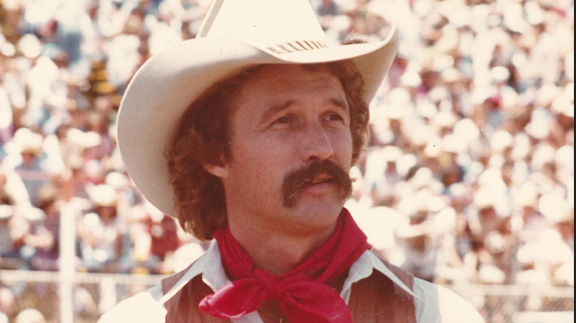
June 2016 Profile – The man behind the mic: Bob Tallman
-
 Outdoor11 years ago
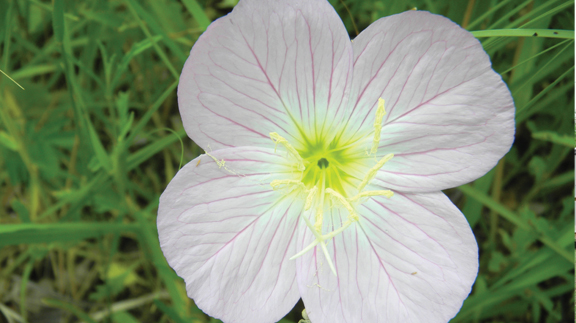
Buttercup or Primrose?
-
 HOME10 years ago
Grazing North Texas – Wilman Lovegrass
-
 Country Lifestyles10 years ago
December 2016 Profile, Rusty Riddle – The Riddle Way
-
 The Natural Horseman9 years ago
This is why we do what we do — RayeAnn and Cisco