
Farm & Ranch
The Science of Salt Blocks

By Savannah Magoteaux
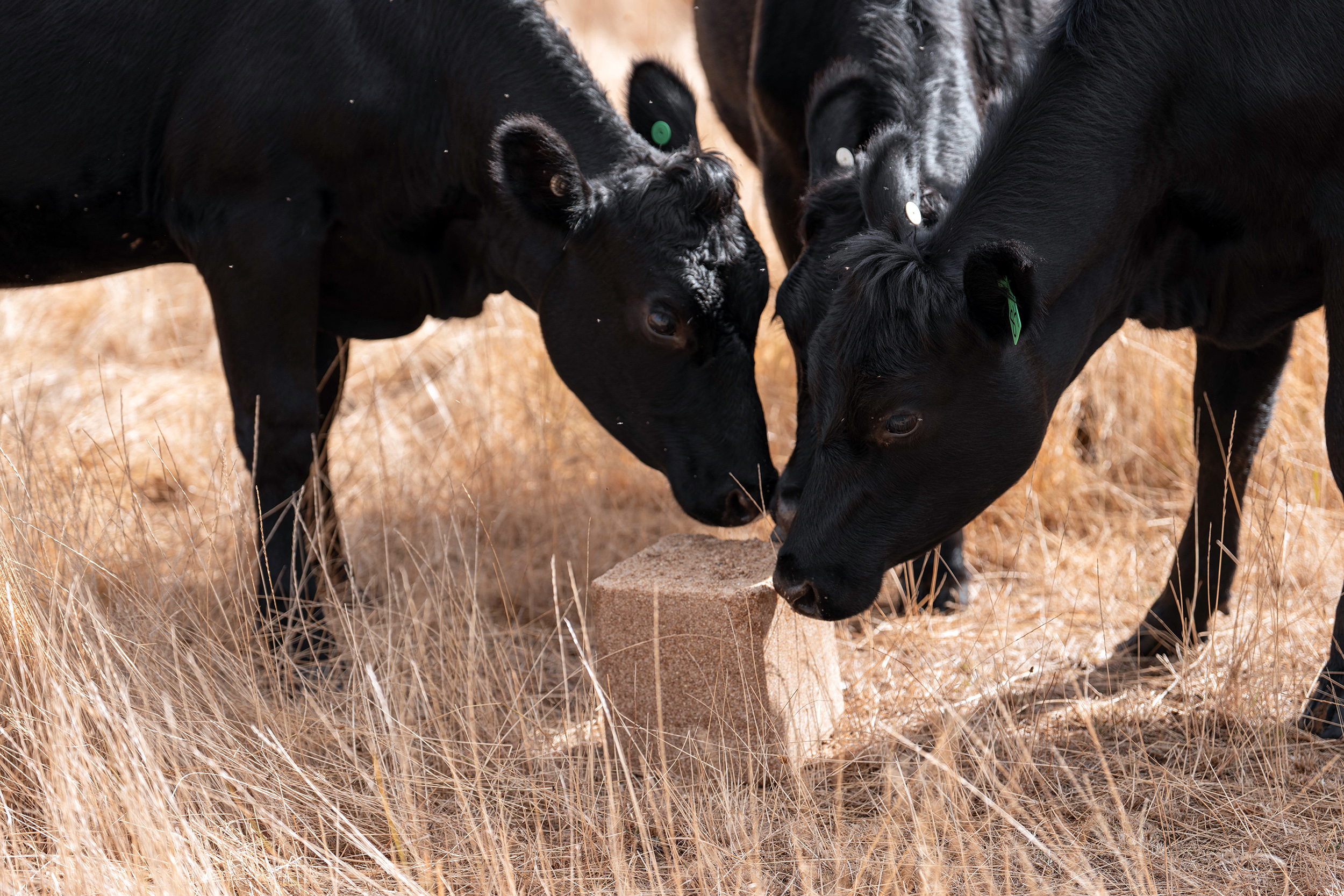
Walk through almost any pasture in Texas, and chances are you’ll find one sitting near a water trough, under a shade tree or tucked beside a feed bunk. Sometimes it’s a plain white block. Other times it’s red, brown or even pink. Some weigh a few pounds, while others tip the scales at 50 pounds or more. Salt and mineral blocks have become such a familiar part of livestock management that many producers set them out without much thought. Yet these simple blocks play an important role in animal nutrition, and understanding why livestock seek them out can help producers make better decisions for the health and productivity of their herds.
Salt is one of the few nutrients animals actively crave. Livestock get most of their protein and energy from forage and feed, but pasture plants often lack sodium. Livestock have a specific appetite for salt that kicks in when their bodies need it. That instinct is one reason cattle, horses, sheep and goats will travel surprising distances to find sodium if none is nearby.
Salt blocks have been a ranch staple for generations, but today’s mineral supplements are far more sophisticated. Many products now combine salt with calcium, phosphorus and trace minerals that support everything from muscle contraction and reproduction to immune function and hoof health. The right product depends on the species you’re feeding, the forage available and even the region where the animals live.
More Than Just Salt
Salt is made of two essential minerals: sodium and chloride. Both are macrominerals, meaning animals need them in relatively large amounts compared to trace minerals. Sodium helps regulate nerve impulses, muscle contractions and the movement of fluids through the body. Chloride works alongside sodium to maintain proper hydration and is also a critical component of stomach acid, which livestock need to digest feed efficiently.
Forages contain many nutrients, but they are naturally low in sodium. Even lush spring grass seldom provides enough to meet an animal’s daily requirement, so cattle, horses and many other grazing animals need supplemental salt year-round.
A salt deficiency usually develops slowly, and producers may notice subtle changes that grow more pronounced over time. Animals may eat less feed, which slows weight gain or reduces milk production. Fertility can decline, growth rates may slow and overall performance often suffers. In more severe cases, livestock may start chewing wood, licking soil, eating unusual objects or seeking out other unnatural sources of sodium. These behaviors, sometimes called pica, are the body’s attempt to correct a nutritional imbalance.
Salt is one of the simplest nutritional needs to meet. Salt blocks give livestock a convenient way to regulate their own intake. Instead of eating a large amount at once, animals typically lick the block off and on throughout the day, taking in what their bodies need. Weather-resistant pressed blocks can stay in the pasture for extended periods, which makes them useful for grazing operations where daily feeding is limited.
The familiar white salt block is almost pure sodium chloride and has one main job: supplying salt. For operations where feed or loose mineral supplements already balance the rest of the mineral program, a plain white block may be all you need. In many cow-calf operations, however, producers choose trace mineral salt blocks instead.
Animals need trace minerals in much smaller amounts than sodium or calcium, but those minerals still matter. Copper contributes to immune function, reproduction and proper hair pigmentation. Zinc supports healthy skin, hoof quality and wound healing. Manganese plays a role in skeletal development and reproductive performance. Cobalt is necessary for rumen microbes to produce vitamin B12, while iodine supports proper thyroid function. Selenium, where deficient, works with vitamin E to protect muscle tissue and strengthen the immune system.
Many soils contain low levels of certain trace minerals, so forage quality can vary considerably from one region to another. In portions of Texas and Oklahoma, soil selenium levels are frequently too low to meet livestock requirements. Other areas may contain high concentrations of sulfur, iron or molybdenum, which interfere with copper absorption. These regional differences are one reason nutritionists often recommend mineral programs designed for local conditions instead of a one-size-fits-all approach.
More is not always better. Too much of some minerals can be as harmful as too little. Sheep, for example, are far more sensitive to copper than cattle and should never have unrestricted access to cattle mineral products formulated with higher copper concentrations. Horses have different mineral requirements than ruminants, and goats often need supplementation programs designed for their own nutritional needs. Reading the label before you set a block in the pasture is every bit as important as selecting the right feed.
Producers sometimes overlook intake itself. Salt acts as a natural regulator because livestock eat only limited amounts each day. Manufacturers often mix minerals into salt products because the salt draws animals back to the block regularly while keeping them from overeating the supplement. Even so, weather, forage quality, water availability and individual preferences all affect how much each animal actually gets. Dominant animals may visit the block more often, while timid animals may get less than intended if the pasture has too few blocks.
Placement matters, too. Nutrition specialists often recommend setting blocks near watering areas or loafing sites where livestock naturally gather. In larger pastures, multiple blocks reduce competition and encourage animals to use more of the available grazing acreage. Some producers deliberately place mineral feeders away from water to spread grazing more evenly across the pasture, which can reduce overgrazing in heavily traveled areas and make better use of available forage.
Matching the Supplement to the Situation
Nutritional needs vary from animal to animal, and they can change dramatically through the year. A dry beef cow grazing dormant winter forage has different mineral requirements than a lactating cow nursing a calf. Growing replacement heifers, breeding bulls, horses in heavy work and young livestock all have different demands. As forage quality rises and falls with the seasons, so does the amount of supplementation they may need. During drought, or when livestock rely heavily on hay, mineral supplementation often becomes even more important because stored forages frequently contain lower concentrations of certain nutrients than actively growing pasture.
One of the biggest changes in livestock nutrition over the past several decades has been the growing use of loose mineral supplements. Animals can eat loose minerals more easily than they can lick a pressed block, so nutritionists generally find intake more consistent. Loose minerals also let manufacturers include higher concentrations of phosphorus and other ingredients that are hard to incorporate into a hard block. For producers managing breeding herds or seeking maximum production, loose minerals often provide the most complete nutritional program.
Salt blocks still have a place. Operations with smaller herds, leased grazing ground or remote pastures often appreciate the durability of a pressed block. Blocks hold up well in rain, create little waste and need replacing less often than loose minerals exposed to the weather. Some producers offer both, giving livestock constant access to a salt block with a balanced loose mineral supplement nearby.
Producers also have options when it comes to size. Smaller mineral bricks, often weighing four to ten pounds, are convenient for horse stalls, small paddocks, trailers and temporary pens where only a few animals need access. They are easy to move and replace but need more frequent checking. Larger blocks weighing 25 to 50 pounds suit pastures with multiple animals and last considerably longer before they need replacing. Their size also makes them harder for curious livestock to tip over or carry away.
Weather can affect any mineral program. Pressed blocks hold up well in rain, but you should still set them on well-drained ground whenever possible to reduce waste. Protect loose minerals with covered feeders so moisture doesn’t cake or harden the product. Whatever supplement you offer, keeping feeders clean and replacing contaminated product helps ensure livestock keep eating the minerals as intended.
Water quality deserves consideration as well. Water naturally contains dissolved minerals, and in some parts of Texas, elevated sulfur levels can interfere with copper absorption or contribute to other nutritional imbalances. Forage grown on different soil types can also vary widely in mineral content from one ranch to the next. Because of these differences, many Extension specialists encourage producers to base their mineral program on forage analysis, water testing and recommendations from a veterinarian or livestock nutritionist instead of choosing a product on price or marketing claims.
Mineral supplements cannot make up for poor overall nutrition. Salt blocks and mineral mixes supplement a balanced feeding program. They can’t replace quality forage, adequate energy or sufficient protein. When cattle are short on calories or protein, more mineral won’t fix the underlying problem. Mineral nutrition works best as one piece of a larger management plan.
Despite the growing number of specialized products, the principle stays simple. Livestock need minerals for many biological functions, and because forage often lacks those nutrients or supplies them inconsistently, producers must provide them another way. Whether that means a plain white salt block, a fortified trace mineral block or a carefully balanced loose mineral depends on the operation and the animals.
That weathered salt block sitting in the pasture reflects decades of nutritional research and a basic lesson of animal physiology: even the smallest nutrients can have a big effect on health, reproduction and performance. Like good fences and dependable water, a well-planned mineral program tends to go unnoticed until it is missing.
Choosing the Right Block
Walk down the livestock aisle of any farm store and you’ll likely find dozens of mineral products. Labels vary by manufacturer, but these are some of the most common options producers encounter.
White Salt Blocks: Made almost entirely of sodium chloride, these blocks provide a basic source of salt. Producers commonly use them when livestock already receive a balanced mineral supplement through feed or a separate loose mineral program.
Trace Mineral Salt Blocks (Red Blocks): The most common choice for beef cattle, these blocks contain salt along with added trace minerals such as zinc, copper, manganese, cobalt and iodine. They help supply nutrients that may be lacking in forage.
High-Selenium Mineral Blocks: Designed for regions where selenium-deficient soils are common, these products provide carefully regulated levels of selenium. Because selenium can become toxic if overfed, follow label directions and check local recommendations before use.
Sulfur or Specialty Mineral Blocks: Some blocks are formulated for specific regional deficiencies or management goals and may include sulfur, magnesium or other nutrients. Producers often choose these products based on forage tests, water quality or veterinary advice.
Pressed Blocks vs. Loose Minerals: Pressed blocks are durable, weather resistant and low maintenance, which makes them ideal for many pasture situations. Loose minerals generally provide more consistent intake and allow more complete formulations, making them the preferred choice for many breeding and production herds.
Large Blocks or Small Bricks? Smaller mineral bricks are convenient for stalls, pens and small groups of livestock where portability matters. Larger 25- and 50-pound blocks are designed for pasture use and need replacing less often. The best choice often comes down to herd size, grazing conditions and how often you can check and refill the supplement.

By Savannah Magoteaux
Two bales can look almost identical and feed very differently. Color, smell and leafiness tell part of the story, but a forage test tells you what your cattle are actually being offered. If you buy hay by the ton or are trying to stretch winter feed, that little lab sheet can be one of the cheapest management tools on the place.
Reading the report
Start with dry matter. Hay contains water, and labs report nutrients either “as fed” or on a dry-matter basis. Feeds are easiest to compare on a dry-matter basis because it takes moisture out of the comparison. Hay that is 90 percent dry matter is about 10 percent water.
Crude protein, usually abbreviated CP, is the number most people recognize. It estimates protein from the forage’s nitrogen content. Higher isn’t automatically better. The goal is to match the hay to the animal. A dry, mature cow in mid-gestation doesn’t need the same protein as a lactating cow, a growing replacement heifer or a young calf.
Energy matters just as much. Beef cattle forage reports commonly estimate energy as total digestible nutrients, or TDN. Low-TDN hay may fill a cow up before it supplies enough energy, particularly when her requirements rise late in gestation or during lactation. That is when you may need better forage, an energy supplement or a different feeding plan.
Fiber numbers explain why some hay looks coarse and why animals may not be able to eat enough of it. Neutral detergent fiber, or NDF, is closely tied to intake. As NDF climbs, cattle generally eat less because the forage moves through the digestive tract more slowly. Acid detergent fiber, or ADF, is tied to digestibility. Higher ADF generally means lower digestibility.
Some reports also include relative feed value or relative forage quality. These indexes help compare lots of forage, particularly alfalfa and mixed hay, but they aren’t a complete ration. They don’t replace looking at protein, energy, minerals, animal class and expected intake.
Then come the numbers you hope are boring. Nitrate testing matters when drought, heavy nitrogen fertilization, cloudy weather or other conditions have stressed the forage enough to cause nitrate accumulation. Sorghum-type forages, johnsongrass, corn and some weeds deserve particular attention. Nitrates stay in hay after it is cut and baled, so a risky crop doesn’t become safe just because it dried.
Minerals deserve a look, but this is where a hay report gets harder to interpret. Calcium, phosphorus, potassium, magnesium and other minerals may be listed, yet a complete mineral program depends on water, other feeds and local conditions. A high number isn’t always an advantage. Excessive potassium, for example, can interfere with magnesium use under some circumstances. If you are balancing a ration for high-risk animals, work with a nutritionist or Extension specialist rather than treating the lab sheet as a stand-alone mineral prescription.
Moisture tells another story. Hay baled too wet is at greater risk of heating and mold, and very wet hay can become a fire hazard as microbial activity raises its internal temperature. A test taken months later can’t reconstruct every storage problem, so inspect the stack, too. A musty odor, visible mold, unusual heat and dark discoloration are all reasons to investigate.
Getting a good sample
A hay test is only as good as the sample, and sampling is the step most likely to ruin a good analysis. A handful pulled from the outside of one convenient bale doesn’t represent a stack of 100 bales. Round bales aren’t uniform from the outside to the center, and one bale may not represent the whole cutting.
Texas A&M AgriLife recommends using a hay probe and collecting cores from multiple bales in a lot, then combining them into one representative sample. A coring probe reaches through the layers of the bale and gives the lab a much better cross-section. Test different cuttings, fields or hay types separately, and don’t blend samples from separate fields or cuttings to save the cost of a test if you will feed them as separate lots.
Putting the numbers to work
The most useful way to read the report is backward from the cattle. What class of animal will eat this hay, at what stage of production, and how much is she likely to eat? Once you answer those questions, the lab numbers start to mean something.
A mature dry cow in good body condition can often use lower-quality forage than a first-calf heifer nursing a calf. Young cattle need nutrients for growth on top of maintenance, and cold stress raises energy demand. A hay test becomes valuable when you pair it with those real-world differences.
Remember that price per bale isn’t the same as price per unit of nutrition. A cheap bale with very low energy and protein may require expensive supplementation, and better hay can turn out to be the lower-cost feed once you count waste and supplements.
Before buying, try putting two hay reports side by side. Compare dry matter, crude protein, TDN and fiber first. Then add delivered cost and likely feeding waste. A heavier, denser bale isn’t automatically more economical, and a greener bale isn’t automatically more nutritious. The numbers make the comparison fair.
Testing is especially valuable after a hard weather year. Drought hay may be lower in yield and higher in nitrate risk. Mature, rain-damaged hay may test lower in protein and energy than it looks. Hay cut from a fertilized field after stress may deserve a safety screen before it ever reaches a feeder.
A forage test won’t make poor hay better. It shows you where the gaps are before your cattle show them through lost condition or lower performance. One report can’t answer every feeding question, but it replaces several guesses with measurements, and that makes winter nutrition planning much more accurate.
By Savannah Magoteaux
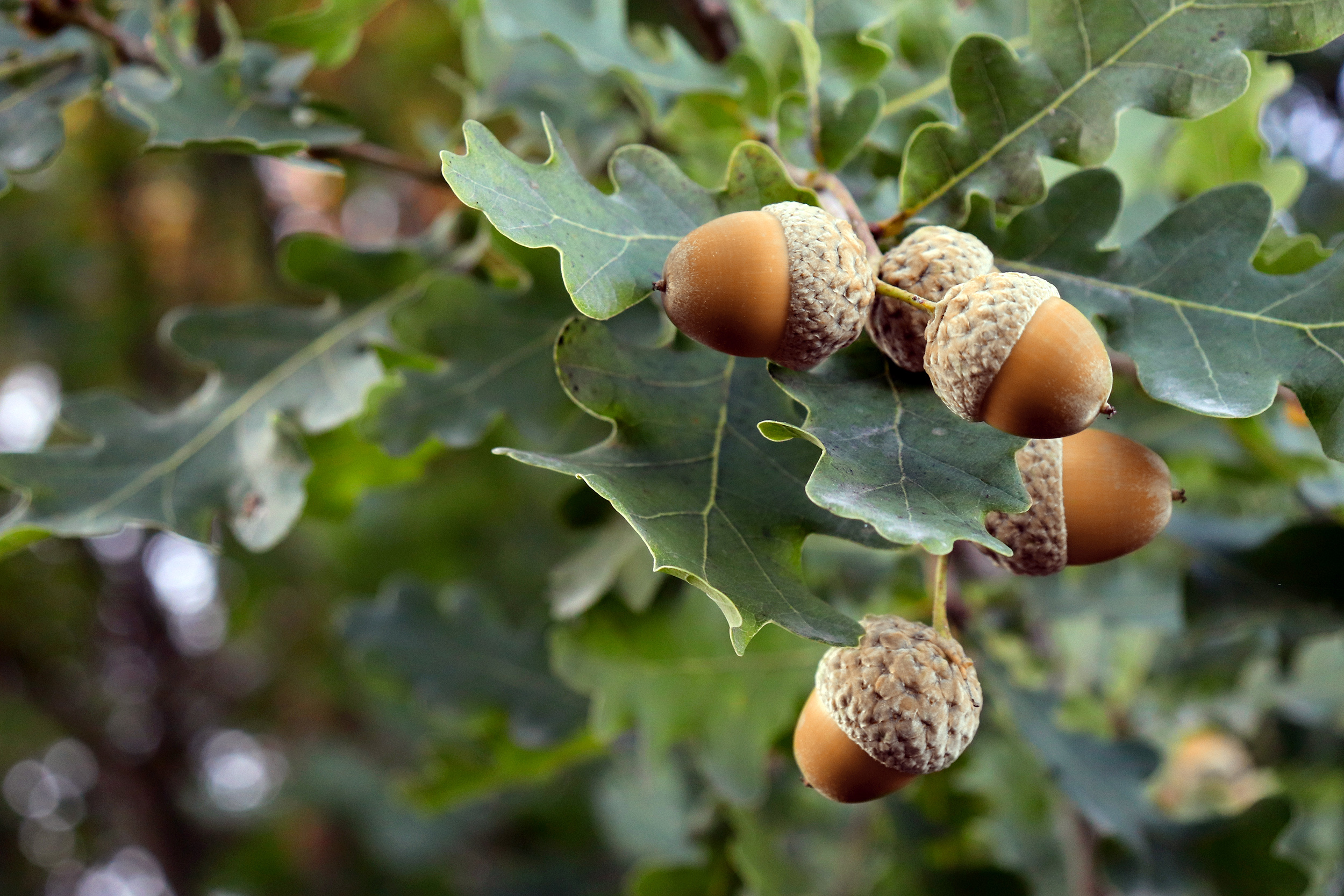
A heavy crop of acorns under an oak tree usually looks more like a sign of fall than a livestock problem. For most cattle in most years, that is all it is. Trouble starts when acorns stop being an occasional bite and become a meaningful part of the diet.
Oak leaves, buds and acorns contain tannins that can damage the digestive tract and kidneys when cattle eat enough of them. Green acorns are generally considered more toxic than mature brown ones, but either can cause problems if cattle eat too many.
The risk climbs when forage is short and cattle go looking for something else to eat. Drought, overgrazed pastures or simply a heavy acorn crop can set up that situation.
Cattle aren’t equally interested in acorns. A few animals in a herd may eat far more than the rest, which helps explain why cases can appear scattered.
Early signs can be vague. Affected cattle may go off feed, look depressed or become constipated. As the damage progresses, you may see dark or bloody manure, abdominal pain, frequent urination followed by reduced urine output, dehydration and weakness. Kidney failure is the most serious concern.
You can’t remove every acorn from a wooded pasture, so prevention comes down to keeping cattle from relying on them. Adequate forage and supplementation take away the incentive to eat large amounts.
You can also fence cattle away from heavily producing oaks for a while, especially when pasture conditions are poor. If several animals seem to be seeking out acorns, take a close look at the rest of the ration instead of assuming they will quit on their own.
If you suspect oak poisoning, call a veterinarian early. Treatment is supportive and does much more good before severe kidney damage sets in. Moving unaffected cattle away from the source and providing good-quality feed and water may prevent more cases.
Acorns are an important fall food for deer, squirrels and other wildlife, and a few acorns generally don’t spell disaster for cattle. The concern is quantity. A pasture full of oaks becomes a different management problem when grass is short, cattle are hungry and the ground is covered with something they are willing to eat.
Oak toxicity comes up most often in cattle, but other livestock can be affected, too. And the risk isn’t limited to acorns. Oak buds and young leaves also contain tannins, so spring can occasionally bring problems as well. In fall, though, the obvious temptation is lying on the ground where cattle can eat it quickly.
Watch where your cattle spend their time. If cows that normally graze open grass start camping under oaks and hunting acorns, that behavior tells you something.
Walk the pasture, estimate how much usable forage is left and check whether a few dominant animals are eating more than the rest. Hay or supplemental feed may help, but place it where all the cattle can reach it rather than assuming one feeder will solve the problem.
Oak poisoning can look like other illnesses, and no one can diagnose kidney damage from pasture observation alone. A veterinarian may use history, clinical signs and lab work to separate it from dehydration, digestive disease or other toxicities. That is another reason to mention a heavy acorn crop when you call. A detail that seems like an ordinary part of fall can be an important part of the history.
Your pasture plan doesn’t have to be complicated. If one wooded trap has a much heavier acorn crop than the rest, use another pasture while you still have the choice.
If you can’t move the herd, make sure hay and supplement are adequate before the animals get hungry enough to seek out acorns aggressively. Salt or mineral by itself won’t make up for a shortage of forage.
The problem usually fades as cattle eat through the crop or the acorns weather or get covered. Don’t return cattle that have already shown signs as soon as they look better, though. Kidney injury can be serious. Follow your veterinarian’s recommendations and reassess the pasture before turning recovered animals back out.

By Jared Groce
Late summer has been brutal on our livestock, our grass and the rural land market in North Texas. We currently have an astounding 42 months of inventory on hand in our report area, and the only properties selling are the ones priced right. Overpriced properties aren’t even getting looked at, much less receiving offers, so pricing your property correctly matters more than ever right now.
Many sellers are still picturing the daily price increases we saw in 2020 to 2023, but those days are behind us, and agents need to be more realistic with listing prices to get any activity for their clients. Hopefully the rains will come soon and bring more land buyers with them this fall, but right now it is still very much a buyer’s market. No one knows how long this dry spell will last, but it will likely take a flood to end it. The same is true of the weather!
They say the best time to plant a tree, or buy land, was 20 years ago, and the second-best time is today.
| County | Area | Acres | $/Acre | List Price | Sold Price | Sale/List | DOM |
|---|---|---|---|---|---|---|---|
| Clay | Henrietta | 120.07 | $5,150 | $714,000 | $618,309 | 86.60% | 434 |
| Clay | Bellevue | 159.44 | $6,184 | $981,000 | $985,959 | 100.50% | 48 |
| Clay | Henrietta | 293 | $4,982 | $1,538,250 | $1,459,600 | 94.90% | 212 |
| Clay | Average | 190.84 | $5,438 | $1,077,750 | $1,021,289 | 94.00% | 231 |
| Collin | Anna | 11.08 | $84,356 | $1,200,000 | $935,000 | 77.90% | 634 |
| Collin | Average | 11.08 | $84,356 | $1,200,000 | $935,000 | 77.90% | 634 |
| Cooke | Muenster | 11 | $18,000 | $209,000 | $198,000 | 94.70% | 250 |
| Cooke | Gainesville | 19.3 | $16,580 | $345,000 | $320,000 | 92.80% | 541 |
| Cooke | Valley View | 96.23 | $15,500 | $1,679,215 | $1,491,565 | 88.80% | 194 |
| Cooke | Average | 42.18 | $16,693 | $744,405 | $669,855 | 92.10% | 328 |
| Denton | Sanger | 16.46 | $39,422 | $649,000 | $649,000 | 100.00% | 47 |
| Denton | Cross Roads | 10.35 | $97,575 | $1,200,000 | $1,010,000 | 84.20% | 40 |
| Denton | Sanger | 300 | $14,000 | $4,999,999 | $4,200,000 | 84.00% | 1,327 |
| Denton | Aubrey | 74.09 | $57,684 | $4,815,525 | $4,273,550 | 88.70% | 302 |
| Denton | Average | 100.22 | $52,170 | $2,916,131 | $2,533,138 | 89.20% | 429 |
| Grayson | Collinsville | 11.61 | $46,516 | $600,000 | $540,000 | 90.00% | 280 |
| Grayson | Van Alstyne | 18.8 | $58,511 | $1,175,000 | $1,100,000 | 93.60% | 280 |
| Grayson | Whitesboro | 30 | $37,984 | $1,170,000 | $1,139,506 | 97.40% | 277 |
| Grayson | Average | 20.14 | $47,670 | $981,667 | $926,502 | 93.70% | 237 |
| Jack | No sales reported | — | — | — | — | — | — |
| Montague | Montague | 485 | N/A | $5,566,000 | N/A | N/A | 333 |
| Montague | Bowie | 26 | $12,244 | $323,500 | $318,352 | 98.40% | 743 |
| Montague | Montague | 37.3 | $10,327 | $428,950 | $385,195 | 89.80% | 1 |
| Montague | Saint Jo | 1,185 | $7,764 | $10,000,000 | $9,199,829 | 92.00% | 19 |
| Montague | Average | 433.33 | $10,112 | $4,079,613 | $3,301,125 | 93.40% | 274 |
| Wise | Sunset | 12 | $19,027 | $234,000 | $228,320 | 97.60% | 16 |
| Wise | Sunset | 12 | $19,027 | $234,000 | $228,320 | 97.60% | 14 |
| Wise | Chico | 11.44 | $24,476 | $299,000 | $280,000 | 93.60% | 24 |
| Wise | Chico | 10.25 | $29,265 | $315,000 | $300,000 | 95.20% | 12 |
| Wise | Average | 11.42 | $22,949 | $270,000 | $259,160 | 96.00% | 17 |
DOM = days on market




-

 Country Lifestyles4 years ago
Scott & Stacey Schumacher: A Growth Mindset
-
 Country Lifestyles10 years ago
Style Your Profile – What your style cowboy hat says about you and new trends in 2017
-
 Horsefeathers13 years ago
Mount Scott: Country Humor with David Gregory
-
 Outdoor11 years ago
Buttercup or Primrose?
-
 Country Lifestyles10 years ago
June 2016 Profile – The man behind the mic: Bob Tallman
-
 HOME10 years ago
Grazing North Texas – Wilman Lovegrass
-
 Country Lifestyles10 years ago
December 2016 Profile, Rusty Riddle – The Riddle Way
-
 The Natural Horseman9 years ago
This is why we do what we do — RayeAnn and Cisco