
Outdoor
Vermillionaire Cuphea: A Winner for You and Hummingbirds

By Norman Winter | Horticulturist, Author, Speaker
The Vermillionaire cuphea has won twenty awards, including a Perfect Score in Minnesota, Top Performer at Oklahoma State, and a Perfect Score at the University of Tennessee to name a few—and it will win at your house too!
Now, after growing seven more years, including seven at my home on a forested hillside in west Georgia, I can say this is a must-have plant
When I say must-have, you may be thinking that is a pretty strong recommendation. Now in late July/early August, my plants are about 24 inches tall and 36 inches wide.
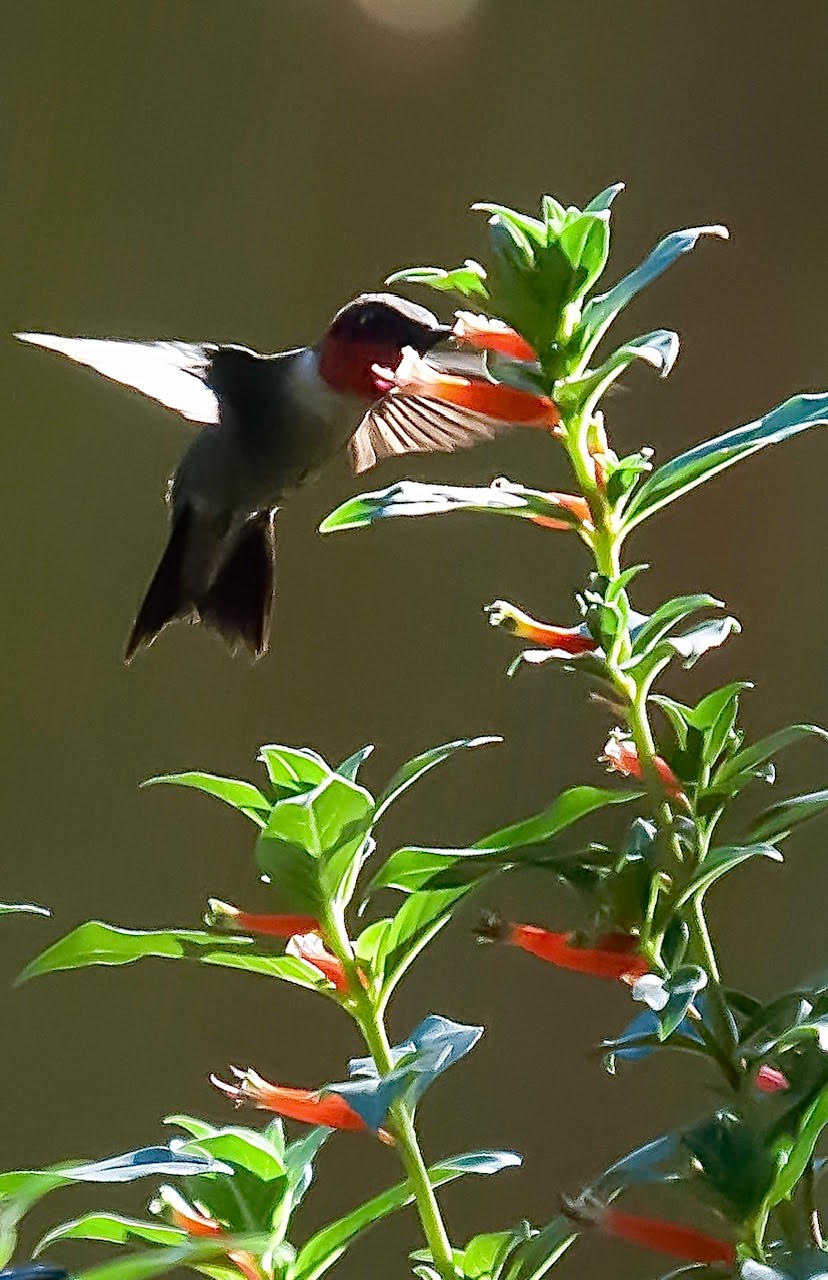
The orange-red tubular flowers are non-stop and produced by the hundreds on each plant. There are always five or six hummingbirds on them, leaving occasionally to go hit on my giant Amistad salvia.
The bees are there in great numbers, too, and every once in a while appear to challenge a hummingbird. This usually ends up with the hummer quickly showing who’s boss.
The thing that has surprised me most, however, are the butterflies. Every day there are Spicebush swallowtails, Eastern Tiger swallowtails, and even Pearl Crescents. This is truly a plant for anyone who enjoys the pollinator garden.
I have mine intermingled with
My son, who I sometimes consider the “Adventurous Color Designer,” uses them in large containers with lime-green ornamental sweet potatoes, and even calibrachoas. He uses them extensively at an outdoor shopping center, where the clientele is often stunned at seeing hummingbirds at the mall.
Botanically speaking, Vermillionaire is a Cuphea ignea hybrid. It develops into a woody- like plant and, as I said, bears hundreds of scarlet orange flow
milkweeds and the colorful Luscious Basket Tangeglow lantana. The combination has been very pleasing and successful.
ers for months.
In zones 8 and 9 it will get knocked to the ground by freezes, but normally returns faithfully in the spring, provided it doesn’t sit in water during the cold winter. It is growing in colder areas as an annual, much like you would a petunia.
When you locate your Vermillionaire cupheas, buy at least three, select a site in full sun and plant in well-drained soil. Set out plants 24 to 36 inches apart, planting them at the same depth they are growing in the container. Apply a good layer of mulch, water to get established and then enjoy.
In early summer, pinch growth as needed and more branching will follow. My son does this religiously, while I tend to leave them naturally. Both methods have proven very successful. But even planting in August will have you feeding hummingbirds and butterflies until frost.
Feed in mid-summer and again in early fall with a light application of a balanced, slow- released fertilizer. These species are drought tolerant, but watering during prolonged dry periods will pay dividends come fall.
Plant them informally in the garden rather than in straight rows. They pair beautifully with
other hummingbird favorites, such as firebush, Luscious lantana, and the new Chicklet Gold esperanza.
Blue flowers, like the spikey Rockin ‘Playin The Blues salvua, create partnerships you will want to photograph as much as the hummingbirds. A lot of hot weather remains, and Vermillionaire cupheas would make a fine addition to your garden!
Norman Winter is a horticulturist and national garden speaker. He is a former director of the Coastal Georgia Botanical Gardens. Follow him on Facebook at Norman Winter “The Garden Guy.”

By Ann Asher
Bats have never had the best public relations team.
They come out at dusk, fly in quick, uneven patterns and have spent too many years being tied to scary movies, old barns and Halloween decorations. For a lot of people, the first reaction to seeing a bat is not appreciation. It is usually something closer to ducking, squealing or hurrying back inside.
But out in the real world, especially across Texas, bats are doing quiet work most of us never see.
While we are closing gates, turning off barn lights, watering the last few plants or heading toward the house for the evening, bats are just getting started. Many of the bats found in Texas feed on insects, including moths, beetles and other night-flying insects.
That makes them part of the natural system working across farms, ranches, ponds, creeks, barns and backyards after dark.
For farmers and ranchers, that matters. Insects are not just a backyard nuisance. They can affect crops, gardens, livestock comfort and the general balance of the outdoors. Bats are not a cure-all, and they are not going to wipe out every mosquito or pest insect on a place, but they are beneficial wildlife. They eat at night, when many birds and other daytime predators are no longer active, which gives them a different role in the landscape.
One of the biggest misconceptions about bats is that they are blind. They are not.
Many bats use echolocation to help them find insects and move through the night, but that does not mean they cannot see. Another old fear is that bats want to fly into people’s hair. They do not. A bat flying low or
That said, bats are still wild animals. They should be respected, not handled.
Rabies is the main safety concern people think of with bats, and it is a serious one. Not every bat has rabies, but any bat that is found on the ground, acting strangely, unable to fly or found inside a home should be treated with caution.
No one should ever pick up a bat with bare hands. If a person or pet may have been bitten or scratched, or if there is any chance of contact while someone was sleeping, local health officials or animal control should
close is usually chasing insects or trying to navigate away, not looking for trouble.
be contacted for guidance.
Common sense goes a long way. Keep pets vaccinated. Teach children not to touch wildlife. If a bat gets into a house, do not panic, but do not ignore it either. Close off the area if possible, keep people and pets away, and contact the appropriate local professionals if there is any concern about exposure.
Around farms and ranches, bats may roost in trees, bridges, barns, old buildings or other sheltered places.
Sometimes that is not a problem. Other times, especially if bats are entering living spaces or heavily used work areas, they may need to be excluded.
Timing matters. In some
For landowners, the goal does not have to be turning the place into a bat sanctuary. It can simply mean understanding that bats have a job to do. They are part of the same outdoor world as songbirds, pollinators, frogs, owls, deer and the insects we notice whether we want to or not.
They are also a good reminder that not everything useful is pretty, popular or easy to appreciate at first glance.
Some of the hardest-working creatures on a farm or ranch are the ones we barely see. Bats do not ask for attention. They do not announce themselves in daylight. They simply take the night shift.
So, the next time you see one dipping and turning through the evening sky, maybe resist the urge to think of it as something spooky.
Think of it as a neighbor clocking in after dark.
Not a pet. Not a monster. Just wildlife doing its work while the rest of us head inside.
cases, sealing an opening at the wrong time can trap young bats inside or create a bigger issue. Wildlife professionals or Extension resources can help property owners understand the safest and most responsible way to handle a bat colony in a structure.
Some people choose to put up bat houses, and they can be a good option when placed correctly.
However, a bat house is not a guarantee that bats will move in. Location, height, sun exposure, temperature and nearby habitat all matter. Natural roosting areas are also important, which is why dead trees, wooded edges, water sources and undisturbed spaces can play a role in supporting bat populations.
Every spring, garden centers fill with shoppers loading young trees onto trailers and into pickup trucks. It makes sense. The weather is warming, everything is turning green, and planting season feels like it has arrived.
But ask an arborist or Extension horticulturist when they would rather plant a tree, and you’ll probably hear a different answer.
Fall.
It may seem backward at first, but in North Texas and central Oklahoma, the months between late September and early winter are widely considered the best time of year to plant most trees. While the leaves above ground may be preparing for winter, something much more important is happening below the surface. Roots continue to grow long after top growth has slowed, allowing a young tree to establish itself before the demands of another hot summer arrive.
That’s a tremendous advantage in a region where summer temperatures routinely climb into the 90s and beyond.
A newly planted tree has one job: grow roots. Unfortunately, when it’s planted in the spring, it has only a short window before it must also support a flush of new leaves while enduring months of heat, drying winds, and occasional drought. That combination can place significant stress on a young tree before its root system has had time to spread into the surrounding soil.
A fall-planted tree has a much easier assignment.
As air temperatures cool, the soil often remains surprisingly warm for weeks. Those conditions encourage continued root growth without requiring the tree to produce new leaves or long shoots. Instead of dividing its energy between growing above and below ground, the tree can devote much of its effort to establishing a healthy root system. By the time spring arrives, it is already settled into its new home and better prepared to handle warmer weather. Research and recommendations from both Oklahoma State University Extension and Texas A&M AgriLife Extension consistently support fall as an ideal planting season for many landscape trees in this region.
That doesn’t mean you can simply dig a hole and walk away.
Choosing the right location is just as important as choosing the right tree. Consider the mature height and spread, not the size of the sapling you’re bringing home. A small oak, pecan, or cedar elm may fit comfortably today, but in a few decades it could tower over a house or interfere with utility lines if planted without planning. Likewise, trees that naturally prefer moist soils may struggle in dry, exposed locations, while drought-tolerant native species often require far less maintenance once established.
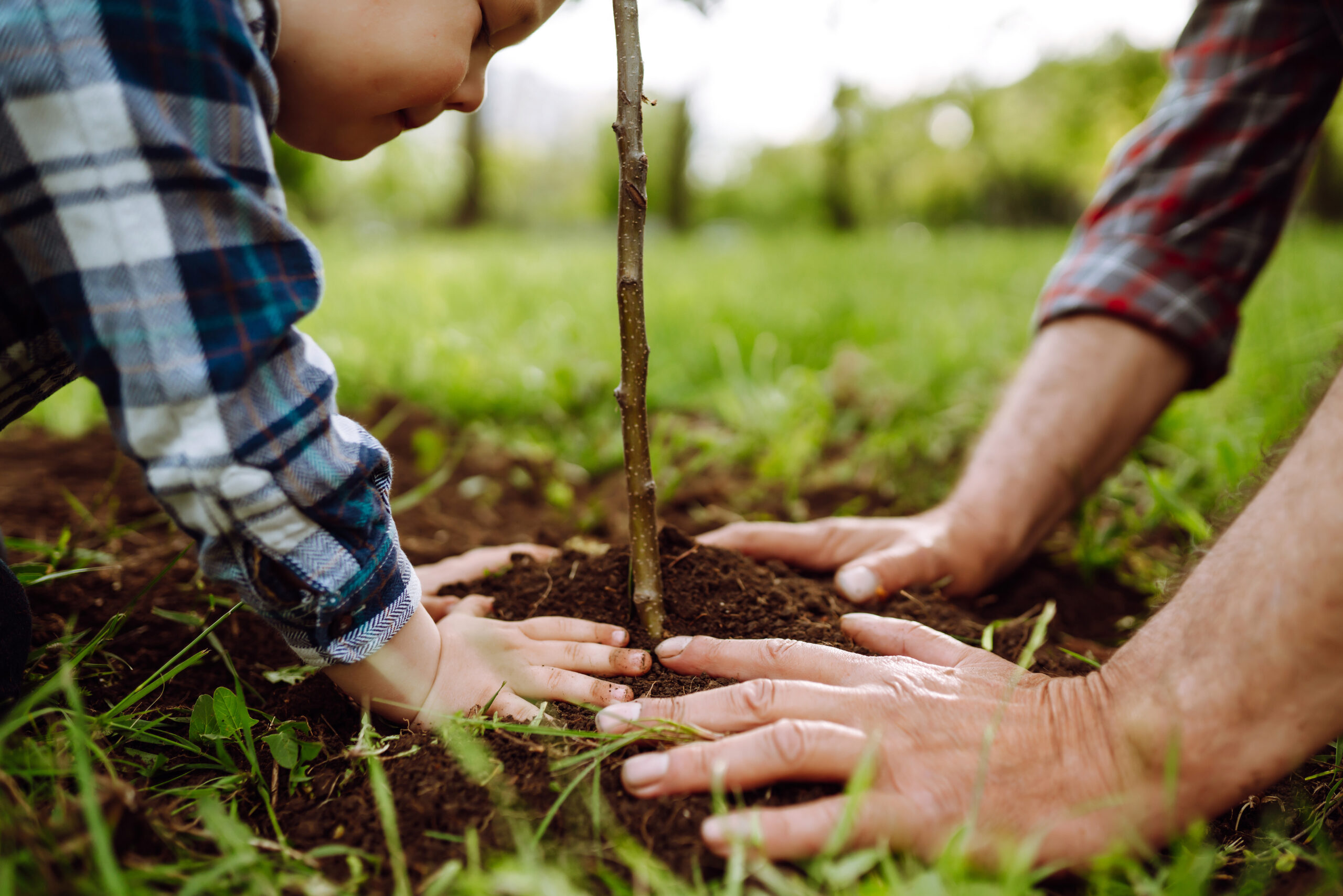
When it’s time to plant, dig a hole two to three times wider than the root ball, but no deeper. One of the most common mistakes homeowners make is planting too deeply. The point where the trunk begins to flare into the roots should remain at or just above the finished soil level. Burying that flare can lead to poor growth and long-term health problems.
Backfill with the native soil that came out of the hole rather than filling it with rich potting soil or heavy amendments. While it may seem like a kindness, surrounding the roots with dramatically different soil can actually discourage them from growing outward into the surrounding ground where they’ll ultimately need to survive.
Water thoroughly after planting, then continue watering deeply as needed during dry periods throughout the fall and winter. Even dormant trees require moisture while their roots continue to develop. A layer of mulch two to four inches deep around the base helps conserve soil moisture, regulate temperature, and reduce weed competition. Just remember to keep the mulch pulled back several inches from the trunk. The familiar “mulch volcano” piled against the bark may look tidy, but it can trap moisture, encourage decay, and attract insects.
If you’re unsure what to plant, consider species that are well adapted to the Southern Plains. Bur oak, chinkapin oak, cedar elm, shumard oak, bald cypress, Mexican plum, eastern redbud, and native pecan are all excellent choices in many parts of North Texas and central Oklahoma, depending on soil conditions and available space. Native trees generally tolerate local weather extremes better and provide valuable habitat for birds, butterflies, and other wildlife.
Planting a tree is one of the few gardening projects that truly benefits future generations.
Long after this year’s tomatoes are forgotten and next season’s flowers have come and gone, that tree will still be growing. It may shade a porch, shelter wildlife, lower summer cooling costs, or become the backdrop for family photographs that haven’t even been taken yet.
Spring may get most of the attention, but fall quietly offers young trees their best opportunity to thrive. Give them a strong start now, and they’ll spend the years ahead returning the favor.
Most of us have heard kudzu called “the vine that ate the South.” It sounds a little dramatic until you see what it can do.
Kudzu does not politely climb a fence. It swallows it. It does not just grow beside a tree. It can cover the whole thing, blocking sunlight, weighing down limbs and eventually weakening or killing the plant underneath. Given enough time, kudzu can turn a fencerow, creek bank or roadside into a solid green blanket.
For North Texas landowners, kudzu may not be the first invasive plant that comes to mind. We tend to talk more about mesquite, thistles, Johnson grass, privet and other familiar headaches. But kudzu has been found in Texas, and it is enough of a concern that it is listed in invasive plant databases and regulated as a noxious plant. The Texas Department of Agriculture defines noxious and invasive plants as species with serious potential to cause economic or ecological harm to agriculture, horticulture, native plants, ecology and waterways.
Part of what makes kudzu so frustrating is its history. It was once promoted in the United States for erosion control and forage, and farmers were even encouraged to plant it in the 1930s and 1940s. By 1970, USDA had declared kudzu a noxious weed, and in 1997 it was listed as a federal noxious weed.
That is quite a change in reputation.
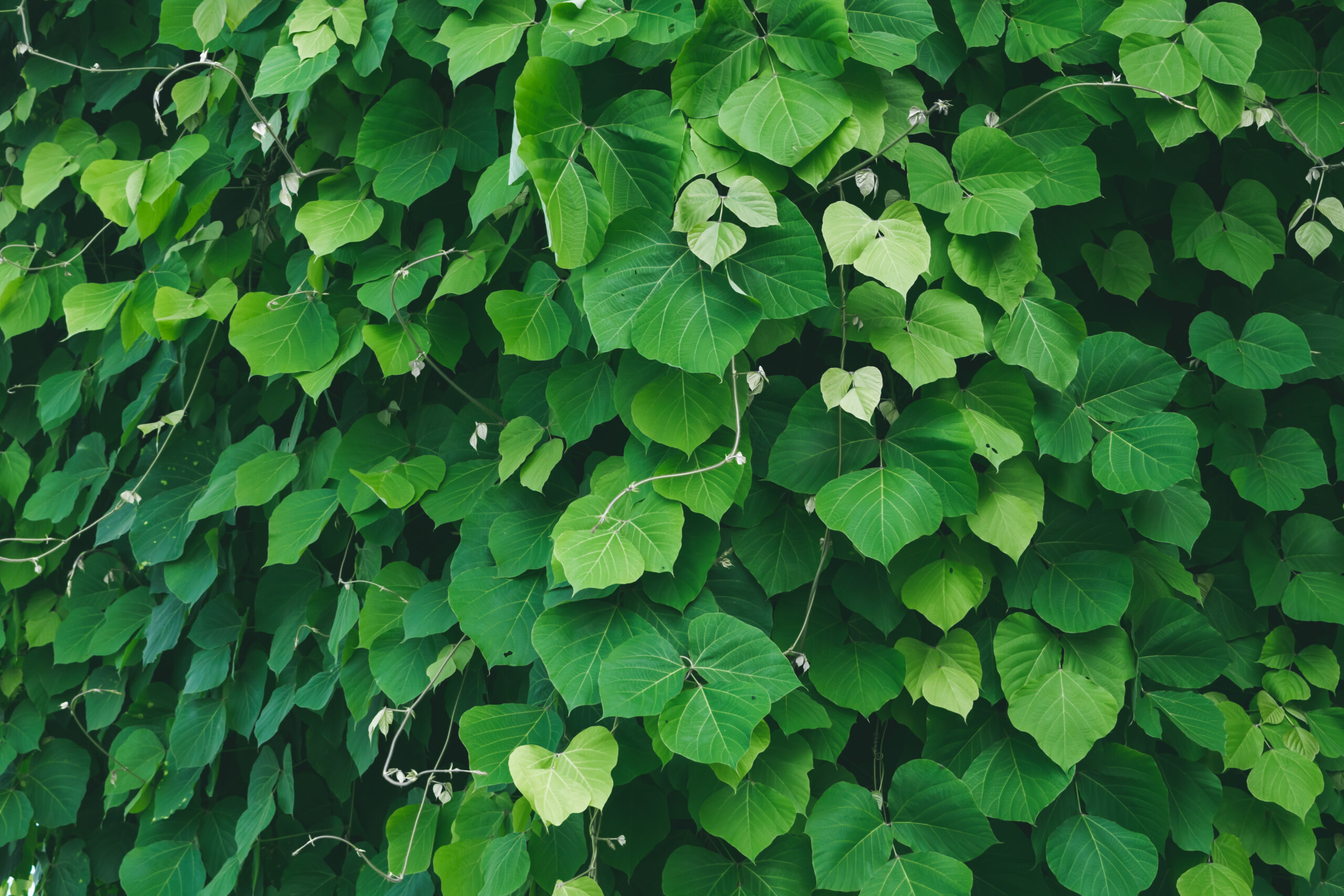
Kudzu, Pueraria montana var. lobata, is a fast-growing vine in the legume family. It has three-part leaves, often with lobes, and can produce purple, fragrant flowers in late summer followed by seed pods. Texas Invasives notes that the leaflets are generally hairy and several inches across.
The real problem is how fast it grows and how completely it can cover other plants. The Native Plant Society of Texas notes that kudzu may grow as much as 60 feet in a season and can expand at a rate of about a foot per day. It damages plants by smothering them, girdling woody stems and even breaking branches or uprooting trees and shrubs under its weight.
For a rancher or landowner, that can mean more than an ugly patch of vines. Kudzu can reduce usable land, cover fences, make access difficult, shade out native plants and damage wildlife habitat. Along waterways and creek bottoms, it can crowd out the native vegetation that helps stabilize soil and support birds, pollinators and other wildlife.
The best time to deal with kudzu is before it becomes a wall of green.
Small patches should be taken seriously. Do not mow once and assume it is handled. Kudzu stores energy in large root crowns, and those crowns are the key to control. Texas A&M AgriLife notes that to kill kudzu, the crown must be removed because it is the part that produces new sprouts.
Control usually takes persistence. Repeated mowing, grazing or cutting may weaken the plant over time, but it rarely solves the problem by itself. Herbicide treatment is often needed, and Texas Invasives lists repeated applications of triclopyr or glyphosate during the growing season as one control option. Large vines may also be cut and immediately treated on the cut surface. As with any herbicide, landowners should read and follow the label, avoid spraying before rain or during windy conditions and use products approved for the site, especially near water.
This is also one of those situations where asking for help early is smart. Local AgriLife Extension offices, county weed specialists, NRCS staff or invasive plant resources can help with identification and management options. If a landowner is not sure whether a vine is kudzu, getting a positive identification matters before beginning control work.
There are plenty of vines in North Texas, and not all of them are enemies. Native vines can provide food and cover for wildlife. But kudzu is different. It is aggressive, persistent and capable of changing the plant community around it.
The lesson is simple: do not wait until kudzu has covered the fence, climbed the trees and claimed the creek bank. If you see it, identify it. If it is kudzu, make a plan. Then keep after it.
Because the vine that ate the South does not need an invitation to start chewing on Texas, too.




-

 Country Lifestyles4 years ago
Scott & Stacey Schumacher: A Growth Mindset
-
 Country Lifestyles10 years ago
Style Your Profile – What your style cowboy hat says about you and new trends in 2017
-
 Horsefeathers12 years ago
Mount Scott: Country Humor with David Gregory
-
 Country Lifestyles10 years ago
June 2016 Profile – The man behind the mic: Bob Tallman
-
 Outdoor11 years ago
Buttercup or Primrose?
-
 Country Lifestyles10 years ago
December 2016 Profile, Rusty Riddle – The Riddle Way
-
 HOME10 years ago
Grazing North Texas – Wilman Lovegrass
-
 The Natural Horseman9 years ago
This is why we do what we do — RayeAnn and Cisco