
Country Lifestyles
Garden Water Woes

By NTFR Staff
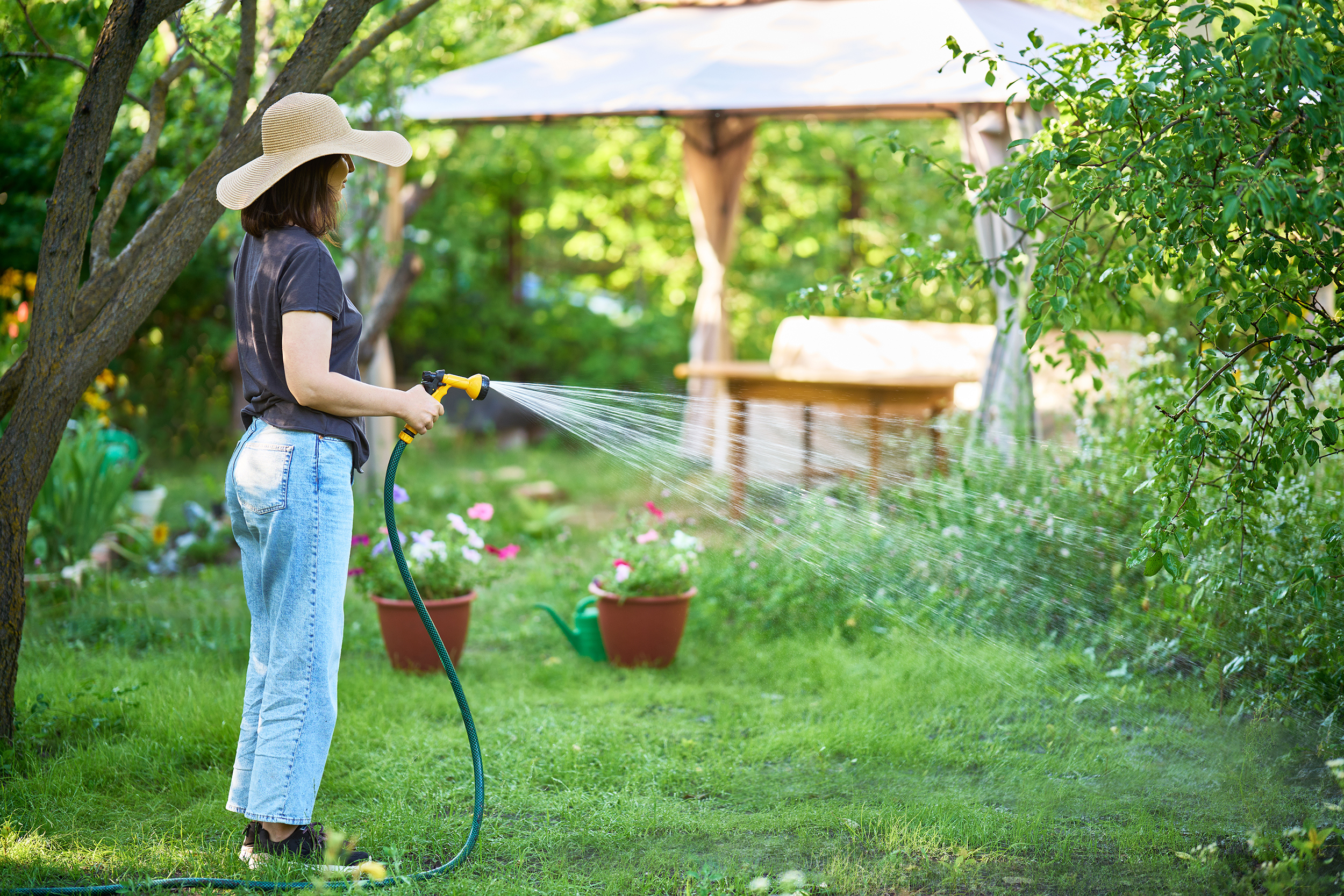
If you’ve spent any time on social media this summer, you’ve probably seen the debate. Some gardeners insist you should water only before sunrise. Others swear by evening watering. A few even claim watering during the heat of the day will burn your plants.
With temperatures climbing well into the 90s – and often higher – in Oklahoma and North Texas, it’s easy to second-guess yourself when your tomato plants start drooping by lunchtime. The good news is that while timing does matter, it’s only one part of keeping a healthy garden. Knowing how and when to water can make a
bigger difference than simply watching the clock.
For most gardens, early morning is considered the best time to water. Between about 5 and 9 a.m., temperatures are cooler, winds are usually lighter, and less water is lost to evaporation. Plants have time to absorb moisture before the hottest part of the day, helping them better withstand the afternoon heat. Any water that splashes onto the leaves also has time to dry, reducing the chance of fungal diseases.
Of course, not everyone has the luxury of watering before work or before the sun comes up. If evening is the only time
that fits your schedule, don’t worry. A garden that receives a thorough watering in the evening is far better off than one left dry while waiting for the “perfect” time.
If you water late in the day, try to direct the water at the soil instead of spraying the foliage. Wet leaves that stay damp overnight can encourage certain plant diseases, especially when humidity is high.
What about watering in the middle of the day? Contrary to a long-standing gardening myth, water droplets generally do not act like tiny magnifying glasses that scorch leaves. Studies have shown this simply isn’t a signifi
cant concern in home gardens. The real drawback is efficiency. During the hottest part of the day, more water evaporates before it ever reaches the root zone. Still, if a plant is severely wilted and the soil is dry, don’t wait until evening. Giving it water right away is better than allowing it to continue suffering from heat and drought stress.
One mistake many gardeners make is watering on a schedule instead of checking the soil. Plants can wilt temporarily during extreme afternoon heat, even when they have plenty of moisture underground.
Before reaching for the hose, push your finger a couple of
inches into the soil. If it still feels cool and moist, your plants probably don’t need water yet. If it’s dry, it’s time to give them a drink.
Just as important as when you water is how you water. A slow, deep soaking encourages roots to grow farther into the soil, where moisture remains longer. Frequent light watering keeps roots close to the surface, making plants more vulnerable during hot weather.
Soaker hoses and drip irrigation systems are excellent choices because they deliver water directly to the roots while wasting very little through evaporation.
Mulch can also become one of your best gardening tools during the summer. A two- to three- inch layer of shredded leaves, straw, untreated grass clippings, or wood mulch helps keep the soil cooler, slows evaporation, and reduces weed growth that competes for moisture. In many gardens, adding mulch can no
ticeably reduce how often you need to water.
Every garden is a little different. Soil type, plant varieties, sunlight, wind, and rainfall all affect how quickly moisture disappears. Sandy soils dry out faster than heavy clay soils, and containers often need water much more frequently than plants growing in the ground.
The best approach is to pay attention to your garden rather than following a strict calendar. Check the soil regularly, water deeply when needed, and don’t panic if your vegetables look a little tired during the hottest part of the afternoon.
Many will perk right back up once temperatures begin to fall.
In the end, consistency matters more than perfection. Whether you water before sunrise or after supper, giving your plants the moisture they need – and delivering it deeply to the roots – will help your garden stay healthier through even the toughest days of summer.

By Annette Bridges
It was in September 2022 when I wrote a column titled “Merry Maui Cows,” featuring a photograph of me with a group of Maui cows grazing in a seaside pasture.
That photo was taken in the very same spot as this one, captured a few weeks ago in March 2026.
Standing there again, looking out over that same green hillside rolling toward the ocean, I couldn’t help but smile.
I’m quite certain those cows were just as merry then as they are now—and I realized, so am I.
My husband and I had returned to Maui to celebrate our 45th wedding anniversary.
Forty-five years. It feels almost impossible to say out loud without wondering where in the world the time has gone.
It truly does seem to have flown by. And yet, when I stop and think about it, so much life has been lived in those years— joys, challenges, ordinary days, unforgettable moments.
The kind of life that shapes you.
This particular trip carried an extra layer of celebration for me.
Since that first “Merry Maui Cows” photo was taken, I’ve lost over fifty pounds.
I found myself happily shopping for new tropical clothes, smiling in dressing rooms, picking up sizes I hadn’t worn in years.
It was in September 2022 when I wrote a column titled “Merry Maui Cows,” featuring a photograph of me with a group of Maui cows grazing in a seaside pasture.
It was fun in a lighthearted
way—but also meaningful in a deeper one.
A reminder that change is still possible, even later in life.
And isn’t that part of what this season of life brings?
Birthdays and anniversaries begin to feel less like markers of time passing and more like invitations to reflect.
To look back. To take stock. To notice what has changed—and what has remained.
When I placed my new photo beside the one from 2022, I noticed the differences, of course. But what stood out most wasn’t what had changed.
It was what hadn’t. Still merry. Those two simple words felt like more than just an observation.
They felt like a quiet declaration.
Because being “still merry” after years have passed.
After life has unfolded in all its beauty and difficulty—really does say something.
It says we’ve held onto joy. It says we’ve chosen gratitude.
It says we’ve weathered what needed weathering and still found reasons to smile.
Life doesn’t stay the same. It isn’t meant to.
There are seasons of ease and seasons of challenge.
There are moments that take your breath away and moments that take your strength. But tucked within it all, there can still be something steady… a thread of merriness that we carry forward.
Not a loud, constant happiness.
Not a perfect, untouched life. Just… still merry.
And maybe that’s enough. In fact… maybe it’s everything.
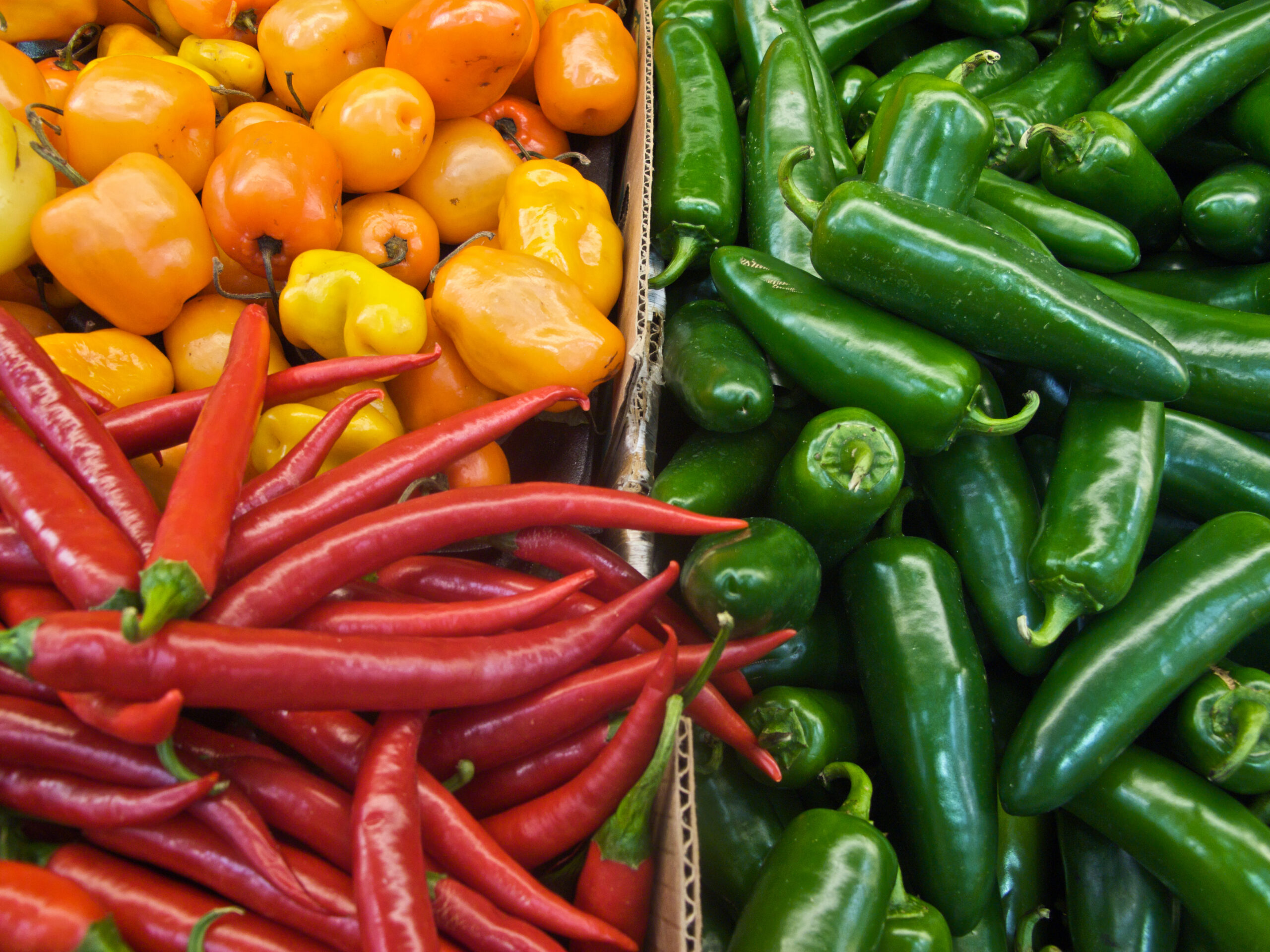
Most of us have been there. You take a bite of something that looks harmless enough, and within seconds, your mouth is on fire. Your eyes water, your nose runs, and suddenly you’re questioning every decision that led you to that moment. Whether it’s a jalapeño that packed more punch than expected or a sauce someone swore “wasn’t that bad,” peppers have a way of keeping people humble.
There is, however, a way to measure that heat before you ever take a bite. It’s called the Scoville scale, and it’s the standard used to rank just how hot a pepper can be. The measurement is expressed in Scoville Heat Units, or SHU. The higher the number, the more heat you can expect. A bell pepper sits at zero, meaning no heat at all. Jalapeños usually land somewhere between 2,500 and 8,000 SHU, while the upper end of the scale climbs into the millions.
The system dates back to 1912, when pharmacist Wilbur Scoville developed a method to test pepper heat. His approach was simple, if not a little impractical by today’s standards. Pepper extract was diluted with sugar water until a panel of tasters could no longer detect the burn. The more dilution required, the hotter the pepper. It worked, but it depended heavily on human perception, which is far from consistent.
Today, the process is far more precise. Instead of relying on taste, scientists measure the concentration of compounds called capsaicinoids using laboratory equipment. Those numbers are then converted into Scoville Heat Units. It takes the guesswork out of the equation and gives growers, processors, and consumers a reliable way to compare peppers.
Capsaicinoids are the group of compounds responsible for heat, with capsaicin being the main contributor. Contrary to what a lot of people believe, the seeds are not where the heat lives. Most of it is concentrated in the white inner ribs of the pepper. The seeds can seem hot because they come into contact with those oils, but removing the inner ribs is the most effective way to dial the heat back while keeping the flavor.
That burning sensation you feel isn’t actually heat in the traditional sense. Capsaicin interacts with receptors in your mouth that are designed to detect pain and temperature. Your brain reads that signal as burning, even though there’s no physical damage being done at typical levels. Depending on how much you’ve had, that sensation can linger anywhere from a few minutes to well over half an hour.
One thing worth keeping in mind is that not all peppers are created equal, even within the same variety. Growing conditions, soil, weather, and maturity all play a role in how much capsaicin a pepper develops. Two jalapeños from different fields, or even different plants in the same field, can vary more than you might expect.
At the far end of the scale are peppers that push the limits of what most people would consider edible. Varieties like the Carolina Reaper have recorded levels exceeding 2 million SHU. That’s well beyond the point of casual consumption and into territory where even a small amount can be overwhelming. While some people seek that level of heat for the challenge, it’s not something to take lightly.
For everyday use, the Scoville scale is less about chasing extremes and more about making informed choices. If you know your comfort level, you can select peppers that add flavor without overpowering a dish. It also helps explain why a recipe that calls for “one pepper” can turn out very differently depending on what you pick up at the store or out of the garden.
In the end, that moment when your mouth feels like it’s on fire isn’t as mysterious as it seems. There’s a system behind it, and a little understanding of the Scoville scale can go a long way in keeping your next bite from turning into a regret.
By Annette Bridges
I was watching a television interview with a Texas rancher when he said something that made me stop what I was doing. I paused the program, rewound it, and listened again. “It’s great to enjoy the world at 1.4 miles per hour.” As soon as I heard those words, I knew they were speaking to me. They gave simple, well-chosen language to something I already understood—feelings I had carried and conclusions I had reached after forty-five years of living on our cattle ranch.
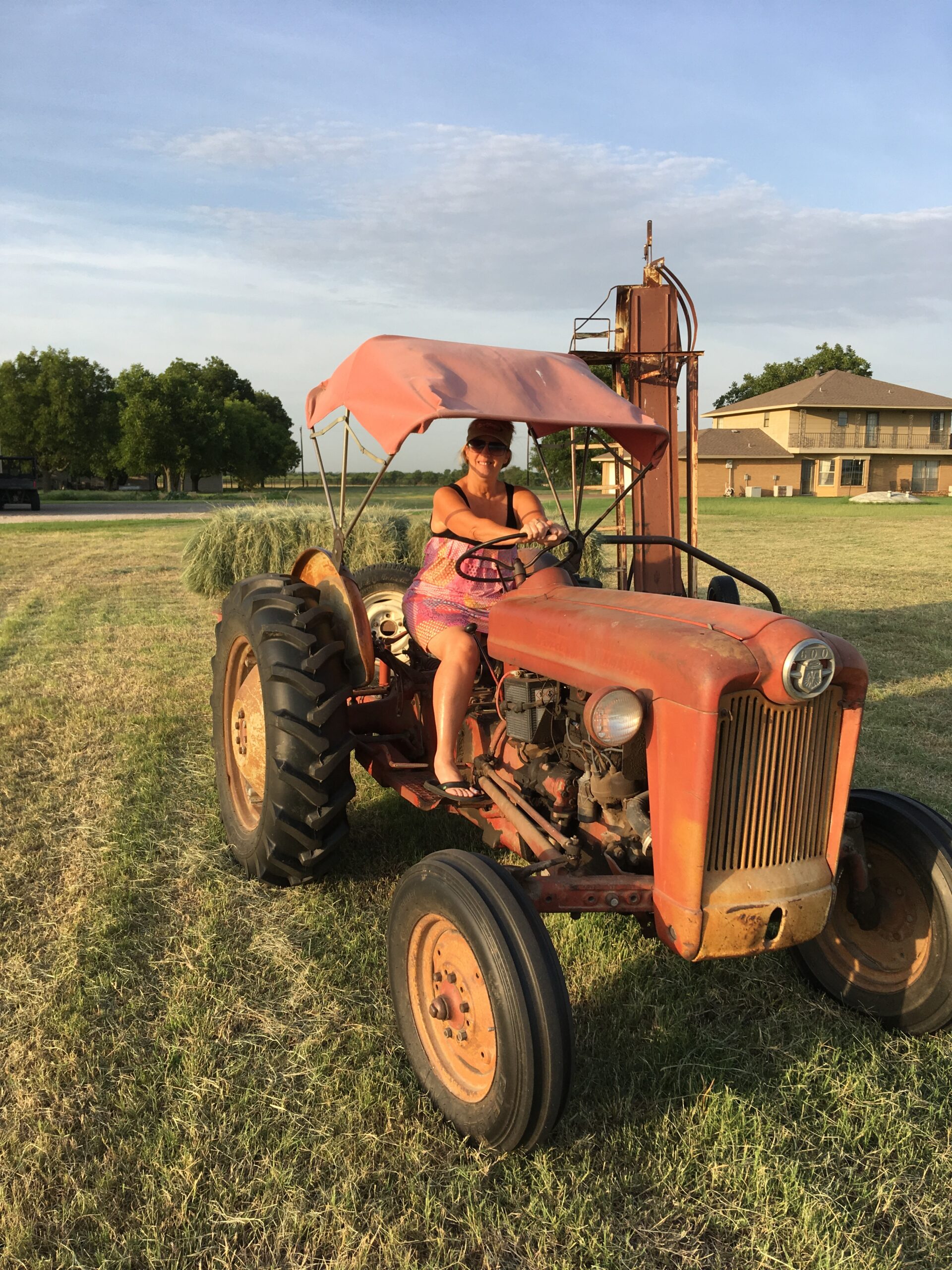
He was sitting on his tractor when he said it, smiling a little, making reference to the slow, steady speed of a machine built for work, not hurry. And maybe that’s why it settled so deeply into my heart—because I know that speed well.
One of my greatest joys of life on our cattle ranch has been driving my beloved red tractor while picking up square bales. There’s no rushing involved. The tractor putters along slowly, steadily, just fast enough to move forward but slow enough that nothing feels missed. I can ease ahead, line up the bale loader, make small adjustments, and never feel pressed for time.
At 1.4 miles per hour, the world opens up.
I glance toward the pasture and see calves playing chase, kicking up dust like they’ve discovered joy for the first time. I spot a calf nursing its mama, that quiet, instinctive moment that somehow feels sacred every single time. Sometimes it’s two “bestie” mamas grazing side by side, comfortable in each other’s company, reminding me that companionship doesn’t always require words.
From the tractor seat, I notice things I would never see if I were moving faster. The sun beginning its slow descent, casting a golden glow across the field. Birds perched on square bales, patiently waiting their turn to be picked up. The sound of geese or ducks flying overhead, announcing their presence long before I see them cross the sky.
There isn’t much I miss at that speed.
When I first came to living on the ranch after getting married, I didn’t immediately appreciate the slower pace. In fact, I often felt impatient with it. Chores felt like something to get through, not something to linger in. I was usually in a hurry to finish the task at hand so I could move on to what I thought was the fun part of the day. The slowness felt like an obstacle, not a gift. It would take many years—many seasons—before I began to realize what that pace was quietly offering me all along.
The tractor doesn’t allow hurry. It insists on patience. It teaches you to work with the land instead of racing across it. And somewhere between bale after bale, I learned that slowing down isn’t about doing less—it’s about seeing more.
At 1.4 miles per hour, your senses wake up. Your thoughts quiet down. You stop multitasking and start noticing. Joy doesn’t rush in loudly; it shows up gently, in scenes that might look ordinary to someone moving too fast to care.
I think that’s why that rancher’s words stayed with me. They captured something I’ve been learning all along—that there’s a richness to life that only reveals itself at a slower pace. A pace where your eyes are open, your heart is present, and your mind isn’t already racing ahead to the next task.
In a world that celebrates speed and hustle, choosing to putter along can feel almost countercultural. But from my seat on my beloved red tractor, moving at 1.4 miles per hour, it feels like a gift.
Because there is so much more to see when you slow down enough to notice.




-

 Country Lifestyles4 years ago
Scott & Stacey Schumacher: A Growth Mindset
-
 Country Lifestyles10 years ago
Style Your Profile – What your style cowboy hat says about you and new trends in 2017
-
 Horsefeathers12 years ago
Mount Scott: Country Humor with David Gregory
-
 Country Lifestyles10 years ago
June 2016 Profile – The man behind the mic: Bob Tallman
-
 Outdoor11 years ago
Buttercup or Primrose?
-
 Country Lifestyles10 years ago
December 2016 Profile, Rusty Riddle – The Riddle Way
-
 HOME10 years ago
Grazing North Texas – Wilman Lovegrass
-
 The Natural Horseman9 years ago
This is why we do what we do — RayeAnn and Cisco