
Farm & Ranch
Theileria orientalis

By Barry Whitworth, DVM
Over the past few years, veterinarians have detected Theileria orientalis in Oklahoma cattle. Early cases were primarily diagnosed in adult cattle, but more recent Oklahoma cases have been identified in stocker cattle. All cattle producers should be familiar with the clinical signs of this disease and check their cattle daily for signs of trouble.
The first U.S. case of theileriosis was identified in Virginia in August 2017. Those cattle showed weakness and anemia, and veterinarians made an initial diagnosis of anaplasmosis. Blood samples from the animals were tested for Anaplasma, Babesia and Leptospira. Results were negative for all three, but the tests revealed a blood protozoan, later identified as T. orientalis genotype Ikeda. Since that first herd outbreak, the organism has been detected in several states.
Cattle sick with T. orientalis genotype Ikeda may show fever, weakness, anorexia and exercise intolerance. If forced to move, affected cattle may stagger and gasp for air. If stressed excessively, they may collapse and die. On examination, the gums, eyes or vaginal mucosa may appear pale (white) or yellow. Reproductive losses, including stillbirths and late-term abortions, may occur, along with a drop in milk production.
Clinical signs reported in adult cattle in Oklahoma include anemia, sudden death, weight loss, abortion, failure to thrive and failure to calve. In stocker cattle, producers have reported weight loss, anemia, poor performance and sudden death.
Because Anaplasma marginale and T. orientalis genotype Ikeda produce similar clinical signs, telling the two apart can be difficult. One difference is that clinical signs are more common in young cattle infected with T. orientalis than in young cattle infected with A. marginale. Cattle with anaplasmosis also often display aggression, while those with T. orientalis genotype Ikeda typically do not. A laboratory test is required to tell the two diseases apart with certainty.
Researchers have identified Haemaphysalis longicornis as a possible vector of T. orientalis genotype Ikeda. In 2017, the U.S. Department of Agriculture’s (USDA) National Veterinary Services Laboratories (NVSL) confirmed the presence of H. longicornis, commonly called the Asian longhorned tick (ALT) or bush tick. While trying to determine how the tick arrived in the United States, USDA officials discovered it had been present in West Virginia as early as 2010. The tick has now been confirmed in at least 26 states, including Oklahoma. Some evidence suggests other insect vectors may also transmit T. orientalis genotype Ikeda. Needle transfer is another possible route of transmission.
The ALT has been identified in Craig and Mayes counties in Oklahoma. This tick thrives in areas with high humidity, such as wooded regions, brush or tall grass. Ticks are often found where large numbers of wildlife gather, such as along deer trails. Producers can find more information about the ALT on the USDA website at https://www.aphis.usda.gov/livestock-poultry-disease/cattle/ticks/asian-longhorned.
Other countries have developed treatments for T. orientalis, but no approved treatments are available in the United States, and no vaccine exists for this disease. The best defense is prevention: buying cattle free of the organism, avoiding blood transfer between animals and using effective tick control. Producers should purchase cattle from reputable sources. Clean instruments between animals during procedures such as castration or dehorning, and change needles between every animal. Control external parasites with appropriate insecticide treatments. Pasture management also helps, such as rotating cattle away from wooded or brushy areas where ticks thrive. Patch burning may also help reduce tick populations.
Theileria orientalis remains a concern for some cow/calf and stocker producers in Oklahoma. Producers who want more information about T. orientalis genotype Ikeda should contact their local veterinarian or Oklahoma State University County Extension agriculture educator.
References
Hammer, J. F., Emery, D., Bogema, D. R., & Jenkins, C. (2015). Detection of Theileria orientalis genotypes in Haemaphysalis longicornis ticks from southern Australia. Parasites & Vectors, 8, 229.
Oakes, V. J., Yabsley, M. J., Schwartz, D., LeRoith, T., Bissett, C., Broaddus, C., Schlater, J. L., Todd, S. M., Boes, K. M., Brookhart, M., & Lahmers, K. K. (2019). Theileria orientalis Ikeda genotype in cattle, Virginia, USA. Emerging Infectious Diseases, 25(9), 1653-1659.
Spickler, Anna Rovid. (2019). Theileriosis. Retrieved from http://www.cfsph.iastate.edu/DiseaseInfo/factsheets.php.
Watts, J. G., Playford, M. C., & Hickey, K. L. (2016). Theileria orientalis: A review. New Zealand Veterinary Journal, 64(1), 3-9.
By Barry Whitworth, DVM
Scrapie is a chronic, progressive disease of the central nervous system that affects sheep and goats. The U.S. Department of Agriculture (USDA) has worked for decades to eliminate scrapie from small ruminant operations. The United States was positioned to meet the World Organization for Animal Health’s seven-year benchmark for self-declared scrapie freedom in January 2028. Unfortunately, the Animal and Plant Health Inspection Service (APHIS) confirmed classical scrapie in a sheep slaughtered at a facility in Oregon. With this detection, national scrapie-free status for the U.S. may be pushed back to sometime in 2033.
Scrapie is the oldest of the neurodegenerative diseases known as transmissible spongiform encephalopathies (TSEs). Other TSEs include bovine spongiform encephalopathy, known as mad cow disease; chronic wasting disease, found in deer; and Creutzfeldt-Jakob disease, found in humans. TSEs are protein-misfolding diseases that damage the brain, and they are always fatal.
Researchers don’t fully understand what causes scrapie, but evidence points to an infectious protein called a prion. These infectious prions damage the normal prion proteins found in the brain. The misfolded proteins lead to brain damage and the clinical signs of the disease. Prions resist destruction, so once they are in the environment, they are difficult to remove.
Scrapie appears to spread mainly by the oral route. Lambs and kids typically ingest prions when they contact placentas and birthing fluids from infected ewes and does. Older animals can be exposed the same way. Colostrum and milk are also sources of prions, and urine, feces, saliva and nasal secretions may contain them as well. Once ingested, prions cross into the lymphoid system, where they incubate for a long time, usually two to five years, before entering the nervous system.
Genetics plays a part in scrapie infections. Some breeds are more susceptible because of their genetic makeup. Genetic testing can help producers select breeding stock with resistant genes.
The clinical signs most associated with scrapie are intense itching (pruritus), incoordination (ataxia) and wasting. Early on, producers may notice slight behavior changes in infected sheep and goats. Animals may have a staring or fixed gaze, fail to respond to herding or act aggressively toward objects. As the disease progresses, signs include weight loss despite a normal appetite, incoordination, head tremors and intense itching. In the final stages, sheep go down and may show blindness, seizures and an inability to swallow. Once the first clinical signs appear, death usually follows in one to six months.
The gold standard for diagnosing scrapie after death is immunohistochemistry testing of brain tissue, along with microscopic examination of the brain for the lesions characteristic of TSEs. Veterinarians can also diagnose live animals by testing lymphoid tissue from the third eyelid and rectal mucosa scrapings.
No treatment exists for scrapie, so prevention is key. Biosecurity is a good starting point. Maintain a closed flock, and buy replacement animals only from certified scrapie-free flocks. Limit visitors’ contact with your animals. Keep lambing and kidding areas clean, and dispose of manure and bedding contaminated with birthing fluids and placentas properly. Use genetically resistant animals for breeding to produce genetically resistant offspring.
A novel, or atypical, form of scrapie also exists. Sometimes called the Nor98 variant, it was first found in Norway and has been diagnosed in the U.S. as well. It usually turns up in a single old animal in a flock or herd, and its brain lesions differ from those of classical scrapie. Experts currently believe natural transmission of atypical scrapie is unlikely.
Small ruminant producers can help the USDA’s eradication effort by contacting the agency when an adult sheep or goat shows clinical signs of scrapie or when an adult animal dies or is euthanized. Contact Oklahoma State Veterinarian Dr. Rod Hall at 405-522-6141 or USDA Veterinary Services at 405-254-1797. Collection and testing of samples for scrapie are free.
Another important step in eliminating scrapie, and other diseases, is identifying animals with official USDA ID. The USDA National Scrapie Eradication Program requires most sheep to be identified to their flock of birth when they leave their home premises for sale, show or events, or when they commingle with other sheep.
Unfortunately, the Oregon sheep diagnosed with scrapie had no tag, which will hamper USDA traceback efforts. You can find more information on official ID at https://www.aphis.usda.gov/nvap/reference-guide/animal-identification/sheep-goat.
The U.S. needs to eliminate scrapie. Once it does, the country will gain additional export markets for sheep and goat products. Oklahoma State University Cooperative Extension Service has an informative fact sheet on scrapie. Ask your local county Extension office for fact sheet VTMD-9135, or view it online at https://extension.okstate.edu/fact-sheets/scrapie.html. Sheep and goat producers may also want to visit the USDA National Scrapie Eradication Program website at https://www.aphis.usda.gov/livestock-poultry-disease/sheep-goat/scrapie.
References
Cassmann, E. D., & Greenlee, J. J. (2020). Pathogenesis, detection, and control of scrapie in sheep. American Journal of Veterinary Research, 81(7), 600–614. https://doi.org/10.2460/ajvr.81.7.600
By Jared Groce
The rural land market held steady in July after the increase we saw in June, with nearly identical numbers of transactions and similar pricing. Buyer inquiries rose noticeably in July, with most agents and brokers reporting a sharp increase in calls and showings. Title companies and lenders also report more transactions since July 1, which suggests buyer sentiment may be picking up as summer draws to an end.
The gap between list price and sale price improved compared with June, with the sale-to-list ratio running much higher than the previous month. Total days on market dropped somewhat from June. Several larger tracts also closed in July compared with the rest of 2026 to date.
It is still a buyer’s market, and I expect that trend to continue through the year. Once the Fed lowers interest rates, buyer sentiment will likely climb even more and push us back toward a seller’s market, but who knows when that might happen. In the meantime, we are all fighting higher prices at the pump, higher input costs for seed, fertilizer and hay, and big jumps in insurance premiums across the board. The good news, if you are selling, is that cattle prices remain at an all-time high.
They say the best time to plant a tree was 20 years ago, and the second-best time is today. The same is true of buying land. Get some dirt on your hands.
| County | Area | Acres | $/Acre | List Price | Sold Price | Sale/List | DOM |
|---|---|---|---|---|---|---|---|
| Clay | Henrietta | 25.02 | $13,789 | $345,000 | $345,000 | 100.00% | 5 |
| Clay | Petrolia | 77.72 | $4,825 | $399,000 | $275,000 | 94.00% | 24 |
| Clay | Average | 51.37 | $9,307 | $372,000 | $360,000 | 97.00% | 15 |
| Collin | Blue Ridge | 11.03 | $30,740 | $358,400 | $339,000 | 94.60% | 58 |
| Collin | Blue Ridge | 11 | $48,182 | $550,000 | $530,000 | 96.40% | 325 |
| Collin | Farmersville | 20.97 | $30,514 | $625,000 | $640,000 | 102.40% | 443 |
| Collin | Farmersville | 32.9 | $30,395 | $1,149,000 | $1,000,000 | 87.00% | 315 |
| Collin | Anna | 14.2 | $73,970 | $1,200,000 | $1,050,000 | 87.50% | 50 |
| Collin | Average | 18.02 | $42,760 | $776,480 | $711,800 | 93.60% | 238 |
| Cooke | Collinsville | 11 | $35,364 | $389,000 | $389,000 | 100.00% | 343 |
| Cooke | Gainesville | 43.08 | $15,669 | $775,400 | $675,000 | 87.00% | 5 |
| Cooke | Average | 27.04 | $25,616 | $582,220 | $532,000 | 93.50% | 174 |
| Denton | Krum | 11.93 | $25,086 | $300,000 | $299,204 | 99.70% | 34 |
| Denton | Ponder | 14.92 | $46,917 | $988,200 | $700,000 | 70.80% | 170 |
| Denton | Denton | 22.37 | $90,198 | $2,017,730 | $2,017,730 | 100.00% | 160 |
| Denton | Sanger | 122.36 | $26,153 | $3,360,000 | $3,200,000 | 95.20% | 289 |
| Denton | Sanger | 328.06 | $10,813 | $3,608,000 | $3,547,186 | 98.30% | 11 |
| Denton | Average | 99.93 | $39,833 | $2,054,786 | $1,952,824 | 92.80% | 133 |
| Grayson | Sherman | 23.06 | $13,010 | $395,000 | $300,000 | 75.90% | 7 |
| Grayson | Bells | 11 | $303,909 | $360,000 | $340,000 | 94.40% | 356 |
| Grayson | Collinsville | 11.39 | $49,109 | $619,500 | $559,350 | 90.30% | 183 |
| Grayson | Gunter | 11.5 | $69,000 | $882,874 | $793,500 | 89.90% | 259 |
| Grayson | Average | 14.24 | $40,009 | $507,250 | $449,675 | 90.10% | 221 |
| Jack | Jacksboro | 29.17 | $8,742 | $261,072 | $255,000 | 97.70% | 191 |
| Jack | Jacksboro | 171 | $11,809 | $2,223,000 | $2,019,298 | 90.80% | 148 |
| Jack | Poolville | 202 | $15,347 | $3,434,000 | $3,100,000 | 90.30% | 312 |
| Jack | Average | 134.06 | $11,966 | $1,972,691 | $1,791,433 | 92.90% | 217 |
| Montague | Bowie | 10.01 | $17,483 | $175,000 | $175,000 | 100.00% | 5 |
| Montague | Bowie | 46.3 | $10,043 | $650,000 | $465,000 | 71.50% | 10 |
| Montague | Bowie | 56.02 | $12,049 | $700,250 | $675,000 | 96.40% | 30 |
| Montague | Forestburg | 212.17 | $7,494 | $2,697,000 | $1,590,000 | 93.70% | 369 |
| Montague | Nocona | 192.32 | $11,716 | $2,355,840 | $2,300,000 | 97.60% | 91 |
| Montague | Nocona | 575.87 | $11,287 | $6,910,440 | $6,500,000 | 94.10% | 56 |
| Montague | Nocona | 934.29 | $8,244 | $8,806,000 | $7,701,855 | 87.50% | 333 |
| Montague | Average | 290.14 | $11,188 | $3,042,076 | $2,772,408 | 91.50% | 128 |
| Wise | Chico | 11.4 | $18,421 | $210,000 | $210,000 | 100.00% | 170 |
| Wise | Chico | 14 | $17,143 | $249,900 | $240,000 | 96.00% | 18 |
| Wise | Decatur | 10.15 | $28,498 | $379,000 | $289,258 | 76.30% | 115 |
| Wise | Decatur | 10.15 | $28,498 | $379,000 | $289,258 | 76.30% | 115 |
| Wise | Decatur | 11.61 | $28,498 | $438,000 | $330,865 | 75.50% | 115 |
| Wise | Decatur | 14.58 | $28,506 | $524,880 | $415,619 | 79.20% | 115 |
| Wise | Boyd | 61.34 | $11,575 | $775,000 | $710,000 | 91.60% | 251 |
| Wise | Poolville | 115.69 | $9,076 | $1,300,000 | $1,050,000 | 80.80% | 75 |
| Wise | Average | 31.11 | $21,277 | $533,973 | $441,875 | 84.10% | 122 |
By Savannah Magoteaux
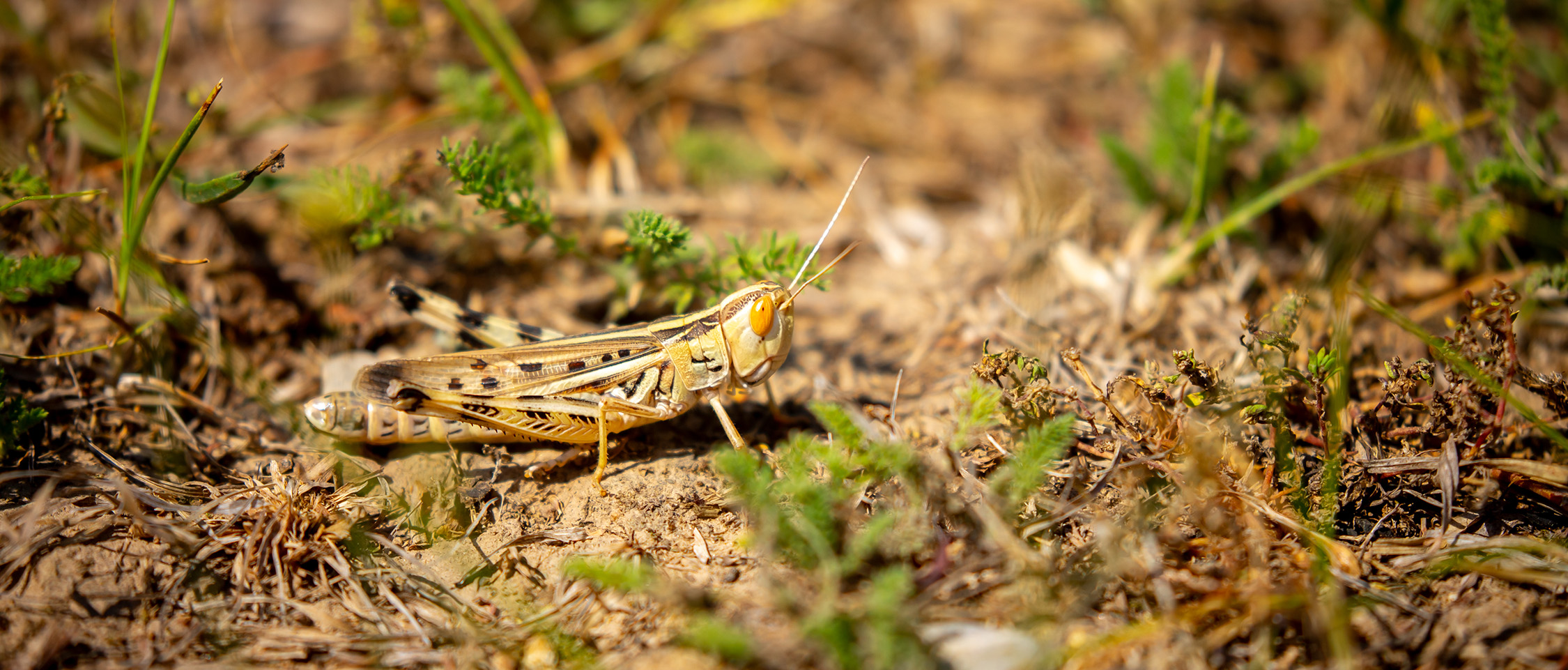
Walk across a pasture in a bad grasshopper year, and you’ll hear them before you see them. Hundreds of insects scatter with every step, springing out of the grass in all directions. A few grasshoppers are a normal part of the landscape, but a population explosion can frustrate farmers, ranchers and homeowners alike.
Grasshoppers can eat tremendous amounts of vegetation. They strip forage from pastures, damage gardens, defoliate young trees and feed on many row crops. In drought years, when forage is already short, heavy grasshopper pressure makes a hard situation worse.
You can reduce the damage. The challenge is knowing when control will work and when it is too late to make much difference.
Why are there so many this year?
Grasshopper numbers rise and fall from year to year, and weather plays a major role in whether they stay manageable or explode.
Warm, dry springs generally favor grasshopper survival. Females lay egg pods in undisturbed soil during late summer and fall. Those eggs stay in the ground through winter and hatch the following spring.
If the winter is mild and the spring stays dry, more young grasshoppers survive. Dry weather also suppresses many of the fungal diseases that normally help keep grasshopper numbers down.
By summer, millions of young insects may already be feeding across rangeland and pastures.
Timing is everything
One of the biggest mistakes landowners make is waiting until grasshoppers have fully developed wings before deciding to act.
Young grasshoppers, called nymphs, are much easier to control. They stay concentrated near where they hatched, can’t fly long distances and take much less insecticide if treatment becomes necessary.
Once they become winged adults, the picture changes. Adult grasshoppers move easily and can fly into treated areas from neighboring fields. Even if a treatment knocks down the local population, new insects may keep arriving all summer.
That is why many Extension specialists stress early monitoring instead of waiting until the damage is obvious.
How much damage can they cause?
Grasshoppers feed on hundreds of plant species. In pastures, they eat grass your livestock would otherwise graze. During severe outbreaks, they may also feed on broadleaf plants, garden vegetables, flowers and young shrubs.
In drought years, the damage shows even more because forage is already stressed. Grasshoppers often gather along field edges first, then move deeper into pastures as food runs short.
Young trees can suffer, too. Newly planted windbreaks, fruit trees and ornamental trees may lose a lot of foliage when grasshopper numbers are high.
What can you do?
No single solution eliminates grasshoppers, but several practices can reduce the damage.
Start with regular scouting. Walking fields every week in late spring and early summer lets you spot rising populations before serious feeding begins.
Good pasture management helps, too. Healthy, vigorous forage generally holds up to feeding better than drought-stressed or overgrazed pasture. Avoiding overgrazing leaves plants more leaf area to recover after insects feed.
Around gardens and homes, mowing tall weeds and unmanaged vegetation can reduce the places where grasshoppers feed and reproduce. It won’t stop an outbreak, but it can make your property less attractive to them.
Natural predators pitch in. Birds, wild turkeys, guineas, chickens, spiders, robber flies and praying mantises all eat grasshoppers. They rarely provide full control in outbreak years, but they help keep numbers lower in normal seasons.
Insecticides can work, but don’t treat them as an automatic solution. Treatment generally works best while most grasshoppers are still immature nymphs. By the time adults are flying, you may need repeated applications because new insects keep moving into treated areas.
Whether treatment pays often depends on how heavy the infestation is and how valuable the crop or pasture is. Extension recommendations commonly use population thresholds to help decide whether control is economically justified, rather than treating every field just because grasshoppers are present.
If you use insecticides, choose products labeled for the site, and follow all label directions on application rates, grazing restrictions and environmental precautions.
Once adult females start laying eggs in late summer, there is little you can do. Those eggs stay in the soil until spring, so early monitoring the next year matters even more after a big outbreak.
Grasshopper populations rarely stay at outbreak levels forever. Weather, predators, disease and natural cycles eventually bring numbers back down. In years that favor grasshoppers, though, producers who scout early and respond quickly usually fare far better than those who wait until the pasture appears to be moving.
No one can eliminate grasshoppers from the landscape, and no one should try. They are a natural part of the ecosystem and an important food source for many wildlife species. The goal is to hold damage to an acceptable level while protecting the long-term health of your pastures, crops and beneficial insects.
By the time grasshoppers are flying up with every step you take through the pasture, much of the damage is already done. The best defense starts weeks earlier, while the insects are young, populations are easier to manage and you have more options.




-

 Country Lifestyles4 years ago
Scott & Stacey Schumacher: A Growth Mindset
-
 Country Lifestyles10 years ago
Style Your Profile – What your style cowboy hat says about you and new trends in 2017
-
 Horsefeathers12 years ago
Mount Scott: Country Humor with David Gregory
-
 Country Lifestyles10 years ago
June 2016 Profile – The man behind the mic: Bob Tallman
-
 Outdoor11 years ago
Buttercup or Primrose?
-
 Country Lifestyles10 years ago
December 2016 Profile, Rusty Riddle – The Riddle Way
-
 HOME10 years ago
Grazing North Texas – Wilman Lovegrass
-
 The Natural Horseman9 years ago
This is why we do what we do — RayeAnn and Cisco