
Farm & Ranch
Frog Fruit

By Tony Dean, tonydean.tx1@gmail.com
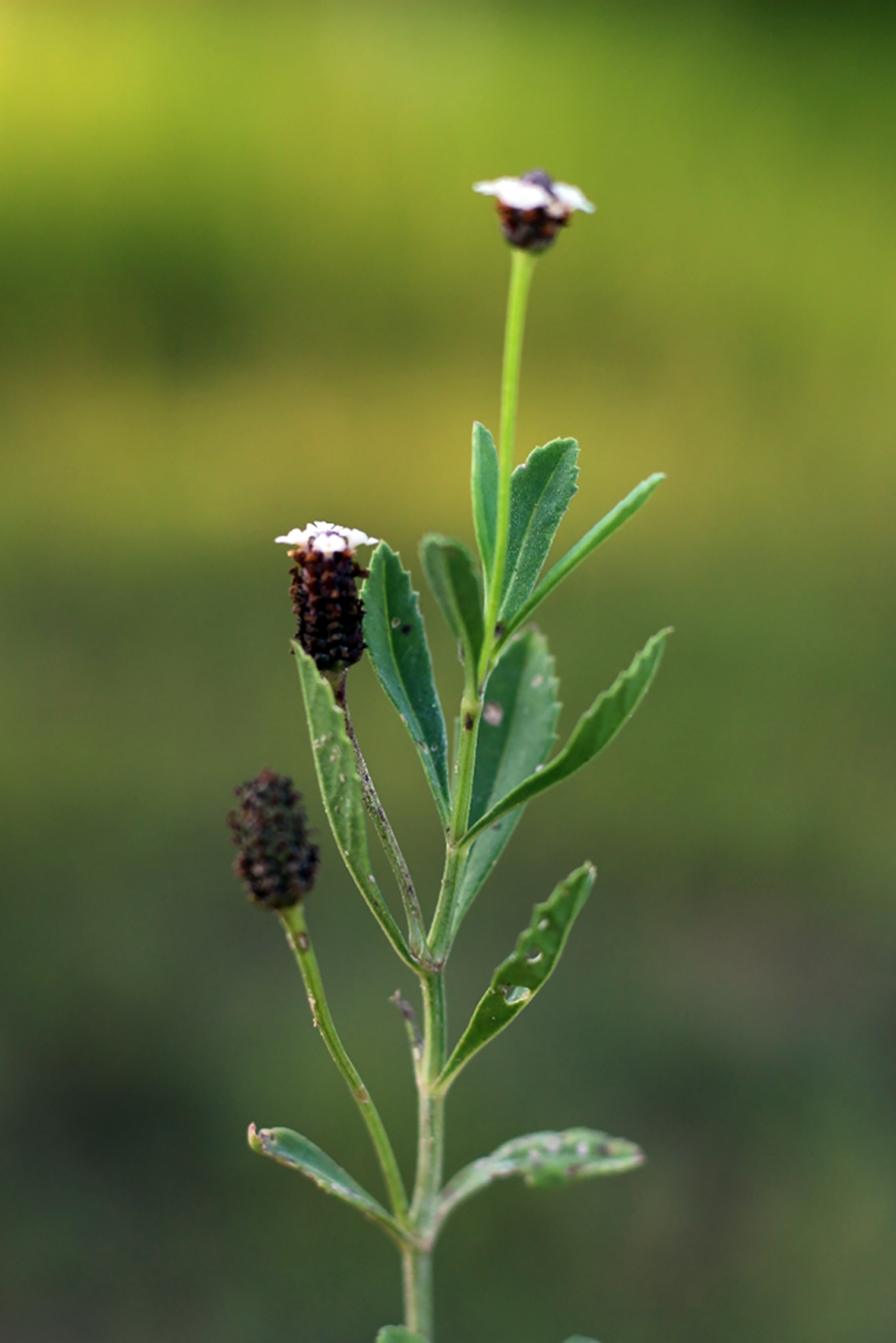
Frog fruit is a native, low-growing perennial forb adapted to most of the eastern U.S., but few grazers know it well. It contributes more to our plant communities than we realize. It generally grows no more than a few inches tall and roots at the nodes. It can form dense mats several feet across and develop runners up to 3 feet long.
The leaves are thick, one to two inches long and 3/8 inch wide, and toothed from the middle to the tip. Tiny white flowers form a ring around a flower head, and the head then elongates into a cylinder an inch long or longer. Frog fruit has a four-angled stem.
Frog fruit can grow almost anywhere in Texas and on many soil types. It can grow in drier soils and likes good drainage, but it needs additional moisture to survive the hottest months. You can find it almost anywhere in a pasture, though it often grows in depressions and near water sources.
“Frog fruit is used as forage by livestock and deer. I recall an instance when I was moving cattle from one pasture to the next on a Jack County ranch. As I opened the gate, I stood by a beautiful green plant of switchgrass which I expected to be immediately grazed down. The cattle walked right by the switchgrass and stuck their heads in a small patch of frog fruit a few feet away,” Dean said.
Frog fruit is gaining popularity as a ground cover for homes and gardens for these reasons:
- Frog fruit grows quickly, maybe too quickly. If it gets out of bounds, you can always trim it back.
- Frog fruit is low maintenance. Once you get it established with adequate watering, it can survive with little care.
- Frog fruit has a long bloom period, from April to October.
- It is a host plant for several butterfly species and other insects.
By Barry Whitworth, DVM
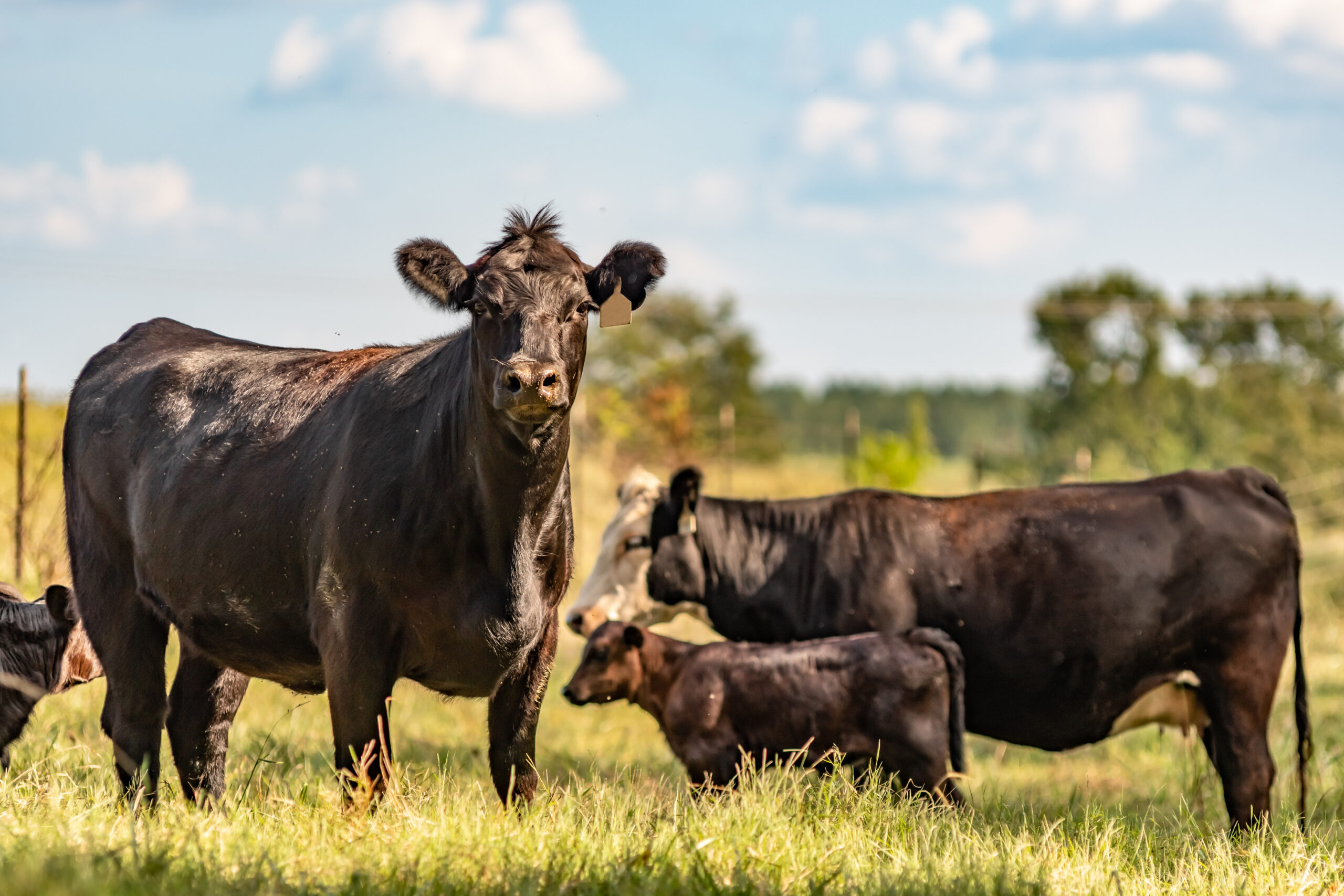
Over the past few years, veterinarians have detected Theileria orientalis in Oklahoma cattle. Early cases were primarily diagnosed in adult cattle, but more recent Oklahoma cases have been identified in stocker cattle. All cattle producers should be familiar with the clinical signs of this disease and check their cattle daily for signs of trouble.
The first U.S. case of theileriosis was identified in Virginia in August 2017. Those cattle showed weakness and anemia, and veterinarians made an initial diagnosis of anaplasmosis. Blood samples from the animals were tested for Anaplasma, Babesia and Leptospira. Results were negative for all three, but the tests revealed a blood protozoan, later identified as T. orientalis genotype Ikeda. Since that first herd outbreak, the organism has been detected in several states.
Cattle sick with T. orientalis genotype Ikeda may show fever, weakness, anorexia and exercise intolerance. If forced to move, affected cattle may stagger and gasp for air. If stressed excessively, they may collapse and die. On examination, the gums, eyes or vaginal mucosa may appear pale (white) or yellow. Reproductive losses, including stillbirths and late-term abortions, may occur, along with a drop in milk production.
Clinical signs reported in adult cattle in Oklahoma include anemia, sudden death, weight loss, abortion, failure to thrive and failure to calve. In stocker cattle, producers have reported weight loss, anemia, poor performance and sudden death.
Because Anaplasma marginale and T. orientalis genotype Ikeda produce similar clinical signs, telling the two apart can be difficult. One difference is that clinical signs are more common in young cattle infected with T. orientalis than in young cattle infected with A. marginale. Cattle with anaplasmosis also often display aggression, while those with T. orientalis genotype Ikeda typically do not. A laboratory test is required to tell the two diseases apart with certainty.
Researchers have identified Haemaphysalis longicornis as a possible vector of T. orientalis genotype Ikeda. In 2017, the U.S. Department of Agriculture’s (USDA) National Veterinary Services Laboratories (NVSL) confirmed the presence of H. longicornis, commonly called the Asian longhorned tick (ALT) or bush tick. While trying to determine how the tick arrived in the United States, USDA officials discovered it had been present in West Virginia as early as 2010. The tick has now been confirmed in at least 26 states, including Oklahoma. Some evidence suggests other insect vectors may also transmit T. orientalis genotype Ikeda. Needle transfer is another possible route of transmission.
The ALT has been identified in Craig and Mayes counties in Oklahoma. This tick thrives in areas with high humidity, such as wooded regions, brush or tall grass. Ticks are often found where large numbers of wildlife gather, such as along deer trails. Producers can find more information about the ALT on the USDA website at https://www.aphis.usda.gov/livestock-poultry-disease/cattle/ticks/asian-longhorned.
Other countries have developed treatments for T. orientalis, but no approved treatments are available in the United States, and no vaccine exists for this disease. The best defense is prevention: buying cattle free of the organism, avoiding blood transfer between animals and using effective tick control. Producers should purchase cattle from reputable sources. Clean instruments between animals during procedures such as castration or dehorning, and change needles between every animal. Control external parasites with appropriate insecticide treatments. Pasture management also helps, such as rotating cattle away from wooded or brushy areas where ticks thrive. Patch burning may also help reduce tick populations.
Theileria orientalis remains a concern for some cow/calf and stocker producers in Oklahoma. Producers who want more information about T. orientalis genotype Ikeda should contact their local veterinarian or Oklahoma State University County Extension agriculture educator.
References
Hammer, J. F., Emery, D., Bogema, D. R., & Jenkins, C. (2015). Detection of Theileria orientalis genotypes in Haemaphysalis longicornis ticks from southern Australia. Parasites & Vectors, 8, 229.
Oakes, V. J., Yabsley, M. J., Schwartz, D., LeRoith, T., Bissett, C., Broaddus, C., Schlater, J. L., Todd, S. M., Boes, K. M., Brookhart, M., & Lahmers, K. K. (2019). Theileria orientalis Ikeda genotype in cattle, Virginia, USA. Emerging Infectious Diseases, 25(9), 1653-1659.
Spickler, Anna Rovid. (2019). Theileriosis. Retrieved from http://www.cfsph.iastate.edu/DiseaseInfo/factsheets.php.
Watts, J. G., Playford, M. C., & Hickey, K. L. (2016). Theileria orientalis: A review. New Zealand Veterinary Journal, 64(1), 3-9.
By OKFR Staff
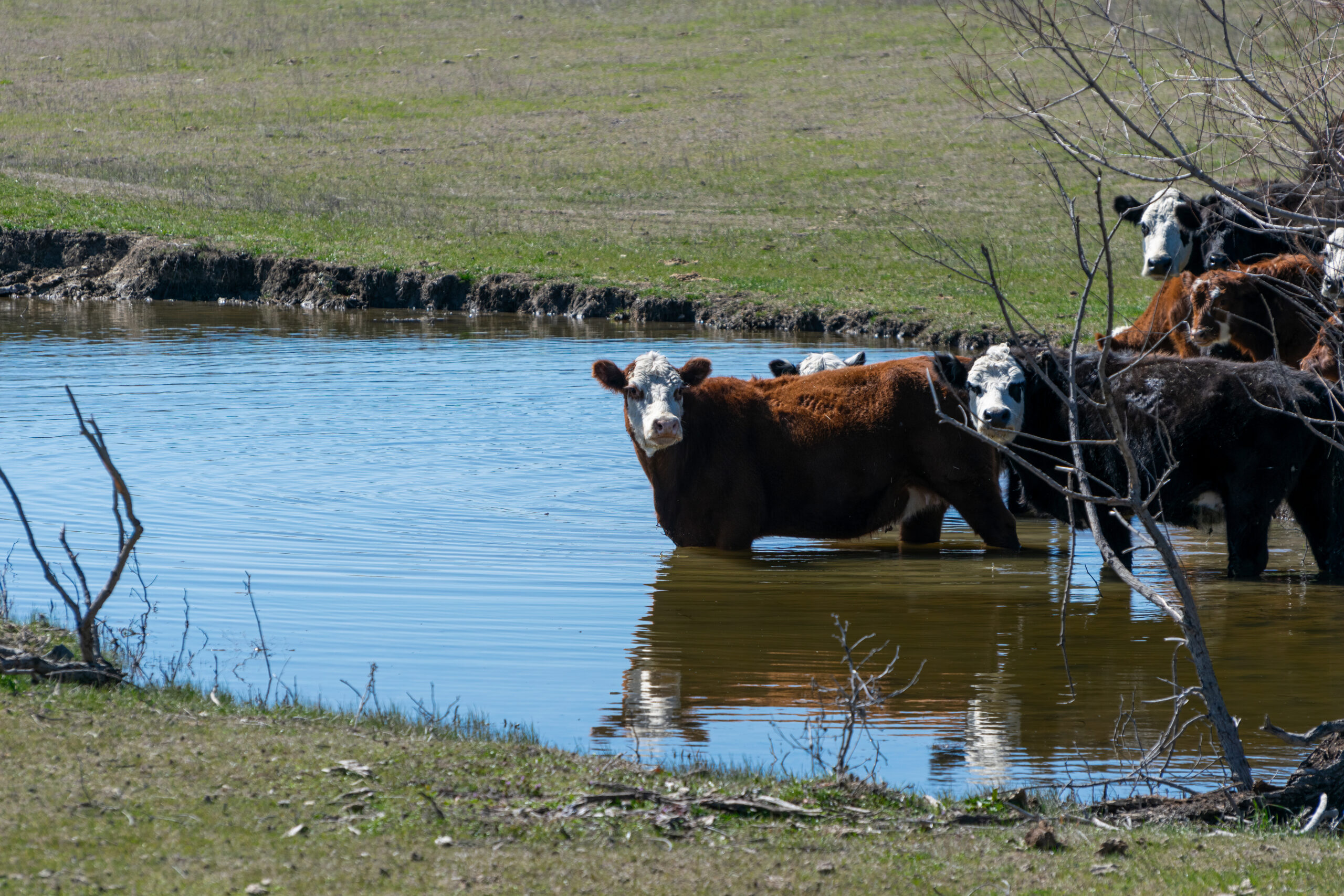
During the hottest part of summer, a farm pond can look like a welcome source of water. Cattle may be standing belly-deep along the bank, and the pond may still hold enough water to seem dependable. Looks alone won’t tell you whether that water is safe.
Hot weather, limited rainfall and falling pond levels can create water-quality problems. As water evaporates, salts, minerals, nutrients and other substances become more concentrated. Warm, still water can also encourage blue-green algae, and some forms can produce toxins capable of killing livestock.
Producers sometimes treat water as an afterthought compared to grass, hay and supplemental feed. Livestock need a dependable supply of clean water to maintain feed intake, regulate body temperature and support production. Poor-quality water can reduce consumption and performance even when it does not cause obvious poisoning.
A pond that has watered cattle for years is not safe under every set of conditions. Pay particular attention during drought, extreme heat or any period when the water level drops significantly.
Watch the Water and the Livestock
One of the most serious late-summer concerns is a bloom of cyanobacteria, commonly called blue-green algae. These organisms live naturally in many bodies of water, and most do not produce dangerous toxins. The risk rises when certain toxin-producing species multiply rapidly under favorable conditions.
According to Oklahoma State University Extension, toxic blue-green algal blooms typically develop in standing water after periods of hot, dry, calm weather. Nutrients such as nitrogen and phosphorus can fuel excessive growth. Those nutrients may reach a pond through manure, fertilizer runoff, soil erosion and decaying vegetation.
A suspicious bloom may turn the water bright green, blue-green, pea-soup green or even brownish. Scum, foam or mats may collect along the shoreline, particularly where the wind pushes floating material into one area. Some blooms look like spilled paint.
Not every green pond is poisonous. Common aquatic plants and harmless algae can also change the color or surface of the water. You usually cannot tell whether a bloom is toxic by looking at it, and a pond can contain toxin-producing cyanobacteria without showing every commonly described warning sign.
Keep livestock, horses, pets and people away from water that has an unusual color, heavy surface scum, a bad odor or unexplained dead fish or wildlife nearby. Do not let livestock drink from another part of the same pond on the assumption that the water is safe there. Wind can move a bloom, and toxin levels may vary across the pond.
Blue-green algae can produce toxins that affect the nervous system or liver. Depending on the toxin and the amount consumed, affected animals may develop weakness, staggering, difficulty breathing, tremors, convulsions, diarrhea or collapse. In severe cases, owners find animals dead near the water before realizing anything is wrong. Treatment often fails, which makes prevention especially important.
Treat any suspected poisoning as an emergency. Move the herd away from the water source without driving or stressing animals that may already be affected. Provide another clean water supply and contact a veterinarian immediately. Your county Extension office can also help you determine where and how to submit a water sample.
Blue-green algae is not the only potential problem. Pond water may contain elevated levels of dissolved salts, sulfates, nitrates, bacteria or other contaminants. Runoff can carry manure, fertilizer, pesticides and organic matter into the pond. Low water levels make some of these problems worse because the remaining water grows more concentrated.
Water with excessive dissolved solids may taste bitter or salty, so animals drink less of it. Depending on the substances involved and their concentrations, poor-quality water may contribute to diarrhea, reduced feed intake, poor weight gain or other health concerns. Young animals and livestock that are not used to the water may be more vulnerable.
Watch the cattle themselves, too. Are they reluctant to drink? Are they crowding around a different water source? Has feed intake or weight gain dropped without an obvious explanation? Are several animals having digestive problems? Changes across multiple animals can be an early clue that you need to look at the feed or water.
OSU Extension recommends collecting a representative sample and submitting it for a livestock water test whenever you suspect a water supply is harming animal health or performance. A standard livestock water test covers several characteristics, but blue-green algae can require different sampling and testing procedures. Contact the laboratory or county Extension office before collecting the sample so you take it from the right location, use the proper container and handle it correctly.
Reduce Problems Before They Develop
Good pond management cannot eliminate every water-quality problem, but it can lower the risk. One of the most effective steps is limiting the manure, soil and nutrients that enter the water.
Cattle with unrestricted access to an entire pond can damage the banks, muddy the water and deposit large amounts of manure in or near it. Hoof traffic strips vegetation and speeds erosion. Sediment fills the pond over time, while manure supplies nutrients that can encourage excessive algae growth.
Where practical, fence livestock away from most of the pond and provide a limited-access watering point. Another option is piping water to a trough below the dam or elsewhere in the pasture. OSU notes that reducing cattle manure in the pond can reduce the conditions that favor toxic algae and make the water more palatable.
A vegetated buffer around the pond can slow runoff and trap soil and nutrients before they reach the water. Apply fertilizer and manure carefully in the watershed, particularly before heavy rain, and do not let large amounts of hay, feed or organic debris pile up at the water’s edge.
Alternative watering systems need maintenance, too. Check troughs for algae, manure, drowned animals and other contamination. Install wildlife escape ramps in tanks so birds and small animals can climb out instead of drowning and fouling the water.
Be cautious about treating a pond on your own. Some owners use copper sulfate and other algaecides for algae control, but improper treatment can create new problems. Killing a large amount of algae or aquatic vegetation at once can deplete dissolved oxygen as the material decomposes, which can lead to a fish kill. Treatment may also release toxins from affected cyanobacteria into the water. Base any chemical application on proper identification and professional recommendations, not guesswork.
Livestock should always have enough water for the weather, their size and their stage of production. Demand rises sharply in hot weather, and a pond that barely meets the herd’s needs in spring may fall short in August. Check the source regularly instead of waiting for cattle to gather around a muddy shoreline.
Ponds can fool you. Crystal-clear water isn’t always safe, and a green pond doesn’t always mean toxic algae. Regular observation, testing and prevention are the best ways to keep a pond safe for your herd.
By Savannah Magoteaux
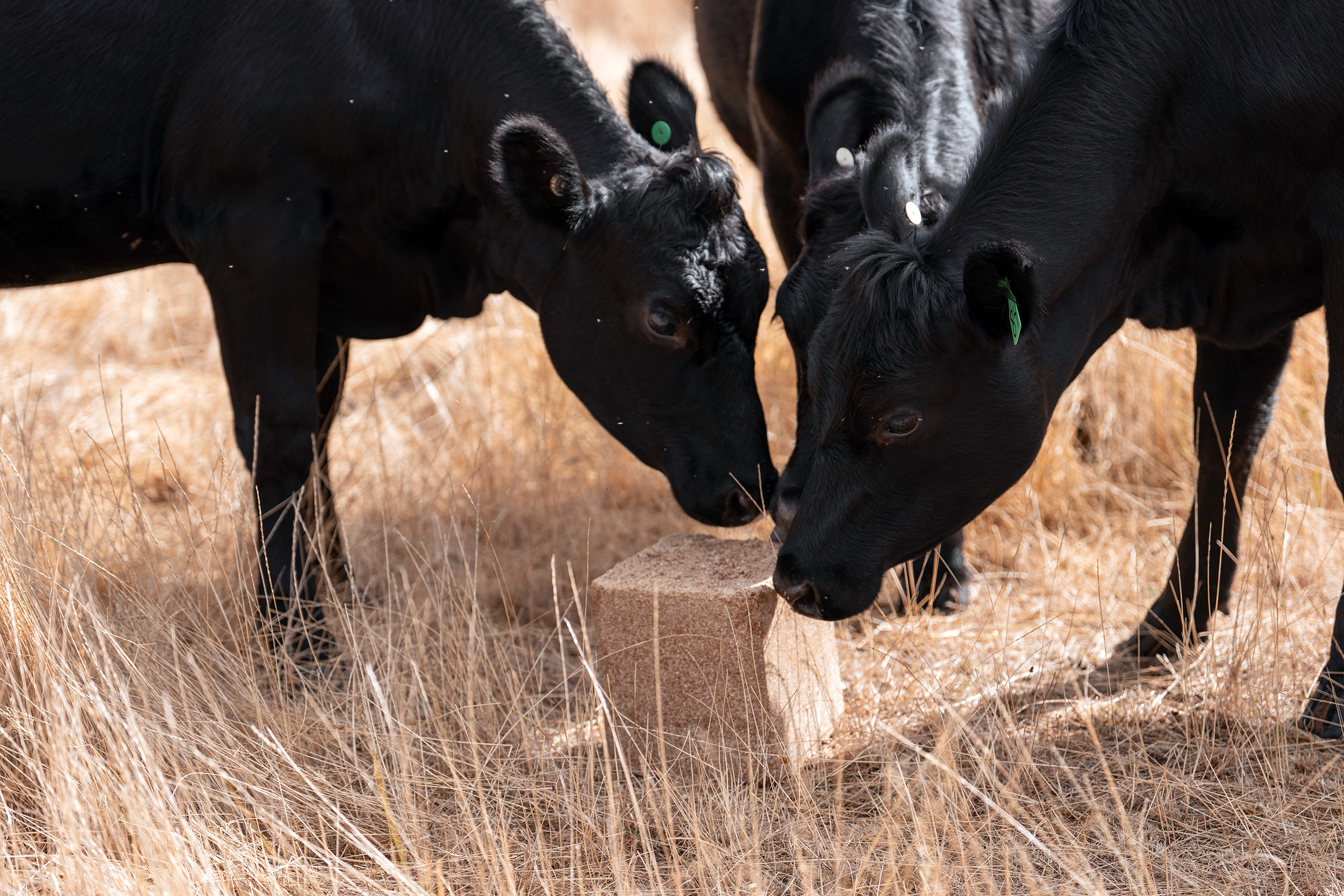
Walk through almost any pasture in Texas, and chances are you’ll find one sitting near a water trough, under a shade tree or tucked beside a feed bunk. Sometimes it’s a plain white block. Other times it’s red, brown or even pink. Some weigh a few pounds, while others tip the scales at 50 pounds or more. Salt and mineral blocks have become such a familiar part of livestock management that many producers set them out without much thought. Yet these simple blocks play an important role in animal nutrition, and understanding why livestock seek them out can help producers make better decisions for the health and productivity of their herds.
Salt is one of the few nutrients animals actively crave. Livestock get most of their protein and energy from forage and feed, but pasture plants often lack sodium. Livestock have a specific appetite for salt that kicks in when their bodies need it. That instinct is one reason cattle, horses, sheep and goats will travel surprising distances to find sodium if none is nearby.
Salt blocks have been a ranch staple for generations, but today’s mineral supplements are far more sophisticated. Many products now combine salt with calcium, phosphorus and trace minerals that support everything from muscle contraction and reproduction to immune function and hoof health. The right product depends on the species you’re feeding, the forage available and even the region where the animals live.
More Than Just Salt
Salt is made of two essential minerals: sodium and chloride. Both are macrominerals, meaning animals need them in relatively large amounts compared to trace minerals. Sodium helps regulate nerve impulses, muscle contractions and the movement of fluids through the body. Chloride works alongside sodium to maintain proper hydration and is also a critical component of stomach acid, which livestock need to digest feed efficiently.
Forages contain many nutrients, but they are naturally low in sodium. Even lush spring grass seldom provides enough to meet an animal’s daily requirement, so cattle, horses and many other grazing animals need supplemental salt year-round.
A salt deficiency usually develops slowly, and producers may notice subtle changes that grow more pronounced over time. Animals may eat less feed, which slows weight gain or reduces milk production. Fertility can decline, growth rates may slow and overall performance often suffers. In more severe cases, livestock may start chewing wood, licking soil, eating unusual objects or seeking out other unnatural sources of sodium. These behaviors, sometimes called pica, are the body’s attempt to correct a nutritional imbalance.
Salt is one of the simplest nutritional needs to meet. Salt blocks give livestock a convenient way to regulate their own intake. Instead of eating a large amount at once, animals typically lick the block off and on throughout the day, taking in what their bodies need. Weather-resistant pressed blocks can stay in the pasture for extended periods, which makes them useful for grazing operations where daily feeding is limited.
The familiar white salt block is almost pure sodium chloride and has one main job: supplying salt. For operations where feed or loose mineral supplements already balance the rest of the mineral program, a plain white block may be all you need. In many cow-calf operations, however, producers choose trace mineral salt blocks instead.
Animals need trace minerals in much smaller amounts than sodium or calcium, but those minerals still matter. Copper contributes to immune function, reproduction and proper hair pigmentation. Zinc supports healthy skin, hoof quality and wound healing. Manganese plays a role in skeletal development and reproductive performance. Cobalt is necessary for rumen microbes to produce vitamin B12, while iodine supports proper thyroid function. Selenium, where deficient, works with vitamin E to protect muscle tissue and strengthen the immune system.
Many soils contain low levels of certain trace minerals, so forage quality can vary considerably from one region to another. In portions of Texas and Oklahoma, soil selenium levels are frequently too low to meet livestock requirements. Other areas may contain high concentrations of sulfur, iron or molybdenum, which interfere with copper absorption. These regional differences are one reason nutritionists often recommend mineral programs designed for local conditions instead of a one-size-fits-all approach.
More is not always better. Too much of some minerals can be as harmful as too little. Sheep, for example, are far more sensitive to copper than cattle and should never have unrestricted access to cattle mineral products formulated with higher copper concentrations. Horses have different mineral requirements than ruminants, and goats often need supplementation programs designed for their own nutritional needs. Reading the label before you set a block in the pasture is every bit as important as selecting the right feed.
Producers sometimes overlook intake itself. Salt acts as a natural regulator because livestock eat only limited amounts each day. Manufacturers often mix minerals into salt products because the salt draws animals back to the block regularly while keeping them from overeating the supplement. Even so, weather, forage quality, water availability and individual preferences all affect how much each animal actually gets. Dominant animals may visit the block more often, while timid animals may get less than intended if the pasture has too few blocks.
Placement matters, too. Nutrition specialists often recommend setting blocks near watering areas or loafing sites where livestock naturally gather. In larger pastures, multiple blocks reduce competition and encourage animals to use more of the available grazing acreage. Some producers deliberately place mineral feeders away from water to spread grazing more evenly across the pasture, which can reduce overgrazing in heavily traveled areas and make better use of available forage.
Matching the Supplement to the Situation
Nutritional needs vary from animal to animal, and they can change dramatically through the year. A dry beef cow grazing dormant winter forage has different mineral requirements than a lactating cow nursing a calf. Growing replacement heifers, breeding bulls, horses in heavy work and young livestock all have different demands. As forage quality rises and falls with the seasons, so does the amount of supplementation they may need. During drought, or when livestock rely heavily on hay, mineral supplementation often becomes even more important because stored forages frequently contain lower concentrations of certain nutrients than actively growing pasture.
One of the biggest changes in livestock nutrition over the past several decades has been the growing use of loose mineral supplements. Animals can eat loose minerals more easily than they can lick a pressed block, so nutritionists generally find intake more consistent. Loose minerals also let manufacturers include higher concentrations of phosphorus and other ingredients that are hard to incorporate into a hard block. For producers managing breeding herds or seeking maximum production, loose minerals often provide the most complete nutritional program.
Salt blocks still have a place. Operations with smaller herds, leased grazing ground or remote pastures often appreciate the durability of a pressed block. Blocks hold up well in rain, create little waste and need replacing less often than loose minerals exposed to the weather. Some producers offer both, giving livestock constant access to a salt block with a balanced loose mineral supplement nearby.
Producers also have options when it comes to size. Smaller mineral bricks, often weighing four to ten pounds, are convenient for horse stalls, small paddocks, trailers and temporary pens where only a few animals need access. They are easy to move and replace but need more frequent checking. Larger blocks weighing 25 to 50 pounds suit pastures with multiple animals and last considerably longer before they need replacing. Their size also makes them harder for curious livestock to tip over or carry away.
Weather can affect any mineral program. Pressed blocks hold up well in rain, but you should still set them on well-drained ground whenever possible to reduce waste. Protect loose minerals with covered feeders so moisture doesn’t cake or harden the product. Whatever supplement you offer, keeping feeders clean and replacing contaminated product helps ensure livestock keep eating the minerals as intended.
Water quality deserves consideration as well. Water naturally contains dissolved minerals, and in some parts of Texas, elevated sulfur levels can interfere with copper absorption or contribute to other nutritional imbalances. Forage grown on different soil types can also vary widely in mineral content from one ranch to the next. Because of these differences, many Extension specialists encourage producers to base their mineral program on forage analysis, water testing and recommendations from a veterinarian or livestock nutritionist instead of choosing a product on price or marketing claims.
Mineral supplements cannot make up for poor overall nutrition. Salt blocks and mineral mixes supplement a balanced feeding program. They can’t replace quality forage, adequate energy or sufficient protein. When cattle are short on calories or protein, more mineral won’t fix the underlying problem. Mineral nutrition works best as one piece of a larger management plan.
Despite the growing number of specialized products, the principle stays simple. Livestock need minerals for many biological functions, and because forage often lacks those nutrients or supplies them inconsistently, producers must provide them another way. Whether that means a plain white salt block, a fortified trace mineral block or a carefully balanced loose mineral depends on the operation and the animals.
That weathered salt block sitting in the pasture reflects decades of nutritional research and a basic lesson of animal physiology: even the smallest nutrients can have a big effect on health, reproduction and performance. Like good fences and dependable water, a well-planned mineral program tends to go unnoticed until it is missing.
Choosing the Right Block
Walk down the livestock aisle of any farm store and you’ll likely find dozens of mineral products. Labels vary by manufacturer, but these are some of the most common options producers encounter.
White Salt Blocks: Made almost entirely of sodium chloride, these blocks provide a basic source of salt. Producers commonly use them when livestock already receive a balanced mineral supplement through feed or a separate loose mineral program.
Trace Mineral Salt Blocks (Red Blocks): The most common choice for beef cattle, these blocks contain salt along with added trace minerals such as zinc, copper, manganese, cobalt and iodine. They help supply nutrients that may be lacking in forage.
High-Selenium Mineral Blocks: Designed for regions where selenium-deficient soils are common, these products provide carefully regulated levels of selenium. Because selenium can become toxic if overfed, follow label directions and check local recommendations before use.
Sulfur or Specialty Mineral Blocks: Some blocks are formulated for specific regional deficiencies or management goals and may include sulfur, magnesium or other nutrients. Producers often choose these products based on forage tests, water quality or veterinary advice.
Pressed Blocks vs. Loose Minerals: Pressed blocks are durable, weather resistant and low maintenance, which makes them ideal for many pasture situations. Loose minerals generally provide more consistent intake and allow more complete formulations, making them the preferred choice for many breeding and production herds.
Large Blocks or Small Bricks? Smaller mineral bricks are convenient for stalls, pens and small groups of livestock where portability matters. Larger 25- and 50-pound blocks are designed for pasture use and need replacing less often. The best choice often comes down to herd size, grazing conditions and how often you can check and refill the supplement.




-

 Country Lifestyles4 years ago
Scott & Stacey Schumacher: A Growth Mindset
-
 Country Lifestyles10 years ago
Style Your Profile – What your style cowboy hat says about you and new trends in 2017
-
 Horsefeathers12 years ago
Mount Scott: Country Humor with David Gregory
-
 Country Lifestyles10 years ago
June 2016 Profile – The man behind the mic: Bob Tallman
-
 Outdoor11 years ago
Buttercup or Primrose?
-
 HOME10 years ago
Grazing North Texas – Wilman Lovegrass
-
 Country Lifestyles10 years ago
December 2016 Profile, Rusty Riddle – The Riddle Way
-
 The Natural Horseman9 years ago
This is why we do what we do — RayeAnn and Cisco