
Equine
Six World Champions crowned at Stock Horse World Show

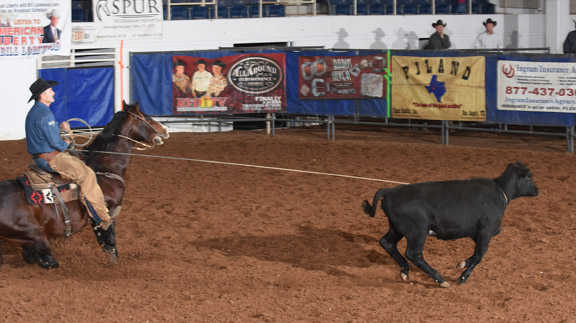
Photo: Mike Major and Smart Whiskey Doc earn their first Stock Horse World Championship. The event featured competition in stock horse pleasure, trail, reining and cow horse and crowned world champions in six different divisions. Photo courtesy of WillieGomezPhotos.com.
FOR IMMEDIATE RELASE
November 5, 2015
Media Contact:
Jill Dunkel, Dunkel Designs
940-631-4658
SHOT Contact:
Kim Lindsey, Executive Director
855-846-SHOT (7468)
Six World Champions crowned at Stock Horse World Show
More than 150 horses and riders gathered in Abilene, Texas, for the Western Horseman Stock Horse World Championship. Six world titles were awarded as well as more than $70,000 in cash and prizes. Contestants tested their abilities in four Stock Horse of Texas (SHOT) classes – stock horse pleasure, trail, reining and cow horse – in several different divisions.
Despite a scary fall in the cow horse, Mike Major and Smart Whiskey Doc prevailed in the Open division, winning the duo’s first SHOT world championship. Mike and “Whiskey” have won several titles together, including an AQHA Select Working Cow Horse world championship as well as AQHA Versatility Ranch Horse world championships in 2009 and 2010. Mike brought Whiskey out of retirement to come to the SHOT world show. He was reserve world champion on Cowpony Express, owned by Diamond JK Ranches and R. Snider. Mike’s daughter, Shanae Major and Chica Shine also earned a buckle as Youth Reserve World Champion.
The Non Pro and Youth titles went to a father and son duo, William and Christopher Lewis. William piloted Shiney Vintage Chic to win the all around on both days of competition. William has worked his way through SHOT’s divisions, starting as a Novice a few years ago and is now a Non Pro rider. The world show win also secured William as the Non Pro Year End SHOT champion. Sidney Dunkel and Bobbie Can Do finished the weekend as Reserve Non Pro World Champions.
William’s son, 12-year-old Christopher earned the Youth world championship on Colonels Colonel. The youth title was a very tight race and came down to the last class before a winner was determined. Christopher’s horse, Colonels Colonel is a SHOT Merit Hall of Fame inductee. The gelding has been shown by three different SHOT members during his career.
Jenifer Ingram and Rey Jay Boonsmal repeated as Limited Non Pro World Champions, with Nonie Casselman-Reed and Zeena Lena finishing reserve. Ingram, who had never ridden a reining or cow horse before purchasing Rey Jay Boonsmal, has become a steady SHOT competitor. Rey Jay Boonsmal won the AQHA Senior Ranch Pleasure World Championship in 2014 with Mozaun McKibben.
Two members of the Texas Tech Ranch Horse Team finished as world champion and reserve world champion in the Novice division. Kameron Buchanan and Heza Hickory Colonel won the title by one point over Courtney Reynolds and Cows Playboy. Their consistency also helped propel the Texas Tech Ranch Horse Team to the top of the collegiate standings for the team world championship. The Texas A&M Stock Horse Team earned reserve in the collegiate division.
Another tight race was in the Junior Horse division, with Stacey McAlexander taking the world title on Who Whiz Hank. Stacey won the all around on the first day of competition, but was edged by Brianna Parnell and Surely Dolled Up for the all around on day two. When the two shows were combined, Stacey earned the championship by a narrow two-point margin. Brianna was reserve world champion.
The last day of the show featured the SHOT Futurity and Derby, where aged event horses showed in stock horse pleasure, trail, reining and cow horse. Bozo Rogers and his three-year-old Kuki Sioux took top honors in the Futurity winning $2,800. Kuki Sioux is owned by Wes and Sarah Williams. Reserve went to Clay Hight and Eureka Wild Card owned by Alex Bryant, earning $2,100. Non Pro honors went to Morgan Holmes on The Smart Dun. Morgan receives $1,000 in non-pro incentive money and was named the collegiate champion, receiving the Nathan Belcher Memorial Scholarship of $1,500 that goes to the highest placing college student.
The Derby championship went to Reata B Rejoicing, a 2011 mare owned by Jody Brooks and ridden by Mike Major. It paid $3,088 for the win. The reserve title was earned by Satin Lil Cat and came with a $2,098 check. The four-year-old stallion was piloted by Jake Lemons and is owned by Damian Rivera Cordero. The top Non Pro rider who received $1,000 in Non Pro incentive money was Sidney Dunkel on Boots Be Tuff. She also earned $1,786 for a third place finish in the open. The collegiate champion was Lanham Brown on R A B He Dunit. Lanham received the Zinn Lindsey Memorial Scholarship as the highest placing collegiate rider.
The SHOT Limited Futurity winner was Danae Parman and HR Mowawk Pepto, earning $1,200. Reserve limited champion was Jeff Conner on Cowboy Trasholena and a check for $200. Ashley Adams and TTU Guns N Bunnies won the $500 collegiate scholarship. The Limited Derby champion was Kerry Wink on Zack Wood Too, earning $1,225, with Dejonna Haneline taking reserve on Royal Rosie Lena for $797. Dejonna also won the $500 collegiate scholarship as the highest placing college student.
Complete results are available at stockhorsetexas.org/results. Stock Horse of Texas (SHOT) is a family friendly horse show association that has been “helping people ride a better horse” since 1996. They host clinics and shows around the state. For more information and dates of upcoming events, visit stockhorsetexas.org.
-30-

By Krista Lucas Wynn
Summer is soon to be in full swing, and equine enthusiasts will be traveling to rodeos, trail rides and other events with their equine partners. Whether traveling across North Texas or across the country, it is important to know the tricks of the trade before leaving home.
It is vital to carry fresh water when traveling. Offering clean, cool water to horses keeps them hydrated and ready to perform. Water can be hung in a trailer, stall or while tied to the trailer for a horse to be able to drink at leisure. Stalled horses should have at least two buckets in front of them at all times. It may even be beneficial to pack electrolytes to help replace any lost hydration while on the road. Fans are important to have on hand as well. Box fans may be used while stalling away from home, to keep air flowing during these hot summer days.
Be sure to take plenty of hay and feed, depending on the duration of the trip. If going away for a few hours, one hay bag may suffice. When staying overnight somewhere, it is vital to be able to feed the horse’s usual grain from home while on the road, and owners may need to bring bags of shavings for stalls or the trailer, for more comfortable bedding.
Grooming supplies are also important to have on hand. Brushes, curry combs and hoof picks are a few to not leave home without, along with fly spray and ShowSheen for the mane and tail. Depending on the discipline, owners may need a few other things besides a saddle, pad, bridle, leg wraps, and bell boots. If going very far from home, it is a good idea to bring multiple of each, just in case something breaks. Some owners even pack a few extra horseshoes and shoeing tools in case of an emergency.
Speaking of emergencies, it is also important to have certain medical supplies on hand. A veterinarian may not always be on hand or convenient to get ahold of. Horses that are traveling up and down the road, may experience episodes of colic, tying up or other illnesses due to the stress of traveling. Always seek a veterinarian’s help when available, but be prepared by packing an emergency first aid kit. There are plenty of lists available online to help decide what a horse may need while on the road. Properly taking care of and knowing the horse can be critical in avoiding emergencies while traveling.
Weather can play a factor in travel, and it is important to be prepared for all types. Being weather aware can also help avoid catastrophe on the road with horses. Other items to consider if going very far include auto products like spare tires and tools to change a flat. Also, always fuel up when the opportunity arises. Many northern states do not have as many diesel pumps or diesel exhaust fluid available like Texas.
Horses will also need proper papers to travel across state lines. Negative coggins papers and a health certificate is a must. Most events or public places require both. Coggins is a yearly blood test checking for antibodies against the transmissible viral disease, Equine Infectious Anemia, and a clean health certificate can be obtained for one specific address or for up to six months if traveling multiple places.
Before leaving home, go over this checklist to get started on packing for the next adventure with an equine partner. Whether staying in North Texas, or traveling across the country, remember to enjoy the experience, and hopefully this list will help to prepare.

By Garrett Metcalf, DVM
Splint bone issues in horses are a common problem across various ages and disciplines. These injuries can be caused by excessive work in young horses or by traumatic injuries. The splint bones play an important role in the stability of the joints they help form at the knee or hock level. This article will discuss the different types of splint bone injuries and their treatments.
The splint bones are small bones that are intimately attached to the inside and outside of the cannon bone. To understand which section is injured, it’s helpful to break the splint bone down into three parts: the head, the mid-body section, and the button. The head of the splint bones forms part of the carpus (knee) in the forelimb and part of the hock in the hindlimb. Research has demonstrated the important role splint bones play in the stability of these joints. A study conducted at Colorado State College of Veterinary Medicine noted that when larger portions of the splint bone were removed, rotational stability in the carpus was significantly impacted, and other directional forces were also affected.
Diagnosing splint bone injuries is generally straightforward with radiographs, though in some cases, ultrasound can also be helpful. Bone or callus formation around these splint bone injuries can compress the suspensory ligament, leading to chronic pain and lameness issues.
Popped Splints
“Popped splints” refer to injuries that generally occur in younger horses entering training and work. These injuries typically affect the inside forelimb splints and can be quite painful, leading to loss of training time. A popped splint is the result of tearing the ligament that holds the splint bone to the cannon bone, known as the interosseous ligament. When the ligament is torn, bleeding can occur, disrupting the periosteum of the bones and causing a callus or firm bony lump.
The inside splint on the forelimb is more prone to injury because it bears direct load with the second carpal bone at the head of the splint bone. This places direct force on the splint bone, while other splint bones share the load with adjacent carpal or hock bones.
Popped splints are often painful, with noticeable swelling near the splint bone and heat present. When palpated, a moderate amount of pain will be elicited.
Treatment for popped splints typically includes rest, systemic anti-inflammatory drugs, and local anti-inflammatory treatments. Acute inflammation can be soothed with ice, cold therapies, and bandaging. Alternative therapies such as cold laser therapy, MagnaWave, or shockwave therapy can also be incorporated into the treatment plan. In more extreme cases, surgical removal of the bone callus may be necessary to prevent compression of the suspensory ligament.
Splint Bone Fractures
Splint bone fractures can occur at any level of the splint bone, but some areas are more commonly fractured. The distal one-third of the splint bone is most often fractured in the forelimbs. These fractures are occasionally associated with forelimb suspensory ligament issues. The suspensory ligament has a small attachment to the button of the splint bone, and when the lower limb is heavily extended, bending forces on the lower part of the splint bones can lead to fractures.
In the hind limb, the outside (lateral) splint bone is the most commonly fractured. These fractures often result from kicking injuries. When two horses don’t get along and kick at each other, the lateral splint bone is often the one that gets broken. These injuries are particularly problematic due to the open wounds that are heavily contaminated with manure, hair, and dirt, as well as injuries to flexor tendons.
Fractures near the head of the splint are especially problematic and can sometimes be career-ending or life-threatening. These fractures can involve the joints of the carpus or hock, leading to septic arthritis, severe lameness, and possibly serious instability of the corresponding joint. The rule of thumb for equine veterinarians when surgically removing damaged or fractured splint bones is the “two-thirds, one-third rule.” This means the lower two-thirds of the splint bone can be safely removed, but the upper one-third should be preserved whenever possible. Complete removal of the upper one-third of the splint bone can lead to chronic lameness or, worse, catastrophic joint dislocation when the horse attempts to rise from anesthesia. In some cases, the fractured upper one-third of the splint can be repaired using plates and screws to maintain stability in the joint.
Smaller traumatic injuries to the splint bone often occur from interference injuries or when the horse’s own feet hit the inner splint bones during work. These injuries can be prevented with the use of splint boots on the lower limbs during exercise. Some lower limb boots provide support to the fetlock and suspensory ligament, which can help prevent distal splint bone fractures, although they are not always fully protective.
Conclusion
Some splint bone injuries are relatively simple and common issues that many horse owners can address. However, more serious traumatic fractures and wounds related to splint injuries should be examined by a veterinarian. If you suspect a splint bone injury, it’s best to consult a professional to ensure proper treatment and prevent further complications.
Read more in the September 2025 issue of North Texas Farm & Ranch.
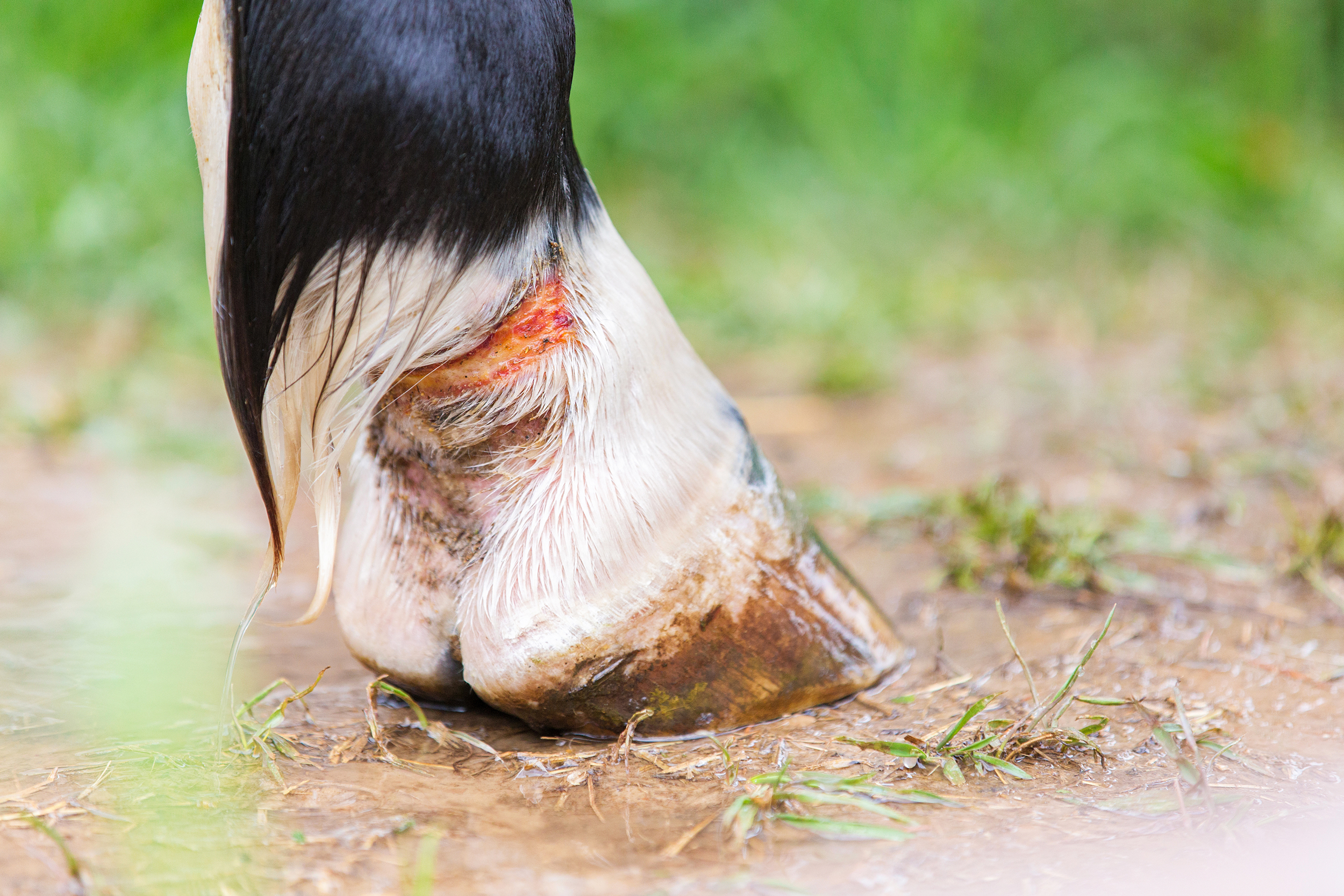
If you spend any amount of time around horses, you learn fairly quickly that bumps, scrapes, and cuts are almost inevitable. Horses can find ways to injure themselves in well-maintained pastures, clean stalls, and even while standing quietly at the fence. While some wounds are minor and heal without much trouble, others can become serious if they are not handled correctly from the start. Knowing how to assess a wound and provide basic first aid can make a real difference in both healing time and long-term soundness.
The first step in dealing with any injury is evaluating where it is located and how severe it appears. Wounds on the legs deserve particular attention. Compared to the body, the lower limbs have very little muscle or fat between the skin and critical structures such as joints, tendons, ligaments, and bone. Because of this, even a small cut can turn into a major problem if it involves deeper tissues.
Certain areas are especially concerning. Cuts on the front of the knee (carpus), the front of the hock, the back of the pastern, or around the heel bulbs are more likely to involve joints or tendons. Large, gaping, or bleeding wounds are usually easy decisions—those warrant a call to your veterinarian. Smaller wounds can be more difficult to judge, particularly when it is hard to tell how deep they go. If you are unsure whether a wound penetrates beyond the skin, it is best to contact your veterinarian before attempting home treatment.
Lameness is another important factor to consider, but it can be misleading. Some horses with fresh joint wounds may not appear lame at first, even if a joint is involved. Over time, however, infection can set in, leading to severe or even non-weight-bearing lameness. On the other hand, injuries involving tendons, ligaments, bone, or extensive soft tissue damage often cause immediate and obvious lameness. When a horse is suddenly very sore or unwilling to bear weight, more serious injuries such as fractures must be ruled out.
Being prepared is one of the best things a horse owner can do. A basic first aid kit kept in the barn or trailer allows you to respond quickly when an injury is discovered. The goal of initial wound care is simple: clean the wound, protect it, and prevent further contamination until healing begins or veterinary care is provided.
Most wounds are dirty when first found. Flushing away debris is far more important than applying medication right away. Clean tap water or sterile saline works well for this purpose. A mild antiseptic solution can be used, but it should always be diluted. Strong solutions can damage healthy tissue and slow healing. A good rule of thumb is to dilute antiseptics until the solution is a light tea color. Gentle cleaning is key—scrubbing aggressively can do more harm than good.
Once the wound is clean, a topical treatment may be applied if appropriate. For minor cuts and scrapes, a simple triple antibiotic ointment is often sufficient. These products are widely available and effective when used correctly. In areas where bandaging is difficult or impossible, spray-on products designed to protect wounds can help keep dirt and insects out while the surface heals.
Bandaging can be extremely helpful for many leg wounds. A properly applied bandage helps keep the area clean, provides support, and protects the wound from additional trauma. Basic bandaging supplies include non-stick pads, gauze, cotton or combine rolls, and a secure outer wrap. Bandages should be snug but never tight enough to restrict circulation. They also need to be checked and changed regularly to prevent moisture buildup and skin irritation.
Even with good first aid, it is important to know when to step back and call the veterinarian. Wounds that are deep, involve joints, produce significant swelling, or do not improve over a few days should be professionally evaluated. Your veterinarian can also guide you if you are unsure whether a wound can be managed at home.
Horses may be accident-prone, but prompt and thoughtful wound care goes a long way. A calm assessment, proper cleaning, and knowing your limits as a caretaker can help ensure small injuries stay small and your horse stays on the road to recovery.




-
 Country Lifestyles3 years ago
Scott & Stacey Schumacher: A Growth Mindset
-
 Country Lifestyles9 years ago
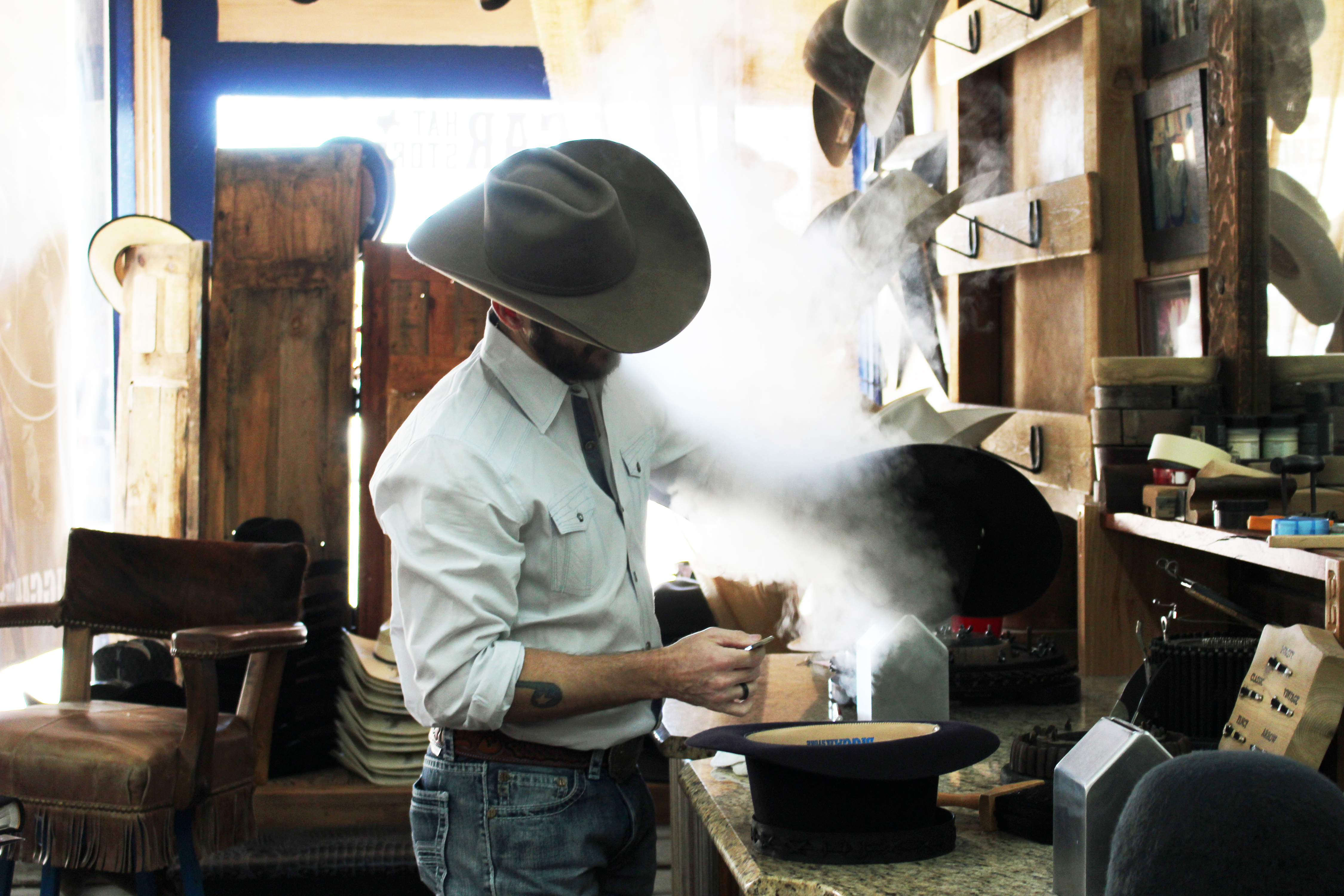
Style Your Profile – What your style cowboy hat says about you and new trends in 2017
-
 Horsefeathers12 years ago
Mount Scott: Country Humor with David Gregory
-
 Country Lifestyles10 years ago
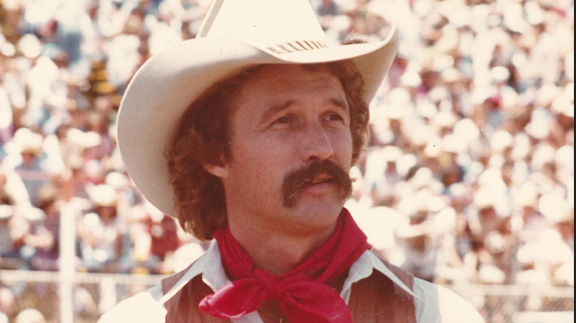
June 2016 Profile – The man behind the mic: Bob Tallman
-
 Country Lifestyles10 years ago
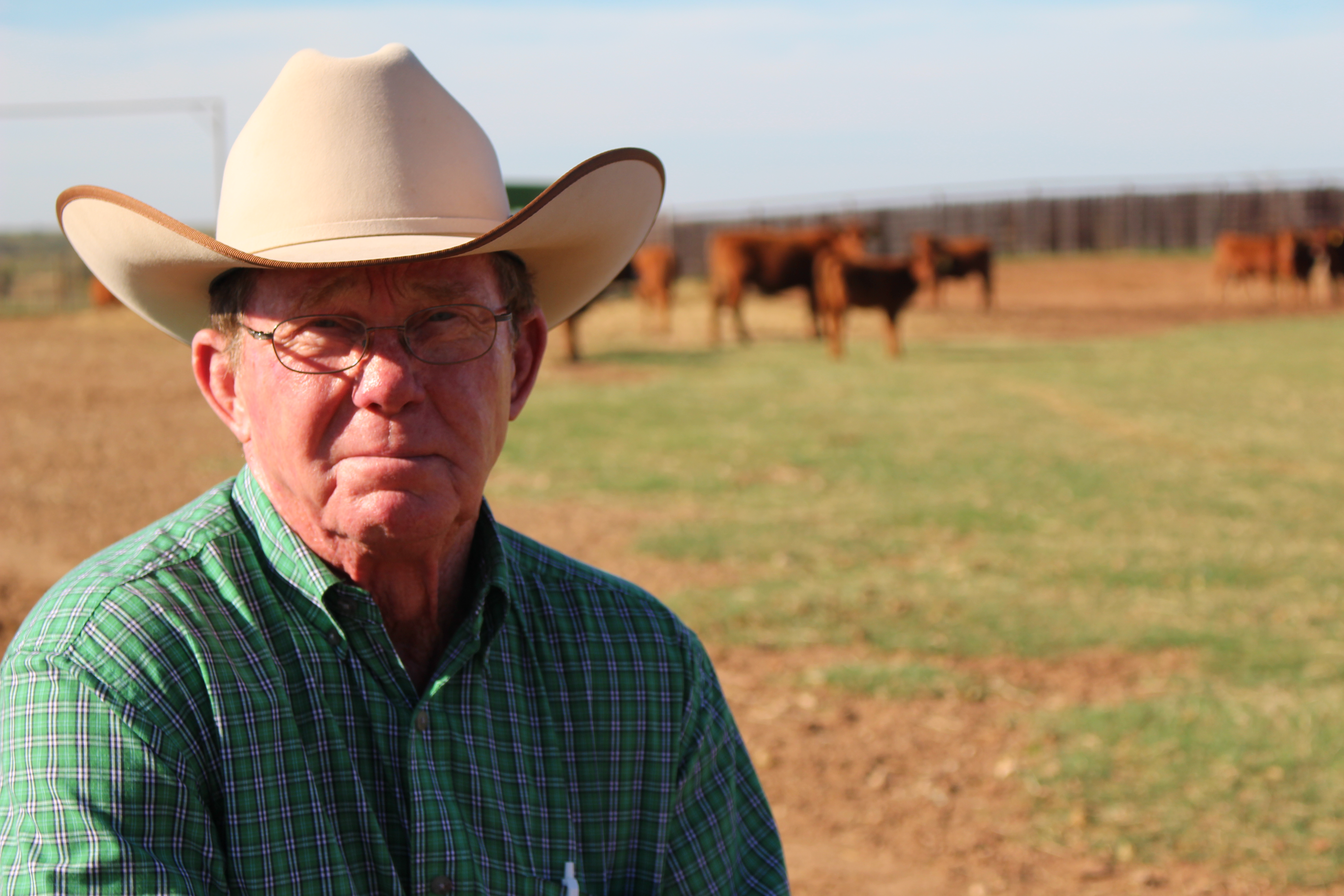
December 2016 Profile, Rusty Riddle – The Riddle Way
-
 Outdoor11 years ago
Buttercup or Primrose?
-
 HOME9 years ago
Grazing North Texas – Wilman Lovegrass
-
 The Natural Horseman9 years ago
This is why we do what we do — RayeAnn and Cisco