
Outdoor
Wildfire Readiness


By Martha Crump
Now I do not want to sound like a glass half full sort of person, but anyone with practical sense knows there is a downside to most everything. In the world of agriculture, having an abundance of pasture vegetation going into Fall brings the downside of a heavy fuel load as it dies back, dries out, and/or becomes dormant. Dry conditions, dense vegetation and high winds are all factors in wildfire ignition and spread. The dangers of wildfire include hot gases, smoke and flames. As a wildfire grows in intensity and size, so do each of these. Wind speed, temperature and relative humidity must also be factored into the rate of spread. Facing an imminent wildfire danger is not the time to consider what steps should be taken. Preparations and a plan of action can determine how timely and how well you and your property fare.
Local volunteer fire departments/first responders go above and beyond in the face of these unexpected and deadly threats. As landowners, there is quite a lot that we can do to facilitate their success in managing a wildfire. Taking a few moments to develop a checklist is a good starting point for the landowner and can be extremely helpful for the first responders specific to your property. Most established ranchers have a good working relationship with the local volunteer fire departments (VFD) around their area, and along the same vein, local VFD’s are accustomed to working shoulder-to-shoulder with their neighboring counterparts and definitely know who has what resources available. These men and women train on their own time, are certified, and on standby 24/7 to be there when they are needed. They do as much as they can, for as long as they can, to protect our interests, be that our land, our homes, our livestock or anything else to do with our livelihoods! The landscape of country living is changing dramatically. More people are wanting to escape city living, if not to fully relocate, at least to own property that allows them a getaway from being in town. The absentee landowners aren’t always easily accessible during emergencies. So whether you’ve lived on your place for 4 or 5 generations, or have recently bought your weekend getaway, it might behoove us all to recap some tips to help ourselves, and most importantly, the VFD’s that come to our rescue.
M. L. Russell, Assistant Professor and Extension Range Specialist-Ecosystem Science and Management developed a checklist with good points for all landowners to consider. According to Mr. Russell, “The answers to the questions below will be instrumental in building operations, tactics, and general firefighting techniques. A carefully thought out wildfire ready checklist is an excellent foundation for improved communication and relationship building during wildfires.” Not all of the suggested points in every category will be a consideration for every landowner, but most will find many that are relevant to both small and large holdings alike.
| Tactics | How do you manage your fine-fuel forage? Are you ok with burnout operations to fight the fire? Are there existing barriers such as roads, fields, bladed areas, caliche pad sites etc. from which to anchor firing operations? Do you have any concerns about bulldozing the fire edge to bare mineral soil, displacing top soil? Are you ok with any fence being cut or laid down? |
| Property at Risk | Are there any high-fenced areas that are prioritized? Are grazing livestock near the fire or in the potential path of the fire? Are there any aggressive exotic wildlife species? Where are the structures located? What is the priority of those structures? |
| Logistics | Do you grant permission to use on-site water to fight a fire? What are the types of water sources? What type of access is there to water sources? What volume of water is available? How deep are the water sources? |
| Support | What type of ranch equipment is available to use? (e.g. sprayers or heavy equipment) Do you have hard copies of aerial imagery or maps with property roads, and gate locations clearly marked? Do you have gate lock codes? Are all gates on the property already open? If not, are you comfortable sending someone to facilitate emergency access? Do you have your neighbor’s contact information or gate lock codes? Do you have absentee landowner neighbors? If so, have you made previous contact with them & exchanged information so that they can be notified &/or asked about access during an emergency? |
| Hazards | Are there oil & gas lines? Any report of H2S or other toxic gases on the property? Are there any rough roads not suitable for responding equipment? Are there damaged cattleguards? Are there any rested pastures with volatile fuel loads? Are there any deer blinds or outbuildings with propane tanks in them? |
Also landowners should ALWAYS be aware of their county burn bans. Compliance with active burn ban law does help to reduce unsafe debris burning, but everyone should remember that a burn ban does NOT have to be in effect for outdoor burning to be illegal. If you negligently allow your fire to escape onto someone else’s property, it is a Class C misdemeanor, punishable by a fine of up to $500.
The State of Texas uses a tiered approach to wildfire response. That starts with local fire departments and counties as the first responders, and is followed by state response as wildfires or conditions exceed the local ability to control. The Texas A&M Forest Service was implemented in 1915 with the main goal of suppression & extinguishing of forest fires (wildfires). In 1993 that mission was expanded to include the coordination of response to any large, or potentially major wildland fire within the state. There is a tremendous amount of coordination that is required beginning with the local first responder level, and growing in magnitude as other agencies are called into action. The Incident Command System at each of these levels ensure a more coordinated and rapid response, and an appropriate use of resources. As landowners/managers, this is where our role becomes critical, especially to our first responders. It is of utmost importance to be able to contact individuals as firefighters need, or as they are attempting to access property to manage wildfires. The inability to do so is very handicapping. I would encourage all individuals that are living remote from your property to at least make sure that neighboring property owners have a means of contact for you. My experience with folks that are new to either owning a country recreational property, or to being new country living residents, is that there is a certain level of “distrust” that many experience regarding sharing of information about their properties. I realize that giving gate codes to neighbors might seem counterintuitive, however it might mean the difference between suppressing a fire quickly versus having it grow and spread. If you aren’t comfortable sharing that information with a neighbor, then please share with the local law enforcement office in your area so that someone can contact you. And as a matter of note, country living, or land ownership means getting to know your neighbors so that we can all work together to protect everyone’s’ interests. We cannot help you in your absence if we don’t know you or cannot contact you!
Texas A&M Forest Service provides the following sources of information available to homeowners, community members, and landowners alike to facilitate condensing of information into a helpful format for first responders. I strongly encourage everyone to visit this website and follow the links to assist you in preparing for fire should it happen in your area. The web address is: https://tfsweb.tamu.edu Once you have accessed the webpage, then look for the heading Preparing For Wildfires. Upon selecting that, you will find subcategories called Protect Your Community, Protect Your Home, Protect Your Ranch, & Protect Your Wildlands. Two forms of interest found under the link Protect Your Ranch, are the Landowner Priorities Form complete with an example of what is listed where, and also a form called Map My Property that actually enables landowners to not only map their properties, but to also denote features of interest/importance on said property. Our local VFD’s are effective at what they do in the face of overwhelming conditions! Imagine how much we could help their volunteer efforts by taking the time to do just a little bit of computer work and by compiling just a little bit of information like this for them. I would respectfully add that any time your local VFD/First Responders are having a fundraiser, please help to support them. We cannot double their wages as they work for free, but we can contribute to coffers that have to be maintained for equipment purchase and repair, fuel, protective equipment for volunteers, and many, many other costs that most would never think of in regard to keeping these men and women safe and ready to respond. And to that end, may I say God Bless and keep safe all of our VFD members/First Responders as they volunteer their time to protect the rest of us.
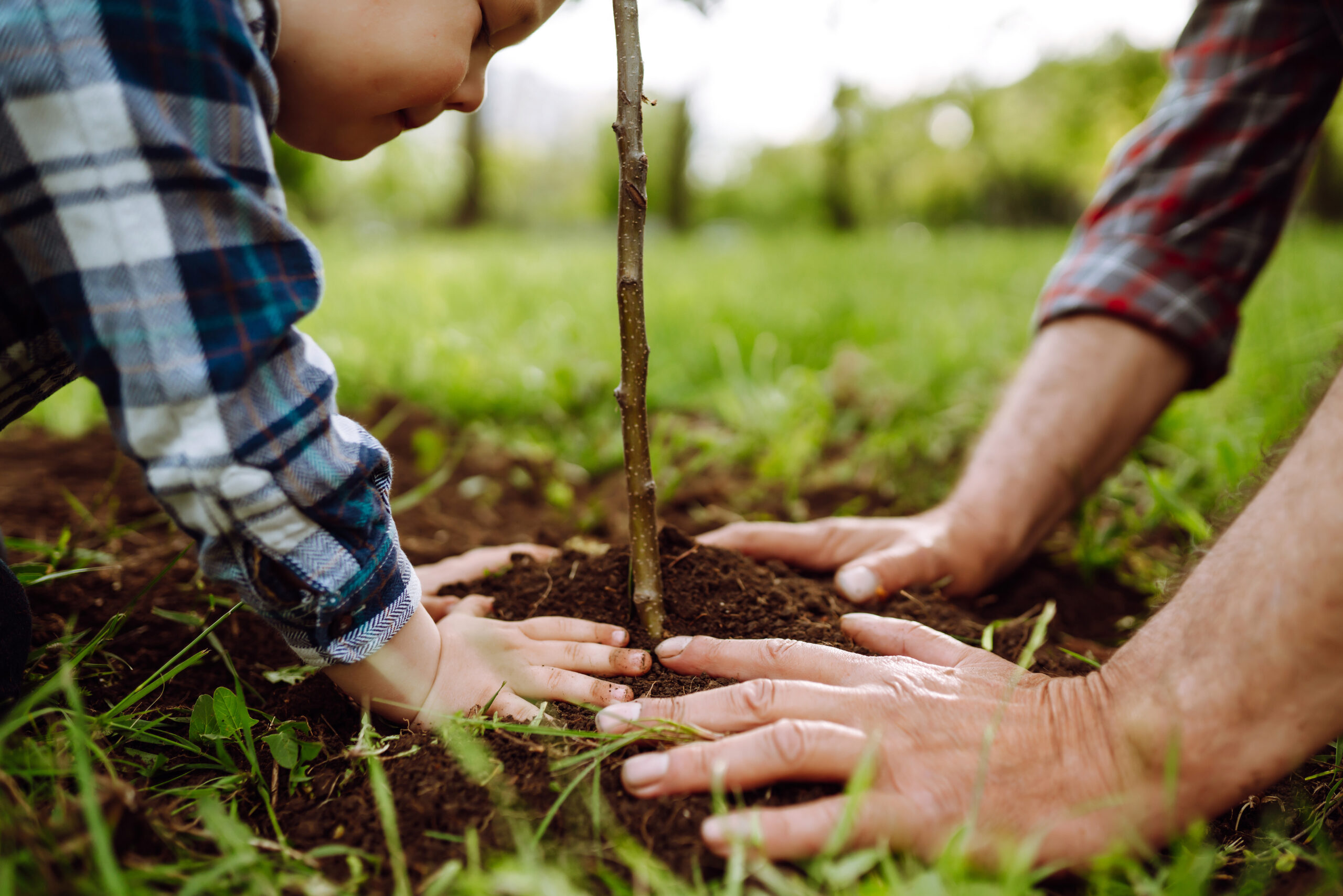
Every spring, garden centers fill with shoppers loading young trees onto trailers and into pickup trucks. It makes sense. The weather is warming, everything is turning green, and planting season feels like it has arrived.
But ask an arborist or Extension horticulturist when they would rather plant a tree, and you’ll probably hear a different answer.
Fall.
It may seem backward at first, but in North Texas and central Oklahoma, the months between late September and early winter are widely considered the best time of year to plant most trees. While the leaves above ground may be preparing for winter, something much more important is happening below the surface. Roots continue to grow long after top growth has slowed, allowing a young tree to establish itself before the demands of another hot summer arrive.
That’s a tremendous advantage in a region where summer temperatures routinely climb into the 90s and beyond.
A newly planted tree has one job: grow roots. Unfortunately, when it’s planted in the spring, it has only a short window before it must also support a flush of new leaves while enduring months of heat, drying winds, and occasional drought. That combination can place significant stress on a young tree before its root system has had time to spread into the surrounding soil.
A fall-planted tree has a much easier assignment.
As air temperatures cool, the soil often remains surprisingly warm for weeks. Those conditions encourage continued root growth without requiring the tree to produce new leaves or long shoots. Instead of dividing its energy between growing above and below ground, the tree can devote much of its effort to establishing a healthy root system. By the time spring arrives, it is already settled into its new home and better prepared to handle warmer weather. Research and recommendations from both Oklahoma State University Extension and Texas A&M AgriLife Extension consistently support fall as an ideal planting season for many landscape trees in this region.
That doesn’t mean you can simply dig a hole and walk away.
Choosing the right location is just as important as choosing the right tree. Consider the mature height and spread, not the size of the sapling you’re bringing home. A small oak, pecan, or cedar elm may fit comfortably today, but in a few decades it could tower over a house or interfere with utility lines if planted without planning. Likewise, trees that naturally prefer moist soils may struggle in dry, exposed locations, while drought-tolerant native species often require far less maintenance once established.
When it’s time to plant, dig a hole two to three times wider than the root ball, but no deeper. One of the most common mistakes homeowners make is planting too deeply. The point where the trunk begins to flare into the roots should remain at or just above the finished soil level. Burying that flare can lead to poor growth and long-term health problems.
Backfill with the native soil that came out of the hole rather than filling it with rich potting soil or heavy amendments. While it may seem like a kindness, surrounding the roots with dramatically different soil can actually discourage them from growing outward into the surrounding ground where they’ll ultimately need to survive.
Water thoroughly after planting, then continue watering deeply as needed during dry periods throughout the fall and winter. Even dormant trees require moisture while their roots continue to develop. A layer of mulch two to four inches deep around the base helps conserve soil moisture, regulate temperature, and reduce weed competition. Just remember to keep the mulch pulled back several inches from the trunk. The familiar “mulch volcano” piled against the bark may look tidy, but it can trap moisture, encourage decay, and attract insects.
If you’re unsure what to plant, consider species that are well adapted to the Southern Plains. Bur oak, chinkapin oak, cedar elm, shumard oak, bald cypress, Mexican plum, eastern redbud, and native pecan are all excellent choices in many parts of North Texas and central Oklahoma, depending on soil conditions and available space. Native trees generally tolerate local weather extremes better and provide valuable habitat for birds, butterflies, and other wildlife.
Planting a tree is one of the few gardening projects that truly benefits future generations.
Long after this year’s tomatoes are forgotten and next season’s flowers have come and gone, that tree will still be growing. It may shade a porch, shelter wildlife, lower summer cooling costs, or become the backdrop for family photographs that haven’t even been taken yet.
Spring may get most of the attention, but fall quietly offers young trees their best opportunity to thrive. Give them a strong start now, and they’ll spend the years ahead returning the favor.
Most of us have heard kudzu called “the vine that ate the South.” It sounds a little dramatic until you see what it can do.
Kudzu does not politely climb a fence. It swallows it. It does not just grow beside a tree. It can cover the whole thing, blocking sunlight, weighing down limbs and eventually weakening or killing the plant underneath. Given enough time, kudzu can turn a fencerow, creek bank or roadside into a solid green blanket.
For North Texas landowners, kudzu may not be the first invasive plant that comes to mind. We tend to talk more about mesquite, thistles, Johnson grass, privet and other familiar headaches. But kudzu has been found in Texas, and it is enough of a concern that it is listed in invasive plant databases and regulated as a noxious plant. The Texas Department of Agriculture defines noxious and invasive plants as species with serious potential to cause economic or ecological harm to agriculture, horticulture, native plants, ecology and waterways.
Part of what makes kudzu so frustrating is its history. It was once promoted in the United States for erosion control and forage, and farmers were even encouraged to plant it in the 1930s and 1940s. By 1970, USDA had declared kudzu a noxious weed, and in 1997 it was listed as a federal noxious weed.
That is quite a change in reputation.
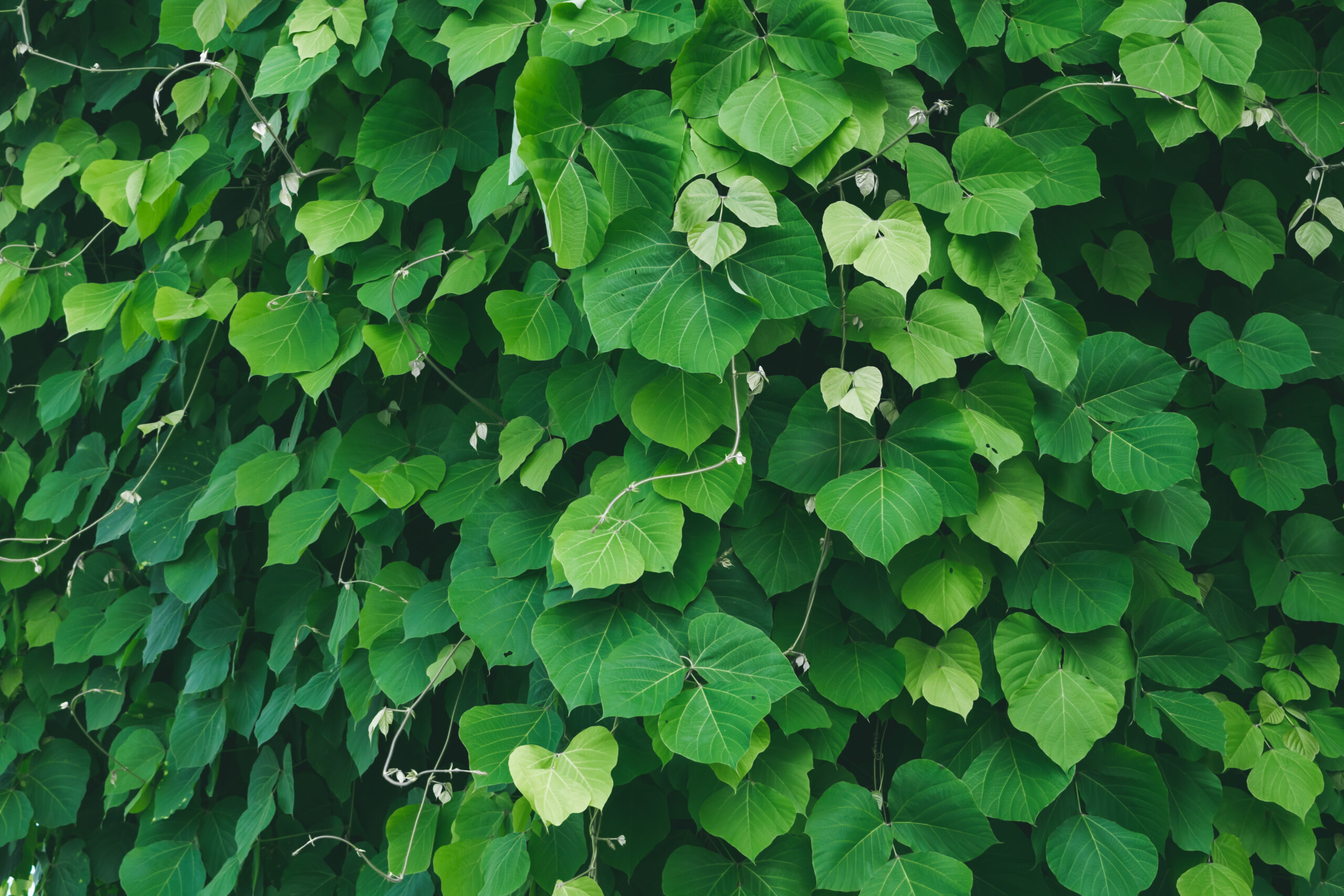
Kudzu, Pueraria montana var. lobata, is a fast-growing vine in the legume family. It has three-part leaves, often with lobes, and can produce purple, fragrant flowers in late summer followed by seed pods. Texas Invasives notes that the leaflets are generally hairy and several inches across.
The real problem is how fast it grows and how completely it can cover other plants. The Native Plant Society of Texas notes that kudzu may grow as much as 60 feet in a season and can expand at a rate of about a foot per day. It damages plants by smothering them, girdling woody stems and even breaking branches or uprooting trees and shrubs under its weight.
For a rancher or landowner, that can mean more than an ugly patch of vines. Kudzu can reduce usable land, cover fences, make access difficult, shade out native plants and damage wildlife habitat. Along waterways and creek bottoms, it can crowd out the native vegetation that helps stabilize soil and support birds, pollinators and other wildlife.
The best time to deal with kudzu is before it becomes a wall of green.
Small patches should be taken seriously. Do not mow once and assume it is handled. Kudzu stores energy in large root crowns, and those crowns are the key to control. Texas A&M AgriLife notes that to kill kudzu, the crown must be removed because it is the part that produces new sprouts.
Control usually takes persistence. Repeated mowing, grazing or cutting may weaken the plant over time, but it rarely solves the problem by itself. Herbicide treatment is often needed, and Texas Invasives lists repeated applications of triclopyr or glyphosate during the growing season as one control option. Large vines may also be cut and immediately treated on the cut surface. As with any herbicide, landowners should read and follow the label, avoid spraying before rain or during windy conditions and use products approved for the site, especially near water.
This is also one of those situations where asking for help early is smart. Local AgriLife Extension offices, county weed specialists, NRCS staff or invasive plant resources can help with identification and management options. If a landowner is not sure whether a vine is kudzu, getting a positive identification matters before beginning control work.
There are plenty of vines in North Texas, and not all of them are enemies. Native vines can provide food and cover for wildlife. But kudzu is different. It is aggressive, persistent and capable of changing the plant community around it.
The lesson is simple: do not wait until kudzu has covered the fence, climbed the trees and claimed the creek bank. If you see it, identify it. If it is kudzu, make a plan. Then keep after it.
Because the vine that ate the South does not need an invitation to start chewing on Texas, too.

In North Texas, we are used to watching for plenty of things on the road. Deer at dusk, cattle out after a storm, slow-moving tractors, potholes, washouts and the occasional armadillo that made a poor decision.
But this time of year, there is another traveler worth watching for: turtles.
After spring rains, during nesting season or when ponds, creeks and low-water areas begin to change, turtles may be on the move. They cross county roads, highways, driveways and pasture lanes for several reasons. Some are looking for nesting sites. Some are moving between water sources. Others may simply be following the same route they have used for years, long before the road was ever there.
For drivers, a turtle in the road may seem like a small thing. For the turtle, that crossing can be dangerous. Turtles are not built for speed, and even a quiet farm-to-market road can become a problem when traffic picks up.
Many of the turtles North Texans see are aquatic species, such as red-eared sliders, which are common across Texas. These are the turtles often seen lined up on logs or rocks near ponds and creeks, sliding into the water when approached. Other turtles, including box turtles, may be seen farther from water, especially after rain or during warm, active months.
When you see a turtle in the road, the first rule is simple: do not put yourself or anyone else in danger. If traffic is heavy, visibility is poor or there is no safe place to pull over, it is better to slow down and go around if you can. A good intention is not worth causing a wreck.
If it is safe to stop, pull completely off the road, turn on your hazard lights and watch for traffic before getting out. The safest approach is usually to move the turtle to the side of the road it was already heading toward. That part matters. If you turn it around or move it somewhere else entirely, the turtle may try to cross again.
Small turtles can usually be picked up gently by holding both sides of the shell. Keep your fingers away from the head and front legs, and carry the turtle low to the ground in case it kicks or startles you. Set it down a safe distance from the road, facing the same direction it was traveling.
Snapping turtles are a different matter. North Texas is home to common snapping turtles, and Texas also has alligator snapping turtles in parts of the state. These turtles have powerful jaws and long necks, and they should be handled with respect. Never pick up any turtle by the tail. It can injure the animal, and with a snapping turtle, it can put you in a bad position quickly.
If you are dealing with a large snapping turtle and do not feel comfortable helping it, the best choice may be to let it continue on its own while you stay safely away. If you can safely assist without handling it directly, you may be able to guide it across with a shovel, board or floor mat, but only if traffic conditions allow.
What you should not do is take the turtle home. A turtle in the road is not lost in the way we might think. It is likely trying to get somewhere specific. Relocating it to your pond, your yard or a “better” place miles away can do more harm than good. Turtles have home ranges, and moving them far from where they were found may leave them stressed, disoriented or more likely to die.
It is also worth remembering that wild turtles are not pets. They may look harmless, and some may be tempting for children to keep, but wild turtles belong in the wild. In Texas, there are rules regarding the collection and possession of native wildlife, and some turtle species have special protections. The simplest and best choice is to help them across when safe, then leave them where they belong.
If a turtle is injured, the answer is a little different. A cracked shell, obvious bleeding or a turtle that has been hit by a vehicle may need help from someone trained to handle wildlife. In that case, contact a permitted wildlife rehabilitator, local animal control office or Texas Parks and Wildlife for guidance.
For those of us who spend a lot of time driving North Texas backroads, watching for turtles is just another small way to be aware of the land around us. It does not take much effort to slow down, give one a little room or help it across when conditions are safe.
A turtle crossing the road may not be in a hurry, but it is on its way somewhere. Sometimes the best thing we can do is help it get there.




-
 Country Lifestyles4 years ago
Scott & Stacey Schumacher: A Growth Mindset
-
 Country Lifestyles10 years ago
Style Your Profile – What your style cowboy hat says about you and new trends in 2017
-
 Horsefeathers12 years ago
Mount Scott: Country Humor with David Gregory
-
 Country Lifestyles10 years ago
June 2016 Profile – The man behind the mic: Bob Tallman
-
 Outdoor11 years ago
Buttercup or Primrose?
-
 Country Lifestyles10 years ago
December 2016 Profile, Rusty Riddle – The Riddle Way
-
 HOME9 years ago
Grazing North Texas – Wilman Lovegrass
-
 The Natural Horseman9 years ago
This is why we do what we do — RayeAnn and Cisco