
Farm & Ranch
Looking for Low-Maintenance Poultry? Geese are Your Answer!

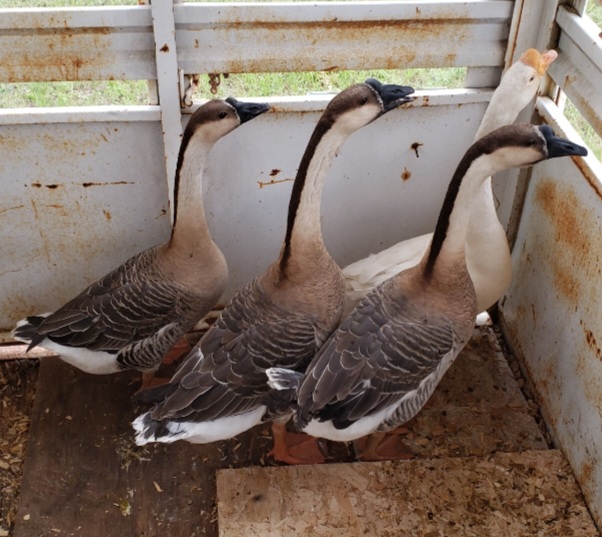
Unless you are a fan of Dickens and Doyle, geese probably aren’t the first thing that comes to mind when you think of poultry. But maybe they should be. And the aim of this article is to get you acquainted with the aristocrat of poultry.
Let’s start with the basics. Geese are domesticated waterfowl. Twelve breeds are recognized by the American Poultry Association, but dozens more are available. Much like ducks, all domestic geese breeds descend from two species. The overwhelming majority of breeds originate from Greylag geese (Anser anser). This species is native to Europe and Central Asia. These are the stockier, heavy geese that feature prominently in German fairy tales as a symbol of wealth and which Victorians loved to consume at Christmas. These geese come in various sizes, colors and dispositions. Here are a few examples: Cotton Patch geese are a small, variably-colored, extremely heat tolerant landrace native to the South. These were raised to consume weeds in cotton fields in the days before commercial herbicides. They are quite rare today and lay a variable number of eggs. American Buff geese are medium-sized, tan colored, very docile geese of uncertain origin. They are excellent meat birds. They are decent layers and wonderful mothers. Toulouse geese are the largest breed at up to thirty pounds. This ancient French breed is dark grey in color. They are bred to become very fat and so must be managed carefully to maintain fertility. They are very gentle, but require somewhat more shelter than other breeds.
A native of parts of China, Mongolia and Russia, the Swan Goose (Anser cygnoides) gave us both the Chinese goose and the African goose. Both have large bulbs on their heads and are similarly colored, but are otherwise very different. African geese are quite large, maturing at around twenty pounds and prized for their meat. These gentle giants are often recommended for beginners. Chinese geese are the egg champions of the goose family. They produce multiple clutches in a year, equaling up to a hundred eggs annually. They are small geese with males weighing about twelve pounds and females ten. They are nervous and the loudest breed, but this makes them suburb as “watch geese” and perhaps the best all-purpose breed.
Now that we are a bit acquainted with various breeds, we can find out just why someone may want to keep geese. Before we go over their benefits, you may be surprised to learn something surprising about geese. Geese are so rarely seen in the United States today that they can seem unusual, even exotic. As such, you may reasonably expect that geese are hard to manage, require expensive feeds and must be waited on hand and foot. The surprise is that geese are actually significantly easier to take care of than chickens. In fact, I would venture to day that geese are the lowest maintenance poultry there are.
Geese are unique among poultry in that the vast majority of their diet is made up of grass. Some meat birds are raised entirely on grass. It may be a good idea to supplement their grass with some chicken feed and scratch grains, but you will find that, when grass is plentiful, they will generally not bother with anything else. Geese are excellent pasture birds. A simple wire pen that can be moved every other day is enough to keep them happy. Unlike chickens, geese do not scratch up a yard and are not nearly as messy as ducks. If moved promptly, the area they occupied will swiftly grow back greener, thanks to all the free fertilizer, which they produce in abundance. Few geese can fly with any proficiency and even then, only when they are young. One wing’s feathers can be easily clipped, if their escape is a concern.
Geese are also almost absurdly hardy. They not only love rain, they seldom if ever go inside. Shade and perhaps a windbreak are their only real needs for shelter. In sub-freezing temperatures, they will scorn a shed and simply sit in the snow. There is a reason that goose down is so valued for comforters. It is extremely good at keeping them warm. The clever little birds know exactly when they need to bend down over their feet to keep them warm and hide their heads under their wings for the same purpose. In the summer, geese require shade and access to water at all times, but are otherwise unbothered. Geese keep their bodies very clean and are, owing to a small oil gland and their meticulous grooming, waterproof. They will soil water almost instantly, so do not worry about keeping it clean, just be sure they have enough. Without water, they may die in the heat and regardless (like ducks) cannot keep their bills and eyes clean, which could cause disease. Provide multiple water tubs to reduce fighting. Geese will dig up the mud around their waterers, so they should be moved each time they are filled. They will appear to be eating the mud, but are actually filtering it in the water through the serration in their bills. This is to find food, as well as small rocks for their gizzards. With a bit of caution, geese will weed a garden for you and clean it up at the end of the season.
Geese need little more from you than water, basic protection from predators and grass. In return, they offer a number of benefits.
In the first place, Geese offer a dark, rich, beef-like meat. Geese are often butchered between twelve and twenty weeks old. At this time, their weight will vary by breed, but as an example, the commonly raised meat breed Pilgrim geese will weigh around thirteen pounds. The carcass weight will be about sixty to seventy percent of the live weight. If one cares to process it, goose fat is highly valued in the culinary world and contains almost no saturated fat. It is comparable to olive oil and may be used in the same applications.
Especially if you have selected the Chinese goose, eggs are another offering of your new favorite poultry. These eggs are roughly the equivalent of three chicken eggs. A fried goose egg, sausage or bacon and a pancake makes a very nice dinner or hearty breakfast. Alternatively, you can incubate and hatch goose eggs quite easily. The goslings are so valuable that it’s a wiser financial move to only consume the first couple of eggs laid in the spring, which are usually infertile. Goose eggs are easily candled without any special equipment. Infertile eggs or those that die early on can be blown out and made into painted or dyed eggs.
If you hate waste, and wish to use all but the “honk,” so to speak, the feet are rich in collagen and highly prized in the rest of the world. The liver of a goose is extremely healthy and famous as foie gras. A more familiar byproduct of butchering is down, which can be made into extremely valuable bedding. Be sure to clean and dry feathers carefully first. If raised by hand and handled very often, geese will be quite friendly to their owners and make loyal pets. Some people will actually hold their geese in their laps and gently pluck the down from their flock.
Lastly, geese are often kept as watch animals. Geese are extremely observant night and day and will loudly complain when they see something unfamiliar anywhere in the vicinity. It takes a very short time to learn the difference between the normal sounds of geese and the sound of their panic. Please know that while they may scare away small predators and they are nearly always too big for hawks, a goose is largely defenseless against most predators. Keeping geese near a livestock guardian dog is a great idea. The extremely intelligent birds will rapidly learn the dogs are a source of safety and will alert the dogs to anything they see as a threat. Geese can usually be kept with other poultry without problems. They will not directly protect their avian brethren, but the others will learn to hide when the more observant geese voice a concern. In mixed flocks, the noble geese stride around the yard, aristocracy among poultry.
Geese are immensely versatile, the most low-maintenance poultry there is and should have a place on any property.

This morning, I walked out into my arena and noticed something that gave me pause. The roping steers had been in there the day before, and even though the ground was wide and level, the sand carried their story. Hoofprints crossed every direction, but in several spots, the same trail was pressed deeper than the rest. Twelve steers had been turned out, yet more than a few chose the exact same path, wearing it down until it stood out from all the other tracks.
Cattle are creatures of habit. Anyone who has spent time around them knows this. They like routine: the same feed, the same water trough, the same shade tree in the pasture. When they are turned loose, they rarely wander without purpose. More often than not, they move together, following the same course as the steer in front of them. There are reasons for this: efficiency, safety, instinct. Walking a beaten path conserves energy, and following the herd is their natural defense. Even in an arena with no real destination, those instincts come through. By the end of a short turnout, you will see the evidence, lines where they have chosen the easiest way to travel and stuck with it.
Out on the range, those lines last longer. Before fences and highways, cattle drives cut deep paths across the land. The Chisholm Trail, which carried herds north from Texas through Oklahoma into Kansas, was walked by millions of cattle in the late 1800s. More than a century later, faint traces of those trails remain, worn so deep by hooves and wagon wheels that the land still carries the mark. On ranches today, you can see the same effect in pastures where cattle walk the same lines between water and grazing. From the ground those trails might look like nothing more than dusty ruts, but from the air, they sometimes stand out as sharp lines winding through otherwise open fields. Cattle do not simply pass over the land; they shape it. Every step adds up.
That simple truth extends beyond livestock. We all make tracks. Our habits and routines are our trails, worn in by repetition, sometimes efficient, sometimes limiting. Like the cow paths, they can serve a purpose, keeping us steady and helping us move forward. But when repeated without thought, they risk becoming ruts, keeping us from stepping into new ground. History offers perspective here too. The old cattle trails built towns and economies, but once railroads and fences changed the landscape, those paths were no longer useful. Sticking to them would have meant going in circles. Progress required something new.
The Tracks We Leave
Standing in the arena, I thought about the kind of tracks I leave behind. Most of mine are not visible in the dirt. They are pressed into my daily life, how I work, the way I handle challenges, the example I set. Some are helpful and worth keeping. Others may have outlived their purpose. The difference comes in knowing when to stay in the track and when to step out of it.
Tomorrow I will drag the arena and smooth it all clean again. The next time the steers are turned in, they will make the same trails. That is their nature. But unlike them, I have a choice. I can decide which paths are worth walking, which ones to change, and what kind of tracks I want to leave for others who might follow.
Tracks tell a story. Sometimes they are only temporary, fading with the next rain. Other times they last for generations, reminders of where herds and people once walked. This morning, the cattle showed me again that even the smallest things on the ranch carry meaning. Their tracks in the arena were not just marks in the sand. They were a lesson: every step matters, and the paths we choose shape more than just the ground beneath our feet.

Farmers and ranchers are in a very close partnership with Mother Nature. If we really pay attention, she presents us some interesting scenarios.
For example, though they are totally different types of plants, water lilies and prickly pear have a lot in common. They both have strikingly beautiful flowers, both plants are edible, both of them are invaders into their respective habitats, and too much of either one can be an obstacle that we have to deal with.
Many north Texas ranches rely on excavated ponds for livestock water. Any time a pond contains a significant amount of shallow water so that sunlight reaches the bottom, some type of pond weed will develop. The plant family that includes water lilies and lotuses is a common invader in our livestock water.
Water lilies and lotuses are in the same plant family but they are two separate genera. There are easy ways to tell them apart:
• A primary difference is that water lily leaves commonly float on the surface, but lotus leaves can grow above the water line.
• Water lily leaves and flowers are thick and waxy, while lotus leaves and flowers are thin and papery.
• Water lily leaves have a distinct notch in the leaf, while lotus leaves are more rounded.
• Water lily flower petals are pointed, and lotus petals are more rounded.
The photos attached to this writing are from Clay County, and this plant is common across north Texas. American lotus is adapted to a wide area, from Honduras north through Mexico and across the eastern US and into Canada.
American lotus is a perennial, and it is cold tolerant and heat tolerant. It can grow in any pond or slow moving stream that contains shallow water areas. It prefers water with a depth of about 12 inches. Germination can occur from the large lotus seeds. Tubers, or roots, are established in the mud, and long slender stems extend upward. Leaves and flowers are both emergent in that they grow above the water line.
Lotus flowers are fragrant, and yellowish white with rich gold centers. They open in the morning and close by late afternoon, then open again the next day.
Lotus is an edible plant and has a history as a food source. The large tuberous roots, the size of a human arm, were baked like sweet potatoes. The leaves were eaten like spinach, and the large seeds were ground into flour. Stems taste somewhat like beets and were usually peeled before being eaten.
There is a large world-wide industry of cultivating lilies and lotuses in water gardens. According to Dr. Jerry Parsons, Professor and Extension Horticulturist with Texas A&M AgriLife Extension, cultivation of these plants dates back as early as ancient Egypt. Today, anyone with determination and a little money can have a water garden.
In 2011, the 82nd Texas Legislature designated the water lily “Texas Dawn” as the official Texas State Water Lily. Texas Dawn is a hybrid developed by Texas resident Kenneth Landon, a world-renowned expert in the field of water lilies and the director of the International Water Lily collection in San Angelo.
Ducks and other wildlife utilize the large acorn like seeds of American lotus, and submerged portions of all aquatic plants provide some form of wetland habitat. Many of us have tried to pull a bass out of a group of water lilies or lotuses, and I’m sure others have had better luck than I did. Although there can certainly be benefits to lilies, lotuses, and other aquatic plants, they can also infest ponds to the extent that the pond is not functioning correctly.
So, while the rest of the world works hard to grow these plants, ranchers sometimes need to control populations in their stock ponds. Once it gets a foot hold, American lotus can spread aggressively in wetland areas.
The primary issue that encourages American lotus, and most other water weeds, is shallow water. Look closely at a good livestock pond and you will find that the deeper water is basically free of infestation. Any pond will have a certain amount of shallow water that encourages water weed growth, depending upon the terrain at the pond site and how the pond was constructed. Some ranchers who enjoy and utilize wetland habitat may prefer to have ponds with significant shallow water area.
Almost all livestock ponds have a certain life expectancy. Siltation, or movement of soil into the pond bottom through rainfall runoff, is a natural occurrence. How fast siltation occurs into each pond, and how deep the pond was to start with, determines the length of time that the pond will contain adequate depth for dependable water for livestock.
Ponds that develop infestations of water weeds over a large percent of the surface may not have adequate depth to remain a viable water source for livestock during drought periods, especially in western north Texas where evaporation rates are higher.
Mud, or silt, from the pond bottom, can be removed to deepen the water, but this is a very expensive process. It is often more economical to construct a new pond rather than try to remove the silt from an old one. Most of us do not have the funds to continually construct deep water livestock ponds, so we must try to keep existing structures functioning and providing good drinking water for livestock, for as long as we can. Control of pond weeds like American lotus may be necessary, and it can be accomplished.
There is currently no feasible biological control. American lotus can be cut and removed, but this process us usually temporary because lotus can reestablish from seeds and roots.
American lotus can be safely controlled by chemicals. This must be done carefully. If a pond containing a large amount of any pond weeds is treated to remove all of the vegetation, a fish die-off could occur. When the dying weeds decompose, they use up the oxygen in the water and fish can suffocate. If possible, treat only a portion of the area, wait about two weeks, and treat another portion.

By Landon Moore
Rabbits offer a lot to the home gardener, and perhaps the most useful of all is their waste. Rabbit manure is likely the single most versatile and valuable fertilizer of any animal manure. It’s a “cold” manure, meaning it can be applied directly to plants in any form without the risk of burning them. In contrast, manure from sheep, horses, cows, and especially poultry must be aged before it’s applied, or it may damage plants. Because rabbit manure doesn’t need to be aged, it retains more of its nutrients and is therefore twice as rich as chicken manure and four times more potent than horse or cow manure. Rabbit manure is safe to apply to soil growing edible crops, has virtually no smell, and contains no harmful seeds. It can be used immediately, or be dried, powdered, made into tea, or turned into worm castings. A single trio of rabbits and their offspring can produce up to two cubic yards of fertilizer per year, along with 100 to 200 pounds of meat.
Rabbit manure is in such high demand as a fertilizer, particularly for roses, that it’s often sold online at a premium price. Some rabbitry owners even charge people to come scoop the manure themselves, paying by the bag. Larger rabbitries might sell by the truckload, but many owners keep it all for their own gardens. You may wonder what makes this little mammal’s excrement so uniquely useful. To understand, we first need to look at the qualities that make it special and then explore its various applications.
To begin with, let’s take a closer look at a rabbit’s biology. Contrary to popular belief, rabbits are not rodents but belong to the order Lagomorpha and family Leporidae, along with hares. All domestic rabbits are domesticated European rabbits (Oryctolagus cuniculus) and are unable to produce fertile offspring with American cottontails. Rabbits are considered “pseudo-ruminants” because they have a single-chambered stomach, but they also have an organ called the cecum, which functions similarly to a rumen and makes up about 40% of their digestive tract. They are crepuscular, meaning they are most active at dawn and dusk, typically feeding in the evening.
Rabbits actually produce two kinds of manure. The familiar dry pellets make up most of their waste, while the other type, known as “cecotropes,” is a moist and smelly substance resembling tiny bunches of grapes. Cecotropes are not fully digested, and because rabbits cannot chew their cud, they reingest the cecotropes as they are excreted. This fermented substance allows the rabbit to absorb more nutrients than it would through initial digestion. While cecotropes are occasionally found in cage trays, the feeding behavior that leads to them is usually only witnessed by the rabbit owner.
The dry pellets are the true manure that most people are familiar with. These small, round, dry pellets have almost no smell when kept dry. When crushed, they break down into a powder resembling tiny grass fragments because, in essence, that’s what they are. Some people crush the pellets before applying them to speed up their absorption into the soil, while others appreciate their “slow-release” feature. Additionally, the manure’s water solubility can be exploited in several ways. Soaking a wheelbarrow full of manure creates a potent sludge that can be easily applied to flat surfaces. If the odor is not an issue, the smell will dissipate once the manure is either dissolved by moisture or dried by the sun. Another method is to make manure tea: fill a cloth bag with manure, seal it, and submerge it in a barrel of water for a few weeks. A simpler method involves placing damp manure at the bottom of a barrel, filling it with water, and letting it sit in the sun for a couple of weeks. Stir occasionally, and you’ll have a powerful liquid fertilizer ready for use.
Domestic rabbits should be fed a modern, pelleted feed, which provides all the nutrients they require. This diet eliminates the risk of noxious seeds being present in the manure, making it safe to apply directly to the lawn, especially during winter. Winter and spring rains will break it down, and by late spring, you’ll have a healthy carpet of turf.
Rabbit manure’s nutrient content varies depending on factors like storage, age, and diet, but it generally contains around 2% nitrogen (N), 1.3% phosphorus (P), and 1.2% potassium (K). The Oregon Extension Service gives a range of 3-4.8% nitrogen, 1.5-2.8% phosphorus, and 1-1.3% potassium. Even at the lower end of the scale, rabbit manure has higher nitrogen content than poultry manure and twice the nitrogen content of cattle manure. One reason rabbit manure doesn’t burn plants is due to the biology of birds, which lack bladders and produce more ammonia in their waste. In contrast, rabbits release ammonia in their urine, which is why their manure may have a stronger odor.
Because of its balanced nitrogen-to-phosphorus ratio, rabbit manure promotes a wider variety of species in the same application area. Applying it directly to heavy clay soils will improve them quickly, especially when combined with other organic matter. It can also improve sandy soils by adding texture and helping them retain moisture. Anyone raising rabbits will have a steady supply of manure, as they are efficient producers. A small herd of 17 animals, including their litters, can produce about one ton of manure annually.
Beyond fertilizing, rabbit manure has several other uses. It is considered the best food for earthworms and can be combined with moisture-holding bedding like peat moss, shredded paper, or hay taken from used nestboxes. Many rabbitries (including my own) keep worm beds right under the cages. The resulting castings are rich in nutrients and can be used as-is or incorporated into soil amendments. A couple of feet of manure under a foot of soil in a hotbox can generate enough warmth to start and grow seeds, even in cold climates like Vermont.
In Europe and Asia, the rabbit meat industry is a billion-dollar market. While the Czech Republic leads in per capita consumption (over 8 pounds per person annually), China is the leading producer of rabbit meat. A recent study in China examined the effects of replacing peat moss in seed-starting soil with rabbit manure. The study found no significant difference in germination rates and noted that the manure provided increased nutrients for seedlings. The ideal ratios for seed-starting soil were found to be one-third manure, one-third perlite, and one-third vermiculite, or half manure and half perlite.
Rabbit manure is often overlooked as a nuisance, but as we can see, it’s an incredibly versatile soil conditioner, excellent fertilizer, ideal food for earthworms, and a superior seed-starting medium. Anyone raising rabbits should consider this another benefit, in addition to having a home meat supply, exhibition livestock, or pets.





-

 Country Lifestyles3 years ago
Scott & Stacey Schumacher: A Growth Mindset
-
 Country Lifestyles9 years ago
Style Your Profile – What your style cowboy hat says about you and new trends in 2017
-
 Horsefeathers12 years ago
Mount Scott: Country Humor with David Gregory
-
 Country Lifestyles10 years ago
June 2016 Profile – The man behind the mic: Bob Tallman
-
 Country Lifestyles10 years ago
December 2016 Profile, Rusty Riddle – The Riddle Way
-
 Outdoor11 years ago
Buttercup or Primrose?
-
 HOME9 years ago
Grazing North Texas – Wilman Lovegrass
-
 The Natural Horseman9 years ago
This is why we do what we do — RayeAnn and Cisco