
Outdoor
Wildfire Readiness


By Martha Crump
Now I do not want to sound like a glass half full sort of person, but anyone with practical sense knows there is a downside to most everything. In the world of agriculture, having an abundance of pasture vegetation going into Fall brings the downside of a heavy fuel load as it dies back, dries out, and/or becomes dormant. Dry conditions, dense vegetation and high winds are all factors in wildfire ignition and spread. The dangers of wildfire include hot gases, smoke and flames. As a wildfire grows in intensity and size, so do each of these. Wind speed, temperature and relative humidity must also be factored into the rate of spread. Facing an imminent wildfire danger is not the time to consider what steps should be taken. Preparations and a plan of action can determine how timely and how well you and your property fare.
Local volunteer fire departments/first responders go above and beyond in the face of these unexpected and deadly threats. As landowners, there is quite a lot that we can do to facilitate their success in managing a wildfire. Taking a few moments to develop a checklist is a good starting point for the landowner and can be extremely helpful for the first responders specific to your property. Most established ranchers have a good working relationship with the local volunteer fire departments (VFD) around their area, and along the same vein, local VFD’s are accustomed to working shoulder-to-shoulder with their neighboring counterparts and definitely know who has what resources available. These men and women train on their own time, are certified, and on standby 24/7 to be there when they are needed. They do as much as they can, for as long as they can, to protect our interests, be that our land, our homes, our livestock or anything else to do with our livelihoods! The landscape of country living is changing dramatically. More people are wanting to escape city living, if not to fully relocate, at least to own property that allows them a getaway from being in town. The absentee landowners aren’t always easily accessible during emergencies. So whether you’ve lived on your place for 4 or 5 generations, or have recently bought your weekend getaway, it might behoove us all to recap some tips to help ourselves, and most importantly, the VFD’s that come to our rescue.
M. L. Russell, Assistant Professor and Extension Range Specialist-Ecosystem Science and Management developed a checklist with good points for all landowners to consider. According to Mr. Russell, “The answers to the questions below will be instrumental in building operations, tactics, and general firefighting techniques. A carefully thought out wildfire ready checklist is an excellent foundation for improved communication and relationship building during wildfires.” Not all of the suggested points in every category will be a consideration for every landowner, but most will find many that are relevant to both small and large holdings alike.
| Tactics | How do you manage your fine-fuel forage? Are you ok with burnout operations to fight the fire? Are there existing barriers such as roads, fields, bladed areas, caliche pad sites etc. from which to anchor firing operations? Do you have any concerns about bulldozing the fire edge to bare mineral soil, displacing top soil? Are you ok with any fence being cut or laid down? |
| Property at Risk | Are there any high-fenced areas that are prioritized? Are grazing livestock near the fire or in the potential path of the fire? Are there any aggressive exotic wildlife species? Where are the structures located? What is the priority of those structures? |
| Logistics | Do you grant permission to use on-site water to fight a fire? What are the types of water sources? What type of access is there to water sources? What volume of water is available? How deep are the water sources? |
| Support | What type of ranch equipment is available to use? (e.g. sprayers or heavy equipment) Do you have hard copies of aerial imagery or maps with property roads, and gate locations clearly marked? Do you have gate lock codes? Are all gates on the property already open? If not, are you comfortable sending someone to facilitate emergency access? Do you have your neighbor’s contact information or gate lock codes? Do you have absentee landowner neighbors? If so, have you made previous contact with them & exchanged information so that they can be notified &/or asked about access during an emergency? |
| Hazards | Are there oil & gas lines? Any report of H2S or other toxic gases on the property? Are there any rough roads not suitable for responding equipment? Are there damaged cattleguards? Are there any rested pastures with volatile fuel loads? Are there any deer blinds or outbuildings with propane tanks in them? |
Also landowners should ALWAYS be aware of their county burn bans. Compliance with active burn ban law does help to reduce unsafe debris burning, but everyone should remember that a burn ban does NOT have to be in effect for outdoor burning to be illegal. If you negligently allow your fire to escape onto someone else’s property, it is a Class C misdemeanor, punishable by a fine of up to $500.
The State of Texas uses a tiered approach to wildfire response. That starts with local fire departments and counties as the first responders, and is followed by state response as wildfires or conditions exceed the local ability to control. The Texas A&M Forest Service was implemented in 1915 with the main goal of suppression & extinguishing of forest fires (wildfires). In 1993 that mission was expanded to include the coordination of response to any large, or potentially major wildland fire within the state. There is a tremendous amount of coordination that is required beginning with the local first responder level, and growing in magnitude as other agencies are called into action. The Incident Command System at each of these levels ensure a more coordinated and rapid response, and an appropriate use of resources. As landowners/managers, this is where our role becomes critical, especially to our first responders. It is of utmost importance to be able to contact individuals as firefighters need, or as they are attempting to access property to manage wildfires. The inability to do so is very handicapping. I would encourage all individuals that are living remote from your property to at least make sure that neighboring property owners have a means of contact for you. My experience with folks that are new to either owning a country recreational property, or to being new country living residents, is that there is a certain level of “distrust” that many experience regarding sharing of information about their properties. I realize that giving gate codes to neighbors might seem counterintuitive, however it might mean the difference between suppressing a fire quickly versus having it grow and spread. If you aren’t comfortable sharing that information with a neighbor, then please share with the local law enforcement office in your area so that someone can contact you. And as a matter of note, country living, or land ownership means getting to know your neighbors so that we can all work together to protect everyone’s’ interests. We cannot help you in your absence if we don’t know you or cannot contact you!
Texas A&M Forest Service provides the following sources of information available to homeowners, community members, and landowners alike to facilitate condensing of information into a helpful format for first responders. I strongly encourage everyone to visit this website and follow the links to assist you in preparing for fire should it happen in your area. The web address is: https://tfsweb.tamu.edu Once you have accessed the webpage, then look for the heading Preparing For Wildfires. Upon selecting that, you will find subcategories called Protect Your Community, Protect Your Home, Protect Your Ranch, & Protect Your Wildlands. Two forms of interest found under the link Protect Your Ranch, are the Landowner Priorities Form complete with an example of what is listed where, and also a form called Map My Property that actually enables landowners to not only map their properties, but to also denote features of interest/importance on said property. Our local VFD’s are effective at what they do in the face of overwhelming conditions! Imagine how much we could help their volunteer efforts by taking the time to do just a little bit of computer work and by compiling just a little bit of information like this for them. I would respectfully add that any time your local VFD/First Responders are having a fundraiser, please help to support them. We cannot double their wages as they work for free, but we can contribute to coffers that have to be maintained for equipment purchase and repair, fuel, protective equipment for volunteers, and many, many other costs that most would never think of in regard to keeping these men and women safe and ready to respond. And to that end, may I say God Bless and keep safe all of our VFD members/First Responders as they volunteer their time to protect the rest of us.

By Ann Asher
The first time I saved seeds, it felt a little like cheating.
After spending all spring and summer buying plants, watering them, pulling weeds, and hoping they survived Oklahoma’s heat, it suddenly occurred to me that nature had already figured out how to do this long before seed catalogs showed up in my mailbox.
Every tomato, pepper, bean, and flower in my garden was trying to make next year’s garden all on its own.
Somewhere along the way, I had forgotten that.
Like many gardeners, I had always bought fresh seed packets every spring. There is certainly nothing wrong with that. Seed companies provide incredible varieties that have been bred for everything from disease resistance to better production. But once I began learning about saving seeds, I discovered there is something deeply satisfying about planting seeds that came from vegetables I grew myself.
It also turns out that not every seed is created equal.
One of the first things I learned was the difference between heirloom and hybrid varieties. The terms are often used interchangeably, but they really shouldn’t be.
Heirloom plants are open- pollinated varieties that have been passed from generation to generation, often for 50 years or more. Because they reproduce “true to type,” the seeds you save from a healthy heirloom tomato should produce plants very similar to the parent the following year, assuming they haven’t cross-pollinated with another variety.
Hybrid plants are different. They are intentionally created by crossing two carefully selected
parent plants to combine desirable traits, such as better disease resistance, higher yields, or improved vigor. Those qualities make hybrids wonderful garden plants, but the seeds they produce don’t reliably grow into the same plant the following season. You might get something similar, or you might get a surprise.
Neither one is better than the other. They’re simply different tools for different purposes.
As someone just learning, I quickly realized that seed saving is much easier than I expected.
Beans practically do all the work for you. Leave a few pods on the vine until they dry completely, shell them, and the seeds are ready to store. Peppers are almost as simple. Once the fruit is fully ripe, remove the seeds,
spread them out to dry for several days, and store them in a cool, dry place.
Tomatoes sounded intimidating until I actually tried it. The seeds are surrounded by a gelatinous coating that naturally prevents them from sprouting inside the fruit. Removing that coating usually involves letting the seeds ferment in a little water for a couple of days before rinsing and drying them. It sounds far more complicated than it really is, and once you’ve done it once, you’ll wonder why you waited so long.
Flowers have become one of my favorite places to experiment. Watching seed heads dry on coneflowers, zinnias, marigolds, and sunflowers makes me appreciate that every bloom
Perhaps the biggest surprise has been how seed saving has changed the way I look at gardening.
Instead of seeing the end of the growing season as the finish line, I now see it as the beginning of the next one. Every healthy plant becomes a potential source for next year’s garden. Every flower that goes to seed has a purpose. Even vegetables I once hurried to pull out suddenly have one last job to do.
Will I still order seeds every winter? Absolutely.
There are too many interesting varieties to stop exploring, and I’ll probably always have room in the garden for something new. But I’ll also be opening a small box filled with envelopes from this year’s harvest, each one carrying a little reminder that the garden isn’t just something we grow for a season.
Sometimes, if we let it, the garden grows itself right into the next year.
And I have to admit, there’s something pretty rewarding about that.
Seeds need to be fully mature before they’re collected. Dry seeds need to be completely dry before they’re stored. Otherwise, moisture becomes the enemy, encouraging mold and ruining months of work. A simple paper envelope labeled with the variety and the year often works better than an airtight plastic bag, especially until the seeds have thoroughly finished drying.
is already preparing for another season. Instead of cutting everything down the moment it finishes flowering, I’ve started paying attention to what comes afterward.
I’ve also learned that patience matters.
By Savannah Magoteaux
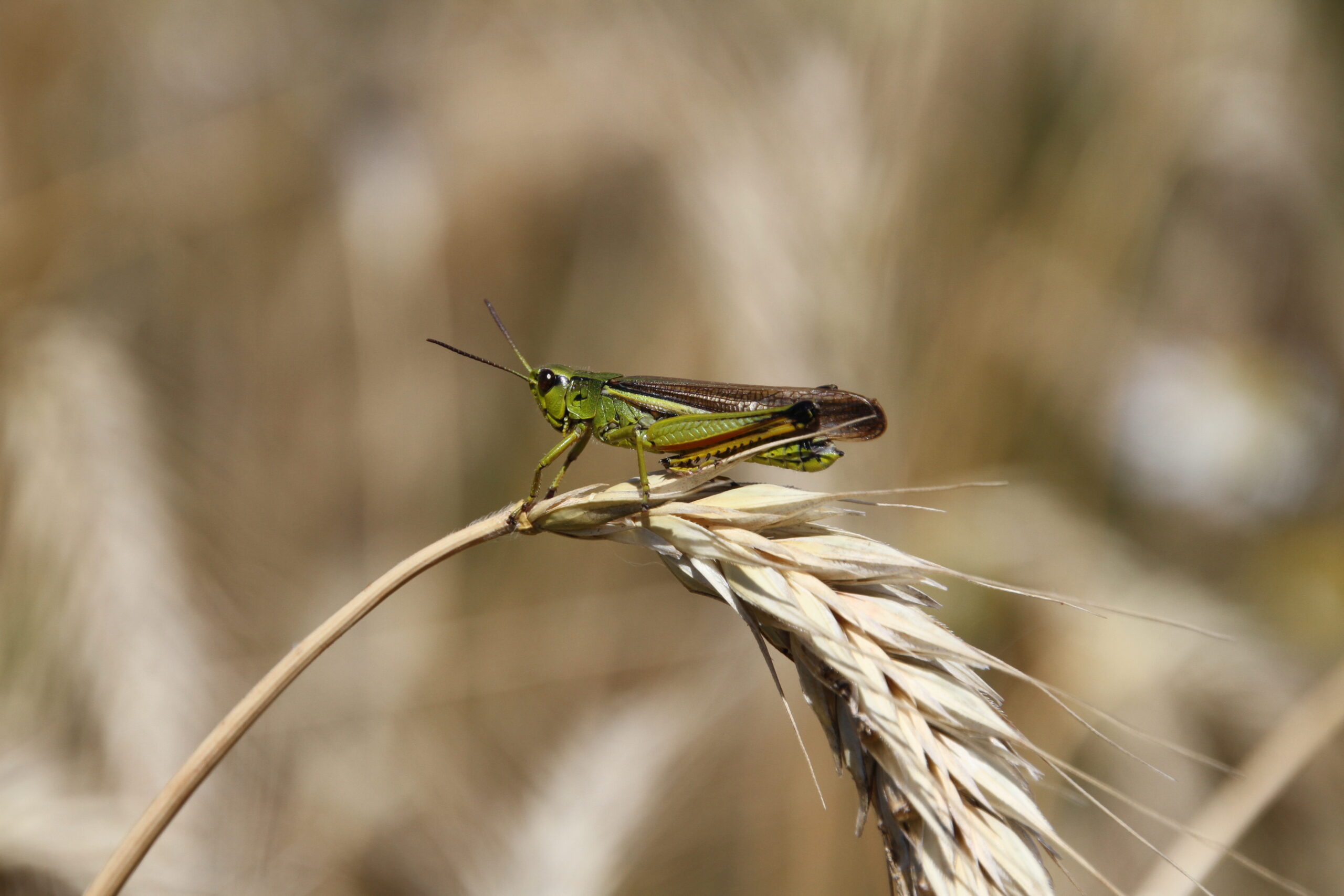
They scatter ahead of the mower, jump from garden rows, cling to fence posts and seem to rise out of the pasture with every step. One or two grasshoppers might still feel like part of summer. A few more may not seem like much of a problem. But when the ground looks like it is moving, and every tomato plant, flower bed or patch of green grass seems to have bite marks, grasshoppers quickly move from background noise to real irritation.
In Oklahoma, grasshoppers are nothing new. They are part of the late-summer landscape, especially in hot, dry years. While they may seem to appear all at once, their numbers usually build over time.
Eggs are laid in the soil, often in undisturbed grassy or weedy areas, and young grasshoppers begin hatching in the spring. As the season progresses, they grow larger, become more mobile and are much easier to notice.
By late summer, many grasshoppers are no longer tiny insects tucked away in roadside grass. They are bigger, stronger and able to move longer distances. That is when homeowners, gardeners and producers often begin seeing the real damage.
Grasshoppers feed by chewing. That means the damage they leave behind is often easy to recognize. Leaves may look ragged, stripped or full of holes. In gardens, they may chew on vegetables, flowers and young plants. In pastures and hay fields, heavy numbers can add pressure to forage that is already dealing with heat, drought or grazing. Around barns, yards
and field edges, they may seem to be everywhere at once.
Weather can play a major role in how bad grasshoppers become. Warm, dry conditions are often favorable for them. Drought can reduce some of the natural diseases that help keep grasshopper numbers in check, and when native grasses or weeds begin to dry down, grasshoppers may move toward any green growth they can find. That may be a vegetable garden, irrigated lawn, flower bed, crop edge or low area of pasture that still has something tender left to eat.
The frustrating part is that by the time most people are truly tired of grasshoppers, they are also harder to control. Grasshoppers are much easier to manage when they are small and concentrated in hatching areas. Once they are large enough to fly or move freely across a property, control becomes more difficult and often less effective.
That does not mean there is nothing to do. It just means timing matters.
For gardeners, barriers can
help protect valuable plants, especially when plants are young. Row covers or other lightweight covers may reduce feeding damage if they are placed before grasshoppers are already in the plants. Some people also use protective cages or netting around individual plants. While these methods are not always pretty, they can make a difference in a home garden where the goal is to protect a few important rows or plants.
Managing weedy areas may also help, especially earlier in the season. Roadsides, ditch banks, fence rows and unmowed grassy spots can serve as places where young grasshoppers develop. Keeping those areas under control may reduce some pressure, though it will not stop grasshoppers from moving in from neighboring properties. That is one of the challenges with an insect that can travel.
There are insecticides and baits labeled for grasshopper control, but they should be used carefully and according to the label. The right product depends on where it is being
used, whether it is a garden, landscape, pasture or crop setting, and what else is in the area. It is also important to consider pollinators, livestock, pets, water sources and harvest restrictions. When in doubt, Extension guidance is one of the best places to start.
It is also worth remembering that not every grasshopper problem requires the same response. A few grasshoppers in the yard are annoying. Heavy feeding in a garden may be worth addressing. Large numbers in a pasture or crop setting may require a more serious look, especially if forage is already limited.
Natural predators, including birds and some insects, do feed on grasshoppers, but they rarely eliminate a large outbreak on their own. Chickens may help around a yard or garden area, but they can also create their own kind of damage if turned loose in the wrong place. Like most things on the farm or around the house, there is usually a trade-off.
By late summer, grasshoppers may feel like just one more thing to deal with. The grass is tired, the garden is tired, the livestock are tired and most people are tired, too. Still, understanding why grasshoppers build, where they come from and when control works best can make them a little less mysterious.
They may always be part of an Oklahoma August, but they do not have to catch us completely off guard. Watch the field edges. Pay attention to young plants. Notice when small grasshoppers first begin to show up.
Because when grasshoppers take over, they rarely do it quietly.
By OKFR Staff
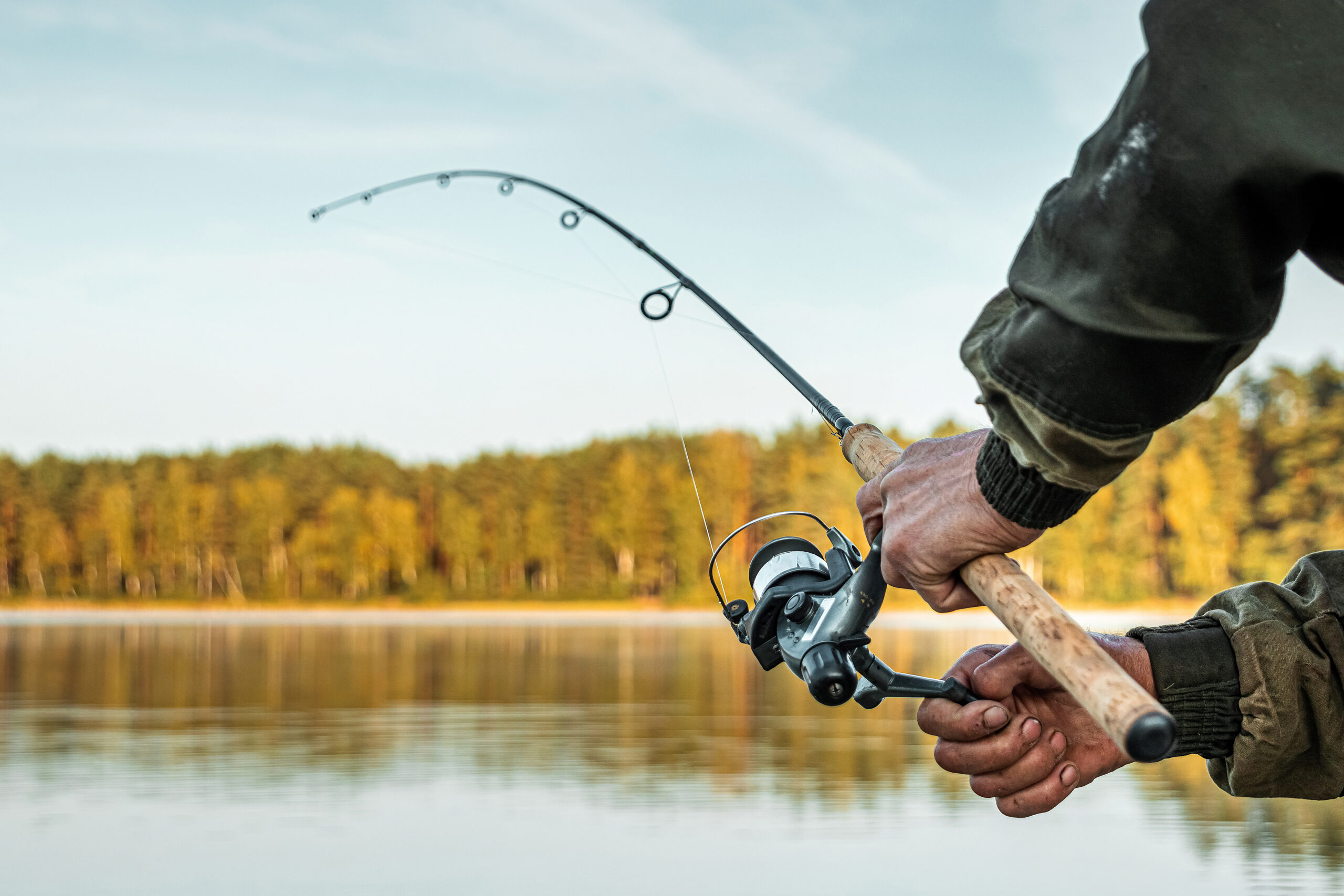
Right now, fishing in Oklahoma can feel a little like everything else this time of year.
It is hot. The water is warm. The easy part of summer has worn off, and if you are standing on the bank in the middle of the afternoon expecting fish to jump on the hook just because you showed up, you may be disappointed.
That does not mean the fishing is bad. It just means the fish are doing what most of us are doing by late summer. They are looking for cooler places, easier meals and the most comfortable part of the day.
Across Oklahoma, late-summer fishing is often a game of timing. Early mornings, evenings, overnight hours and cloudy days can make a big difference. Fish may still feed during the heat of the day, but many species are more active when light is lower and water temperatures are not quite as punishing.
The Oklahoma Department of Wildlife Conservation notes that summer fishing often improves during low-light periods, especially for species like catfish, which are active at night and can be caught on punch bait, stink bait, cut bait and other scented baits.
Catfish are one of the best late-summer targets for Oklahoma anglers. Channel catfish and blue catfish can both be caught this time of year, and they are often a good choice for families, bank anglers and anyone who wants to keep the setup fairly simple.
Look around creek channels, points, riprap, deeper holes and areas where wind or current may be moving food. Cut shad, worms, prepared stink bait, punch bait and other strong-
smelling baits can all work. If you are fishing a pond, try near the dam, deeper water or around structure, especially later in the evening.
For largemouth bass, August is not always easy, but it can still be productive. The biggest
adjustment is realizing that bass may not be where they were in spring. In hot weather, they often relate to shade, deeper water, vegetation, docks, brush, creek channels and other places that offer cover or access to cooler water. Early in the morn
ing, topwater baits can be worth trying along the bank, around grass or near shallow cover. As the sun gets higher, it often pays to slow down or move deeper with soft plastics, jigs, crankbaits or other baits that can reach fish
holding off the bank.
White bass can also provide good late-summer action, especially when they are chasing schools of shad. This is the kind of fishing that can go from quiet to exciting in a hurry.
Watch for baitfish breaking the surface, birds working over the water or sudden splashes that look like the lake is boiling. Spoons, slabs, small swimbaits, inline spinners and shad-colored lures can all be good choices.
ODWC’s white bass guidance notes that anglers can have success in summer by vertically jigging spoons and slabs off the bottom over ledges, which is especially useful when the fish are not visibly schooling on top.
Crappie can be more challenging in late summer, but they do not disappear. They may simply move deeper or hold tighter to brush, standing timber, docks,
bridge pilings or other structure. Instead of beating the bank like you might in spring, look for shaded or deeper cover. Minnows and small jigs are still reliable choices, but presentation matters. Sometimes the key is getting the bait down to the right depth and keeping it there long enough for a fish to decide it is worth the effort.
Bluegill and other sunfish should not be overlooked, especially if you are taking kids fishing or just want steady action.
They can often be found around docks, weeds, brush, rocks and shaded banks.
A small hook, light line, a bobber and a worm can still be one of the most dependable combinations in the tackle box. In ponds, bluegill fishing can be a good way to keep everyone interested while waiting for catfish or bass to cooperate.
No matter what you are fish
ing for, late summer usually rewards anglers who pay attention. Look for shade. Look for baitfish. Look for moving water, wind-blown banks, deeper edges, brush piles and places where fish do not have to work too hard for a meal. In clear water, natural colors may work better. In stained water or low light, a little more scent, vibration or contrast can help fish find the bait.
It also helps to be realistic. August is not always the time to fish harder. Sometimes it is the time to fish smarter. Go earlier. Stay later. Try after dark where it is safe and legal.
Keep water for yourself, watch the weather and do not forget that hot weather can be hard on both anglers and fish. If you are catching and releasing, handle fish quickly and get them back in the water as soon as possible.
Before heading out, anglers should also check the current Oklahoma fishing regulations, including license requirements, daily limits and any lake-specific rules.
The 2025-26 Oklahoma Fishing and Hunting regulations are available through the Oklahoma Department of Wildlife Conservation, and rules can vary by species and location.
Late-summer fishing may take a little more patience, but there is still plenty biting for those willing to adjust.
Catfish may be waiting after dark. Bass may be tucked into shade or deeper structure. White bass may be chasing shad. Crappie may be buried in brush. Bluegill may still be ready to make a bobber dance.
In other words, the fish are still there.
They are just trying to beat the heat, too.




-

 Country Lifestyles4 years ago
Scott & Stacey Schumacher: A Growth Mindset
-
 Country Lifestyles10 years ago
Style Your Profile – What your style cowboy hat says about you and new trends in 2017
-
 Horsefeathers12 years ago
Mount Scott: Country Humor with David Gregory
-
 Country Lifestyles10 years ago
June 2016 Profile – The man behind the mic: Bob Tallman
-
 Outdoor11 years ago
Buttercup or Primrose?
-
 Country Lifestyles10 years ago
December 2016 Profile, Rusty Riddle – The Riddle Way
-
 HOME10 years ago
Grazing North Texas – Wilman Lovegrass
-
 The Natural Horseman9 years ago
This is why we do what we do — RayeAnn and Cisco