60th Annual Saint Jo Rodeo

St Jo
TX 76265
USA
August 4-5
60th Annual Saint Jo Rodeo – Saint Jo Riding Club Arena, Saint Jo, Texas. Come out Aug. 4 through the 5 to watch rodeo action each night starting at 8 p.m. Events include bull riding, calf roping, cowgirl’s barrel racing, cowgirl’s breakaway roping, ranch bronc riding, saddle bronc riding, steer wrestling, team roping, tie down roping. The event is a CPRA and UPRA sanctioned event. This Saint Jo rodeo will take place. Saint Jo Riding Club and hosted by Flying C Rodeo Company. This year is the 60th Annual Saint Jo Rodeo. For more info email sjrcrodeo@gmail.com.

St Jo
TX 76265
USA
By Ann Asher
The first time I saved seeds, it felt a little like cheating.
After spending all spring and summer buying plants, watering them, pulling weeds, and hoping they survived Oklahoma’s heat, it suddenly occurred to me that nature had already figured out how to do this long before seed catalogs showed up in my mailbox.
Every tomato, pepper, bean, and flower in my garden was trying to make next year’s garden all on its own.
Somewhere along the way, I had forgotten that.
Like many gardeners, I had always bought fresh seed packets every spring. There is certainly nothing wrong with that. Seed companies provide incredible varieties that have been bred for everything from disease resistance to better production. But once I began learning about saving seeds, I discovered there is something deeply satisfying about planting seeds that came from vegetables I grew myself.
It also turns out that not every seed is created equal.
One of the first things I learned was the difference between heirloom and hybrid varieties. The terms are often used interchangeably, but they really shouldn’t be.
Heirloom plants are open- pollinated varieties that have been passed from generation to generation, often for 50 years or more. Because they reproduce “true to type,” the seeds you save from a healthy heirloom tomato should produce plants very similar to the parent the following year, assuming they haven’t cross-pollinated with another variety.
Hybrid plants are different. They are intentionally created by crossing two carefully selected
parent plants to combine desirable traits, such as better disease resistance, higher yields, or improved vigor. Those qualities make hybrids wonderful garden plants, but the seeds they produce don’t reliably grow into the same plant the following season. You might get something similar, or you might get a surprise.
Neither one is better than the other. They’re simply different tools for different purposes.
As someone just learning, I quickly realized that seed saving is much easier than I expected.
Beans practically do all the work for you. Leave a few pods on the vine until they dry completely, shell them, and the seeds are ready to store. Peppers are almost as simple. Once the fruit is fully ripe, remove the seeds,
spread them out to dry for several days, and store them in a cool, dry place.
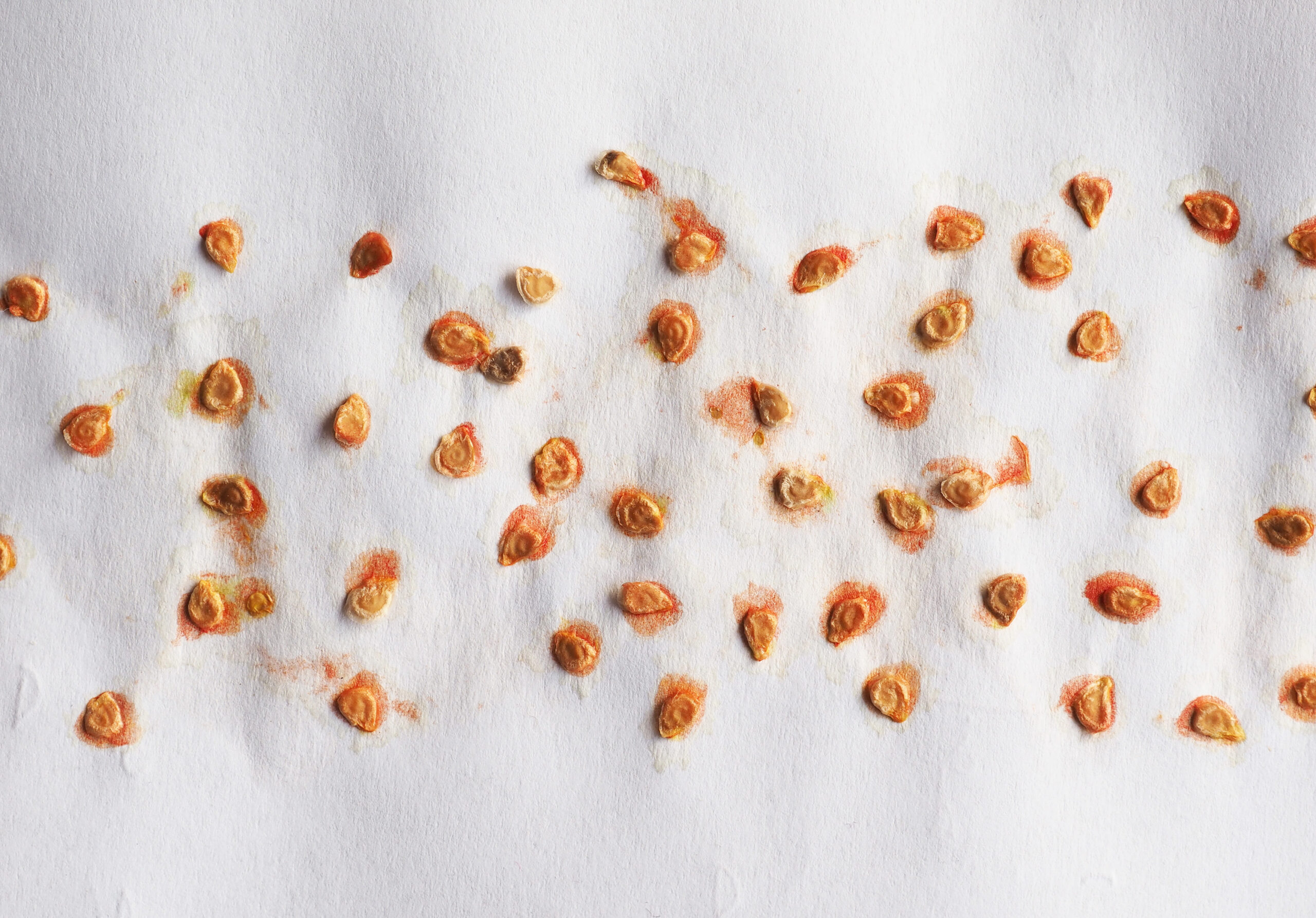
Tomatoes sounded intimidating until I actually tried it. The seeds are surrounded by a gelatinous coating that naturally prevents them from sprouting inside the fruit. Removing that coating usually involves letting the seeds ferment in a little water for a couple of days before rinsing and drying them. It sounds far more complicated than it really is, and once you’ve done it once, you’ll wonder why you waited so long.
Flowers have become one of my favorite places to experiment. Watching seed heads dry on coneflowers, zinnias, marigolds, and sunflowers makes me appreciate that every bloom
Perhaps the biggest surprise has been how seed saving has changed the way I look at gardening.
Instead of seeing the end of the growing season as the finish line, I now see it as the beginning of the next one. Every healthy plant becomes a potential source for next year’s garden. Every flower that goes to seed has a purpose. Even vegetables I once hurried to pull out suddenly have one last job to do.
Will I still order seeds every winter? Absolutely.
There are too many interesting varieties to stop exploring, and I’ll probably always have room in the garden for something new. But I’ll also be opening a small box filled with envelopes from this year’s harvest, each one carrying a little reminder that the garden isn’t just something we grow for a season.
Sometimes, if we let it, the garden grows itself right into the next year.
And I have to admit, there’s something pretty rewarding about that.
Seeds need to be fully mature before they’re collected. Dry seeds need to be completely dry before they’re stored. Otherwise, moisture becomes the enemy, encouraging mold and ruining months of work. A simple paper envelope labeled with the variety and the year often works better than an airtight plastic bag, especially until the seeds have thoroughly finished drying.
is already preparing for another season. Instead of cutting everything down the moment it finishes flowering, I’ve started paying attention to what comes afterward.
I’ve also learned that patience matters.
St Jo
TX 76265
USA
By Lacey Vilhauer
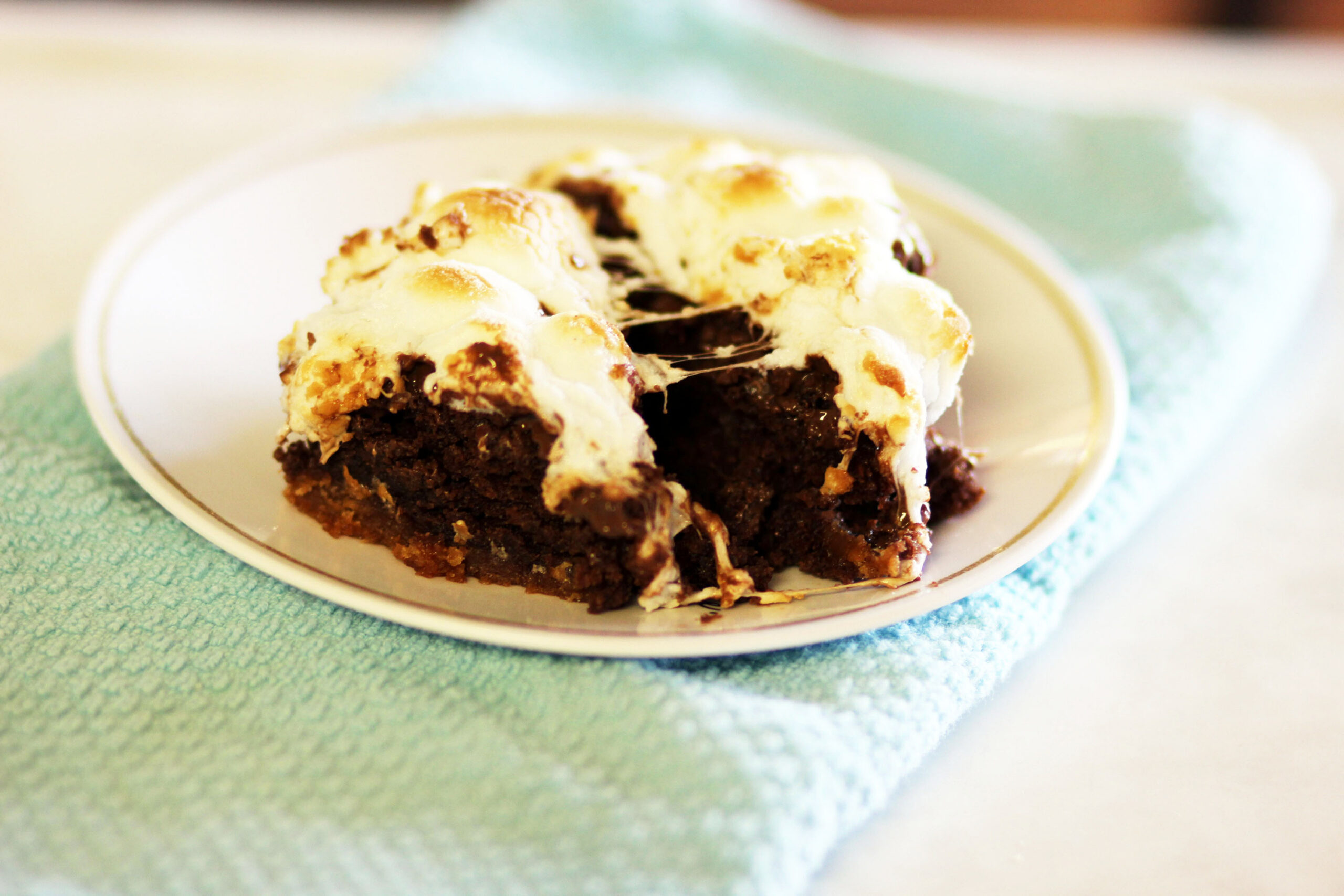
Ingredients: Graham Cracker Crust • 1 cup pulverized graham crackers (about 6 graham crackers, blended or food processed) • 1/3 cup butter (melted) • 1/4 cup brown sugar Brownies • 12 Tbs butter • 1 cup brown sugar (lightly packed) • 3/4 cup white sugar • 4 eggs • 1 1/2 tsp vanilla • 1/4 cup flour • 1 cup cocoa powder • 1 cup milk chocolate chips Toppings • 4 Hershey’s Bars • 10-ounce bag of mini-marshmallows
Instructions: • Preheat oven to 350 degrees Fahrenheit • Grease an 8×8 baking pan • Graham Cracker Crust • Pulverize graham crackers and stir in melted butter. Stir in brown sugar. Press into bottom of baking sheet and set aside.
Brownies In a heavy sauce pan melt butter and stir in white and brown sugars, stir over medium heat for about 1-2 minutes until sugar starts to dissolve. Remove from heat, add vanilla. Add eggs in one at a time and whisk them into the sugar butter mixture. Add flour and cocoa powder and stir together. Fold in chocolate chips. Pour brownie mixture over the top of graham cracker crust. Bake for 40 minutes. Remove from oven and turn oven to broil. Immediately put chocolate bars over the top and top them with mini-marshmallows (or cut up large marshmallows). Broil for one to two minutes (keep an eye on them so they don’t burn), remove once brown. Let cool.
St Jo
TX 76265
USA
By Savannah Magoteaux
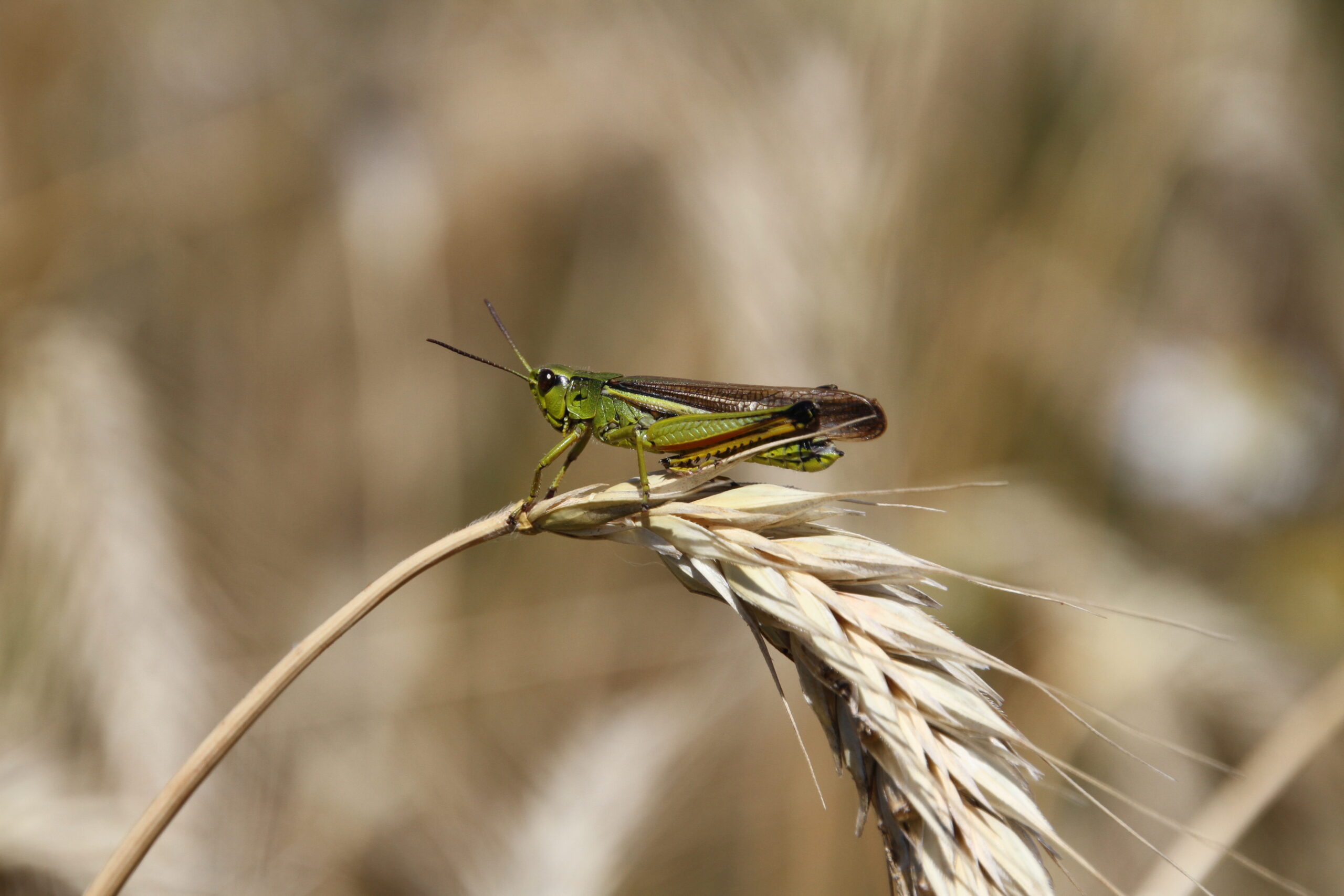
They scatter ahead of the mower, jump from garden rows, cling to fence posts and seem to rise out of the pasture with every step. One or two grasshoppers might still feel like part of summer. A few more may not seem like much of a problem. But when the ground looks like it is moving, and every tomato plant, flower bed or patch of green grass seems to have bite marks, grasshoppers quickly move from background noise to real irritation.
In Oklahoma, grasshoppers are nothing new. They are part of the late-summer landscape, especially in hot, dry years. While they may seem to appear all at once, their numbers usually build over time.
Eggs are laid in the soil, often in undisturbed grassy or weedy areas, and young grasshoppers begin hatching in the spring. As the season progresses, they grow larger, become more mobile and are much easier to notice.
By late summer, many grasshoppers are no longer tiny insects tucked away in roadside grass. They are bigger, stronger and able to move longer distances. That is when homeowners, gardeners and producers often begin seeing the real damage.
Grasshoppers feed by chewing. That means the damage they leave behind is often easy to recognize. Leaves may look ragged, stripped or full of holes. In gardens, they may chew on vegetables, flowers and young plants. In pastures and hay fields, heavy numbers can add pressure to forage that is already dealing with heat, drought or grazing. Around barns, yards
and field edges, they may seem to be everywhere at once.
Weather can play a major role in how bad grasshoppers become. Warm, dry conditions are often favorable for them. Drought can reduce some of the natural diseases that help keep grasshopper numbers in check, and when native grasses or weeds begin to dry down, grasshoppers may move toward any green growth they can find. That may be a vegetable garden, irrigated lawn, flower bed, crop edge or low area of pasture that still has something tender left to eat.
The frustrating part is that by the time most people are truly tired of grasshoppers, they are also harder to control. Grasshoppers are much easier to manage when they are small and concentrated in hatching areas. Once they are large enough to fly or move freely across a property, control becomes more difficult and often less effective.
That does not mean there is nothing to do. It just means timing matters.
For gardeners, barriers can
help protect valuable plants, especially when plants are young. Row covers or other lightweight covers may reduce feeding damage if they are placed before grasshoppers are already in the plants. Some people also use protective cages or netting around individual plants. While these methods are not always pretty, they can make a difference in a home garden where the goal is to protect a few important rows or plants.
Managing weedy areas may also help, especially earlier in the season. Roadsides, ditch banks, fence rows and unmowed grassy spots can serve as places where young grasshoppers develop. Keeping those areas under control may reduce some pressure, though it will not stop grasshoppers from moving in from neighboring properties. That is one of the challenges with an insect that can travel.
There are insecticides and baits labeled for grasshopper control, but they should be used carefully and according to the label. The right product depends on where it is being
used, whether it is a garden, landscape, pasture or crop setting, and what else is in the area. It is also important to consider pollinators, livestock, pets, water sources and harvest restrictions. When in doubt, Extension guidance is one of the best places to start.
It is also worth remembering that not every grasshopper problem requires the same response. A few grasshoppers in the yard are annoying. Heavy feeding in a garden may be worth addressing. Large numbers in a pasture or crop setting may require a more serious look, especially if forage is already limited.
Natural predators, including birds and some insects, do feed on grasshoppers, but they rarely eliminate a large outbreak on their own. Chickens may help around a yard or garden area, but they can also create their own kind of damage if turned loose in the wrong place. Like most things on the farm or around the house, there is usually a trade-off.
By late summer, grasshoppers may feel like just one more thing to deal with. The grass is tired, the garden is tired, the livestock are tired and most people are tired, too. Still, understanding why grasshoppers build, where they come from and when control works best can make them a little less mysterious.
They may always be part of an Oklahoma August, but they do not have to catch us completely off guard. Watch the field edges. Pay attention to young plants. Notice when small grasshoppers first begin to show up.
Because when grasshoppers take over, they rarely do it quietly.




-

 Country Lifestyles4 years ago
Scott & Stacey Schumacher: A Growth Mindset
-
 Country Lifestyles10 years ago
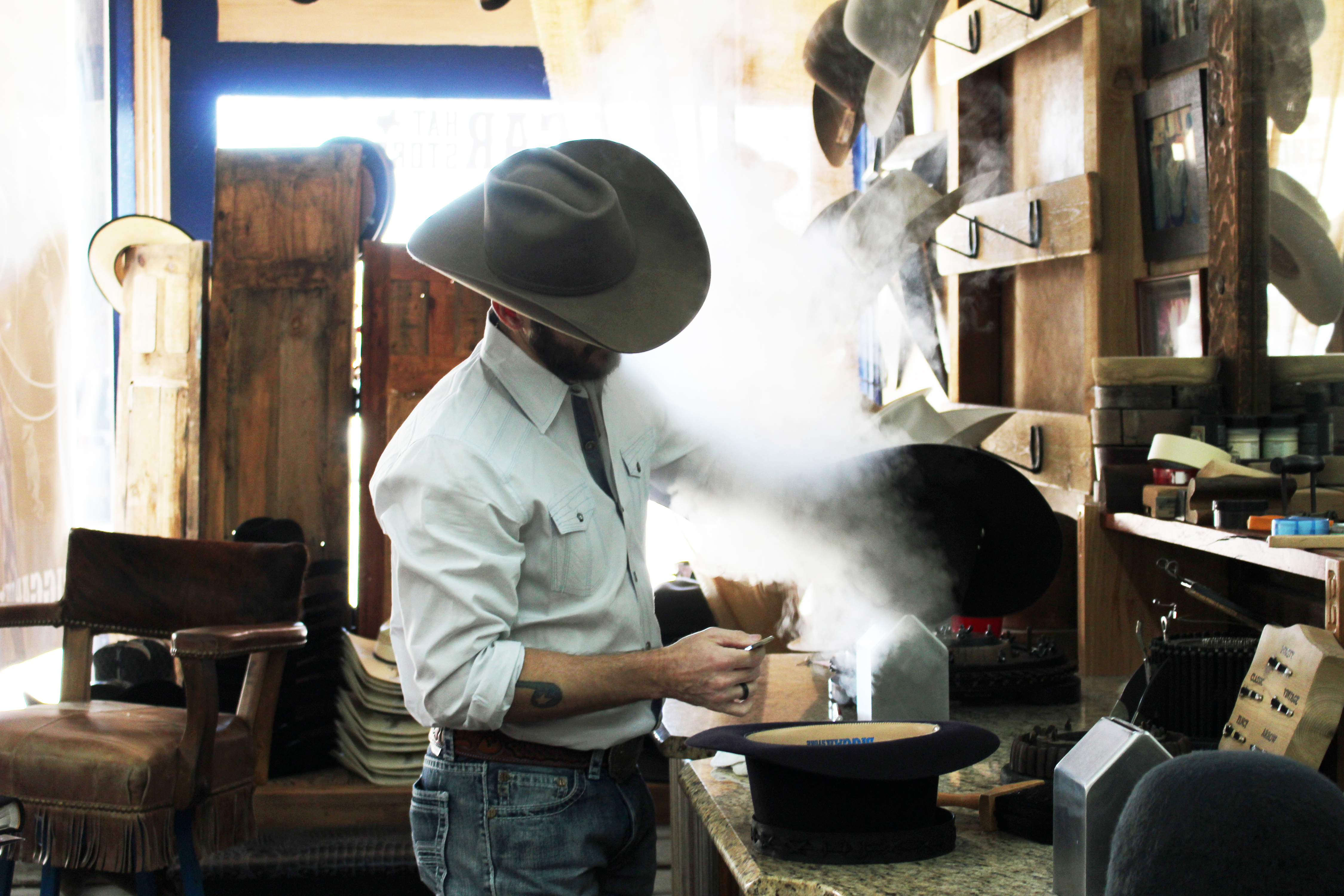
Style Your Profile – What your style cowboy hat says about you and new trends in 2017
-
 Horsefeathers12 years ago
Mount Scott: Country Humor with David Gregory
-
 Country Lifestyles10 years ago
June 2016 Profile – The man behind the mic: Bob Tallman
-
 Outdoor11 years ago
Buttercup or Primrose?
-
 Country Lifestyles10 years ago
December 2016 Profile, Rusty Riddle – The Riddle Way
-
 HOME10 years ago
Grazing North Texas – Wilman Lovegrass
-
 The Natural Horseman9 years ago
This is why we do what we do — RayeAnn and Cisco