
Farm & Ranch
[AgriLife] Texas crop, weather report for March 1, 2016

By: Paul Schattenberg
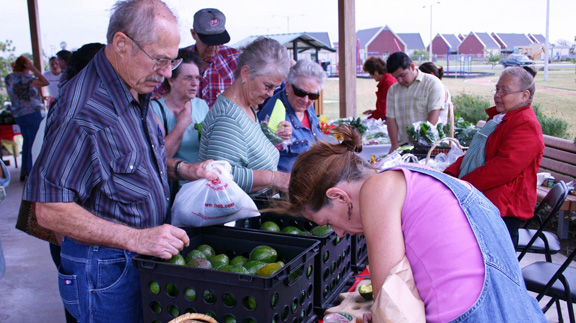
DALLAS — While most people typically think bright lights and big city when they think of the Dallas-Fort Worth metroplex, agriculture remains a primary driver of the area’s economy, said Dr. Blake Bennett, Texas A&M AgriLife Extension Service economist in Dallas.
“The area’s temperate weather and available irrigation water are well suited to numerous agricultural enterprises, including various livestock operations and more than 25 commercial crops,” Bennett said.
More than 20 different crops are produced commercially in the metroplex, including a variety of fruits and vegetables and major field crops.
“The climate and soil conditions are particularly well suited to the development of high-value specialty crops,” he said. “Primary crops include nursery crops, wheat, corn, grain sorghum, hay, and ensilage.”
These and other interesting facts about agribusiness and agricultural production throughout an eight-county area in North Texas can be found in the recent publication “Agribusiness: The Impact of Agriculture in the Dallas-Fort Worth Metroplex,” which is on the agency’s Agricultural Economics website, http://agecoext.tamu.edu/files/2013/08/DFWMetroplex.pdf.
Bennett said the metroplex is so well suited to agriculture that per the state’s agricultural census from 2007 to 2012, the number of farms and acres of agriculturaa-use land in the eight-county area in and around the metroplex increased by nearly 10 percent.
“This growth is in contrast to the rest of Texas where during the same time frame the number of farms increased by just over one-half of one percent and farmland actually saw a small decrease,” he said. “Also counter to state trends, farms of every size in the metroplex saw increases — the greatest being among smaller-acreage farms.”
During the same time period the rest of the state showed only an increase in the number of farms in size ranging from 10 to 179 acres, with all other size categories showing decreases.
“The owners of most of these small-acreage farms have primary jobs that are off the farm, but still produce enough to make a significant economic impact on the area,” Bennett said. “And the reasons for people purchasing small farms are as diverse as the metroplex itself.”
He said some small-acreage farmers want to grow organic produce while others just want to experience a more rural lifestyle or use their farm for agritourism or agritainment, such as providing festivals, hayrides, corn mazes or a pumpkin patch experience.
Bennett added those who own smaller farms, especially farms of 20 or fewer acres, are also more likely to grow alternative or “niche” crops than larger commercial farmers, and many small-scale farmers tend to focus on cattle and hay production as the most effective use of their limited acreage.
“While impressive, the figure still does not reflect the entire value of the agricultural industry in the region, as data limitations prevent the inclusion of public sector employees involved in agriculture,” he said. “Production agriculture in this region is as diverse as the communities and landscape within it.”
He noted while housing, businesses, roadways and other aspects of urban structure and infrastructure have grown significantly in the region, production agriculture has seen significant growth as well.
“While we don’t have figures for after 2012, it is apparent that agricultural production in this area continues to be on the upswing, and the trend toward smaller farms continues,” Bennett said.
AgriLife Extension district reporters compiled the following summaries:
CENTRAL: Counties in the region reported 90 percent good soil moisture with the area receiving rains ranging from 1.5 to 2.8 inches. Range and pasture conditions were fair, as were overall crop conditions. Corn planting began and some producers were putting down fertilizer and weed control on Bermuda grass pastures. Stock tanks were full and cattle remained in good condition. Producers were preparing and planting fields with milo.
COASTAL BEND: Up to 2.5 inches of rain fell across most of the region, improving soil moisture conditions. Corn and some grain sorghum planting began. Some corn fields have emerged and a little cotton was planted. Wheat was in good condition and warm-season perennial pastures were growing. Some controlled burns took place. Cattle were in good condition.
EAST: Conditions around the region were cold and windy. Subsoil and topsoil conditions were mostly adequate with a few counties reporting conditions as short. Nighttime temperatures dropped to the low 30s with daytime temperatures in the 60s and 70s. Most of the counties received much needed rain with amounts up to 4 inches. Most counties were reporting pasture and range conditions as poor with only a few reporting conditions as good. Winter forage crops improved and the risk of fire danger was reduced. Producers were top dressing winter pastures. Fertilizer prices have come down. Some applications of fertilizer were being made on cool season annuals. People were preparing to plant their spring garden vegetables. Spring sprouting has begun on trees and flowers. Fruit tree pruning was underway. Livestock were in fair to good condition. Cattle were chasing the grass that has sprouted up, but there was not enough to sustain them so producers were still supplemental feeding. Spring breeding season had begun. Cows were calving. Selling of market ready calves and culls continued. Cattle numbers were still low but prices were slightly better. Feral hogs continued to be a problem.
NORTH: Topsoil moisture varied from adequate to short. Rainfall amounts ranged from about 1.5 to 2.5 inches. High winds and rain slowed down farming activity, and many corn farmers were waiting until fields dried out so they could plant. Cattle ranchers were trying to pull cattle off wheat and other winter annual pastures. Continued temperature swings caused stress with livestock, as it affected cool season forages and crops. Fruit tree buds were swelling and some were starting to bloom. Winter pastures greened up but had little growth. The mild temperatures were good for forage but questionable for fruit production.
PANHANDLE: Temperatures ranged from cold to warm. Some areas received moisture in the form of rain or snow. Potential wildfire conditions persisted throughout the region, slowing some farm work. Preparations were being made for spring planting. Winter wheat greened up but needed moisture. Dallam and Hartley counties were warm and dry, so activity picked up in the field as producers put down fertilizer and pre-emerge herbicides ahead of corn planting. Some pre-watering was being done. Supplemental feeding continued among cow-calf producers. Spring calving was underway and calves were getting off to a good start. A few weeds started to emerge in pastures, and cool-season grasses greened up. Wheat-pasture stocker cattle made good progress. Deaf Smith County producers also prepared for spring plantings. Pasture cattle were doing well, thanks to above-normal temperatures and adequate soil moisture providing excellent forage. Cattle on wheat were in good condition. In Hutchinson County, some weeds began to emerge and producers needed moisture for a good start on their crops. Wheeler County wheat needed rain and was showing some moisture stress, but cattle remained in fair shape. Many herds are experiencing lice problems; winter annuals provided some grazing in native pastures. Farmers began shredding cotton stalks and preparing land for spring planting. Range and pasture conditions varied from poor to excellent with most reporting good to fair.
ROLLING PLAINS: Rain fell across parts of the region with amounts ranging from 0.5 to 2 inches, helping the wheat crop. Range and pastures were in better condition though pastures still had dead winter grass and weeds, which could act as fuel for a wildfire. Livestock were in good condition and preparations were being made for row-crop planting. Cotton remained a concern from a market standpoint.
SOUTH: Temperatures throughout the region were warm during the daytime and cool at night. Rainfall occurred in some counties ranging from drizzling to heavy downpours, with the heavy rainfall brought by storms tracking across the region. In the northern part of the region, conditions were good. Rainfall from 1.5 to 4 inches, was reported throughout the area. Rainfall was accompanied by hail, which damaged spinach and potato crops throughout the area. In Frio County, wheat and oat crops responded well to the much-needed rainfall. Some of the southeast portion of the county received the lesser rainfall with the northern portion receiving the most. Range and pasture conditions remained mostly unchanged and in fair overall condition in McMullen and surrounding counties. Supplemental feeding continued at a steady pace but declined some as temperatures warmed. Cattle body-condition scores remained fair. Soil moisture was 100 percent adequate in the Atascosa and Frio County areas, 80 percent adequate in the LaSalle County area and 60 percent adequate in the McMullen County area.
In eastern parts of the region, range and pastures improved throughout Brooks County, even though conditions were generally very dry. Supplemental feeding continued at a steady pace. Two cold fronts swept through the Jim Wells County area, but no significant rainfall was received. Temperatures were milder during the day and colder at night. Windy conditions continued to reduce topsoil moisture in most row-crop fields. Jim Wells County had minimal planting activity. Some of the corn crop emerged with good stands. Additional moisture will be needed to help with row crops throughout the area and to improve forage quality. Corn crops in the Kleberg/Kenedy county area were also almost completely planted, and sorghum planting was underway. Soil moisture conditions were 100 percent adequate in the Brooks County area. Jim Wells County had 50 percent adequate subsoil and 100 percent short topsoil moisture. Kleberg/Kenedy County soil moisture conditions were 50 to 60 percent short. Range and pasture conditions were fair.
In the western part of the region, Dimmit County received isolated showers and Maverick County received some light rain. Coastal Bermuda grass continued in its dormant stage and was yellow, but will soon be ready for its first cut of the year. Weather conditions remained cool with only a small amount of rain was received throughout the area. Temperatures reached the 80s and 90s in Zapata County. Pastures remained green but with some visible stress due to the lack of rainfall. Strong winds, heavy rainfall and hail hit parts of Zavala County, causing damage to buildings and crops. Cabbage and spinach producers began preparing insurance claims for crop damage but the extent of damage was as yet unknown. The storms also damaged center irrigation pivots in some parts of the county. Livestock on native range and pastures continued to receive supplemental feed. Soil moisture conditions throughout the area were 50 percent short in Dimmit County, 70 percent short in Maverick County, 40 percent short in Zapata County and 100 percent adequate in Zavala County.
In the southern parts of the region, sorghum, cotton and corn planting progressed well in Cameron County. Of the crops planted, a minimum amount of grain sorghum was planted. Also in Cameron County, some harvesting of hay occurred in improved pastureland. Grain sorghum and cotton planting was active in the Hidalgo County area, as was the harvesting of sugarcane, citrus and vegetables. In Starr County, onion crops progressed well, beef cattle producers continued supplemental feeding and range and pastures showed signs of moisture stress. Soil moisture conditions were 60 percent adequate in Cameron County, 70 percent adequate in Hidalgo County and 90 percent adequate in Starr County.
SOUTH PLAINS: Recent moisture in Cochran County has improved subsoil and topsoil moisture in pastures and rangeland. Winter wheat dealt with fluctuating hot and cold temperatures while producers attempted to get ready for spring planting. Floyd County received rain from 0.3 to 2 inches, which will help winter wheat and make planting conditions more favorable. There was warmer-than-normal weather in Hale County and limited moisture was a concern. Wheat crops looked good and livestock were in good condition. Hockley County received an early rain so some producers were kept out of the fields for a few days. Lubbock County had good weather with light precipitation. Fruit trees began to bloom. Land preparation continued and area wheat fields were nearing the jointing stage. Scurry County received from 0.2 to 0.5 inches of rain.
SOUTHEAST: Soil-moisture levels throughout the region varied widely, mostly in the adequate to surplus range with adequate being the most common. Fort Bend, Chambers and Walker counties reported 100 percent adequate. Rangeland and pasture ratings were mainly fair to poor, with fair ratings being the most common.
In Walker County, rain replenished moisture levels. Cool-season forages such as clovers grew well and were looking good, as did ryegrass. Most of the region had excellent soil moisture for planting crops. In Brazos County, scattered showers provided 1 to 2 inches of rainfall. Corn producers prepared for planting. In Grimes County, rain replenished the topsoil moisture, but was followed by strong winds that may have prevented much of the moisture to be absorbed. Montgomery County received 2 to 3 inches of rain with morning temperatures in the 30s and mild daytime temperatures. Waller and Brazoria counties also received rain. Chambers County was drier, but still had enough moisture to initiate field work. Rice fields were being readied for planting. Fort Bend County received approximately 1.5 inches of rain countywide, which delayed corn planting but provided much-needed moisture to pastures. Producers were also preparing to plant grain sorghum soon. Livestock were in good condition.
SOUTHWEST: Recent rain from 1 inch to 4 inches helped with small grain and pastures. Some areas got hail, which damaged some leaves on forage. The colder weather was good for peaches. Some farmers began fertilizing. Supplemental feeding of cattle continued.
WEST CENTRAL: Most of the area received rainfall ranging from 0.5 to 2 inches, putting much-needed moisture back in the topsoil. Unseasonably high temperatures brought on spring-like conditions earlier than normal, but high winds continued to cause range fire concern. Some cooler weather and a light freeze set back some warm-season grasses and forages that had previously began to break dormancy. The winter wheat crop remained in good condition and showed good growth. Row-crop producers were plowing fields and spraying winter weeds. More rain will be needed before spring planting. Livestock grazed winter wheat and remained in fair to good condition. Some supplemental feeding continued and cattle prices remained steady.
-30-
LikeTweet
Find more stories, photos, videos and audio at http://today.agrilife.org
By Tony Dean, tonydean.tx1@gmail.com
Who qualifies as your neighbor? Webster says it is someone who lives nearby, but it isn’t always that simple. Is my neighbor the person next door, or someone in the next county? It could be both.
Our neighbors are an important part of life on the ranch and the grazing lands we share. Many of us find comfort in knowing another human being is somewhere in our neck of the woods, and that someone nearby cares what happens to us.
Being a good neighbor is part of being a productive and responsible rancher, so let’s look at some of the qualities that make a good one.
Protect your neighbor
Watch out for him.
The cattle business is dangerous. Almost everything we work with is bigger and faster than we are. A mad cow can turn an otherwise wonderful day into a disaster. Sooner or later, all of us will need some help.
The average age of today’s rancher keeps climbing. Be aware of your neighbors’ ages, limitations or disabilities, and keep an eye out for anything outside their normal routine.
More women own and operate ranches today, too. Some may suddenly find themselves responsible for parts of the operation that a spouse or family member used to handle. As neighbors, we can be a valuable backup system, helping one another learn, adjust and keep the operation moving.
And then there is wildfire. It can be on us in minutes. You may need to help move a family down the road to safety or move livestock out of harm’s way. Have a plan in mind before the emergency happens.
Be a friend
Some of us who live in the country drive to town for work or make regular trips for other reasons. Others are stay-at-home ranchers, and life can get a little lonely. A friendly smile, a phone call or an invitation to lunch can mean more than we realize.
Things aren’t always wine and roses at the ranch. Few occupations ask people to juggle such a mix of complex markets, weather, natural resource management, livestock management and countless other issues.
Spirits can get low. If we are listening, we can hear and feel the stress in someone’s life. On those days, you have a chance to be a special kind of friend.
Help your neighbor
Have you ever tried to load a trailer by yourself and needed someone to stand in the gate for a couple of minutes? All of us will need help at some point, and our neighbors should be among the people we can call.
Do your best to be there when needed, and your neighbors will likely be there when it is your turn to ask. Sometimes it will be a small job. Other times, it will be a big one. It doesn’t matter. We help our neighbors.
It’s also smart to make sure someone nearby knows your ranching program and understands the land you use. At some point, one of you may need to take care of business for the other for several days.
Be cooperative
There is no end to the situations that can involve more than one family. Fencing, road maintenance and livestock getting where they don’t belong are common ones.
If you don’t handle these things with a friendly, cooperative attitude, they can create problems between neighbors that last for years.
Good fences are something to be proud of. Nothing is gained by years of bickering. Reaching an agreement may be hard at times, but neighbors should be able to work things out. Clear your head, use common sense and come up with an answer everyone can live with.
If your cattle get mixed up with your neighbor’s, make it a priority to separate them as soon as possible. It is rude to let your cattle stay in your neighbor’s pasture eating his grass while you do nothing about it.
One good way to handle strays is for the rancher whose pasture they are in to pen his own cattle along with the strays. The other rancher can then load his cattle and take them home. Afterward, both ranchers can work together on any fence repairs.
By the way, a gate between neighbors is almost always a good policy.
Take ownership
The only way to avoid mistakes is to do nothing. But it isn’t in us as ranchers to sit around and watch the world go by. We are men and women of action, so things are going to go sideways from time to time.
When that happens, and it will, own your mistakes. Decisive action can prevent misunderstandings and make a problem go away much faster.
Be honest, and never, ever lie.
Be patient
We all have bad days. When your neighbor is a little grouchy, he or she probably has something weighing on them.
That is a chance to be a good neighbor. Be patient. Be a good listener. Help your neighbor through the turmoil if you can.
Respect property boundaries
Trespassing is wrong, illegal and rude. Never do it except in an emergency.
In the Southwest, where we live, land ownership is considered a sacred right, and it is a right available to anyone. With ownership comes an expectation of privacy and respect. When you trespass, you violate those rights.
And yes, it is trespassing when you cross a fence to fish or hunt without permission. Texas is a private-property state, which makes respecting these boundaries especially important.
That doesn’t mean you can’t have an understanding with your neighbors that lets you onto their land. Many good friends and neighbors work together on one another’s ranches, but both parties should always communicate well.
You have a cell phone. Use it any time you doubt whether you have the right to go through the gate. An invitation onto another person’s ranch is a privilege, so don’t abuse it.
Your word
Your word as a rancher, neighbor, man or woman helps define you in your community and throughout your life. Your neighbors want to trust you. They want to know that all they need from you is a handshake and that they can depend on what you say.
It is a blessing to live in North Texas, where people still respect and honor a life lived with truth and love.
A good life to live
Having good neighbors is a great way to live. It brings comfort and enjoyment to life. Sometimes it takes a little extra effort, but a friendly neighborhood, even one that covers many acres, is enjoyable and can help keep all of us safer.
It is worth the effort.
The Bible
The Bible has many references to being a good neighbor. Being a good neighbor was good judgment 2,000 years ago, and it is good judgment today. Jesus made it clear that love should guide a good neighbor.
Leviticus 19:18 tells us to love our neighbors as ourselves. That is a tall order. In Matthew 5:44, Jesus takes it further, telling us to love our enemies and pray for those who persecute us.
Our goal should always be to love one another, lift each other up, and help and protect our neighbors.
All of us face drought, floods, wildfire, tornadoes, low cattle prices, rattlesnakes and feral hogs, so let’s fight the fight together. Stand by your neighbor’s side, and he will stand by yours.
A North Texas minister was recently asked, “What do you do if you have a neighbor who is really hard to love?”
His answer was short and to the point: “Love him anyway.”
By NTFR Staff
A stack of hay may look good from the outside. The bales may be heavy, green and free of obvious weeds or mold. None of that tells a cattle producer what the hay will provide once it reaches the feed bunk.
Two bales from the same field can differ noticeably in nutrition if they were cut at different stages of maturity, weathered differently or stored under different conditions. The differences grow even larger when you compare hay bought from separate farms or produced in different growing seasons.
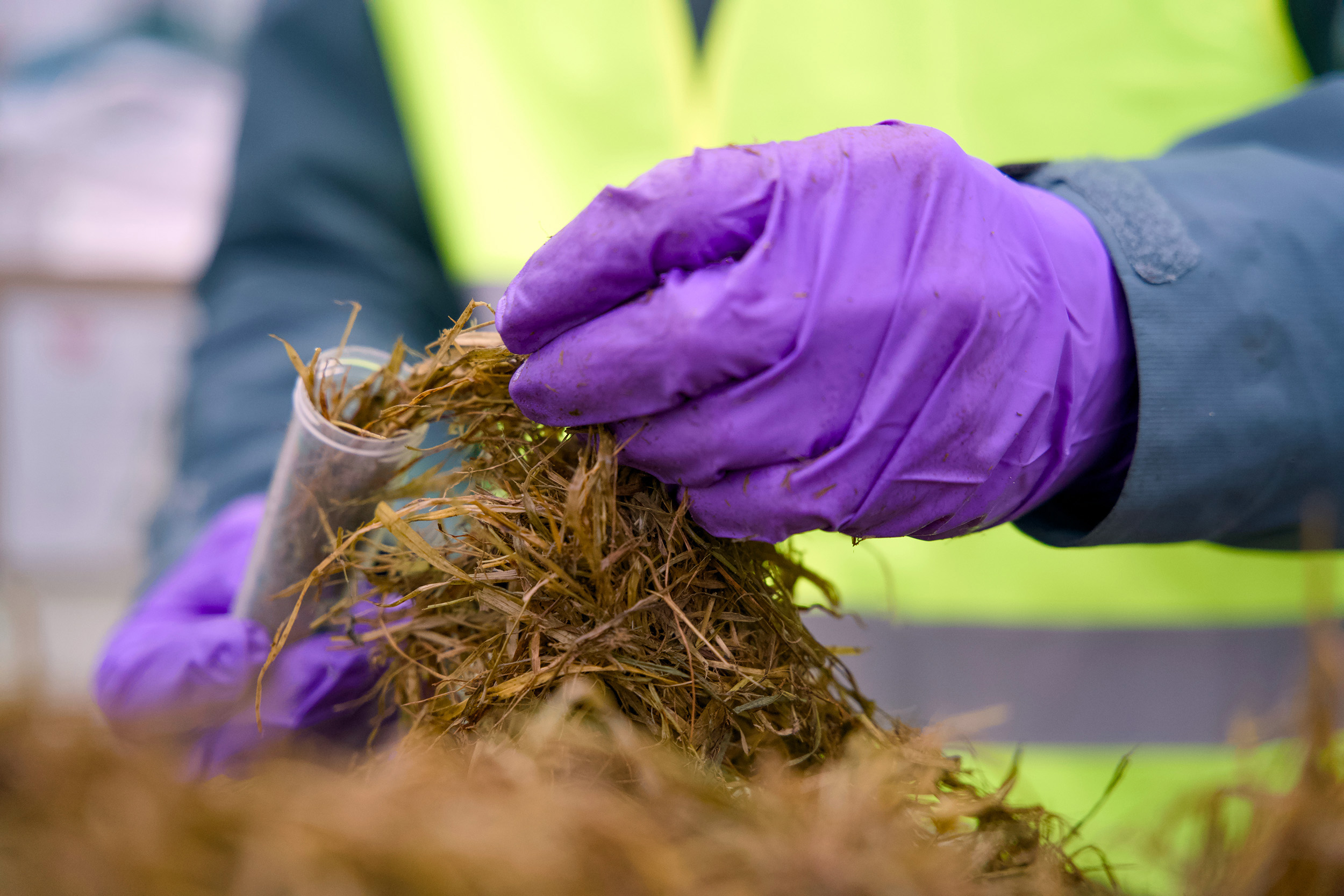
A forage analysis takes much of the guesswork out by showing what the hay contains and where you may need to supplement.
Crude protein is often the first number producers check, but it is only one part of the report. Energy, fiber, moisture and possible toxicity concerns can matter just as much when deciding whether a lot of hay suits dry cows, lactating cows, replacement heifers or growing calves.
Reading beyond the protein number
Most forage reports show results on both an “as received” and a dry-matter basis. The as-received column includes the water in the hay. The dry-matter column takes moisture out of the calculation so you can compare feeds with different moisture levels fairly.
For ration planning, the dry-matter values are usually the most useful. If you’re comparing dry hay with silage, cubes or another feed, make the comparison on a dry-matter basis rather than on the numbers as fed.
Moisture still deserves attention. Hay baled too wet is more likely to heat, mold or deteriorate in storage. In severe cases, heating can create a fire risk. Moisture also affects how many pounds of actual nutrients you are buying. A heavy bale isn’t necessarily a nutrient-dense bale if much of its weight is water.
Crude protein, usually listed as CP, estimates the protein in the forage based on its nitrogen content. Protein keeps the rumen microbes that help cattle digest forage working. When forage protein drops too low, intake and digestion may decline because those microbes can’t function as well.
The amount of protein a cow needs changes a great deal through the year. A mature, dry cow in mid-pregnancy needs less than a cow in late pregnancy or early lactation. Young, growing cattle and first-calf heifers may also need more protein than mature dry cows. Hay that is adequate for one group may fall short for another.
Always compare a forage report with the needs of the cattle that will eat the hay. Oklahoma State University notes that cattle requirements vary with weight, age, stage of production, desired gain and milk production. A single protein target can’t describe the needs of an entire herd.
Energy is another major piece of the feeding decision. Many forage reports express energy as total digestible nutrients, or TDN, an estimate of the digestible energy in the feed. Protein supports rumen function and tissue growth, while energy fuels maintenance, pregnancy, milk production and weight gain.
Hay can test well for protein and still come up short on energy. That matters most for cows nearing calving or producing milk. Low-energy hay may leave cattle feeling full without giving them enough nutrition to hold body condition. University of Nebraska Extension stresses evaluating both protein and energy when judging the feeding value of forage.
Fiber measurements help explain why cattle eat one hay readily and less of another. Neutral detergent fiber, or NDF, represents much of the plant’s structural material, including cellulose, hemicellulose and lignin. As NDF rises, cattle generally eat less because bulky, fibrous forage stays in the digestive tract longer.
Acid detergent fiber, or ADF, includes the least digestible parts of the plant. Higher ADF generally means lower digestibility and less available energy. Put simply, high NDF can limit how much cattle eat, and high ADF can mean they get less energy from what they do eat.
Both numbers tend to climb as forage plants mature. Mature hay usually has more stem and less leaf than hay cut earlier. It may still be acceptable feed for animals with lower needs, but it is less likely to support lactating cows or growing cattle without supplementation.
Some reports also include relative feed value, or RFV. This index uses ADF and NDF to compare forage quality, particularly for alfalfa and other legumes. It can help when you compare similar types of hay, but it doesn’t account for every nutrient cattle need. Don’t let RFV replace a closer look at crude protein, energy and the animal’s stage of production.
Depending on the lab package you choose, the report may include minerals. Labs commonly report calcium and phosphorus, but a forage analysis can’t replace a well-designed mineral program. Water quality, other feeds and interactions among minerals all affect mineral needs and availability. Work with an Extension specialist, veterinarian or livestock nutritionist before making major mineral changes.
Nitrate and prussic acid
A standard forage analysis may not include nitrates, and you often have to request that test separately. Nitrate testing is especially important for drought-stressed forage, heavily fertilized fields and crops such as sorghum, sudangrass, sorghum-sudan hybrids, millet, oats and some weeds.
Nitrate can remain in cured hay and doesn’t reliably disappear in storage. Test any hay you suspect of high nitrate before feeding it. Oklahoma State University recommends a laboratory analysis because field screening tests can show that nitrate is present but can’t measure how much.
Prussic acid is a different concern. Unlike nitrate, prussic acid usually dissipates as properly cured hay sits in storage, though suspect forage still needs careful management and professional guidance. Be sure which test you need, and don’t treat the terms nitrate and prussic acid as interchangeable.
Putting the numbers to work
A hay test pays off when it leads to a feeding plan. Once you have the results, you can match the hay to the right class of cattle. Save better hay for replacement heifers, thin cows, late-gestation cows or cows with calves at side. Feed lower-quality hay to mature dry cows with modest requirements.
Testing can also prevent unnecessary supplementation. Without an analysis, you may buy protein tubs, cubes or other supplements your cattle don’t need. The opposite mistake costs just as much. Assuming hay is better than it is can lead to lost body condition, lower milk production, poor breed-back rates and lighter calves.
Visual inspection still matters. Don’t ignore mold, foreign material, weeds, dust or heat damage because a lab report shows acceptable numbers. At the same time, color and appearance can’t reliably predict nutrient content. University of Nebraska notes that forage nutrient values vary widely, which makes average book values a poor substitute for testing the feed you have on hand.
A forage analysis won’t make poor hay better, but it can show you how to use that hay well. For the cost of a test, you get information that can guide hay purchases, cut supplement waste and put each lot of hay where it will do the most good.
The protein number may get the most attention, but it doesn’t tell the whole story. Understanding moisture, TDN, NDF, ADF and potential toxicity gives you a much clearer picture of what is inside the bale.

By Savannah Magoteaux
A September rain can be exactly what a North Texas pasture needs, but that flush of green can bring an unwelcome guest.
Fall armyworms are a familiar late-summer and early-fall pest across Texas, and they can do serious damage to pastures and hay fields when conditions are right. Bermudagrass is a common target, but armyworms also feed on small grains, ryegrass and other forage crops. The key is catching them early, before a manageable infestation turns into a field that seems to disappear overnight.
Despite the name, fall armyworms are caterpillars. The adult moths migrate into Texas and lay masses of eggs on grasses, fence posts, buildings and other surfaces. Once the larvae hatch, they start feeding on plants.
Young armyworms are small and hard to spot unless you are actively scouting. As they grow, their appetite climbs. Larger larvae can strip leaves fast, leaving stems behind and cutting into available forage or hay yield.
Look for an inverted, light-colored “Y” on the caterpillar’s head. Mature larvae can reach about 1½ inches long and often have several dark and light stripes running the length of the body.
Armyworms feed most actively during the cooler parts of the day, so early morning and late afternoon are good times to scout. Walk through several areas of the pasture rather than checking only along the edge. Look closely near the soil surface and beneath grass leaves, especially where you see fresh feeding damage.
Scouting matters most after rain or irrigation. New grass growth draws newly hatched larvae, and populations can build quickly when conditions favor them.
Texas A&M AgriLife Extension generally recommends considering treatment in improved pastures when you find about three or more armyworms per square foot. The decision should also weigh the size of the larvae, how much forage is present, the expected hay value and how severe the damage is.
Timing matters. Small armyworms are easier to control than large ones, and an insecticide does less good once the caterpillars are nearly mature and have already eaten much of the forage. If you treat, follow the product label carefully, including grazing and hay-harvest restrictions.
Don’t assume one treatment or one scouting trip will carry a pasture through the season. Fall armyworm moths can keep moving into an area, laying more eggs and starting another generation of larvae. Keep checking fields even after you have controlled an infestation.
For hay producers, an approaching harvest date can also shape the decision. When the crop is close to harvest, cutting the field may be a better option than spraying. The best choice depends on the number and size of the armyworms, how much forage remains and whether the weather allows you to cut hay.
September rain is usually welcome across North Texas, especially after a long, hot summer. Just remember that fresh green grass deserves a closer look. A few minutes of scouting can make the difference between catching fall armyworms early and finding the damage after they have eaten their fill.




-
 Country Lifestyles4 years ago
Scott & Stacey Schumacher: A Growth Mindset
-
 Country Lifestyles10 years ago
Style Your Profile – What your style cowboy hat says about you and new trends in 2017
-
 Horsefeathers12 years ago
Mount Scott: Country Humor with David Gregory
-
 Country Lifestyles10 years ago
June 2016 Profile – The man behind the mic: Bob Tallman
-
 Outdoor11 years ago
Buttercup or Primrose?
-
 Country Lifestyles10 years ago
December 2016 Profile, Rusty Riddle – The Riddle Way
-
 HOME10 years ago
Grazing North Texas – Wilman Lovegrass
-
 The Natural Horseman9 years ago
This is why we do what we do — RayeAnn and Cisco