
Equine
Six World Champions crowned at Stock Horse World Show

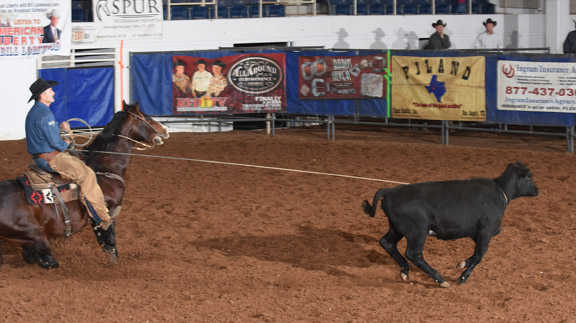
Photo: Mike Major and Smart Whiskey Doc earn their first Stock Horse World Championship. The event featured competition in stock horse pleasure, trail, reining and cow horse and crowned world champions in six different divisions. Photo courtesy of WillieGomezPhotos.com.
FOR IMMEDIATE RELASE
November 5, 2015
Media Contact:
Jill Dunkel, Dunkel Designs
940-631-4658
SHOT Contact:
Kim Lindsey, Executive Director
855-846-SHOT (7468)
Six World Champions crowned at Stock Horse World Show
More than 150 horses and riders gathered in Abilene, Texas, for the Western Horseman Stock Horse World Championship. Six world titles were awarded as well as more than $70,000 in cash and prizes. Contestants tested their abilities in four Stock Horse of Texas (SHOT) classes – stock horse pleasure, trail, reining and cow horse – in several different divisions.
Despite a scary fall in the cow horse, Mike Major and Smart Whiskey Doc prevailed in the Open division, winning the duo’s first SHOT world championship. Mike and “Whiskey” have won several titles together, including an AQHA Select Working Cow Horse world championship as well as AQHA Versatility Ranch Horse world championships in 2009 and 2010. Mike brought Whiskey out of retirement to come to the SHOT world show. He was reserve world champion on Cowpony Express, owned by Diamond JK Ranches and R. Snider. Mike’s daughter, Shanae Major and Chica Shine also earned a buckle as Youth Reserve World Champion.
The Non Pro and Youth titles went to a father and son duo, William and Christopher Lewis. William piloted Shiney Vintage Chic to win the all around on both days of competition. William has worked his way through SHOT’s divisions, starting as a Novice a few years ago and is now a Non Pro rider. The world show win also secured William as the Non Pro Year End SHOT champion. Sidney Dunkel and Bobbie Can Do finished the weekend as Reserve Non Pro World Champions.
William’s son, 12-year-old Christopher earned the Youth world championship on Colonels Colonel. The youth title was a very tight race and came down to the last class before a winner was determined. Christopher’s horse, Colonels Colonel is a SHOT Merit Hall of Fame inductee. The gelding has been shown by three different SHOT members during his career.
Jenifer Ingram and Rey Jay Boonsmal repeated as Limited Non Pro World Champions, with Nonie Casselman-Reed and Zeena Lena finishing reserve. Ingram, who had never ridden a reining or cow horse before purchasing Rey Jay Boonsmal, has become a steady SHOT competitor. Rey Jay Boonsmal won the AQHA Senior Ranch Pleasure World Championship in 2014 with Mozaun McKibben.
Two members of the Texas Tech Ranch Horse Team finished as world champion and reserve world champion in the Novice division. Kameron Buchanan and Heza Hickory Colonel won the title by one point over Courtney Reynolds and Cows Playboy. Their consistency also helped propel the Texas Tech Ranch Horse Team to the top of the collegiate standings for the team world championship. The Texas A&M Stock Horse Team earned reserve in the collegiate division.
Another tight race was in the Junior Horse division, with Stacey McAlexander taking the world title on Who Whiz Hank. Stacey won the all around on the first day of competition, but was edged by Brianna Parnell and Surely Dolled Up for the all around on day two. When the two shows were combined, Stacey earned the championship by a narrow two-point margin. Brianna was reserve world champion.
The last day of the show featured the SHOT Futurity and Derby, where aged event horses showed in stock horse pleasure, trail, reining and cow horse. Bozo Rogers and his three-year-old Kuki Sioux took top honors in the Futurity winning $2,800. Kuki Sioux is owned by Wes and Sarah Williams. Reserve went to Clay Hight and Eureka Wild Card owned by Alex Bryant, earning $2,100. Non Pro honors went to Morgan Holmes on The Smart Dun. Morgan receives $1,000 in non-pro incentive money and was named the collegiate champion, receiving the Nathan Belcher Memorial Scholarship of $1,500 that goes to the highest placing college student.
The Derby championship went to Reata B Rejoicing, a 2011 mare owned by Jody Brooks and ridden by Mike Major. It paid $3,088 for the win. The reserve title was earned by Satin Lil Cat and came with a $2,098 check. The four-year-old stallion was piloted by Jake Lemons and is owned by Damian Rivera Cordero. The top Non Pro rider who received $1,000 in Non Pro incentive money was Sidney Dunkel on Boots Be Tuff. She also earned $1,786 for a third place finish in the open. The collegiate champion was Lanham Brown on R A B He Dunit. Lanham received the Zinn Lindsey Memorial Scholarship as the highest placing collegiate rider.
The SHOT Limited Futurity winner was Danae Parman and HR Mowawk Pepto, earning $1,200. Reserve limited champion was Jeff Conner on Cowboy Trasholena and a check for $200. Ashley Adams and TTU Guns N Bunnies won the $500 collegiate scholarship. The Limited Derby champion was Kerry Wink on Zack Wood Too, earning $1,225, with Dejonna Haneline taking reserve on Royal Rosie Lena for $797. Dejonna also won the $500 collegiate scholarship as the highest placing college student.
Complete results are available at stockhorsetexas.org/results. Stock Horse of Texas (SHOT) is a family friendly horse show association that has been “helping people ride a better horse” since 1996. They host clinics and shows around the state. For more information and dates of upcoming events, visit stockhorsetexas.org.
-30-

Winter brings its own set of challenges. For ranchers and horse owners, few are more pressing than keeping water available. Cold weather, frozen tanks, and ice buildup can cut animals off from the single most important nutrient. Cattle can survive on short pasture and horses can get by on hay, but without water, everything stops. Hydration affects digestion, body temperature regulation, and overall health. That’s why every winter, producers across Oklahoma and North Texas turn their focus to one essential question: how do you keep water flowing when the mercury drops?
The struggle against frozen water isn’t new. Generations before electricity, rural families learned to outsmart the cold with ingenuity and grit.
Chopping Ice – One of the oldest solutions was also the most labor-intensive: grabbing an ax or a bar and breaking ice daily. While effective, this method demands constant attention and becomes impractical during long cold snaps. Horses and cattle can quickly fall behind on intake if a rancher misses even a few hours.
Windmills and Groundwater – Traditional windmills pumping from underground aquifers often provided water that was warmer than surface tanks, since groundwater stays at a relatively stable temperature year-round. Many old ranches still rely on this method, though windmill upkeep is a challenge in itself.
Insulated or Buried Lines – Families learned to bury water lines below the frost line or wrap them with insulating material. That practice continues today, and it remains one of the most effective long-term strategies for preventing frozen pipes.
Floating Devices – Ranchers also improvised with floating logs, balls, or even old tires in stock tanks. The movement helped keep ice from sealing solid and gave livestock a space to drink. While not foolproof, the idea is still used in remote areas.
These methods show the persistence of rural people, but modern technology has added new tools to the fight.
Today, ranchers and horse owners have a wide menu of winter water solutions, ranging from simple add-ons to major investments.
Heated Waterers – Electric or propane-powered waterers remain the most reliable way to ensure animals never face ice. Available in tank heaters, floating units, or fully enclosed automatic waterers, they keep temperatures above freezing even during prolonged cold. The trade-off is cost: electricity bills can spike, and in rural areas, running lines to distant tanks may not be practical. Still, for barns, lots, and heavily used pastures, heated waterers are a standard tool.
Solar Solutions – Where electricity isn’t available, solar-powered heaters have gained traction. Panels run small heating elements or pumps, reducing reliance on grid power. Though initial costs are high, they provide independence and sustainability, especially in sunny but cold climates.
Geothermal Systems – Some operations use earth’s steady underground temperature to keep water from freezing. By burying lines or tanks and tapping into geothermal exchange, water stays at safe levels without heavy energy use. These systems are especially effective when designed into new construction.
Automatic Waterers with Constant Flow – In some cases, ranchers use systems that keep water trickling constantly. Movement prevents ice buildup, though it can waste water if not carefully managed. This method works best where water supply is abundant and low-cost.
Tank Additives – While chemicals are never recommended for human or animal safety, some producers use nontoxic dyes or floating covers to limit algae and ice. These are niche options, but they illustrate the creativity at play.
Practical Ranch Hacks – Many ranchers mix and match. Submersible de-icers paired with insulated tank covers, old truck hoods repurposed as windbreaks, or even placing tanks on south-facing slopes to maximize sun exposure can make the difference between usable and frozen water.
Why does all this matter so much? Because winter dehydration can have cascading effects. Horses, for instance, are prone to impaction colic when water intake drops. Cattle that can’t drink freely eat less feed, lose weight, and struggle to maintain body condition. Calves and older animals are especially vulnerable. Even wildlife around a farm benefits from accessible water sources.
Beyond animal health, reliable winter water reduces labor stress. Instead of breaking ice in multiple tanks at dawn and dusk, producers with dependable systems can focus on feeding, calving prep, or other winter tasks. In a season where daylight is short and weather unpredictable, those saved hours are invaluable.
Water is the lifeblood of the ranch, and winter tests every producer’s ability to keep it flowing. From chopping ice with an ax to installing solar-powered heaters, solutions have evolved, but the goal is the same: hydration without interruption.
For some, a floating log and a good bar might still get the job done. For others, investment in heated automatic waterers pays off every year. The choice depends on herd size, geography, and budget. What unites them is the understanding that winter water is not optional. It is essential, and it always will be.
References
Oklahoma State University Extension. Winter Livestock Water Management. https://extension.okstate.edu
Texas A&M AgriLife Extension. Cold Weather Livestock Care. https://agrilifeextension.tamu.edu
University of Minnesota Extension. Horse Hydration and Colic in Winter.
USDA Natural Resources Conservation Service. Livestock Watering Systems.
Aermotor Windmill Company. Windmills and Water Supply.

By Krista Lucas Wynn
Every fall, calf ropers descend onto a southwest Texas town for the annual Cinch Roping Fiesta, in San Angelo, Texas. The roping event was held October 23-26 and is the longest running stand alone roping event in the nation. The weekend features calf roping, breakaway roping, team roping, steer roping, and double mugging.
The fan favorite event is the invitational calf roping, featuring the top 30 of the Professional Rodeo Cowboys Association world standings, as well as five from a qualifying event held the day before. Bryce Derrer, of Portales, NM, dominated the competition by winning both go rounds and the average. He pocketed over $16,000 for his efforts.
Tom Crouse, Blane Cox, Chet Weitz, and Tyson Durfey followed Derrer in the first round, placing second through fifth respectively. Zane Kilgus, Cody McCartney, Logan Bird, Cash Enderli, and Riley Webb rounded out the second go round. Previously featured NTFR calf roper and local cowboy, Hagen Houck, also competed at the roping fiesta for the first time.
Weitz, of London, Texas, bested the short go field, with a time of 9.6 seconds. Kincade Henry, Webb and Brey Yore rounded out the final round.
World champion, Webb, also roped against world champion and 10 time Wrangler National Finals Qualifier, Caleb Smidt, in a 12 head match. Smidt retired in 2025 but still hung with Webb up until a missed calf cost him time. After that, Webb stayed consistent to finish the match with a time of 197.1 seconds, a full minute and a half ahead of Smidt.
A fan favorite event has quickly become the legends match, presented by O-H Triangle Ranch, during the calf roping event. This year, WNFR qualifiers, Jeff Chapman and Ricky Canton went head to head on six calves. Canton was the returning champion but was bested by Chapman after a back and forth contest. Chapman finished with a time of 84.3 seconds, and Canton turned in a total time of 91.7 seconds.
With three full days of roping, a remodeled arena, and beautiful weather, roping fans of all ages and disciplines had something to watch. Winnings for the calf roping and steer roping will count for the 2026 PRCA world standings. For full results, visit www.sanangelorodeo.com.

By Krista Lucas Wynn
As rodeo fans look forward to the 2025 Wrangler National Finals Rodeo, some professional cowboys and cowgirls made their dreams a reality, while others were pushed out at the very last second. The 2025 professional rodeo season wrapped up September 30th, and it took more money than ever before, with payouts larger than ever before.
Within the last week of the 2025 season alone, there were multiple rodeos scattered across the country, but most eyes were set on the Governor’s Cup held in Sioux Falls, SD.
Held the last weekend of September, the Governor’s Cup had the biggest payout with each round paying over $11,000 to win it, with Sunday’s finals being a clean slate and $32,000 going to the winner. This meant the Governor’s Cup had huge implications on the top 15.
In the bareback riding, young gun Rocker Steiner added to his lead in the standings by advancing to the final round where he rode Cosmic Stardust for 88 points. Tilden Hooper came into the event in 17th place and was able to move up to 14th by placing sixth and third in both rounds, keeping the veteran’s WNFR dreams alive.
Steer wrestlers, Cody Devers and Gavin Soileau, both created opportunities to advance to the final round, but both would also end in heartbreak. Devers, who was 16th in the standings, split third in the first round, and then missed his second steer. Soileau advanced all the way to Sunday, where he missed his steer to advance to the final four round. He went on to catch a chartered plane to San Bernadino, CA where he would win enough to slip into the top 15, showing what all it takes to even have a chance at the WNFR. Justin Shaffer, of Hallsville, Texas, won the event moving up to third place for his second WNFR qualification.
Going into the Governor’s Cup, team ropers Luke Brown and Trey Yates found themselves fighting for a spot in the top 15. They came out with a bang by winning the first round for $11,911 each. World champions Kaleb Driggers and Junior Nogueira moved back into the number one spot in the standings after they won the second round, the semifinals and the final four round.
In the saddle bronc riding, Q Taylor and Ben Anderson took advantage of the big money by both advancing to the Sunday finals. They both moved into the top 15, forcing Wyatt Casper and Lefty Holman on the bubble.
The calf roping was no different than most of 2025, featuring a showdown between Riley Webb and Shad Mayfield. World champion, Shane Hanchey, did not go quietly though. He came into the event in 16th place, and after placing in both long rounds, fought his way into the top 15.
In the breakaway roping, Bailey Bates and Martha Angelone both needed to win money in order to move up into the top 15. Both ended up advancing to the final round, even with Angelone having a broken barrier. Angelone ended up breaking out again in the final four, and Bates roped a 2.1 to win the Governor’s Cup. She moved up to 12th in the standings, while Angelone unfortunately finished 16th for the year.
Texas cowgirls, Halyn Lide and Tricia Aldridge, both did what they needed to do in barrel racing. Aldridge rode her standout stallion, Adios Pantalones, to their first WNFR qualification. They placed seventh and fifth in the rounds, advancing to the semifinals. Then, ran the fastest time in the semifinals and finished second in the finals behind Halyn Lide. Lide placed eighth in both rounds, fourth in the semifinals and won the finals securing her spot at her second WNFR.
Meanwhile, Lide’s sister-in-law, Katelyn Scott, was battling it out at five rodeos across the country to qualify for her first WNFR. She won a total of $9,118 in the last week of the regular season, and slid into the 15th spot to join her sister-in-law at the WNFR.
World champion bull rider, Ky Hamilton, rode all four bulls at the Governor’s Cup to walk away with the win and qualify for his fifth WNFR. Clayton Sellers had a chance to capitalize on the money up for grabs but got bucked off in the final round. Sellers, along with other roughstock cowboys, had to await their fate up to the very last day of September, after the inaugural event, Duel at the Dunes, concluded.



-
 Country Lifestyles3 years ago
Scott & Stacey Schumacher: A Growth Mindset
-
 Country Lifestyles9 years ago
Style Your Profile – What your style cowboy hat says about you and new trends in 2017
-
 Horsefeathers12 years ago
Mount Scott: Country Humor with David Gregory
-
 Country Lifestyles10 years ago
June 2016 Profile – The man behind the mic: Bob Tallman
-
 Country Lifestyles9 years ago
December 2016 Profile, Rusty Riddle – The Riddle Way
-
 HOME9 years ago
Grazing North Texas – Wilman Lovegrass
-
 Outdoor11 years ago
Buttercup or Primrose?
-
 The Natural Horseman9 years ago
This is why we do what we do — RayeAnn and Cisco