Pioneer Day: A Living History Day at the Jack County Museum

241 W. Belknap
Jacksboro
Texas
Relive the days of long ago in early Jack County. Demonstrators will present exhibits and activities of the early Texas settlers. There will be music, storytelling, and fun. Event will be 10 a.m. to 3 p.m. Admission free. Authentic chuckwagon lunch available from 11:30 a.m. to 1 p.m. $10 for adults, $6 for children under 12. For more information call Frances Easter 940-567-5900

241 W. Belknap
Jacksboro
Texas
By Shannon Gillette
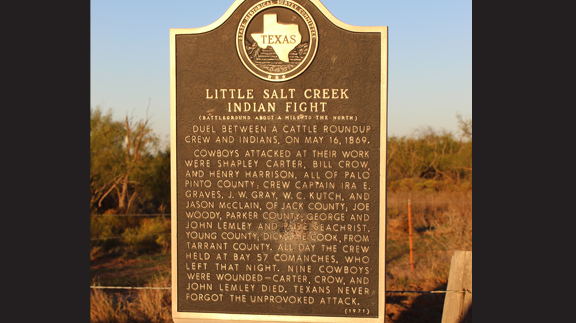
The Salt Creek Prairie with its rolling natural grasses and rampant wildflowers was a deceptive backdrop to the most dangerous prairie in Texas. Located in the northern section of Young County, the prairie absorbed an abundant amount of blood, shed from the battles between the encroaching white man and the Indians desperately trying to hold on to their home lands.
The Salt Creek Prairie was the location of several encounters between the Kiowa, Comanche and the area ranchers. The Indian Raid of Elm Creek on Oct. 13, 1867, resulted in the death of seven ranchers, five former Confederate Soldiers, the kidnapping of six women and children and the theft of 10,000 head of cattle. On May 18, 1871, the prairie witnessed another massacre when the Warren Wagon Train was hit by Kiowa under the command of Satanta, Satank and Big Tree. Seven members of the wagon train were murdered and forty-one mules stolen. But perhaps one of the bloodiest encounters was the Salt Creek fight on May 16, 1869.
Eleven cowboys under the watchful eye of their foreman, Captain Ira Graves were in the process of rounding up about five hundred head of their cattle about five miles southeast of present day Olney, Texas. The ranch hands were William Crow, John and George Lemley, C. L. Carter, Jason McClain, W. C. Kutch, J. W. Gray, Henry Harrison, Rube Secris, Joe Woody and a former slave known as Dick. They had noticed signs of recent Indian activity and were vigilant as they gathered the herd together. Each was armed with cap and ball six shooters. They had pointed the cattle towards the ranch and had made about four miles headway when they noticed a few more head grazing in the distance. Graves sent Carter and Kutch to gather them up. They had advanced about two miles when they spotted a large band of Indians approaching fast. Carter and Kutch could have taken cover in the sparse timber, but realized they would be leaving their companions in serious danger. The two groups met in the middle and tried to take cover in a small ravine that drained into the Salt Creek. The shallow-make shift fox hole offered very little protection.
The Indians attacked again and again. Arrows rained down on the cowboys in a continuous stream of painful blows. They attacked and retreated and attacked and retreated, but each time were met with volleys of gunfire from the small group of ranch hands. Each time the Indians retreated, they conferenced with their leader, who had stationed himself on a small hill away from the battle. After six hours of the constant onslaught, Graves developed a plan. When the Indians retreated, he ordered his men to stand and wave as wildly as they possibly could. The band of Indians, numbering over fifty strong, retreated for a final time, leaving the small band of cowboys alone.
As the dust settled the ranch hands evaluated their losses. In Kutch’s personal account given several years later, he described the aftermath: “Wm. Crow had been dead for several hours, and C. L. Carter had a severe arrow wound in his body, and had been also painfully injured with a rifle ball. John Lemley was mortally wounded in the abdomen with an arrow; J. W. Gray had been twice struck with rifle balls, once in the body and one in the leg; W. C. Kutch had two arrow heads in his knee and one in his shoulder; Jason McClain had been twice wounded with arrows; Rube Secris had his mouth badly torn, and his knee shattered; Geo Lemley had his face badly torn, and an arrow wound in his arm; and Ira Graves and Dick were also wounded.” Harrison was sent to Harmison Ranch for help.
The exhausted and wounded cowboys braved a very long and frightful night. With great relief, the morning hours brought the welcome sight of an incoming wagon. The rescuers patched the wounded as well as they could and sent word that doctors were needed desperately. The doctors did not arrive until a full twenty-four hours later. Carter passed away the next day from the injuries received during the battle. Two years later, McClain died while on another cattle drive. The cause of his death was blamed on the substantial injuries incurred on that fateful day in 1869.
While today the prairie grasses still wave and the wildflowers bloom in gorgeous arrays of colors nestled between cactus and mesquite, the blood shed is a distant memory. On crisp spring mornings it is easy to picture the deadly predicament that the cowboys faced.
This article originally appeared in the January 2016 issue of NTFR.
241 W. Belknap
Jacksboro
Texas
Overweight cattle and cattle turned out on lush legumes with high concentration are at risk as well. In this case, an epidural anesthetic is usually necessary. The tissue will need to be replaced and sutured in place. Vaginal sutures will need to be removed prior to calving.
Toxemia happens when cattle are exposed to low nutrition during the last two months of pregnancy. Cows that are overly fat and/or carrying twins are at higher risk. Cows with toxemia become depressed, stop eating and often stand off away from the herd. You will notice some have the scent of acetone on their breath. As the condition worsens, the cow may develop muscle tremors. Treatment for toxemia is IV glucose, B vitamins or propylene glycol given by oral drench.
During calving there are a number of problems that could occur. Those include dystocia, bruises and lacerations to the birth canal, uterine prolapse, milk fever, retained placenta and grass tetany.
According to the Beef Cattle Handbook, a product of Extension Beef Cattle Resource Committee Adapted from the Cattle Producer’s Library, at any time a cow is unable to deliver her calf, a dystocia has occurred. There are many things a producer can do to reduce this incidence. With heifers, lot those with small pelvic areas before breeding. Select bulls based on their birth weight, not on their relative size. Ultimately use bulls that will produce small birth-weight calves. When calving first-calf heifers separate them from cows, at best into small groups. Producers will want to provide surveillance over the heifers on a 24 hour basis. Some tips include restricting the calving to 42 to 60 days. That will enable personal focus for a short, intense calving period. Also feeding at night between 9 and 11 p.m. will cause more animals to calve during daylight hours.
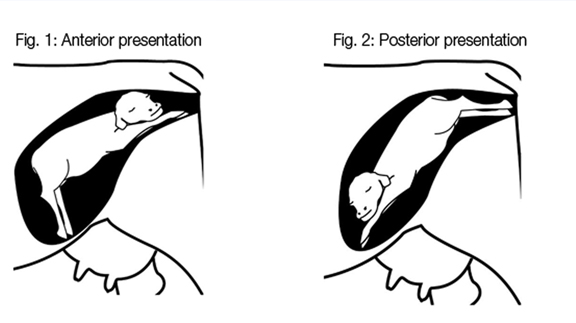
If problems arise and a cow hasn’t shown progress in 60 to 90 minutes, it’s time for the producers to step in. Signs of an abnormal delivery are the head only, the head and one leg, one leg alone or the tail. At this point it is best to contain the animal in a squeeze chute or small pen. A calf can only deliver one of two ways: both front feet followed by the head or both back feet out together. Once constrained, using ample lubrication, a producer can reach in and move the calf to one of the two correct positions. If unable to do so, a veterinarian should be called. The top problems include not getting the head out with front feet, having a calf too big to deliver through the mother’s birth canal resulting in hip lock and abnormal breach in which the tail is the only part of the calf visible through the vulva. If all goes well and pulling the calf is suggested, direct traction down and away from the birth canal. Do not pull straight out behind the cow. If two men are unable to pull the calf using the OB chains or when using the calf puller, do not use excessive force. It will not deliver the calf. Odds are the cows birth canal is too small for the calf and will result in a c-section.
Keep in mind bruises, lacerations and rupture of the birth canal are possible during a difficult birth. Rough handling of the calf or maternal tissues and careless use of obstetrical instruments during calving add danger. This is typical when a cow is in labor several hours with a dry, non-lubricated birth canal.
Cows with difficult delivery and trauma to the tissue and birth canal may have damage to the nerves and spinal cord or hips that supply the legs. This results in abnormal leg function. In some cases, while pulling a calf, excessive force was used and the middle lower pelvis bones were fractured. At this point steroids are administered to help with swelling and nerve healing. In bad cases were the cows are unable to stand, they need to be hoisted to their feet twice a day.
In older cows producers may see difficulty in birth injury or irritation of the external birth canal and severe straining, retained placenta and loose uterine attachment in the abdominal cavity called uterine prolapse. When noticed, this condition needs immediate action. Apply material to uterine wall to saturate fluid ASAP. You can use sulfaurea powder, urea powder or even sugar. Replace the uterus immediately or call your veterinarian. Without properly replacing the uterine horns, prolapse will reoccur.
Usually the placenta is passed in three to eight hours. If the placenta hasn’t passed in eight to 12 hours of calving, the placenta is retained and the cows must be treated. A number of reasons lead to retained placenta: dystocia, c-sections, fetotomy, twinning or abortion along with other infectious diseases. Even feed deficiencies, malnutrition, low carotene, vitamin A, iodine, selenium and vitamin E can be to blame. To treat, use slight, manual force and gently pull on the placenta. If it resists, stop and pack the uterus with boluses or fluid douches to keep antibiotics in the uterus. As with prolapse, be sure to use proper hygiene when treating the uterus or worse problems will occur.
Another condition parallel with cows with age, number of calves and dairy or mixed breeds is milk fever. This condition happens when a cow starting to produce milk is unable to remove calcium from her bones quickly enough. If blood levels of calcium fall below the minimal level, the muscles of the body are unable to function. This leaves the cow almost crippled, comatose and dead. High blood levels of estrogen inhibit calcium mobilization; this may be a factor on pastures that are high in legumes. Usually a slow administer of IV calcium is given. 300 to 500 ml of a commercial calcium solution is given over 20 to 30 minutes.
Lastly, grass tetany poses as an issue to cows calving. It is similar to milk fever, but in this instance cattle have heavy post-calving lactation and lose large amounts of magnesium in their milk. Most types of mixed pasture grasses are low in magnesium. If cows are exposed to cold weather or stress during early lactation, their blood levels may drop low enough to cause grass tetany. At that point an IV of magnesium is given with calcium. Treatment is not as effective as with milk fever and in many cases, animals do not respond.
This article was originally published in the January 2016 issue of North Texas Farm & Ranch.

241 W. Belknap
Jacksboro
Texas
By Hannah Claxton | Editor
The North Texas area is located within USDA Hardiness zones seven and eight. The zones are categorized by predicted low temperatures for winter and timing of the first and last frosts.
Zone seven usually has winter low temps between 0 and 10 degrees F with the average date of the first frost falling between Oct. 29 and Nov. 15 and the average date of the last frost falling between March 22 and April 3.
Overall, these two zones have similar climates and growing conditions, making the options for timing and variety within a garden very similar.
In these zones, cool-season crops should go in the ground in March, meaning that soil preparation should start now.
To read more, pick up a copy of the January edition of North Texas Farm & Ranch magazine, available digitally and in print. To subscribe by mail, call 940-872-5922.




-
 Country Lifestyles2 years ago
Scott & Stacey Schumacher: A Growth Mindset
-
 Country Lifestyles8 years ago
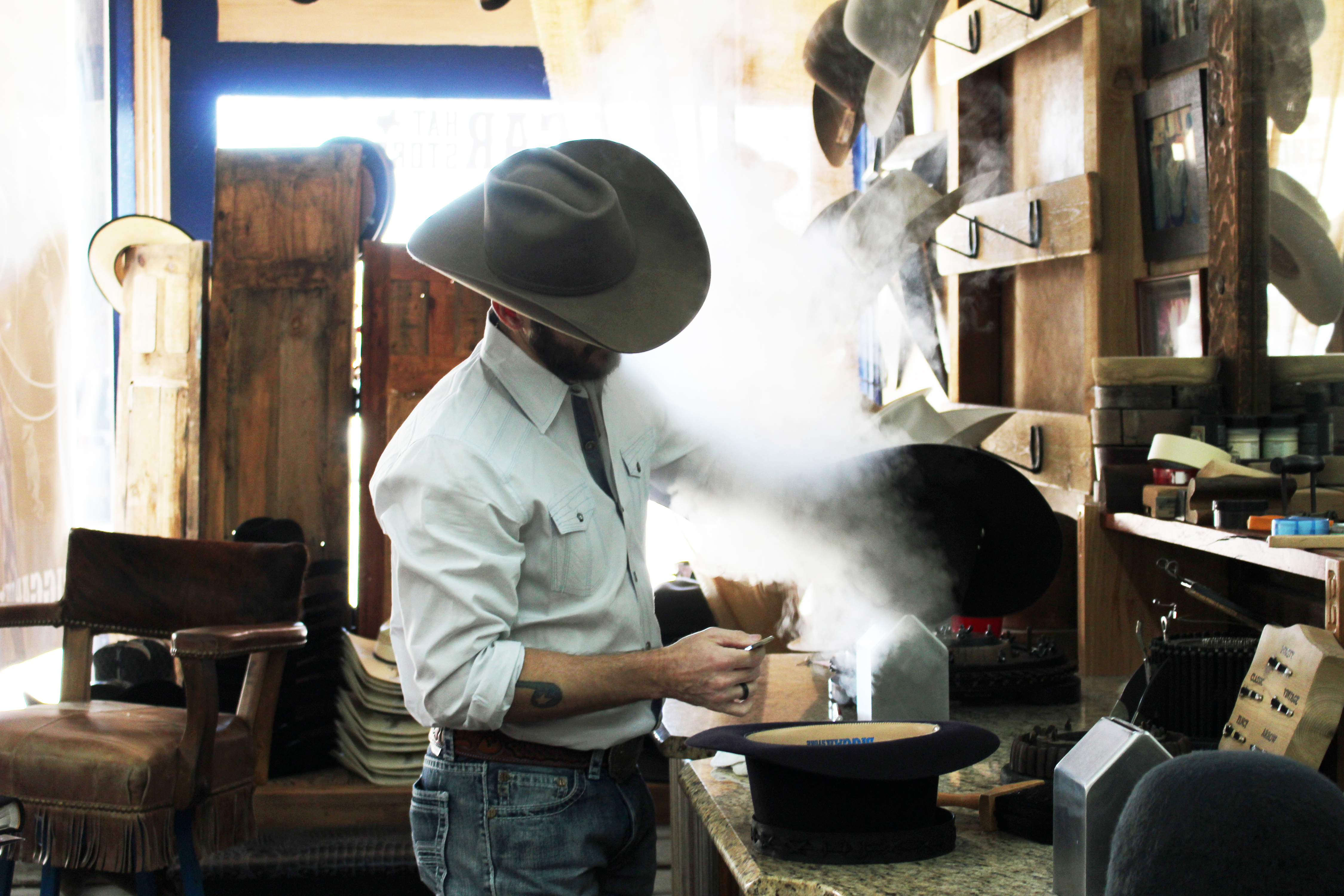
Style Your Profile – What your style cowboy hat says about you and new trends in 2017
-
 HOME8 years ago
Grazing North Texas – Wilman Lovegrass
-
 Outdoor10 years ago
Buttercup or Primrose?
-
 Country Lifestyles9 years ago
June 2016 Profile – The man behind the mic: Bob Tallman
-
 Country Lifestyles8 years ago
December 2016 Profile, Rusty Riddle – The Riddle Way
-
 Country Lifestyles5 years ago
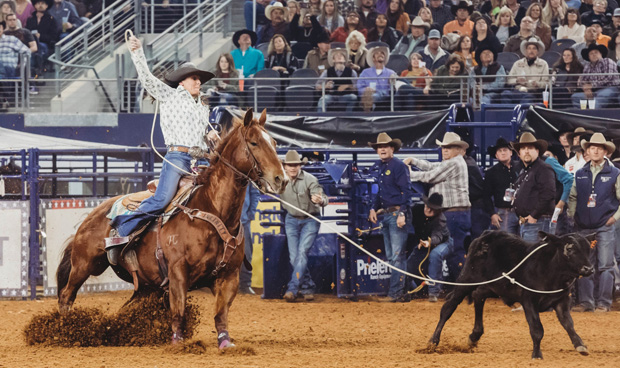
Amber Crawford, Breakaway Roper
-
 Equine2 years ago
The Will to Win