Denton Redbud Festival

321 E. McKinney Street
Denton.
The award-winning Denton Redbud Festival is Denton’s Official Arbor Day celebration – promoting community beautification and Denton pride since 1994. The Denton Redbud Festival features dozens of vendors.

321 E. McKinney Street
Denton.
By Beth Watkins
I have started this over and over.
Usually, when that happens, it’s because I can’t think of anything to say. This time, it’s because I have too much.
Too many memories. Too many feelings. A heart full of gratitude mixed with a sadness that feels a little silly when you consider I never actually knew Dolly Parton.
And yet, somehow, didn’t we all feel like we did?
When the news came that Dolly had died, a collective sadness seemed to settle over people from every walk of life. Country music fans, rock stars, grandmothers, little girls, people from the mountains and people who wouldn’t know which end of a cow the feed goes in.
Everybody had a Dolly story.
Mine begins in a little trailer house.
My sister and I shared a bedroom growing up, and although I couldn’t tell you exactly how old we were, I can still picture that room. It wasn’t much bigger than the full-size bed pushed against the wall. There wasn’t room for matching nightstands, reading chairs or any of the things Pinterest would now tell us a bedroom requires.
There was just enough room for two sisters.
And at night, my sister would sing me to sleep.
She has always had a beautiful voice, and the song that seemed to send me off to sleep best was Dolly Parton’s “Coat of Many Colors.”
I can still hear it.
Funny how memories work. I couldn’t tell you what color the curtains were or what was hanging on the wall. I couldn’t tell you what pajamas I had on or what we had eaten for supper. But more than fifty years later, I can close my eyes and hear my sister singing about a little girl whose mama stitched together a coat made from rags and told her the Bible story of Joseph and his coat of many colors.
Every stitch was sewn with love.
Back then, I only knew it was a pretty song that somehow soothed my little-girl soul. I didn’t know I was listening to a lesson.
A lesson about poverty without shame. About finding abundance in what the world might call lack. About the difference between what something costs and what something is worth.
Maybe that is why Dolly’s death feels strangely personal to so many of us.
Her songs found their way into bedrooms and kitchens, old pickups and beauty shops. They became part of weddings, funerals, childhoods and long drives home. Somewhere along the way, Dolly Parton became woven into the fabric of our lives.
Since her passing, I have seen one phrase repeated again and again:
Be like Dolly.
Be kind like Dolly. Love people like Dolly. Give like Dolly. Don’t judge people. Treat everyone with dignity. Stay humble. Stay true to who you are.
I understand exactly what people mean. Lord knows the world could use a whole lot more of that.
But I keep thinking… those ideas didn’t begin with Dolly Parton.
The Bible was here long before Dolly. The Ten Commandments were here long before Dolly. “Love your neighbor as yourself” was spoken long before somebody glued the first rhinestone onto a guitar.
And Dolly herself would have known that better than most.
She grew up dirt poor in the mountains of Tennessee, one of twelve children, in a family where faith wasn’t reserved for Sunday morning. She grew up singing in church, and throughout her life she spoke openly about prayer, God, forgiveness and her belief that the gifts she had been given came with a purpose.
She believed God had His hand on her life and that she was supposed to do something good with it.
I’d say she did.
Dolly didn’t spend her life preaching Christianity at people. She lived much of it in front of them.
She fed people. She helped people. She put books into the hands of millions of children who might otherwise never have owned one. She poured money back into the poor mountain community she came from. She stepped forward when disaster devastated families. She treated the powerful and the powerless with the same dignity.
And somehow, she became one of the most famous women in the world without deciding that made her better than anybody else.
She also seemed to understand something we have forgotten lately: Not every conversation has to become a political argument.
Dolly was asked plenty of times to weigh in on politics, and she repeatedly made it clear that she was an entertainer, not a politician. She had opinions, of course she did, but she didn’t seem to believe every opinion needed a microphone.
Well, mercy. Imagine that.
Today we can’t seem to buy tomatoes without somebody wanting to know how we vote. Dolly somehow managed to welcome people without first requiring them to agree with her.
Maybe that’s part of the void we feel now. We didn’t just lose a singer. We lost one of those increasingly rare people almost everybody had agreed we could simply love.
But I think we need to be careful here.
If we say, “Don’t let Dolly’s spirit die,” and all we mean is play her music louder, wear rhinestones, visit Dollywood and quote her funny sayings, then I think we’ve missed the best part of what she left us.
Honor her by doing what she did.
See people. Help somebody who can’t repay you. Give quietly. Speak kindly. Remember where you came from. Laugh at yourself. Use whatever God placed in your hands to make somebody else’s road a little easier.
And for heaven’s sake, sometimes keep your opinion to yourself.
Maybe the message isn’t really Be like Dolly. Maybe it’s this: Remember who Dolly was trying to be like: Jesus.
A woman who understood that she had been blessed, and therefore had a responsibility to bless somebody else. A light. And lights aren’t meant merely to be admired. They’re meant to help somebody else find their way.
Somewhere in my memory, there will always be a little trailer-house bedroom, a full-size bed pushed against the wall, and my sister’s beautiful voice singing a Dolly Parton song until her big sister drifted off to sleep.
I didn’t know then that the song would follow me through nearly every season of my life. Even now, when my sister and I take one of our sister trips and end up sharing a hotel room, I still make the same request:
Sing me my song.
And she does.
I didn’t know, lying in that little bed all those years ago, that the woman who wrote those words would one day leave such an enormous empty space behind.
But even through the sadness, I can’t help but smile. Somewhere beyond what we can see, I like to imagine Heaven’s choir sounding just a little sweeter now.
Dolly left a void here on earth, but she also left something behind that death cannot take away: the example of a life lived with faith, generosity, humor, humility and love.
Maybe we don’t keep her light alive by trying to become Dolly. Maybe we keep it alive by remembering what she knew all along:
The light was never hers to begin with. It came from God. She simply let it shine.
And now it’s our turn.
321 E. McKinney Street
Denton.
By Barry Whitworth, DVM
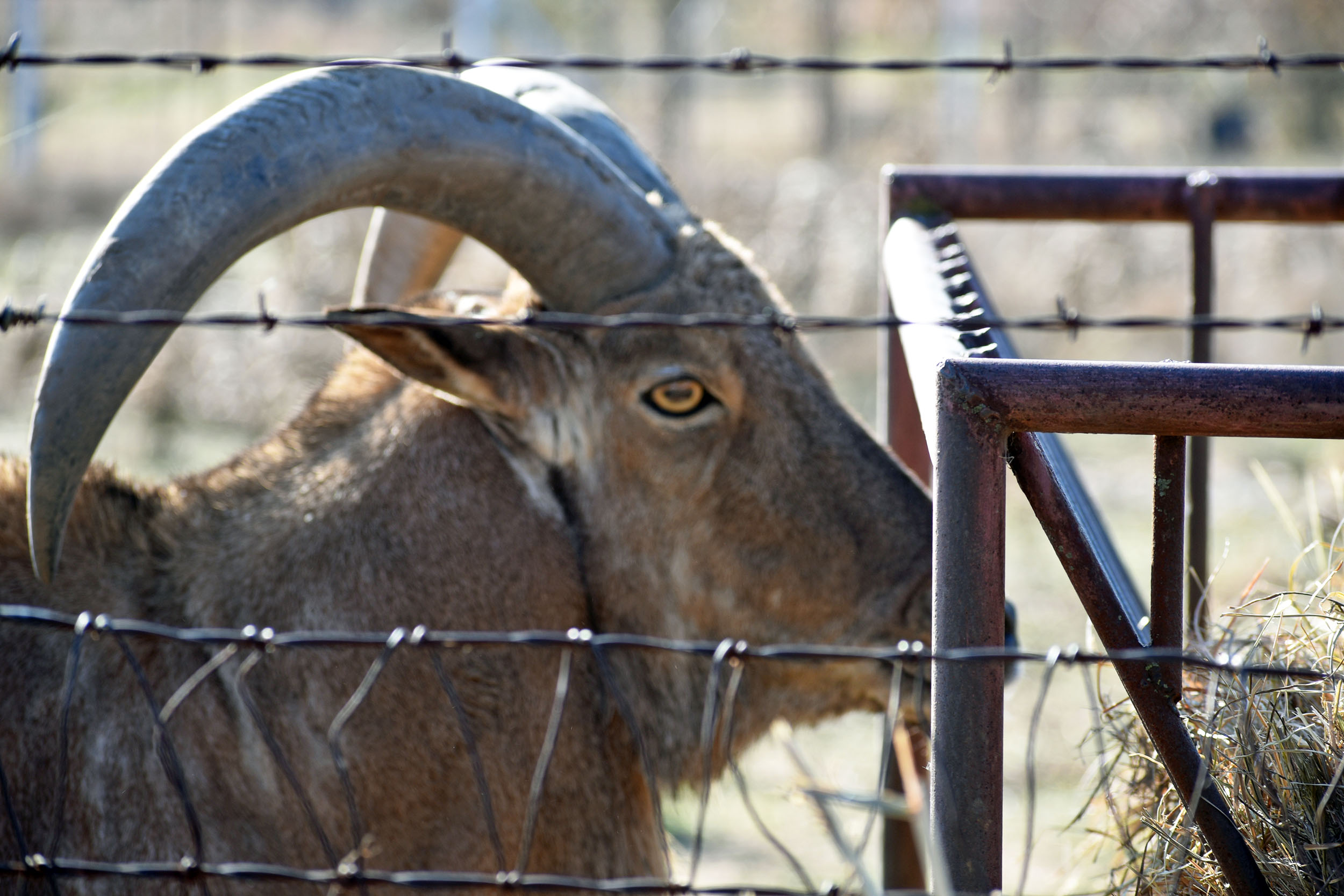
Scrapie is a chronic, progressive disease of the central nervous system that affects sheep and goats. The U.S. Department of Agriculture (USDA) has worked for decades to eliminate scrapie from small ruminant operations. The United States was positioned to meet the World Organization for Animal Health’s seven-year benchmark for self-declared scrapie freedom in January 2028. Unfortunately, the Animal and Plant Health Inspection Service (APHIS) confirmed classical scrapie in a sheep slaughtered at a facility in Oregon. With this detection, national scrapie-free status for the U.S. may be pushed back to sometime in 2033.
Scrapie is the oldest of the neurodegenerative diseases known as transmissible spongiform encephalopathies (TSEs). Other TSEs include bovine spongiform encephalopathy, known as mad cow disease; chronic wasting disease, found in deer; and Creutzfeldt-Jakob disease, found in humans. TSEs are protein-misfolding diseases that damage the brain, and they are always fatal.
Researchers don’t fully understand what causes scrapie, but evidence points to an infectious protein called a prion. These infectious prions damage the normal prion proteins found in the brain. The misfolded proteins lead to brain damage and the clinical signs of the disease. Prions resist destruction, so once they are in the environment, they are difficult to remove.
Scrapie appears to spread mainly by the oral route. Lambs and kids typically ingest prions when they contact placentas and birthing fluids from infected ewes and does. Older animals can be exposed the same way. Colostrum and milk are also sources of prions, and urine, feces, saliva and nasal secretions may contain them as well. Once ingested, prions cross into the lymphoid system, where they incubate for a long time, usually two to five years, before entering the nervous system.
Genetics plays a part in scrapie infections. Some breeds are more susceptible because of their genetic makeup. Genetic testing can help producers select breeding stock with resistant genes.
The clinical signs most associated with scrapie are intense itching (pruritus), incoordination (ataxia) and wasting. Early on, producers may notice slight behavior changes in infected sheep and goats. Animals may have a staring or fixed gaze, fail to respond to herding or act aggressively toward objects. As the disease progresses, signs include weight loss despite a normal appetite, incoordination, head tremors and intense itching. In the final stages, sheep go down and may show blindness, seizures and an inability to swallow. Once the first clinical signs appear, death usually follows in one to six months.
The gold standard for diagnosing scrapie after death is immunohistochemistry testing of brain tissue, along with microscopic examination of the brain for the lesions characteristic of TSEs. Veterinarians can also diagnose live animals by testing lymphoid tissue from the third eyelid and rectal mucosa scrapings.
No treatment exists for scrapie, so prevention is key. Biosecurity is a good starting point. Maintain a closed flock, and buy replacement animals only from certified scrapie-free flocks. Limit visitors’ contact with your animals. Keep lambing and kidding areas clean, and dispose of manure and bedding contaminated with birthing fluids and placentas properly. Use genetically resistant animals for breeding to produce genetically resistant offspring.
A novel, or atypical, form of scrapie also exists. Sometimes called the Nor98 variant, it was first found in Norway and has been diagnosed in the U.S. as well. It usually turns up in a single old animal in a flock or herd, and its brain lesions differ from those of classical scrapie. Experts currently believe natural transmission of atypical scrapie is unlikely.
Small ruminant producers can help the USDA’s eradication effort by contacting the agency when an adult sheep or goat shows clinical signs of scrapie or when an adult animal dies or is euthanized. Contact Oklahoma State Veterinarian Dr. Rod Hall at 405-522-6141 or USDA Veterinary Services at 405-254-1797. Collection and testing of samples for scrapie are free.
Another important step in eliminating scrapie, and other diseases, is identifying animals with official USDA ID. The USDA National Scrapie Eradication Program requires most sheep to be identified to their flock of birth when they leave their home premises for sale, show or events, or when they commingle with other sheep.
Unfortunately, the Oregon sheep diagnosed with scrapie had no tag, which will hamper USDA traceback efforts. You can find more information on official ID at https://www.aphis.usda.gov/nvap/reference-guide/animal-identification/sheep-goat.
The U.S. needs to eliminate scrapie. Once it does, the country will gain additional export markets for sheep and goat products. Oklahoma State University Cooperative Extension Service has an informative fact sheet on scrapie. Ask your local county Extension office for fact sheet VTMD-9135, or view it online at https://extension.okstate.edu/fact-sheets/scrapie.html. Sheep and goat producers may also want to visit the USDA National Scrapie Eradication Program website at https://www.aphis.usda.gov/livestock-poultry-disease/sheep-goat/scrapie.
References
Cassmann, E. D., & Greenlee, J. J. (2020). Pathogenesis, detection, and control of scrapie in sheep. American Journal of Veterinary Research, 81(7), 600–614. https://doi.org/10.2460/ajvr.81.7.600
321 E. McKinney Street
Denton.
By Savannah Magoteaux, Editor
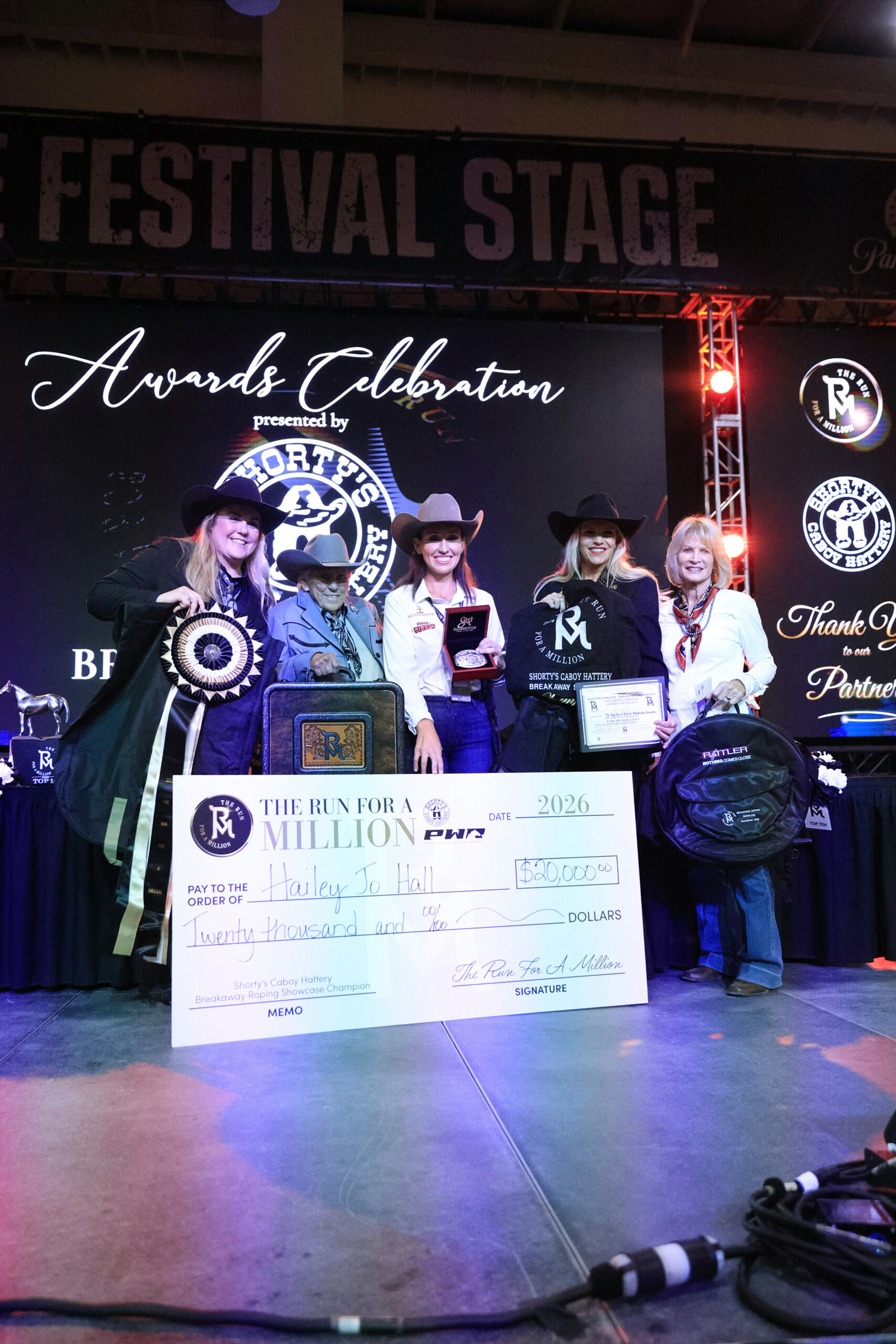
Hailey Jo Hall moved to Texas because she wanted to rope where the competition was toughest. Five years later, after plenty of hard lessons, long hours and a season spent sharpening the details, that decision helped carry her all the way to Las Vegas, where she became the first Breakaway Roping Showcase champion at The Run For A Million. Now splitting her time between Texas and Oklahoma to stay close to family, Hall is balancing a career in agricultural insurance, a growing breakaway career and a horse that has been part of her family from the beginning.
Hall moved to Texas in 2021 to find out how she stacked up against the best breakaway ropers in the country. For a while, the answer stung. The Northwest, where she came from, had plenty of good ropers and horses, but she learned quickly that the sheer depth of the competition in Texas could be overwhelming, and she had nowhere to hide any holes in her game.
Five years later, the Washington native rode into South Point Arena at The Run For A Million in Las Vegas and left as the event’s first Breakaway Roping Showcase champion.
Getting there took a family steeped in rodeo, two-hour drives for roping lessons, a career change, a horse few people would have picked and a 2025 season that sent her home with a long list of things to fix.
Rodeo roots
Hall grew up in Enumclaw, Washington, outside Seattle, while her father’s family was based in central Oregon. The Halls spent the school year in Washington and summers in Oregon, and rodeo often set the schedule. Her father, John Hall, won circuit championships and qualified several times for the Dodge National Circuit Finals, now known as the NFR Open.
“When my dad was rodeoing, we did spend some time in the South in Atoka, Oklahoma,” Hall said. “We would kind of split our time up during the year. It all worked around the school year, but we traveled quite a bit in the summer. We’d all take off, load up with him and hit the road and go to all the rodeos.”
The family’s rodeo roots go back more than one generation. On the side of her mother, Jamie Hall, relatives were involved with the King Rodeo Company in Kansas in the early 1900s. According to Hall, they raised bucking stock and helped produce rodeos, including early editions of the professional rodeo in Garden City, Kansas.
Jamie later barrel raced and roped, and Hall calls her mother a knowledgeable horsewoman and a big part of her own success.
On her father’s side, Hall’s grandmother rodeoed in the Northwest decades before women had many of today’s opportunities. She served on the Sisters Rodeo court in Oregon and, according to family history, worked around the bullfighting barrel in the 1950s and 1960s before becoming a rodeo queen.
“She always wanted to be a cowgirl,” Hall said. “I think that’s where I got that from.”
Growing up in rodeo country didn’t guarantee Hall a practice pen full of ropers down the road. In western Washington, she had to go looking for them.
“When I wanted to learn to rope, my dad would have to drive me two hours after school to go get roping lessons and practice,” she said. “It’s just not as common up there as it is around Stephenville.”
Hall rodeoed in high school in Washington, then attended Blue Mountain Community College in Pendleton, Oregon. She graduated in 2013 with an associate degree in general studies and dental training and spent nearly a decade working in dentistry.
Iron sharpens iron
In June 2021, Hall joined the long line of contestants who have hauled into Erath County with a horse trailer and a plan.
“Like everybody else, I had the rodeo dream,” she said. “When you want to be the best, you go where the best are, so I moved down there and spent a lot of time getting my butt kicked.”
She laughs about it now, but the adjustment was real.
“Everybody at home, they roped great,” Hall said. “There are just so many people down here that it’s a knife fight, and iron sharpens iron. I came down to Stephenville, and I’m so glad I did. It’s helped me immensely and put me on a path I never thought I would be on.”
Stephenville changed her career, too. Soon after she arrived, Hall arranged to feed-lease a set of roping calves from a man who owned an insurance agency. She kept the calves fed and healthy, and in return she had cattle to practice on. Nearly a year later, he called with another offer.
“He just called me kind of out of the blue one day and asked if I wanted to go to work with him,” Hall said. “I jumped at the opportunity, and I’ve been doing that ever since. I have not looked back once.”
Today Hall works with 4TAg Insurance. She writes equine policies; pasture, rangeland and forage coverage; crop insurance; home and auto; equipment; and commercial agricultural coverage. The job took her out of dentistry and into an industry full of the same people she sees at rodeos and ropings.
“I feel like I’m pretty personable, so I have an easy time visiting with people,” she said. “My granddad actually owned an insurance agency in Oregon for many years, which now I look back and think I should have picked his brain more. But it goes so well with what I do. Every day I get up and rope. I’m either going to a rodeo or going to a ranch to do insurance. My professional breakaway career and my professional career in insurance tie in very well together.”
Expensive lessons
Hall joined the Women’s Professional Rodeo Association around 2016 or 2017, when breakaway roping began gaining ground in the Northwest. She also helped push to bring breakaway roping to the grass at the Pendleton Round-Up, producing an event with the goal of one day seeing women rope in the famous Pendleton arena.
For most of those years, though, Hall competed mainly at circuit and amateur rodeos. That changed in 2025.
“That was really the first year I ever went out rodeoing very hard during the summer,” she said. “I learned a lot of expensive lessons.”
She came home in August knowing where she stood.
“I came back with my tail between my legs a little bit after getting my butt handed to me,” she said. “I was like, ‘All right, I’ve got a list of things I need to fix,’ from horsemanship to equipment to really the mental game of roping.”
Instead of hauling harder in 2026, Hall used the year differently. She still competed, but she put more time into improving at home, getting another horse going and entering Premier Women’s Rodeo events closer to home.
“I really just kind of fine-tuned things where I feel like now I’m at a level I can compete to the best of my capabilities,” she said.
The road to Las Vegas
That shift pointed her toward Las Vegas. Hall had followed the PWR before, but she started paying closer attention after she saw the money paid at the PWR Finals.
“I got online, checked it out and learned the nomination system,” she said. “To be honest, the nominating thing confused me at first.”
A conversation with PWR executive Sami Jo Smith cleared it up. Hall could nominate many of the events she already planned to attend, earn PWR points and work toward the PWR Finals and The Run For A Million without rebuilding her schedule.
“When I looked at it, it was almost like, ‘I can’t believe I haven’t been nominating,’” Hall said. “I’m already spending the fuel to go to these places. I’m already entered at them. For a little more, I can nominate it, get the points and open the opportunities like Vegas and The Run For A Million.”
Hall estimates she spent about $1,000 in nomination fees on her way to qualifying for Las Vegas.
“I’ll spend that at a good roping any given weekend,” she said. “And I netted $19,000. That’s a pretty good return on investment, in my opinion.”
The money mattered less to Hall than the setting. Her qualification put her inside South Point Arena during one of the biggest weeks in western performance sports. The Run For A Million draws top competitors in reining, cutting, reined cow horse and other disciplines, and Hall had watched most of them only online.
“That was the coolest thing I’ve ever been a part of,” she said. “I’d never been to anything really in the reining, cutting or working cow horse industry. I watch it online and stuff, but to be there, and I had guys like Kole Price telling me good job and shaking my hand, and I’m walking the same barn as Golden Coins. That was so cool.”
The welcome from those competitors stood out just as much.
“They were all so welcoming,” she said. “They were out in the warm-up arena the night we were up, telling us good luck.”
Hall arrived happy to be included and left with the title.
“I was just happy being there,” she said. “But to go out there and be the first-ever breakaway champion at The Run For A Million, that’s pretty cool.”
A horse few would have picked
Hall is quick to share the credit.
Her family bred and raised Dats A Hickory Dude, the 8-year-old gelding she rode in Las Vegas. They owned his dam, still own his sire and handled much of his development. Steven and Katy Duby started him as a 2-year-old before Hall brought him home and began roping calves on him.
He doesn’t look the part.
“He does not really fit the cow horse, calf horse kind of horse you think of when you see rope horses,” Hall said. “He’s pretty tall. He’s about 16 hands, 16.1. He’s got long legs and a long neck. He’s just a little bit unorthodox for his discipline, but he does the job.”
The long legs help.
“He’s fast,” she said. “I hardly ever get outrun.”
He also made Hall adjust. He stands taller than the horses she had preferred, and his style didn’t feel natural to her at first. Some days she wondered whether they were the right match. Her mother never did.
“My mom just kept telling me, ‘I think you should just keep working on him. I think he’s going to be special,’” Hall said. “As it turns out, he is. She was right.”
Her parents also put in plenty of nights no crowd saw.
“My parents have spent many nights out at the arena opening the chutes for me to train this horse,” she said. “I’m just so thankful I get to ride him, and I can count on him at places like that to pull through for me and always do his job.”
At 8, the gelding should have years of work left.
“He’s been with me his whole life,” Hall said. “He’s part of the family. He’s earned his place. It’s nice to have him on the team and know that he’s old faithful and I can count on him no matter what.”
Two states, one goal
Hall plans to rodeo harder in 2027 and keep nominating PWR events. She wants another shot at The Run For A Million and a trip to the PWR Finals, and she has a bigger goal in front of her.
“My goal is to make the National Finals Breakaway Roping,” she said. “I feel like I’ve put in the work, and I have the horsepower and the support behind me, from my family to my employers. God’s put this on my heart to do it, and I won’t stop until I do.”
She will chase those goals from two states. Shortly before The Run For A Million, Hall moved to Stillwater, Oklahoma, to be closer to her parents and her younger sister, who will soon make her an aunt. Her insurance business remains in Stephenville, so she expects to spend plenty of time on both sides of the Red River.
“I’ve been in Stephenville for five or six years,” she said. “I live up here and get my mail up here, but my business and everything is based out of Stephenville, so I’m kind of split. I’m down there quite a bit regardless.”
Living in two places is nothing new for Hall. She grew up learning that when the opportunity was somewhere else, you loaded the trailer and went.
She has already made sure her nephew will have the proper wardrobe. After learning her sister was expecting a boy, Hall bought a tiny Run For A Million onesie in Las Vegas.
“I said, ‘You better be wearing this home from the hospital,’” she said with a laugh.
Nobody knows yet whether he’ll pick up a rope. In this family, he won’t have to look far for someone to teach him.
Hall knows other young women are watching, too. Some grow up surrounded by ropers. Others are like she was, climbing into a truck after school for a two-hour drive to practice.
“I feel like there are a lot of other girls out there that are like me, that have really big dreams,” she said. “You might not always see a way that you’re going to accomplish them, but just never give up and trust the path God’s put you on. I would have never guessed five years ago that I’d be where I’m at now. I just thank God for the opportunities and the people He’s put in my path, and the ability He’s given me to never quit.”
Five years ago, Hall moved to Stephenville to find out whether she could compete with the best. Plenty of people there made her prove it. In Las Vegas, she did.



-
 Country Lifestyles4 years ago
Scott & Stacey Schumacher: A Growth Mindset
-
 Country Lifestyles10 years ago
Style Your Profile – What your style cowboy hat says about you and new trends in 2017
-
 Horsefeathers12 years ago
Mount Scott: Country Humor with David Gregory
-
 Country Lifestyles10 years ago
June 2016 Profile – The man behind the mic: Bob Tallman
-
 Outdoor11 years ago
Buttercup or Primrose?
-
 Country Lifestyles10 years ago
December 2016 Profile, Rusty Riddle – The Riddle Way
-
 HOME10 years ago
Grazing North Texas – Wilman Lovegrass
-
 The Natural Horseman9 years ago
This is why we do what we do — RayeAnn and Cisco