
Farm & Ranch
Brazil and Bulls


By Krista Lucas Wynn
It takes a leap of faith to move thousands of miles away from home to a new country, and that is exactly what Kaue Flora did in order to further his relatively new bull riding career. The 25 year old left a tight knit family life and a full time job in Sao Paolo, Brazil to move with his wife and young daughter to Gainesville, Texas to pursue a bull riding dream.
“Growing up in Brazil was very good,” Flora said. “I was able to graduate as an agricultural technician and practice this profession for a period of time. I started riding bulls after my brother passed away because he had a dream of being a world champion here in the United States, and I am striving to one day become a world champion.”
Kaua, Flora’s younger brother passed away in 2022 from an accidental drowning. Flora got on his first bull shortly after, in honor of Kaua, and never looked back. He even started off using his brother’s used equipment and was able to win his first professional rodeo in Brazil. His family encouraged him to continue the journey of bull riding, which led to him making the move to Texas.
“My family is very important to me,” Flora said. “Everything I do is thinking of them, and I want to be able to honor them and give the best to them.” The move has come with its adjustments, but Flora has kept his head down and adapted quickly.
“When I moved to the United States, what I had to adapt to the most was the culture here, including the food,” he said. “I love this country though.” The adjustments have not just been in the way of living but also in the caliber of competition and bulls.
“You really have to be an athlete in both countries to ride. You have to prepare yourself physically and psychologically,” Flora said. “However, here the bulls are more difficult. They are faster, and there is a greater degree of difficulty.”
Flora has risen to the occasion in his new environment, already making his name known in the Professional Bull Riders ranks. In June, he competed on Team Land.com at the Next Gambler event held in Taylor, Texas. Flora successfully rode two bulls to be named the Next Austin Gambler.
He was the only cowboy to ride both bulls, earning him a spot on the PBR team, Austin Gamblers. The Gamblers are the reigning PBR Teams world champions, coached by PBR hall of famer, Michael Gaffney and features a star studded roster, including three time world champion, Jose Vitor Leme.
Unfortunately, the saying in bull riding is it is not not if you get hurt but when, and Flora experienced this first hand shortly after his big win. He suffered a serious injury to his lower abdomen in July, where four muscles detached from bone.
“I’ve already had surgery and am getting the necessary rest and physical therapy I need,”
he said. “I am focusing 100 percent on my recovery so I can return to riding next season in pursuit of my goals.”
Flora will no doubt return to the arena and will be a name to watch for in 2026. With the support of his home country, his loving family and guardian angel, Kaua, he will see how far his bull riding dreams can take him.
By Jared Groce
The rural land market held steady in July after the increase we saw in June, with nearly identical numbers of transactions and similar pricing. Buyer inquiries rose noticeably in July, with most agents and brokers reporting a sharp increase in calls and showings. Title companies and lenders also report more transactions since July 1, which suggests buyer sentiment may be picking up as summer draws to an end.
The gap between list price and sale price improved compared with June, with the sale-to-list ratio running much higher than the previous month. Total days on market dropped somewhat from June. Several larger tracts also closed in July compared with the rest of 2026 to date.
It is still a buyer’s market, and I expect that trend to continue through the year. Once the Fed lowers interest rates, buyer sentiment will likely climb even more and push us back toward a seller’s market, but who knows when that might happen. In the meantime, we are all fighting higher prices at the pump, higher input costs for seed, fertilizer and hay, and big jumps in insurance premiums across the board. The good news, if you are selling, is that cattle prices remain at an all-time high.
They say the best time to plant a tree was 20 years ago, and the second-best time is today. The same is true of buying land. Get some dirt on your hands.
| County | Area | Acres | $/Acre | List Price | Sold Price | Sale/List | DOM |
|---|---|---|---|---|---|---|---|
| Clay | Henrietta | 25.02 | $13,789 | $345,000 | $345,000 | 100.00% | 5 |
| Clay | Petrolia | 77.72 | $4,825 | $399,000 | $275,000 | 94.00% | 24 |
| Clay | Average | 51.37 | $9,307 | $372,000 | $360,000 | 97.00% | 15 |
| Collin | Blue Ridge | 11.03 | $30,740 | $358,400 | $339,000 | 94.60% | 58 |
| Collin | Blue Ridge | 11 | $48,182 | $550,000 | $530,000 | 96.40% | 325 |
| Collin | Farmersville | 20.97 | $30,514 | $625,000 | $640,000 | 102.40% | 443 |
| Collin | Farmersville | 32.9 | $30,395 | $1,149,000 | $1,000,000 | 87.00% | 315 |
| Collin | Anna | 14.2 | $73,970 | $1,200,000 | $1,050,000 | 87.50% | 50 |
| Collin | Average | 18.02 | $42,760 | $776,480 | $711,800 | 93.60% | 238 |
| Cooke | Collinsville | 11 | $35,364 | $389,000 | $389,000 | 100.00% | 343 |
| Cooke | Gainesville | 43.08 | $15,669 | $775,400 | $675,000 | 87.00% | 5 |
| Cooke | Average | 27.04 | $25,616 | $582,220 | $532,000 | 93.50% | 174 |
| Denton | Krum | 11.93 | $25,086 | $300,000 | $299,204 | 99.70% | 34 |
| Denton | Ponder | 14.92 | $46,917 | $988,200 | $700,000 | 70.80% | 170 |
| Denton | Denton | 22.37 | $90,198 | $2,017,730 | $2,017,730 | 100.00% | 160 |
| Denton | Sanger | 122.36 | $26,153 | $3,360,000 | $3,200,000 | 95.20% | 289 |
| Denton | Sanger | 328.06 | $10,813 | $3,608,000 | $3,547,186 | 98.30% | 11 |
| Denton | Average | 99.93 | $39,833 | $2,054,786 | $1,952,824 | 92.80% | 133 |
| Grayson | Sherman | 23.06 | $13,010 | $395,000 | $300,000 | 75.90% | 7 |
| Grayson | Bells | 11 | $303,909 | $360,000 | $340,000 | 94.40% | 356 |
| Grayson | Collinsville | 11.39 | $49,109 | $619,500 | $559,350 | 90.30% | 183 |
| Grayson | Gunter | 11.5 | $69,000 | $882,874 | $793,500 | 89.90% | 259 |
| Grayson | Average | 14.24 | $40,009 | $507,250 | $449,675 | 90.10% | 221 |
| Jack | Jacksboro | 29.17 | $8,742 | $261,072 | $255,000 | 97.70% | 191 |
| Jack | Jacksboro | 171 | $11,809 | $2,223,000 | $2,019,298 | 90.80% | 148 |
| Jack | Poolville | 202 | $15,347 | $3,434,000 | $3,100,000 | 90.30% | 312 |
| Jack | Average | 134.06 | $11,966 | $1,972,691 | $1,791,433 | 92.90% | 217 |
| Montague | Bowie | 10.01 | $17,483 | $175,000 | $175,000 | 100.00% | 5 |
| Montague | Bowie | 46.3 | $10,043 | $650,000 | $465,000 | 71.50% | 10 |
| Montague | Bowie | 56.02 | $12,049 | $700,250 | $675,000 | 96.40% | 30 |
| Montague | Forestburg | 212.17 | $7,494 | $2,697,000 | $1,590,000 | 93.70% | 369 |
| Montague | Nocona | 192.32 | $11,716 | $2,355,840 | $2,300,000 | 97.60% | 91 |
| Montague | Nocona | 575.87 | $11,287 | $6,910,440 | $6,500,000 | 94.10% | 56 |
| Montague | Nocona | 934.29 | $8,244 | $8,806,000 | $7,701,855 | 87.50% | 333 |
| Montague | Average | 290.14 | $11,188 | $3,042,076 | $2,772,408 | 91.50% | 128 |
| Wise | Chico | 11.4 | $18,421 | $210,000 | $210,000 | 100.00% | 170 |
| Wise | Chico | 14 | $17,143 | $249,900 | $240,000 | 96.00% | 18 |
| Wise | Decatur | 10.15 | $28,498 | $379,000 | $289,258 | 76.30% | 115 |
| Wise | Decatur | 10.15 | $28,498 | $379,000 | $289,258 | 76.30% | 115 |
| Wise | Decatur | 11.61 | $28,498 | $438,000 | $330,865 | 75.50% | 115 |
| Wise | Decatur | 14.58 | $28,506 | $524,880 | $415,619 | 79.20% | 115 |
| Wise | Boyd | 61.34 | $11,575 | $775,000 | $710,000 | 91.60% | 251 |
| Wise | Poolville | 115.69 | $9,076 | $1,300,000 | $1,050,000 | 80.80% | 75 |
| Wise | Average | 31.11 | $21,277 | $533,973 | $441,875 | 84.10% | 122 |
By Laura Nelson
Planting a seed may be the ultimate act of faith and hope. Giving it the right conditions to thrive takes action on our part.
Jim Johnson, Noble Research Institute’s senior regenerative ranching advisor, says building the right conditions in your soil will improve the odds of successful germination and growth.
“Building healthy soil is something we work at every day, all year long,” Johnson says.
Whether you’re planting a cover crop for the first time or trying to add diversity to your pastureland, new seeds have the same requirements for a good start: viable seed, good seed-to-soil contact, adequate moisture, proper temperatures and available oxygen.
“Those aren’t necessarily things that you can just take care of the day you decide to go plant,” Johnson says. “They’re soil management actions that we take every day.”
Start with the best seed
Start with high-quality, vigorous seed.
“A vigorous seed is going to be more forgiving if conditions are less than ideal,” Johnson says. A laboratory can run a cold germination test or a stress test to give you a good idea of a seed lot’s viability.
When comparing seed of the same species, look at the number of seeds per pound. If one rye cover crop has 26,000 seeds per pound and another of the same variety has 16,000, the 16,000-seed lot has bigger seeds.
“You want big, plump seeds for that variety, because the bigger and plumper seeds typically have more of the stored energy they need to get started,” he says.
Maximize seed-to-soil contact
A seed has to soak up moisture from the soil to soften and swell for germination. Picture each seed as a cube. Broadcast it on the surface, and only one side touches the soil. Push it down a little, and parts of the other sides touch the dirt around it. Push it down and firmly cover it with soil, and all six sides can make contact, but only if the soil structure is in good condition.
Hard, compacted soil makes it difficult to get seed into the ground and to get the soil to close back around it. Loose, fluffy soil is full of air gaps that prevent seed-to-soil contact. You want to plant into friable soil that crumbles easily when squeezed, about the consistency of cottage cheese or a moist chocolate cake. That gives the seed its best chance.
Ground cover helps build more friable soil, but too much residue can keep seed from reaching the soil. A well-calibrated, well-maintained no-till drill can plant through tons of residue. If you’re broadcasting seed into grass or a crop field with residue, Johnson suggests using livestock to graze off or remove excess cover first. Used correctly, high-density, short-duration grazing can also help tread broadcast seed into the soil.
If livestock aren’t an option, consider another limited, well-timed disturbance to get the seed in touch with the soil. A quick pass with a disc to chop residue while incorporating the seed, or burning residue just before seeding, can give new plants a fresh start.
Adequate moisture matters
Seed-to-soil contact only works if the soil holds enough moisture to reach the seed. In general, a seed needs at least a quarter inch of precipitation to germinate, plus another quarter to half inch for the plant to establish.
A good, well-timed rain is the quickest path to success, but encouraging diverse root systems over the long term builds a moist, fertile environment.
“We always have to be thinking about how we can set the soil up to absorb and hold water,” Johnson says. Heavier residue helps hold moisture and protects the surface from evaporation, and living roots open pore space so water can find its way in.
Healthy soil that holds moisture helps insulate a seed waiting for rain. If you see noticeable erosion on your land, your water cycle is broken. Keep the ground covered to slow water down and help it soak in.
Keep the temperature right
Many seeds tolerate soil temperatures from just above freezing into the low 100s, but the ideal range for germination is typically 65 to 85 degrees Fahrenheit. You’ll want to be confident soil temperatures will stay in the right range for that seed for at least three days in a row, and ideally five. A forecast showing a favorable trend can work, too.
“If we’re planting a cool season crop in the fall, we might be able to plant into soil we know is too hot to germinate,” Johnson says. “But if the days are getting shorter and cooler, and we have a little rain in the immediate forecast, we’re trending in the right direction.”
Timing always matters, but your temperature window widens as your soil health improves.
“We know we can plant earlier or later if we have good, healthy soil,” he says. Healthy, covered, root-filled soil holds a steadier temperature regardless of the air temperature.
Give it room to breathe
Waterlogged or compacted soils starve seeds of the oxygen they need. A heavy rain may soak a seed and trigger germination, but the seed will drown if it sits underwater for more than a couple of days.
One problem often leads to another. Wet soils compact easily, so keep animals and machinery off waterlogged ground, especially before planting. The right amount of ground cover will also soften the effects of compaction.
To show how much ground cover reduces compaction, Johnson often lays his hand on the ground during Noble’s Land Essentials course and invites the biggest student in the class to stand on it. First, though, he gathers plant residue and litter and covers his hand.
“It’s a pretty powerful demonstration when they can stand on my hand, and I hardly feel it,” Johnson says. “That’s how big a cushion residue makes for our soil surface.”
Preventing compaction, building organic matter and improving water absorption also help keep the soil surface from crusting over a seed, another obstacle to a good stand.
“All these things matter and make a difference in your seed germination,” Johnson says. “Healthy soil with good soil structure is easier to plant into, easier to get all the conditions your seed needs to germinate and establish, and easier to get a good stand in.”
Unpredictable weather can still wreck the best-laid plans, but good soil conditions give your seeds their best chance whether you drill or broadcast your new forage crop.
By Savannah Magoteaux
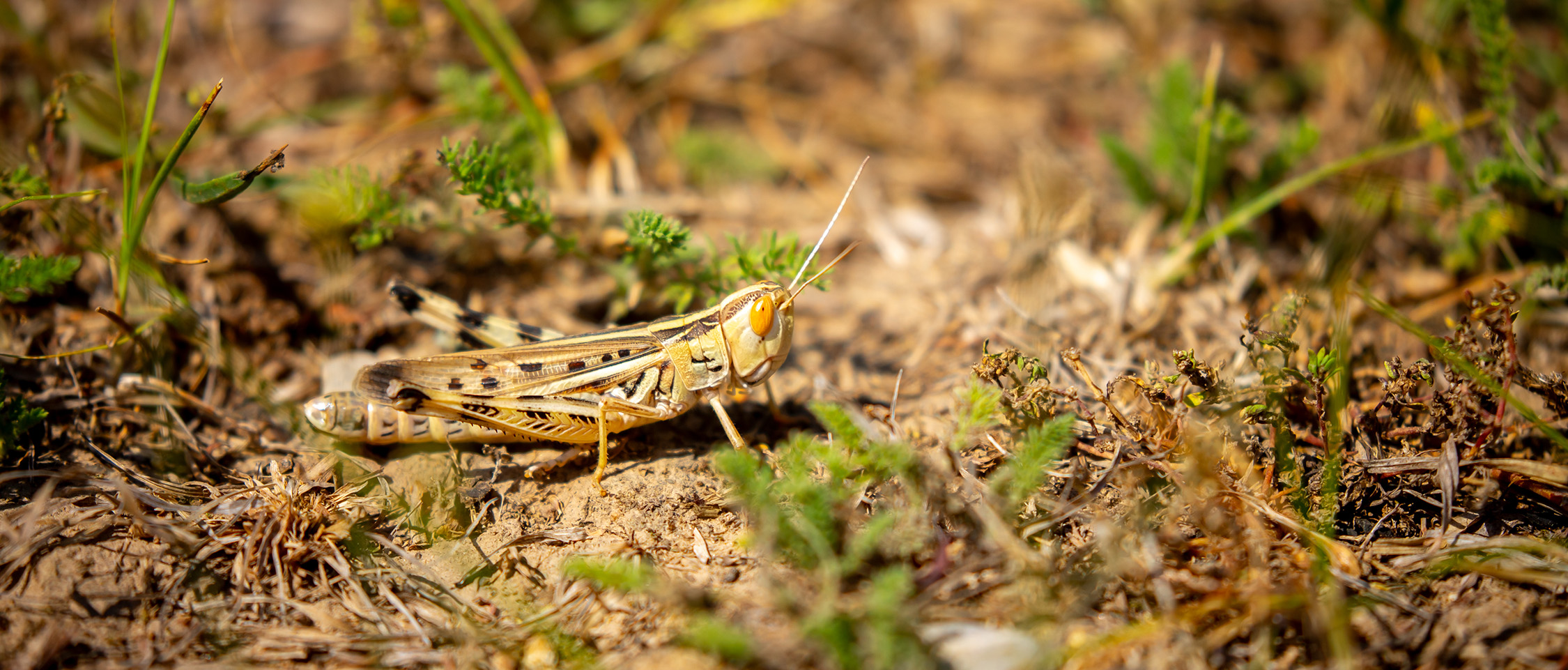
Walk across a pasture in a bad grasshopper year, and you’ll hear them before you see them. Hundreds of insects scatter with every step, springing out of the grass in all directions. A few grasshoppers are a normal part of the landscape, but a population explosion can frustrate farmers, ranchers and homeowners alike.
Grasshoppers can eat tremendous amounts of vegetation. They strip forage from pastures, damage gardens, defoliate young trees and feed on many row crops. In drought years, when forage is already short, heavy grasshopper pressure makes a hard situation worse.
You can reduce the damage. The challenge is knowing when control will work and when it is too late to make much difference.
Why are there so many this year?
Grasshopper numbers rise and fall from year to year, and weather plays a major role in whether they stay manageable or explode.
Warm, dry springs generally favor grasshopper survival. Females lay egg pods in undisturbed soil during late summer and fall. Those eggs stay in the ground through winter and hatch the following spring.
If the winter is mild and the spring stays dry, more young grasshoppers survive. Dry weather also suppresses many of the fungal diseases that normally help keep grasshopper numbers down.
By summer, millions of young insects may already be feeding across rangeland and pastures.
Timing is everything
One of the biggest mistakes landowners make is waiting until grasshoppers have fully developed wings before deciding to act.
Young grasshoppers, called nymphs, are much easier to control. They stay concentrated near where they hatched, can’t fly long distances and take much less insecticide if treatment becomes necessary.
Once they become winged adults, the picture changes. Adult grasshoppers move easily and can fly into treated areas from neighboring fields. Even if a treatment knocks down the local population, new insects may keep arriving all summer.
That is why many Extension specialists stress early monitoring instead of waiting until the damage is obvious.
How much damage can they cause?
Grasshoppers feed on hundreds of plant species. In pastures, they eat grass your livestock would otherwise graze. During severe outbreaks, they may also feed on broadleaf plants, garden vegetables, flowers and young shrubs.
In drought years, the damage shows even more because forage is already stressed. Grasshoppers often gather along field edges first, then move deeper into pastures as food runs short.
Young trees can suffer, too. Newly planted windbreaks, fruit trees and ornamental trees may lose a lot of foliage when grasshopper numbers are high.
What can you do?
No single solution eliminates grasshoppers, but several practices can reduce the damage.
Start with regular scouting. Walking fields every week in late spring and early summer lets you spot rising populations before serious feeding begins.
Good pasture management helps, too. Healthy, vigorous forage generally holds up to feeding better than drought-stressed or overgrazed pasture. Avoiding overgrazing leaves plants more leaf area to recover after insects feed.
Around gardens and homes, mowing tall weeds and unmanaged vegetation can reduce the places where grasshoppers feed and reproduce. It won’t stop an outbreak, but it can make your property less attractive to them.
Natural predators pitch in. Birds, wild turkeys, guineas, chickens, spiders, robber flies and praying mantises all eat grasshoppers. They rarely provide full control in outbreak years, but they help keep numbers lower in normal seasons.
Insecticides can work, but don’t treat them as an automatic solution. Treatment generally works best while most grasshoppers are still immature nymphs. By the time adults are flying, you may need repeated applications because new insects keep moving into treated areas.
Whether treatment pays often depends on how heavy the infestation is and how valuable the crop or pasture is. Extension recommendations commonly use population thresholds to help decide whether control is economically justified, rather than treating every field just because grasshoppers are present.
If you use insecticides, choose products labeled for the site, and follow all label directions on application rates, grazing restrictions and environmental precautions.
Once adult females start laying eggs in late summer, there is little you can do. Those eggs stay in the soil until spring, so early monitoring the next year matters even more after a big outbreak.
Grasshopper populations rarely stay at outbreak levels forever. Weather, predators, disease and natural cycles eventually bring numbers back down. In years that favor grasshoppers, though, producers who scout early and respond quickly usually fare far better than those who wait until the pasture appears to be moving.
No one can eliminate grasshoppers from the landscape, and no one should try. They are a natural part of the ecosystem and an important food source for many wildlife species. The goal is to hold damage to an acceptable level while protecting the long-term health of your pastures, crops and beneficial insects.
By the time grasshoppers are flying up with every step you take through the pasture, much of the damage is already done. The best defense starts weeks earlier, while the insects are young, populations are easier to manage and you have more options.




-
 Country Lifestyles4 years ago
Scott & Stacey Schumacher: A Growth Mindset
-
 Country Lifestyles10 years ago
Style Your Profile – What your style cowboy hat says about you and new trends in 2017
-
 Horsefeathers12 years ago
Mount Scott: Country Humor with David Gregory
-
 Country Lifestyles10 years ago
June 2016 Profile – The man behind the mic: Bob Tallman
-
 Outdoor11 years ago
Buttercup or Primrose?
-
 Country Lifestyles10 years ago
December 2016 Profile, Rusty Riddle – The Riddle Way
-
 HOME10 years ago
Grazing North Texas – Wilman Lovegrass
-
 The Natural Horseman9 years ago
This is why we do what we do — RayeAnn and Cisco