
Farm & Ranch
Generational Transfer in Ranching: Let’s Communicate


Hopefully the title hasn’t made you skim on to the next article, because this isn’t going to be a discussion about finances, legalities, or inheritance of the family enterprise. Instead, I would like to discuss the interactions we have on a day-to-day basis and how occasionally a family just needs to sit down, and have a good old “heart-to-heart” talk. Or, as some in my family would say, “A Come to Jesus Meeting!” As a family, we reached that point not too many days ago. Whether you are a family like ours, where on both sides we are now raising the fifth generation of country kids involved with ranching, or if you are the newly minted first generation who are raising the second, this may strike some chords with you. At the very least you may say “Oh my, so we aren’t the only ones.”, and hopefully, you might finish reading and feel a little bit encouraged by having looked at some things through a different perspective.
My husband and I are both only children. Now before you groan and start repeating stereotypes, please know that not many of them, if any at all are true. Children can be spoiled whether they are an “only”, or one of many. For us as only children, we had some big footstep to follow in, and carried quite a few expectations being the third generation of our respective families that were involved in animal husbandry. In some ways it might have been easier for me as a daughter. Our family business was small and varied. I was reminded often that I could go into the world and do whatever I wanted, and that I didn’t have to stay tied to any form of agriculture. My husband was his Dad’s only right hand man from a very early age, and even though he did go to college, it was an unspoken expectation that he would still help Dad with the ranching. While he did have a successful stint in a town job, it was always with his foot and finances still firmly in the door of cattle raising, working with his Father doing things very much as his Dad always had. After all, that was just the way it had always been done so why change. I remember many evenings of frustration in our home because my husband would say “My Dad just isn’t going to change anything!” It was frequently the theme of the week, month, and even year. My husband learned to just shut down about issues, because talking them over rarely happened. His family were not talkers. Put that together with a young wife from a family that did a lot of talking and it became a crazy mix. His background was along the lines of “bottle it up and live with it”, then silently simmer over it for an extended time. As opposed to my background of “let’s all loudly make our points known” in what could quickly turn into a mess of emotions and resentfulness. Also with nothing resolved. Honestly, how many of us really know how to calmly address issues and attempt to solve conflicts? And with generations involved, we can carry forward some of the very traits and behaviors that could so quickly irritate us as the younger generation working with our parents and grandparents. Doing things “differently” than our parents is commonly referred to in regards to herd management, pasture management, or business management at large, but are we really doing a better job communicating with the generations that we are in charge of? Family businesses don’t often, if ever, have the benefit of being sent for workplace training. If it happens, it’s about the latest vaccines, or pasture weed control, or herd genetics. Never have I ever seen any course advertising training for how ranch families could communicate better to enable harmony in the workplace. And if you are like most wives, you know how quickly that workplace issue comes right on in the backdoor with your spouse. Or with yourself for that matter if you are working alongside everyone in the day-to-day operation. I could give numerous real world examples from the cowlot, but most are not printable. The kicker is you have to go right back out the next day, and see, work with, communicate with, and problem solve with the very person that you perceive as having caused the issue. Other workplaces offer courses on how to communicate, troubleshoot, and problem solve through these types of human issues in the “office.” Why should the family ranching employees be any different just because they are family? We simply aren’t offered a chance of gaining and benefitting from that type training. Here’s the dilemma with us: my husband and son are the third generation of Fathers and sons working together. If you have that dynamic in your family, then you know that there are going to be issues with control and issues with change. And even though my husband went through those very things with his Father, he doesn’t see the traits he has brought forward that are very similar to his Dad’s. Our Son’s biggest complaint: “Dad doesn’t listen to me, and often just won’t talk to me at all.” Unfortunately, our son is like his Mother; very verbal. So here we are with one who has learned to bottle everything inside, and one who learned from the other parent to argue with words. Neither works! Our son has married a very sweet young lady, that doesn’t like loud verbal conflict, so his approach carries over into their home as well, and is equally unsuccessful. And recently our 14 year old grandson has filed a complaint with the Human Resources Dept., (the women of the family) that he doesn’t like the fact that his Dad doesn’t listen to him, or criticizes too much when we are working. The 12 year old granddaughter agreed, and the 7 year old granddaughter blissfully played through much of the family meeting. Please exclude the hormonal turbulence of the teen years, and consider that we are definitely seeing a pattern that is continuing. So, the HR Dept. i.e. women of the family, decided it was time for an intervention. There was groundwork laid down to all parties that the goal was to listen respectfully, consider what was being said, believe that all parties had a role in anything that had happened and that was being discussed, and that there needed to be thoughtful consideration as to how change was possible for the benefit of all of us for now and for future generations. Oh yes, it was about as pleasant as eating ground glass! I’m sure you can imagine the defensiveness at first, closely followed by the denial. There were tears, from the guys first oddly enough, although before we were done there wasn’t a dry eye in the house. There was some necessary contemplation, there were some apologies, even though those weren’t expected, followed by heartfelt declarations by all to truly try to do better. And best of all, by the end there were lots of “I really do love you all!” from all family members present. And by the way, how often do you all say those three little words that have such a big impact? Don’t assume your family knows. Tell them regularly! So how’s it going after our family “talk”? Who knows! The HR Dept. is eternally optimistic, but only time will tell. Words only do so much. The standard of measurement is with actions that are truly different. And change doesn’t happen overnight. It takes time and lots of considered practice not to deal with issues like you have spent a lifetime doing. So what are some good guidelines for us when we don’t have specialty training to fall back on? Consider some insights from the world of business where positive human interaction and communication is essential for productivity. 1. Clarify the Message: Have a clear understanding of what you want to share. Define it and stick with it. What is the issue, and what do you hope to see happen as a result of the message you give. 2. Consider the Audience: A grown son talking to a dad is different than a teen talking to a dad, but both conversations carry equal importance. A spouse talking to a spouse who is a work partner is also a very different conversation in terms of context. Think about the frame of reference, the potential biases, and the knowledge level and the context in which they will receive the information. It’s not rocket science, just thoughtfulness.
3. Convey the Message: Be clear, and concise, and use appropriate language, and tone. The best exchange of issues comes when you can be calm, and not emotional. It’s hard for some not to yell when they are angry and for some it’s hard not to cry when emotional. That lessens the quality of the message. 4. Confirm Understanding: Check that what you are saying is really understood. Ask for feedback to make sure. Be open to questions the person may have in their attempt to understand. A good example of misunderstood communication happened when our son was about four. He was nuts about wearing a little gold ring. He had to have it on all the time. As kids do, he messed around somewhere, (probably with his Dad) and mashed his finger. Within minutes it was swollen, and here was the ring needing to come off. We tried every ring removal trick in the book, with no luck. Now for a toddler, our son was being a trooper. But we were at the end of our bag of tricks, so my husband, being the practical man that he was, finally sighed and said “Well, we’ll just have to cut it off.” That ring was fitting tighter by the minute, so I agreed and off he went to the shop to get a small pair of tin snips. Not a peep was heard from our son till his Dad left, then that old bottom lip started quivering, and big tears were rolling down chubby little cheeks. I panicked at that point. “What’s the matter Baby, is it hurting? I’m so sorry. We’ll fix it as soon as Daddy gets back, I promise.” Through his sobs he looks up at me and says in the most sincere way possible “No Mommy, it doesn’t hurt, but I really like that finger and I sure don’t want Daddy to cut it off.” Needless to say I was torn between laughing because with his limited understanding of the situation he actually thought we were talking about cutting his finger off, or crying because he thought as parents we would resort to cutting his finger off. A classic case of a tense situation where we didn’t consider our audience, we didn’t clarify the message, and we darn sure didn’t explain the outcome we wanted. The finger survived and the ring did not, much to our son’s relief. At the end of the day, what we all hope for in business, relationships, families, and life in general is to get through it happy, with a sense of wellbeing, and definitely in an effective or successful manner. These are three huge outcomes that are affected by how well we communicate. Ranching is a tough industry, but I know of few that would trade jobs for anything else in the world. Make a commitment to the stewardship of our families. Learn better and then do better. After all, our workforce is our family, and who’s worth more than they are?
The next meeting of the WFACW organization will be June 20, 2025 at the Forum, 2120 Speedway, Wichita Falls, TX. The meetings are always held on the third Tuesday of the month. Members attending the midday meeting are encouraged to bring their lunch and enjoy eating and visiting starting at 11:30, followed by the business meeting at 12:00 noon. For more information be sure and follow Wichita Falls Area CattleWomen (WFACW) on Facebook.
By Savannah Magoteaux, Editor
As summer hits its peak, most people in North Texas are thinking about fair food, rodeo tickets, carnival lights and which country act they do not want to miss at the North Texas Fair & Rodeo.
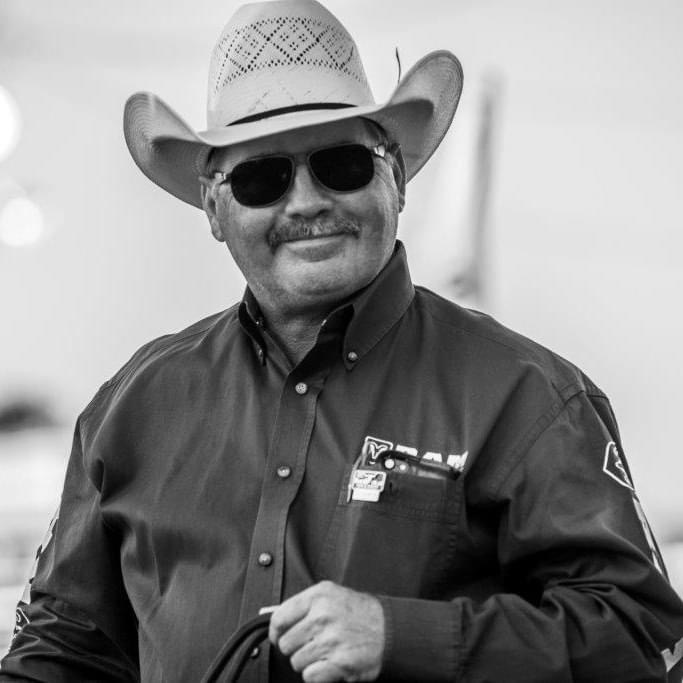
Glenn Carlton is thinking about all of that, too. He is also thinking about hay.
When Carlton visited with us by phone in early July, the Executive Director of the North Texas Fair & Rodeo had about 200 acres of hay on the ground, a quick family vacation coming up, and one of North Texas’ biggest annual events already taking shape at the fairgrounds.
The event has all the things that have been part of his life from the beginning: cattle, rodeo, community, long days and work that usually happens before anyone else gets there and after most people have gone home.
“We never stop planning,” Carlton said. “Normally during the event, I’m already talking to booking agents about who we’re going to hire for next year.”
That is the pace of the North Texas Fair & Rodeo now. It is a year-round operation, a community effort and, in many ways, a moving target that has to keep growing without losing what made people love it in the first place.
That balance has been part of Carlton’s work for more than 40 years.
North Texas Carlton grew up in Eugene, Oregon, but his family’s story runs through southeastern Oklahoma. His parents were from the Tuskahoma area, near the Choctaw Nation Capitol grounds, before they moved to Oregon as a young couple.
Carlton and his sisters were born there, but he always felt a pull back toward this part of the country.
“I always told my family the first chance I got, I was going back to Oklahoma,” Carlton said. “I didn’t quite make it. I got about 30 miles from there.”
His ranching background reaches back into the Kiamichi Mountains, where his grandfather ran open-range cattle. Carlton was little then, too young to remember it firsthand, but the family stories stayed with him. One of his favorites came from an uncle, who told him the cattle were gathered with dogs.
“I asked my uncle, ‘How did y’all gather those cattle?’” Carlton recalled. “They were dog broke. They turned those dogs out in those mountains, and every cow within 10 miles would be in that pen in about 30 minutes.”
As a young man in Oregon, Carlton rode bulls, was involved in high school rodeo and got an early education in what it takes to put on an event. He was president of his high school rodeo team, and when the team decided to produce a rodeo, Carlton was part of making it happen. The facility in Eugene was new, but it was built more for horse shows than rodeo, so they brought in portable panels, gates and bucking chutes and made it work.
That means he was 17 when he produced his first rodeo.
After that, the management side of rodeo was never foreign. He worked for a stock contractor in the Northwest for several years and helped produce 20 to 25 rodeos a year, expanding his education.
“I learned a lot of production rodeos and the stock side of it, and the labor that it takes behind the scenes to make one happen,” Carlton said.
Eventually, rodeo helped get him back closer to the country he had always planned to return to. A beer company that sponsored him when he was riding bulls helped him get a job with a beer distributor in Dallas. Carlton thought he was coming down to be a salesman and hospitality guy. Instead, he was put on a beer truck.
“I learned real quick that I was going to have to work my way up,” he laughed.
He did work his way up, and the beer business eventually brought him to Denton when he was recruited by Miller of Denton. That company, now Fisher59, was a sponsor of the North Texas Fair & Rodeo. Through that sponsorship, Carlton first became involved with the fair.
“Coming from a rodeo and agricultural background, it was a perfect fit for me to get involved as a volunteer,” he said.
He began volunteering in 1985 on Texas rodeo Cowboy Hall of Famer Weldon Burgoon’s rodeo committee. The work was not glamorous. He pushed calves, moved bucking bulls and horses, set up barrels, helped get the arena ready and, when necessary, stayed late at night helping make last-minute fixes before the next performance.
A few years later, Burgoon stepped down, and Carlton was appointed rodeo chairman. He joined the board of directors in 1990 and later served as a vice president. At the time, he had no plans to become Executive Director.
The rodeo chairman role, however, was not a stretch. He already understood rodeo production, and he understood the demands of showing up night after night while still working a full-time job and raising a young family.
“It wasn’t easy, but we still have volunteers that do the very same thing,” he said.
Carlton became Executive Director in 2005 after the previous director announced his retirement. The executive board had discussed splitting the work into separate departments rather than hiring one leader, but Carlton did not believe that would work.
He told the board that if they planned to hire an Executive Director, he would apply. They went through the interview process, considered other applicants and hired him.
“That was a really good feeling, because it was something that I loved,” Carlton said. “I got to do that, and I’ve been doing it ever since.”
At the time, some believed the fair had grown as much as it could. Carlton remembers hearing that there was no more room to expand. The numbers since then tell a different story.
“Our annual income my first year in 2005 was about $400,000,” he said. “Now the fair alone, not counting our rentals and our vendor operation, does over $4 million in annual revenues. There was room to grow.”
Growth, for Carlton, has not only been measured by revenue. It has been measured in attendance, music, parking, restrooms, volunteer numbers, and community support.
Entertainment became one of the biggest pieces. Carlton was in touch with the Texas and Red Dirt music scene at a time when regional artists could draw large crowds without yet being out of reach for a fair like Denton. Artists such as Randy Rogers, Josh Abbott and Stoney LaRue brought in younger crowds, while classic country acts helped bring out a different generation.
The fairgrounds had to keep up. More people meant more pressure on the facility. Under Carlton’s leadership, the Fair improved parking services, added remote parking with free shuttle buses on busy Saturdays, increased restroom capacity and continued maintaining aging buildings. Fair Hall was remodeled again this year.
The grounds have had to be used carefully and creatively, because the fair operates on a footprint that has not changed much in decades.
While the event has grown, Carlton has paid close attention to the volunteer culture behind it. His first rodeo committee had about six people. Today, he estimates the rodeo committee alone has around 30, and the fair is operated by more than 40 committees and about 800 total volunteers.
“What that tells me is that the community, the volunteers that come out here and volunteer, they’re having fun, or they wouldn’t be doing it,” Carlton said. “It’s a social event, an annual reunion for them, and I am very proud of that.”
That same community focus extends beyond the fair’s 10-day run. Carlton said the North Texas Fair & Rodeo, along with associated organizations including the Denton County Youth Fair and the Blue Ribbon Club, puts more than $1 million back into the community each year through scholarships, support of the spring youth fair sale, donated facility use for FFA and other community needs.
“We’re really proud of that,” he said.
Carlton’s days are not limited to the fairgrounds. He still ranches, too. What began small in the early 1990s with a leased place and a handful of cows has grown into a cow-calf operation spread across owned and leased ground. Between his place, his oldest son’s place and leased locations, they run on about 2,000 acres with around 120 head.
“We do it the hard way,” Carlton said. “We own two places, and we lease five.”
One son is very involved in the operation, and the other is involved on a more limited basis. During hay season, Carlton may leave the fair office late in the day, climb onto equipment and cut or rake hay until dark while his son bales behind him.
For about 20 years, he also raised bucking bulls. He built a herd of rodeo-bred and registered cattle, bought breeding bulls from stock contractors he knew, and raised bulls that won competitions and went on to be hauled by contractors. Sammy Andrews and Benny Butler were among those who helped him build that program.
As his sons grew up and moved out of the house, the long weekends on the road became harder to justify. Around 2021, Carlton sold the rodeo-bred herd to one buyer in California and shifted his focus back to commercial cattle.
The ranching, the rodeo, the fair and the civic work all seem to overlap. Carlton currently chairs the board of Discover Denton, the city’s destination marketing organization. He sees the fair not only as a rodeo and entertainment event, but as part of the larger effort to bring people into Denton, fill hotel rooms, support local businesses and keep the city connected to its western and agricultural identity.
“I’m just glad that the North Texas Fair & Rodeo can be sitting at that table and being in this conversation,” he said.
The North Texas Fair & Rodeo has never been a static event. Its story has always included change, adaptation and the need to make room for the next version of itself.
The fair’s history goes back long before Carlton’s involvement. After World War II, the fair resumed in 1946, and in 1948, Dr. W.C. Kimbrough sold the association 22 acres of land in northeast Denton for $5. That land became the longtime home of the fair. Later, in the late 1980s, the association purchased 11 acres to the north, expanding the footprint to 33 acres. That additional land is now used for general parking and livestock parking.
By the time Carlton started volunteering in 1985, the fair was about a five-day event. A couple years later, Executive Director James Roden made a decision that helped shape its future.
The event was expanded to nine days so it could include two weekends, which also gave the fair some protection against rain.
“The idea was to catch two weekends if you had a rainout,” Carlton said. “It’s proven over the years to be very, very good rain insurance.”
A Fair That Keeps Growing
Those earlier years included several rodeo formats. There was what was then called the Black Rodeo, now called the Rodeo of Color.
There was an all-girls rodeo, team penning, a 21 and under rodeo and an open rodeo. When Carlton became rodeo chairman, he began sanctioning the rodeo with the PRCA around 1988.
The rodeo itself has continued to gain importance. Today, the North Texas Fair & Rodeo is a Fort Worth Stock Show & Rodeo qualifying rodeo, a designation that brings in more contestants and adds another layer of economic impact for Denton.
From Carlton’s point of view, that matters when talking with city leaders and local government. More contestants mean more people buying fuel, eating in restaurants and possibly staying in hotels.
“The more people that we can get to town, the stronger you look with an economic impact number,” he said.
The relationship with Denton has been important. Carlton said the City of Denton has been good to work with, and he is aware that not every event has that kind of cooperation.
That partnership was especially important in 2020, when COVID-19 shut down events across the country.
The North Texas Fair & Rodeo did not want to cancel. When the State Fair of Texas canceled that year, an opening in October became available. The fair board chose to postpone from its traditional dates and try to buy more time.
“We decided to postpone ours until October,” Carlton said. “We were basically trying to buy some more time and take it day by day, because we did not want to cancel.”
The event was eventually approved with restrictions, including 50 percent attendance, capacity limits in the rodeo arena, signage and masks available at the gates.
Carlton said they had about 50,000 masks ready if people needed them. Attendance was about half of normal, but the fair still came out financially ahead.
“We actually had the event, and the event was financially successful,” Carlton said.
That decision mattered. Carlton believes many events that canceled in 2020, or canceled for more than one year, struggled to regain momentum. Denton came back strong. The public was ready to get out again, and the fair had record years in 2021 and 2022.
Now, the fair is preparing for another major step: the future Denton County Expo Center. The fair association purchased 109 acres north of town off Interstate 35 in 2014, and Denton County has since purchased acreage around it.
Carlton said the combined site is more than 700 acres, with land bought and paid for and a tax already being collected to help support the project.
He has been working toward a new facility for decades.
“I’ve actually been working on it for 30 years,” Carlton said. “It’s exciting news, because anybody that’s been to the fair, I know it’s fun and it’s homey, but we’re in need of a new facility at this point.”
The concept includes multiple buildings, more than 100,000 square feet, climate-controlled space and a covered arena. The goal is not just to serve the fair, but to create a facility capable of hosting equine events, youth sports, RV shows, home and garden shows, construction shows and other events that Denton County is not currently able to capture.
“We often get criticized for not adding more money in our pro rodeo. We would love to do that, but can’t due to the parking. If we added more money, we would get more contestants. Where would we put them? We don’t have the parking,” he shared. “However, it’s my goal, once we get the new expo center, to add $10,000 per event. I want to make the top 15 cowboys and cowgirls come back to Denton one more time before the season is over. If you are a finals contender, you better enter Denton. That’s my goal.”
Until then, the fair continues to make the most of its current home.
It still feels like the event people have cherished for years, but today’s production is far more extensive. Long before opening day, organizers are already hard at work, with preparations
beginning months ahead and infrastructure going up. Committees are larger. Parking is more strategic. Entertainment is planned months in advance.
Every year, the fair has to be both tradition and progress.
That balance may be why Carlton has been such a natural fit.
He understands the value of the old things, but he is not afraid to adapt when the fair needs to move forward.
He is a rancher, a rodeo man, a civic leader and an event manager, but more than that, he is someone who knows what it takes to keep showing up.
In the middle of the interview, Carlton told a story from 2020, when rodeos and events were being canceled everywhere. When stock contractor Sammy Andrews arrived in Denton, he laughed and shook Carlton’s hand.
“He said, ‘You never was a very good quitter,’” Carlton recalled. “I’m not a very good quitter.”
That may be the simplest way to understand him.
Whether he is checking hay, planning next year’s concert lineup, working with volunteers, talking through economic impact, helping guide the future of Denton tourism or preparing for another 10 nights of rodeo and fair crowds, Carlton has kept showing up for the North Texas Fair & Rodeo.
And in many ways, the fair has grown because of it.
By Savannah Magoteaux
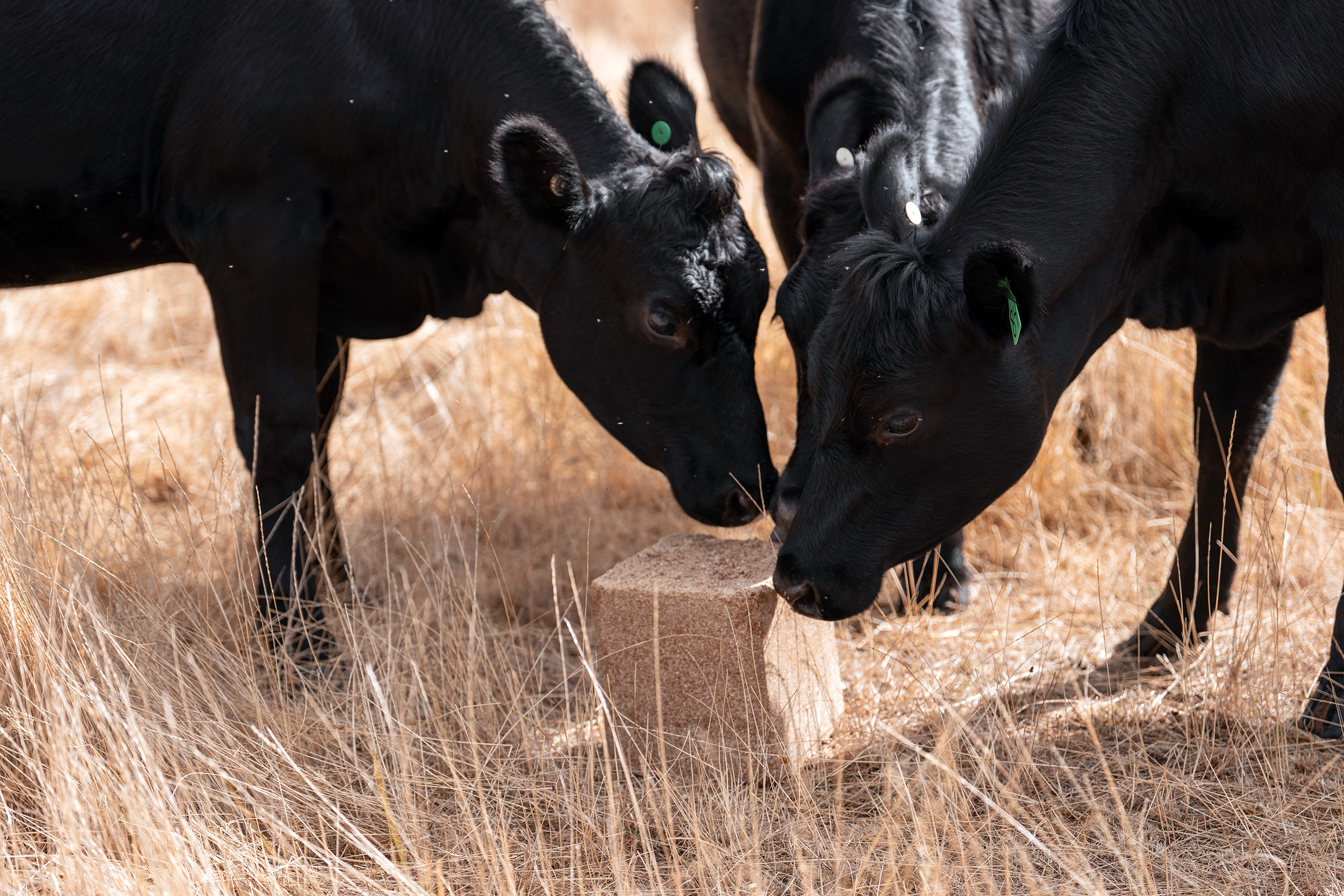
Walk through almost any pasture in Texas, and chances are you’ll find one sitting near a water trough, under a shade tree or tucked beside a feed bunk. Sometimes it’s a plain white block. Other times it’s red, brown or even pink. Some weigh just a few pounds, while others tip the scales at 50 pounds or more. Regardless of their color or size, salt and mineral blocks have become such a familiar part of livestock management that many producers place them in the pasture without giving them much thought. Yet these simple blocks play an important role in animal nutrition, and understanding why livestock seek them out can help producers make better decisions for the health and productivity of their herds.
Salt is one of the few nutrients animals actively crave. Unlike protein or energy, which are largely obtained through forage and feed, sodium is often lacking in pasture plants. Livestock have evolved with an appetite specifically designed to seek out salt when their bodies need it. That instinct is one reason cattle, horses, sheep and goats will travel surprising distances to find a source of sodium if one is unavailable.
While salt blocks have been a ranch staple for generations, today’s mineral supplements have become far more sophisticated. Many products now combine salt with calcium, phosphorus and trace minerals that support everything from muscle contraction and reproduction to immune function and hoof health. Choosing the right product depends on the species being fed, the forage available and even the region where the animals live.
More Than Just Salt At its most basic level, salt is made of two essential minerals: sodium and chloride. Both are classified as macrominerals, meaning animals require them in relatively large amounts compared to trace minerals. Sodium helps regulate nerve impulses, muscle contractions and the movement of fluids throughout the body. Chloride works alongside sodium to maintain proper hydration while also serving as a critical component of stomach acid, allowing livestock to digest feed efficiently.
Although forages contain many nutrients, they are naturally low in sodium. Even lush spring grasses seldom provide enough to meet an animal’s daily requirement. Because of that, cattle, horses and many other grazing animals must receive supplemental salt throughout the year.
A salt deficiency does not usually appear overnight. Instead, producers may notice subtle changes that become more pronounced over time. Animals may consume less feed, resulting in slower weight gain or reduced milk production. Fertility can decline, growth rates may slow and overall performance often suffers. In more severe cases, livestock may begin chewing wood, licking soil, eating unusual objects or seeking out other unnatural sources of sodium. These behaviors, sometimes called pica, are among the body’s attempts to correct a nutritional imbalance.
Fortunately, providing adequate salt is one of the simplest nutritional needs to address. Salt blocks offer a convenient way for livestock to regulate their own intake. Rather than consuming large amounts at one time, animals typically lick the block periodically throughout the day, taking in only what their bodies require. Weather- resistant pressed blocks can remain in the pasture for extended periods, making them particularly useful for grazing operations where daily feeding is limited.
The familiar white salt block is composed almost entirely of sodium chloride and serves one primary purpose: supplying salt. For operations where the rest of the mineral program is already balanced through feed or loose mineral supplements, a plain white block may be all that is needed. In many cow-calf operations, however, producers choose trace mineral salt blocks instead.
Trace minerals are required in much smaller quantities than sodium or calcium, but their importance cannot be overstated. Copper contributes to immune function, reproduction and proper hair pigmentation. Zinc supports healthy skin, hoof quality and wound healing. Manganese plays a role in skeletal development and reproductive performance. Cobalt is necessary for rumen microbes to produce vitamin B12, while iodine supports proper thyroid function. Selenium, where deficient, works with vitamin E to protect muscle tissue and strengthen the immune system.
Because many soils naturally contain low levels of certain trace minerals, forage quality can vary considerably from one region to another. In portions of Texas and Oklahoma, selenium levels in soils are frequently too low to meet livestock requirements. Other areas may contain high concentrations of sulfur, iron or molybdenum, which interfere with the absorption of copper. These regional differences are one reason nutritionists often recommend mineral programs designed specifically for local conditions rather than relying on a one-size-fits-all approach.
It is also important to recognize that more is not always better. While deficiencies create problems, excessive mineral intake can be equally harmful. Sheep, for example, are far more sensitive to copper than cattle and should never have unrestricted access to cattle mineral products formulated with higher copper concentrations. Horses have different mineral requirements than ruminants, and goats often require supplementation programs designed specifically for their unique nutritional needs. Reading the label before placing a block in the pasture is every bit as important as selecting the right feed.
Another factor producers sometimes overlook is intake itself. Salt serves as a natural regulator because livestock consume only limited amounts each day. Manufacturers often incorporate minerals into salt products because the salt encourages animals to visit the block regularly without allowing them to overconsume the supplement. Even so, weather, forage quality, water availability and individual animal preferences all influence how much each animal actually receives. Dominant animals may visit the block more often, while timid animals may consume less than intended if too few blocks are available throughout the pasture.
Placement matters as well. Nutrition specialists often recommend locating blocks near watering areas or loafing sites where livestock naturally gather. In larger pastures, providing multiple blocks helps reduce competition while encouraging animals to utilize more of the available grazing acreage. Some producers intentionally position mineral feeders away from water sources to encourage more even grazing distribution across the pasture, a management practice that can reduce overgrazing in heavily traveled areas while making better use of available forage.
to the Situation Not every animal has the same nutritional requirements, and those needs can change dramatically throughout the year. A dry beef cow grazing dormant winter forage has different mineral requirements than a lactating cow nursing a calf. Growing replacement heifers, breeding bulls, horses in heavy work and young livestock all place different demands on their bodies. As forage quality rises and falls with the seasons, so does the amount of supplementation that may be necessary. During periods of drought or when livestock rely heavily on harvested hay, mineral supplementation often becomes even more important because stored forages frequently contain lower concentrations of certain nutrients than actively growing pasture.
One of the biggest changes in livestock nutrition over the past several decades has been the increasing use of loose mineral supplements. Because animals can consume loose minerals more easily than they can lick a pressed block, nutritionists generally find that intake is more consistent. Loose minerals also allow manufacturers to include higher concentrations of phosphorus and other ingredients that would be difficult to incorporate into a hard block. For producers managing breeding herds or seeking maximum production, loose minerals often provide the most complete nutritional program.
That does not mean salt blocks have become obsolete. In many situations, they remain an excellent choice. Operations with smaller herds, leased grazing ground or remote pastures often appreciate the durability of a pressed block. They withstand rain well, create little waste and require less frequent replacement than loose minerals exposed to the weather. Some producers even offer both products, allowing livestock constant access to a salt block while providing a balanced loose mineral supplement nearby.
Producers also have options when it comes to size. Smaller mineral bricks, often weighing between four and ten pounds, are convenient for horse stalls, small paddocks, trailers and temporary pens where only a few animals need access. They are easy to move and replace but require more frequent monitoring. Larger blocks weighing 25 to 50 pounds are better suited for pastures with multiple animals and can last considerably longer before needing replacement. Their size also makes them more resistant to being tipped over or carried away by curious livestock.
Weather can influence the effectiveness of any mineral program. While pressed blocks hold up well in rain, they should still be placed on well-drained ground whenever possible to reduce waste. Loose minerals should be protected with covered feeders to prevent moisture from causing the product to cake or harden. Regardless of the supplement being offered, keeping feeders clean and replacing contaminated product helps ensure livestock continue consuming the minerals as intended.
Water quality deserves consideration as well. Water naturally contains dissolved minerals, and in some parts of Texas, elevated sulfur levels can interfere with copper absorption or contribute to other nutritional imbalances. Likewise, forage grown on different soil types can vary widely in mineral content from one ranch to another. Because of these regional differences, many Extension specialists encourage producers to base their mineral program on forage analysis, water testing and recommendations from a veterinarian or livestock nutritionist rather than selecting a product based solely on price or marketing claims.
It is also worth remembering that mineral supplements cannot compensate for poor overall nutrition. Salt blocks and mineral mixes are designed to supplement a balanced feeding program, not replace quality forage, adequate energy or sufficient protein. When cattle are short on calories or protein, simply increasing mineral intake will not correct the underlying problem. Like every other aspect of livestock management, mineral nutrition works best when viewed as one piece of a larger management plan.
Despite the growing number of specialized products available today, the principle remains
remarkably simple. Livestock require minerals to support countless biological functions, and because many of those nutrients are inconsistent or lacking in forage, producers must provide them in another form. Whether that comes from a plain white salt block, a fortified trace mineral block or a carefully balanced loose mineral supplement depends on the operation and the animals being managed.
The next time you pass a weathered salt block sitting quietly in the pasture, it is worth remembering that it represents far more than a convenient place for cattle to gather. It is the result of decades of nutritional research, an understanding of animal physiology and the recognition that even the smallest nutrients can have an enormous impact on health, reproduction and performance. Like good fences and dependable water, a thoughtfully planned mineral program is one of those investments that often goes unnoticed—right up until it is missing.
Choosing the Right Block Walk down the livestock aisle of any farm store and you’ll likely find dozens of different mineral products.
While labels vary by manufacturer, these are some of the most common options producers encounter.
White Salt Blocks Made almost entirely of sodium chloride, these blocks provide a basic source of salt. They are commonly used when livestock already receive a balanced mineral supplement through feed or a separate loose mineral program.
Trace Mineral Salt Blocks (Red Blocks) The most common choice for beef cattle, these blocks contain salt along with added trace minerals such as zinc, copper, manganese, cobalt and iodine. They help supplement nutrients Mineral Blocks Some blocks are formulated for specific regional deficiencies or management goals and may include sulfur, magnesium or other nutrients. These products are often recommended based on forage tests, water quality or veterinary advice.
Loose Minerals Pressed blocks are durable, weather resistant and require little maintenance, making them that may be lacking in forage.
Mineral Blocks Designed for regions where selenium-deficient soils are common, these products provide carefully regulated levels of selenium. Because selenium can become toxic if overfed, producers should follow label directions and consult local recommendations before use.
Sulfur or Specialty
Pressed Blocks vs.
High-Selenium
ideal for many pasture situations.
Loose minerals generally provide more consistent intake and allow for more complete formulations, making them the preferred choice for many
breeding and production herds.
Smaller mineral bricks are convenient for stalls, pens and small groups of livestock where portability is important. Larger 25- and 50-pound blocks are
Large Blocks or Small Bricks?
designed for pasture use and require less frequent replacement.
The best choice often comes down to herd size, grazing conditions and how often the supplement can be checked and replenished.
By Tony Dean, tonydean.tx1@gmail.com
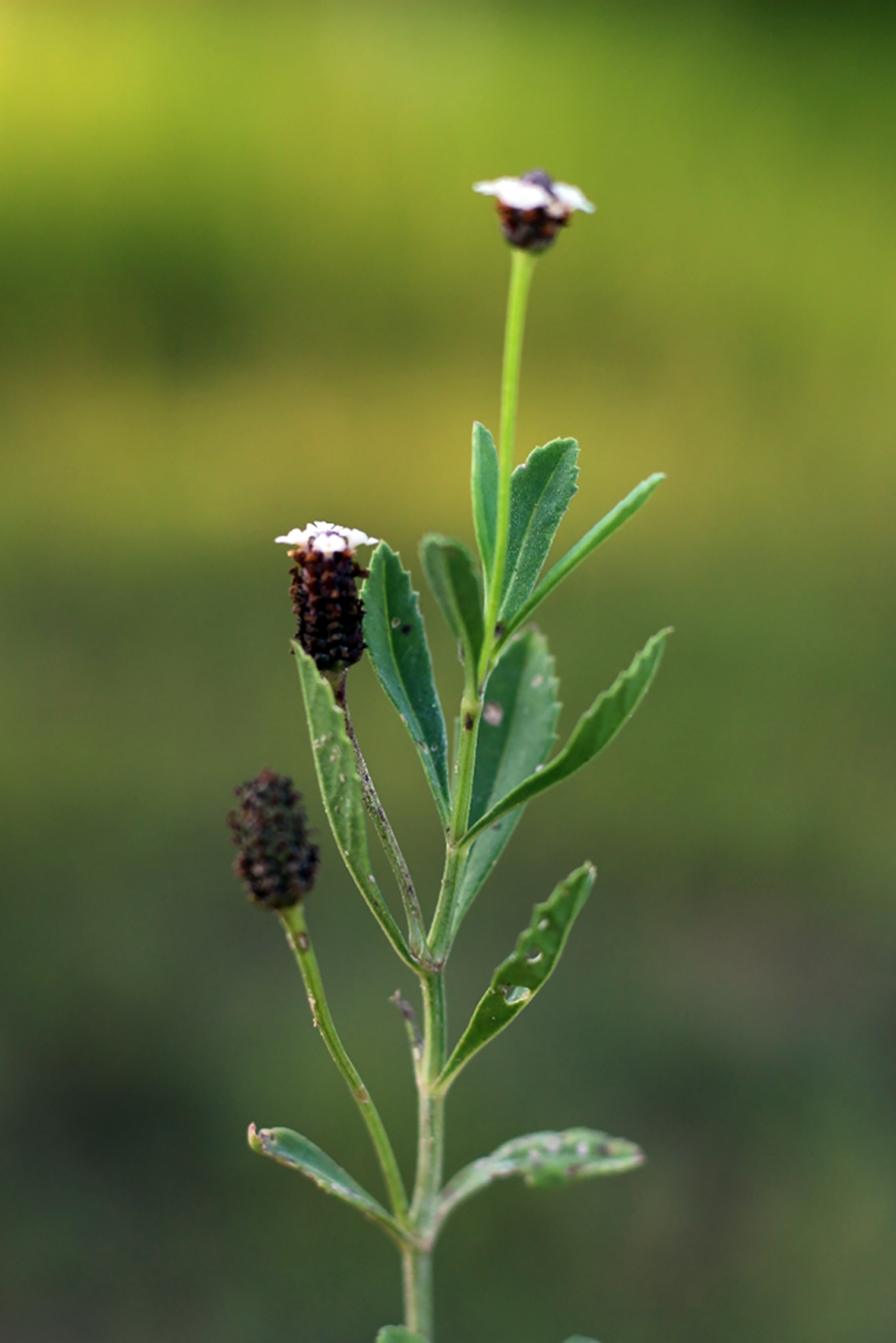
Frog fruit is a native low- growing perennial forb that is adapted to most of the eastern US, but it is not particularly well known to grazers. However, it contributes more to our plant communities than we realize. It generally grows no more than a few inches tall, rooting at the nodes. It can form dense mats several feet in diameter, and can develop runners up to 3 feet long.
Leaves are thick, one to two inches long and 3/8” wide, and are toothed from the middle to the tip of the leaf. Tiny white flowers form a ring around a flower head, then the head elongates to a 1” cylinder or longer. frog fruit has a four-angled stem.
Frog fruit can grow in almost any area in Texas and on many soil types. While it can grow in dryer soils and likes good drainage, it needs additional moisture to survive the hottest months. It can be found almost anywhere in a pasture but is often located in depressions and near water sources.
“Frog fruit is used as forage by livestock and deer. I recall an instance when I was moving cattle from one pasture to the next on a Jack County ranch. As I opened the gate, I stood by a beautiful green plant of switchgrass which I expected to be immediately grazed down. The cattle walked right by the switchgrass and stuck their heads in a small patch of frog fruit a few feet away,” Dean exclaimed.
Frog fruit is rapidly gaining popularity as a ground cover for homes and gardens for the following reasons:
1. Frog fruit grows quickly, maybe too quickly. If it gets out of bounds, you can always trim it back.
2. Frog fruit is low maintenance. Once you get it established with adequate watering, it can survive with little maintenance.
3. Frog fruit has a long bloom period, from April to October.
4. It is a host plant for several butterfly species and for other insects.



-
 Country Lifestyles4 years ago
Scott & Stacey Schumacher: A Growth Mindset
-
 Country Lifestyles10 years ago
Style Your Profile – What your style cowboy hat says about you and new trends in 2017
-
 Horsefeathers12 years ago
Mount Scott: Country Humor with David Gregory
-
 Country Lifestyles10 years ago
June 2016 Profile – The man behind the mic: Bob Tallman
-
 Outdoor11 years ago
Buttercup or Primrose?
-
 Country Lifestyles10 years ago
December 2016 Profile, Rusty Riddle – The Riddle Way
-
 HOME10 years ago
Grazing North Texas – Wilman Lovegrass
-
 The Natural Horseman9 years ago
This is why we do what we do — RayeAnn and Cisco