
Farm & Ranch
[AgriLife Extension] Texas crop and weather report for Aug. 17

By: Rod Santa Ana
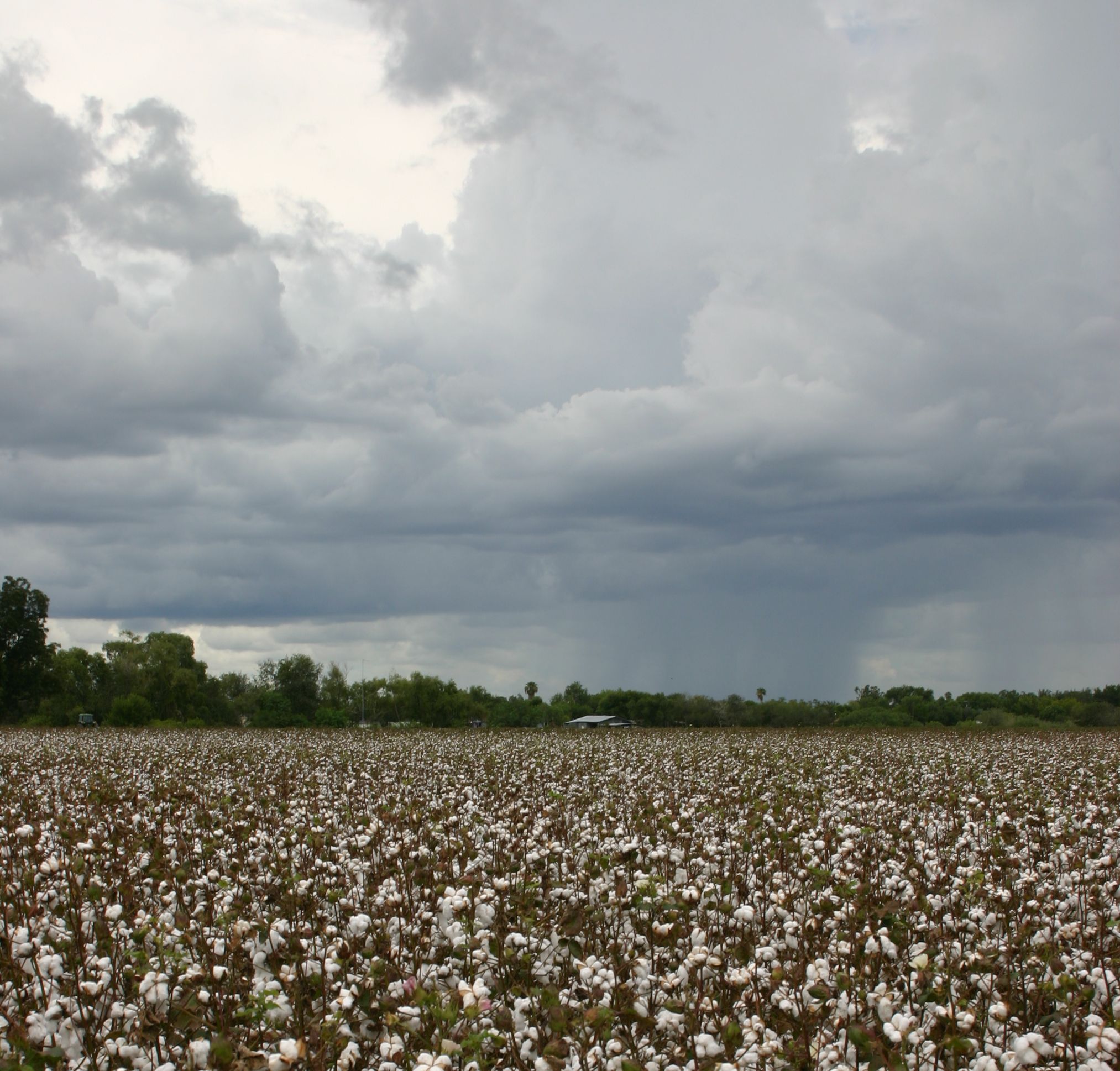
Changing weather patterns likely to keep state’s drought in check
Writer: Rod Santa Ana, 956-878-8317, r-santaana@tamu.edu
Contacts: Brad Cowan, 956-383-1026, b-cowan@tamu.edu
WESLACO – An offshoot of the changing weather system that produced severe and unprecedented flooding in Louisiana should persist throughout most of Texas, helping to check or even eliminate drought conditions that had been developing this summer, according to a weather expert.
While the system shouldn’t impede the summer harvest of cotton and grain statewide, it likely won’t provide much drought relief to South Texas, said Barry Goldsmith, the warning coordinator meteorologist at the National Weather Service in Brownsville.
“The weather pattern that featured a persistent ‘heat dome’ of atmospheric high pressure over Texas through much of July and the first week of August appears to be changing for the remainder of the month,” Goldsmith said.
The change brought heat relief and substantial rainfall to regions of Texas including the east, southeast, central and southern parts of the state, he said.
“The forecast pattern for Texas to close August will be transitioning to one that is more late spring-like rather than late summer-like, with a few twists,” Goldsmith said.
Those twists include atmospheric conditions that will likely lift tropical moisture northward, producing clusters of showers and thundershowers which “should help keep the drought in check across central and north Texas, if not eliminate such conditions in several areas,” he said.
“The axis of heavier rain and potential flooding is likely to extend from the Big Bend region northeast to the Dallas metroplex and east to include much of east and southeast Texas,” Goldsmith said.
The rain events and cloudiness will help put a cap on temperatures.
“We’ll probably see below to much-below average temperatures for late August in those areas where the most rain is likely to fall,” Goldsmith said.
Brad Cowan, the Texas A&M AgriLife Extension Service agent in Hidalgo County, said summer harvesting of grain sorghum and cotton appeared to be going smoothly statewide, including in South Texas, where grain sorghum is all but harvested, but cotton growers could use another few days of dry weather to finish their 2016 crop.
“We got some isolated heavy showers this week that may have slowed or delayed some pockets of cotton harvesting in extreme South Texas, but overall our harvest is going well and could be done soon, given another 10 rain-free days,” he said.
Goldsmith said South Texas will likely get the hot, dry weather Rio Grande Valley cotton farmers need.
“The Valley will likely continue to sit under the remnant core of the ‘heat dome,’ perhaps through month’s end,” he said. “That will keep temperatures slightly above the already hot average and limit precipitation during a time when daily average rainfall begins to rise steadily.”
That means another streak of 100-plus degree days from Laredo to McAllen beginning late this week and possibly continuing through August, Goldsmith said, with rainfall amounts depending on enough atmospheric moisture available to be triggered by afternoon sea breezes.
“The trend is leaning drier than wetter in this case,” he concluded.
Cowan said the weather notwithstanding, finances are weighing heavily on the state’s cotton and grain producers.
“What we could really use are higher market prices for grain sorghum and cotton,” he said.
Grain sorghum prices continue to be weak, and after gaining some momentum recently, cotton prices have also weakened, according to Dr. John Robinson, an AgriLife Extension agriculture economist in College Station.
“After trending for almost two years in the range of 60 cents per pound of lint, New York cotton futures prices recently rose over 10 cents per pound starting in mid-July, before retreating about 9 cents in mid-August,” he said.
Robinson attributes that initial price rise to the U.S. Department of Agriculture’s “more bullish forecast of world demand in the July supply/demand report,” he said. “This was followed by considerable speculative buying with the apparent view of a weather market. Prices will continue to be influenced by expectations about the effect of recent rain events in West Texas.
A weather market is a typical summer phenomena whereby expectations of changing weather conditions and supply are uncertain, resulting in unpredictable and volatile prices, Robinson said.
AgriLife Extension district reporters compiled the following summaries:
CENTRAL: Temperatures were in the three-digit range. Some brush control was done. Corn harvest was about 75 percent complete with yields averaging 60 bushels per acre. Grain sorghum harvests were averaging 2,800 pounds per acre. An increase in yellow sugarcane aphids were seen in sorghum. Most of the soybeans were harvested. Cotton was nearing completion with some fields nearing leaf drop. Cattle remained in good body condition, and stock pond levels were holding steady. Overall range and pasture conditions were fair. Hay baling continued in most areas.
ROLLING PLAINS: Some counties received beneficial rains with totals from 3.5 to 5.5 inches one day and another 1-2 inches a few days later. The rain put out several grass fires that were started by lightning. The majority of the region stayed hot and dry. Cooler nighttime temperatures started, which helped relieve some of the stress on crops and rangelands. Forages seemed to be holding up well. Producers continued to plan fall and winter forages and whether to add cattle to their operations. Cotton looked fair, and some producers began plowing fallow ground for wheat. Cattle were in good condition.
COASTAL BEND: Hot weather persisted with temperatures reaching 100 degrees, putting pressure on soil moisture and forage crops. Corn and sorghum were all out of the fields, and nearly all rice was out as well. Cotton harvest was progressing quickly due to hot, dry conditions. Cotton fields continued to pick extremely clean, and yields continued to be above normal. Some areas reported that cotton harvest was temporarily interrupted by tropical rains off the Gulf. Hay prices remained low with a tremendous supply on hand. Pasture and range conditions continued to dry out, but there was ample forage, and livestock were doing well.
EAST: The region received scattered spotty rainfall. Pasture and range conditions were good to fair. Marion County was the only county reporting excellent pasture and range conditions. Harrison County reported some parts of the county received 2 inches of rain in one afternoon while other parts of the county received no rain. San Augustine County received approximately 4 inches of rain over the weekend. Most counties were still in need of rain. Subsoil and topsoil conditions remained short to adequate. Pond and creek levels were dropping. Cherokee County had worsening drought conditions. Jasper County reported sandy topsoil was drying out fast. Hay production decreased due to the dry conditions. Some producers were still optimistic of getting additional hay cuttings following recent rainfall. Producers continued to monitor and treat hay fields for armyworms and grasshoppers. A severe infestation of armyworms was reported by Cherokee and Wood counties. Cattle prices were holding steady. Livestock were in fair to good condition. Calves were growing, and the calf market was good. Weaning and selling of market-ready calves and cull cows continued.
SOUTH PLAINS: Bailey County producers received light, scattered showers last week, but no significant rainfall totals. Sub- and topsoil moisture levels in Cochran County were very low. The majority of corn crops have dried out. Dryland cotton, sorghum, pastures and rangeland needed moisture. Irrigated cotton, sorghum and peanuts were holding. Cattle were in good condition. The Dawson County area received some much-needed rain but also received some hail. Most dryland cotton was blooming out of the top and irrigated fields were looking really strong. Floyd County received moisture in parts of the county, but it was very minimal and spotty. Dryland crops were really suffering due to lack of moisture. Lubbock County finally received some much needed rainfall across a large portion of the county, which will help to fill out cotton bolls and will help corn and sorghum move closer to maturity. Reports of increased bollworm moth activity had producers on the lookout for possible late-season infestations. In Scurry County, producers did not receive any rainfall. Passing rains in Swisher County helped the struggling crops where irrigation wells were pumping hard the last few weeks. Sorghum was progressing well with limited pest pressure. Some corn began to draw down due to heat stress.
PANHANDLE: Most of the region saw some cooler temperatures at the start of the week then warmed back to near normal by week’s end. Some moisture was received in most areas. Soil moisture was still rated mostly short. Rain was still needed throughout the region. Irrigation was active. In Collingsworth County, cooler conditions toward the beginning of the week gave the cotton some much needed relief. Some bacterial blight moved through due to the cloudy, humid conditions and cooler temperatures. Deaf Smith County had spotty rainfall amounts that helped crop conditions. Most producers were pushing irrigation wells as hard as possible as crops neared maturity. Corn was in good shape as long as the wells were running. Corn fields without irrigation will not be harvested, and some irrigated fields or parts of circles were abandoned. Moth trap numbers were still very high with many producers applying a second Southwest corn borer insecticide application. Grain sorghum was coming along, however sugarcane aphids were found in several places, and some fields reached high enough levels to need a pesticide application. The cotton crop was all over the board with mainly the irrigated cotton being counted on for harvest quality. Hall County temperatures came down a little giving relief to crops and cattle. Spotty rain helped, but a wider spread event was needed to assist with crops and pasture growth and development. Ochiltree County received good general rains allowing producers to cease irrigation. Wheat preplant field work continued with rains helping soil moisture conditions. Dryland grain sorghum looked very promising with recent rains. Randall County was still hot and dry. Some scattered showers occurred but were extremely spotty. Ranges and pastures continued to vary in ratings from very poor to excellent with most reporting good to fair.
NORTH: Topsoil and subsoil moisture was mostly very short to short. The week started off extremely warm with temperatures over 100 degrees and the heat index near 110 degrees. Toward the later part of the week, a cool front came through dropping temperatures to the mid 80’s. Sporadic and short rain showers provided some moisture. Corn was still being harvested around the county. Yields weren’t quite what producers expected but were still around the average yield marks for the county. Grain sorghum was doing well and nearing harvest. Soybeans were doing well despite all the heat. Cotton looked nice. Bermuda grass pastures were struggling a little with the lack of rainfall, however there was a good amount of forage left in pastures due to plentiful rain in the early summer. The extreme heat started to stress livestock.
FAR WEST: Temperatures dropped to the 90’s. Thunderstorms and heavy winds were reported in most counties with rain totals ranging from zero to 5 inches. Flash flooding was reported in the mountain regions. Regan, Upton and Glasscock counties continued to have drought conditions. Rangeland fires were reported in Reagan County. Cotton needed rain to freshen the crop and set more bolls. Sorghum harvest was in full swing. Cattle continued to stay in good condition. Supplemental feeding of livestock and wildlife was necessary in Upton County. Producers completed needed maintenance to prepare for fall work. Cantaloupe and watermelon harvest continued.
WEST CENTRAL: Most of the district was dry, windy and very hot. Triple digits were extreme. Some isolated showers were reported in many areas. Temperatures went down with the weather front that went through. Grain sorghum was maturing fast. Harvest started on some sorghum fields. Yields were slightly above normal. Corn harvest was underway with fair yields reported. Cotton squared and was beginning to set bolls. Rain was needed to continue good growth. Reports of spotty cotton aphids and stink bug pressures were noted. Range and pastures were in poor to fair condition. Soil moisture continued to decline. Forage growth decreased due to hot, dry weather. Livestock remained in fair to good condition. Cattle prices were going up, which was great for the ranchers. Some stock tanks and ponds caught a little runoff from recent rains. Pecan crops appeared to be holding.
SOUTHEAST: In Chambers County, the rice harvest progressed with dry field conditions. Pastures were very dry. In Fort Bend County, livestock were in good condition. Many cotton producers were planning to defoliate or had already started, but rain delayed that. Walker County was in need of rain to green the pastures and fields. In Brazos County, hot and dry conditions persisted. In Jefferson County, the temperatures were hot. Rain showers cooled things off allowing a break from the heat. Livestock and crops were doing well despite the hot temperatures. Soil-moisture levels throughout the region ranged widely from adequate to very short, with most ratings in the short range. San Jacinto County reported 100 percent adequate. Rangeland and pasture ratings varied widely too, from excellent to poor, with fair ratings being the most common. San Jacinto County reported 100 percent fair.
SOUTHWEST: Hot and dry conditions continued throughout the region. With the recent rain received throughout the area, the topsoil moisture levels increased slightly. This should keep available forages from declining. Milo and corn harvests were close to completion, and some hay was being made. Livestock continued to remain in good condition. Rangelands were still dry as weaning of lambs and goats continued.
SOUTH: Counties in the northern part of the district reported soil moisture levels as adequate with the exception of Frio County, which reported short levels. Corn and sorghum harvests there were completed, cotton was in the boll open stage and ready to be defoliated, peanuts were in the pegging stage, and irrigated Bermuda hay was being cut and baled. In Atascosa County, peanut fields, sesame fields and cotton had appreciable rain. In McMullen county, range and pasture conditions remained in fair condition. Horn fly populations were on the increase, and body condition scores on cattle remained good. A couple of showers around the Brooks County area measured about 1 inch. The numbers of cattle in the sale barns were high, but sale prices remained mediocre. In Jim Hogg County, the hot, dry weather led to moisture levels being very short. The corn and grain sorghum harvests were complete in Jim Wells County, and cotton harvest began. In Kleberg and Kenedy counties, early planted cotton was mid-way through harvest. Hot, dry conditions were taking a big toll on pastures and rangelands. Cattle prices continued to decline at area auction barns. Webb County received some moisture, yet conditions were extremely hot with temperatures reaching over 105. Dimmit, Maverick, Zapata and Zavala counties all reported dry conditions with a need for significant rain throughout the area. In the Zavala County region, range and pasture conditions remained mostly fair, however a few producers reported pockets of native range and pastures were approaching poor conditions and may force some supplemental feeding for livestock if no rainfall was received. Plowing of corn and sorghum stubble was active. Starr County reported soil moisture levels as adequate although extremely hot temperatures continued to dry the range pastures. Supplemental feeding of livestock continued. Cotton harvest was in full swing, aided by hot and dry weather in Hidalgo and Cameron counties. Land preparation continued for the fall vegetable crops.
-30-


Find more stories, photos, videos and audio at http://today.agrilife.org
By Barry Whitworth, DVM
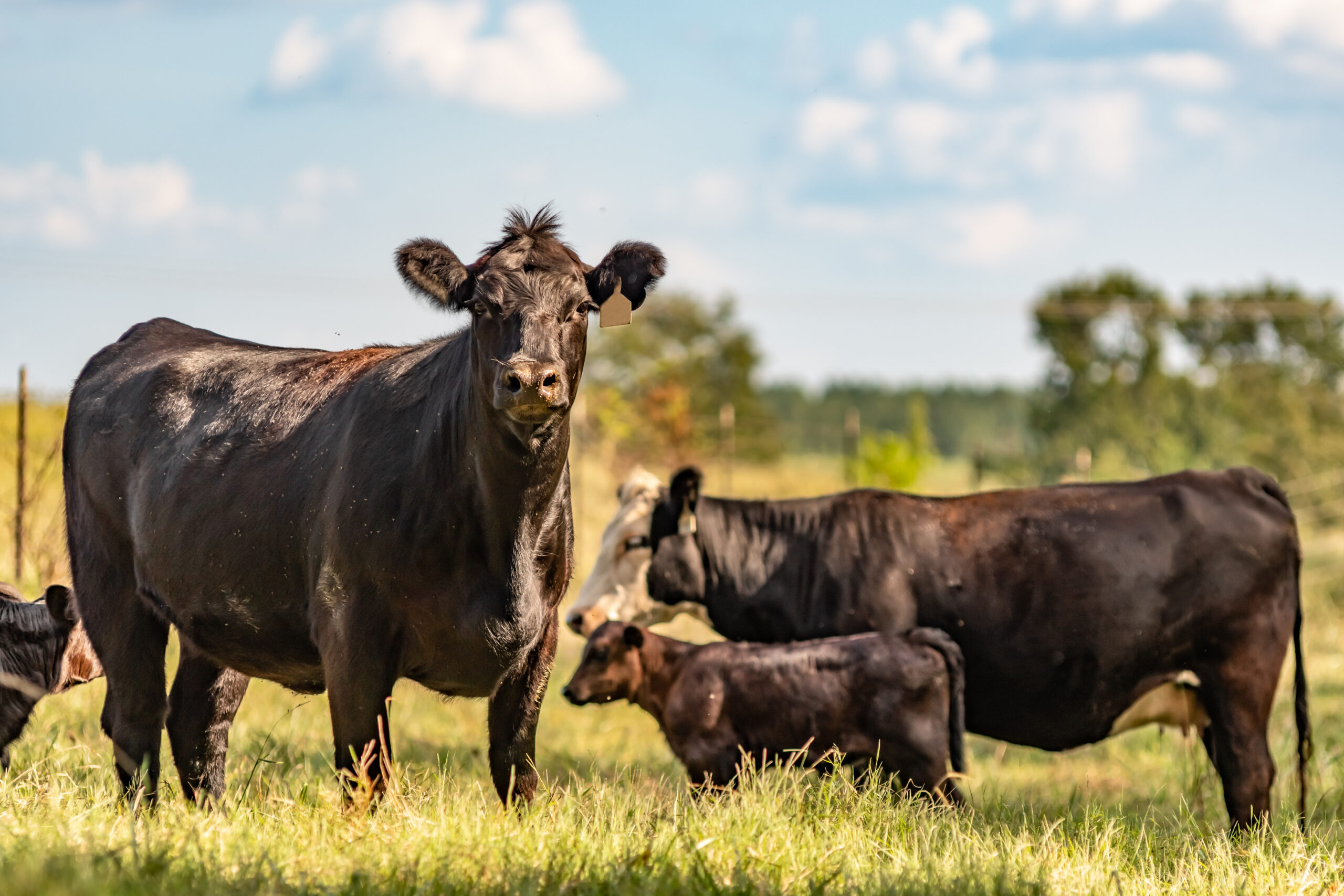
Over the past few years, veterinarians have detected Theileria orientalis in Oklahoma cattle. Early cases were primarily diagnosed in adult cattle, but more recent Oklahoma cases have been identified in stocker cattle. All cattle producers should be familiar with the clinical signs of this disease and check their cattle daily for signs of trouble.
The first U.S. case of theileriosis was identified in Virginia in August 2017. Those cattle showed weakness and anemia, and veterinarians made an initial diagnosis of anaplasmosis. Blood samples from the animals were tested for Anaplasma, Babesia and Leptospira. Results were negative for all three, but the tests revealed a blood protozoan, later identified as T. orientalis genotype Ikeda. Since that first herd outbreak, the organism has been detected in several states.
Cattle sick with T. orientalis genotype Ikeda may show fever, weakness, anorexia and exercise intolerance. If forced to move, affected cattle may stagger and gasp for air. If stressed excessively, they may collapse and die. On examination, the gums, eyes or vaginal mucosa may appear pale (white) or yellow. Reproductive losses, including stillbirths and late-term abortions, may occur, along with a drop in milk production.
Clinical signs reported in adult cattle in Oklahoma include anemia, sudden death, weight loss, abortion, failure to thrive and failure to calve. In stocker cattle, producers have reported weight loss, anemia, poor performance and sudden death.
Because Anaplasma marginale and T. orientalis genotype Ikeda produce similar clinical signs, telling the two apart can be difficult. One difference is that clinical signs are more common in young cattle infected with T. orientalis than in young cattle infected with A. marginale. Cattle with anaplasmosis also often display aggression, while those with T. orientalis genotype Ikeda typically do not. A laboratory test is required to tell the two diseases apart with certainty.
Researchers have identified Haemaphysalis longicornis as a possible vector of T. orientalis genotype Ikeda. In 2017, the U.S. Department of Agriculture’s (USDA) National Veterinary Services Laboratories (NVSL) confirmed the presence of H. longicornis, commonly called the Asian longhorned tick (ALT) or bush tick. While trying to determine how the tick arrived in the United States, USDA officials discovered it had been present in West Virginia as early as 2010. The tick has now been confirmed in at least 26 states, including Oklahoma. Some evidence suggests other insect vectors may also transmit T. orientalis genotype Ikeda. Needle transfer is another possible route of transmission.
The ALT has been identified in Craig and Mayes counties in Oklahoma. This tick thrives in areas with high humidity, such as wooded regions, brush or tall grass. Ticks are often found where large numbers of wildlife gather, such as along deer trails. Producers can find more information about the ALT on the USDA website at https://www.aphis.usda.gov/livestock-poultry-disease/cattle/ticks/asian-longhorned.
Other countries have developed treatments for T. orientalis, but no approved treatments are available in the United States, and no vaccine exists for this disease. The best defense is prevention: buying cattle free of the organism, avoiding blood transfer between animals and using effective tick control. Producers should purchase cattle from reputable sources. Clean instruments between animals during procedures such as castration or dehorning, and change needles between every animal. Control external parasites with appropriate insecticide treatments. Pasture management also helps, such as rotating cattle away from wooded or brushy areas where ticks thrive. Patch burning may also help reduce tick populations.
Theileria orientalis remains a concern for some cow/calf and stocker producers in Oklahoma. Producers who want more information about T. orientalis genotype Ikeda should contact their local veterinarian or Oklahoma State University County Extension agriculture educator.
References
Hammer, J. F., Emery, D., Bogema, D. R., & Jenkins, C. (2015). Detection of Theileria orientalis genotypes in Haemaphysalis longicornis ticks from southern Australia. Parasites & Vectors, 8, 229.
Oakes, V. J., Yabsley, M. J., Schwartz, D., LeRoith, T., Bissett, C., Broaddus, C., Schlater, J. L., Todd, S. M., Boes, K. M., Brookhart, M., & Lahmers, K. K. (2019). Theileria orientalis Ikeda genotype in cattle, Virginia, USA. Emerging Infectious Diseases, 25(9), 1653-1659.
Spickler, Anna Rovid. (2019). Theileriosis. Retrieved from http://www.cfsph.iastate.edu/DiseaseInfo/factsheets.php.
Watts, J. G., Playford, M. C., & Hickey, K. L. (2016). Theileria orientalis: A review. New Zealand Veterinary Journal, 64(1), 3-9.
By OKFR Staff
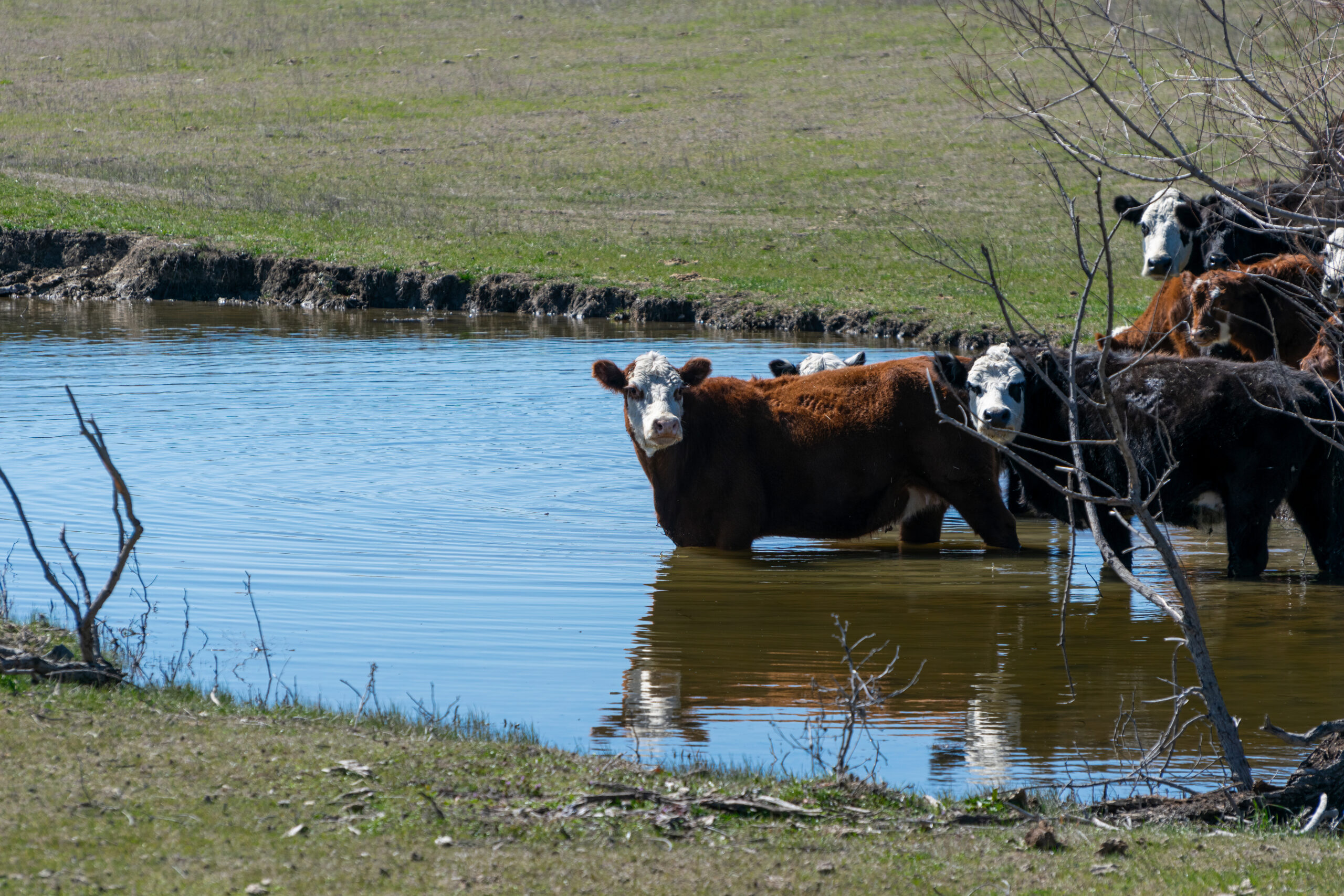
During the hottest part of summer, a farm pond can look like a welcome source of water. Cattle may be standing belly-deep along the bank, and the pond may still hold enough water to seem dependable. Looks alone won’t tell you whether that water is safe.
Hot weather, limited rainfall and falling pond levels can create water-quality problems. As water evaporates, salts, minerals, nutrients and other substances become more concentrated. Warm, still water can also encourage blue-green algae, and some forms can produce toxins capable of killing livestock.
Producers sometimes treat water as an afterthought compared to grass, hay and supplemental feed. Livestock need a dependable supply of clean water to maintain feed intake, regulate body temperature and support production. Poor-quality water can reduce consumption and performance even when it does not cause obvious poisoning.
A pond that has watered cattle for years is not safe under every set of conditions. Pay particular attention during drought, extreme heat or any period when the water level drops significantly.
Watch the Water and the Livestock
One of the most serious late-summer concerns is a bloom of cyanobacteria, commonly called blue-green algae. These organisms live naturally in many bodies of water, and most do not produce dangerous toxins. The risk rises when certain toxin-producing species multiply rapidly under favorable conditions.
According to Oklahoma State University Extension, toxic blue-green algal blooms typically develop in standing water after periods of hot, dry, calm weather. Nutrients such as nitrogen and phosphorus can fuel excessive growth. Those nutrients may reach a pond through manure, fertilizer runoff, soil erosion and decaying vegetation.
A suspicious bloom may turn the water bright green, blue-green, pea-soup green or even brownish. Scum, foam or mats may collect along the shoreline, particularly where the wind pushes floating material into one area. Some blooms look like spilled paint.
Not every green pond is poisonous. Common aquatic plants and harmless algae can also change the color or surface of the water. You usually cannot tell whether a bloom is toxic by looking at it, and a pond can contain toxin-producing cyanobacteria without showing every commonly described warning sign.
Keep livestock, horses, pets and people away from water that has an unusual color, heavy surface scum, a bad odor or unexplained dead fish or wildlife nearby. Do not let livestock drink from another part of the same pond on the assumption that the water is safe there. Wind can move a bloom, and toxin levels may vary across the pond.
Blue-green algae can produce toxins that affect the nervous system or liver. Depending on the toxin and the amount consumed, affected animals may develop weakness, staggering, difficulty breathing, tremors, convulsions, diarrhea or collapse. In severe cases, owners find animals dead near the water before realizing anything is wrong. Treatment often fails, which makes prevention especially important.
Treat any suspected poisoning as an emergency. Move the herd away from the water source without driving or stressing animals that may already be affected. Provide another clean water supply and contact a veterinarian immediately. Your county Extension office can also help you determine where and how to submit a water sample.
Blue-green algae is not the only potential problem. Pond water may contain elevated levels of dissolved salts, sulfates, nitrates, bacteria or other contaminants. Runoff can carry manure, fertilizer, pesticides and organic matter into the pond. Low water levels make some of these problems worse because the remaining water grows more concentrated.
Water with excessive dissolved solids may taste bitter or salty, so animals drink less of it. Depending on the substances involved and their concentrations, poor-quality water may contribute to diarrhea, reduced feed intake, poor weight gain or other health concerns. Young animals and livestock that are not used to the water may be more vulnerable.
Watch the cattle themselves, too. Are they reluctant to drink? Are they crowding around a different water source? Has feed intake or weight gain dropped without an obvious explanation? Are several animals having digestive problems? Changes across multiple animals can be an early clue that you need to look at the feed or water.
OSU Extension recommends collecting a representative sample and submitting it for a livestock water test whenever you suspect a water supply is harming animal health or performance. A standard livestock water test covers several characteristics, but blue-green algae can require different sampling and testing procedures. Contact the laboratory or county Extension office before collecting the sample so you take it from the right location, use the proper container and handle it correctly.
Reduce Problems Before They Develop
Good pond management cannot eliminate every water-quality problem, but it can lower the risk. One of the most effective steps is limiting the manure, soil and nutrients that enter the water.
Cattle with unrestricted access to an entire pond can damage the banks, muddy the water and deposit large amounts of manure in or near it. Hoof traffic strips vegetation and speeds erosion. Sediment fills the pond over time, while manure supplies nutrients that can encourage excessive algae growth.
Where practical, fence livestock away from most of the pond and provide a limited-access watering point. Another option is piping water to a trough below the dam or elsewhere in the pasture. OSU notes that reducing cattle manure in the pond can reduce the conditions that favor toxic algae and make the water more palatable.
A vegetated buffer around the pond can slow runoff and trap soil and nutrients before they reach the water. Apply fertilizer and manure carefully in the watershed, particularly before heavy rain, and do not let large amounts of hay, feed or organic debris pile up at the water’s edge.
Alternative watering systems need maintenance, too. Check troughs for algae, manure, drowned animals and other contamination. Install wildlife escape ramps in tanks so birds and small animals can climb out instead of drowning and fouling the water.
Be cautious about treating a pond on your own. Some owners use copper sulfate and other algaecides for algae control, but improper treatment can create new problems. Killing a large amount of algae or aquatic vegetation at once can deplete dissolved oxygen as the material decomposes, which can lead to a fish kill. Treatment may also release toxins from affected cyanobacteria into the water. Base any chemical application on proper identification and professional recommendations, not guesswork.
Livestock should always have enough water for the weather, their size and their stage of production. Demand rises sharply in hot weather, and a pond that barely meets the herd’s needs in spring may fall short in August. Check the source regularly instead of waiting for cattle to gather around a muddy shoreline.
Ponds can fool you. Crystal-clear water isn’t always safe, and a green pond doesn’t always mean toxic algae. Regular observation, testing and prevention are the best ways to keep a pond safe for your herd.
By Savannah Magoteaux, Editor
As summer hits its peak, most people in North Texas are thinking about fair food, rodeo tickets, carnival lights and which country act they do not want to miss at the North Texas Fair & Rodeo.
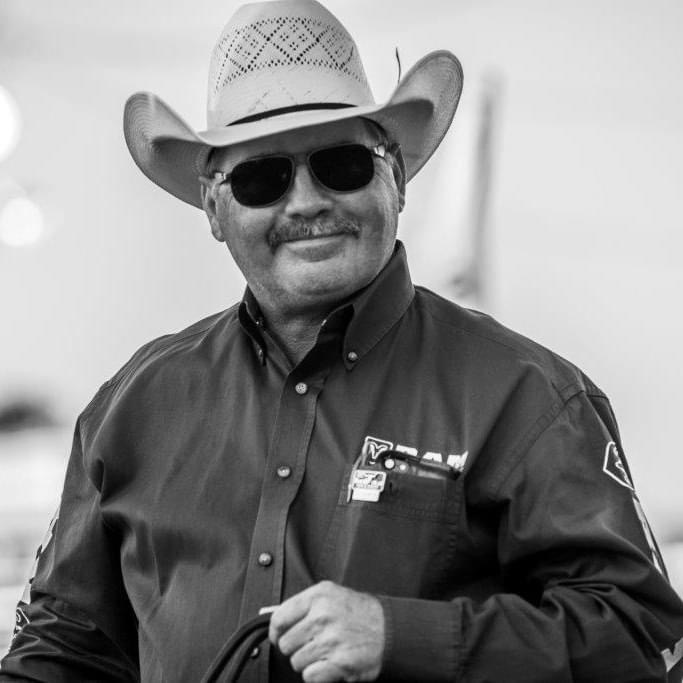
Glenn Carlton is thinking about all of that, too. He is also thinking about hay.
When Carlton visited with us by phone in early July, the Executive Director of the North Texas Fair & Rodeo had about 200 acres of hay on the ground, a quick family vacation coming up and one of North Texas’ biggest annual events already taking shape at the fairgrounds.
The event holds the things that have been part of his life from the beginning: cattle, rodeo, community, long days and work that usually happens before anyone else gets there and after most people have gone home.
“We never stop planning,” Carlton said. “Normally during the event, I’m already talking to booking agents about who we’re going to hire for next year.”
That is the pace of the North Texas Fair & Rodeo now. It is a year-round operation, a community effort and, in many ways, a moving target that has to keep growing without losing what made people love it in the first place.
Carlton has worked to strike that balance for more than 40 years.
From Rodeo Roots to North Texas
Carlton grew up in Eugene, Oregon, but his family’s story runs through southeastern Oklahoma. His parents were from the Tuskahoma area, near the Choctaw Nation Capitol grounds, before they moved to Oregon as a young couple.
Carlton and his sisters were born in Oregon, but he always felt a pull back toward this part of the country.
“I always told my family the first chance I got, I was going back to Oklahoma,” Carlton said. “I didn’t quite make it. I got about 30 miles from there.”
His ranching background reaches back into the Kiamichi Mountains, where his grandfather ran open-range cattle. Carlton was too young then to remember it firsthand, but the family stories stayed with him. One of his favorites came from an uncle, who told him the family gathered cattle with dogs.
“I asked my uncle, ‘How did y’all gather those cattle?’” Carlton recalled. “They were dog broke. They turned those dogs out in those mountains, and every cow within 10 miles would be in that pen in about 30 minutes.”
As a young man in Oregon, Carlton rode bulls, competed in high school rodeo and got an early education in what it takes to put on an event. He was president of his high school rodeo team, and when the team decided to produce a rodeo, Carlton helped make it happen. The facility in Eugene was new but built more for horse shows than rodeo, so they brought in portable panels, gates and bucking chutes and made it work.
He was 17 when he produced his first rodeo.
From then on, the management side of rodeo was never foreign to him. He worked for a stock contractor in the Northwest for several years and helped produce 20 to 25 rodeos a year, which broadened his education.
“I learned a lot of production rodeos and the stock side of it, and the labor that it takes behind the scenes to make one happen,” Carlton said.
Rodeo eventually helped bring him closer to the country he had always planned to return to. A beer company that sponsored him when he rode bulls helped him land a job with a beer distributor in Dallas. Carlton thought he was coming down to be a salesman and hospitality guy. Instead, the company put him on a beer truck.
“I learned real quick that I was going to have to work my way up,” he laughed.
He did work his way up, and the beer business eventually brought him to Denton when Miller of Denton recruited him. That company, now Fisher59, sponsored the North Texas Fair & Rodeo, and through that sponsorship Carlton first got involved with the fair.
“Coming from a rodeo and agricultural background, it was a perfect fit for me to get involved as a volunteer,” he said.
He began volunteering in 1985 on the rodeo committee of Weldon Burgoon, a member of the Texas Rodeo Cowboy Hall of Fame. The work was not glamorous. He pushed calves, moved bucking bulls and horses, set up barrels, helped get the arena ready and, when necessary, stayed late at night making last-minute fixes before the next performance.
A few years later, Burgoon stepped down, and the committee appointed Carlton rodeo chairman. He joined the board of directors in 1990 and later served as a vice president. At the time, he had no plans to become Executive Director.
The rodeo chairman role was not a stretch. He already understood rodeo production, and he understood the demands of showing up night after night while working a full-time job and raising a young family.
“It wasn’t easy, but we still have volunteers that do the very same thing,” he said.
Carlton became Executive Director in 2005 after the previous director announced his retirement. The executive board had discussed splitting the work into separate departments instead of hiring one leader, but Carlton did not believe that would work.
He told the board that if they planned to hire an Executive Director, he would apply. The board went through the interview process, considered other applicants and hired him.
“That was a really good feeling, because it was something that I loved,” Carlton said. “I got to do that, and I’ve been doing it ever since.”
At the time, some people believed the fair had grown as much as it could. Carlton remembers hearing that there was no more room to expand. The numbers since then tell a different story.
“Our annual income my first year in 2005 was about $400,000,” he said. “Now the fair alone, not counting our rentals and our vendor operation, does over $4 million in annual revenues. There was room to grow.”
Carlton measures growth in more than revenue. He also counts attendance, music, parking, restrooms, volunteer numbers and community support.
Entertainment became one of the biggest pieces. Carlton was in touch with the Texas and Red Dirt music scene at a time when regional artists could draw large crowds without being out of reach for a fair like Denton’s. Artists such as Randy Rogers, Josh Abbott and Stoney LaRue brought in younger crowds, while classic country acts drew a different generation.
The fairgrounds had to keep up, because more people put more pressure on the facility. Under Carlton’s leadership, the fair improved parking services, added remote parking with free shuttle buses on busy Saturdays, increased restroom capacity and kept up its aging buildings. Crews remodeled Fair Hall again this year.
The fair has to use its grounds carefully and creatively, because its footprint has not changed much in decades.
As the event has grown, Carlton has paid close attention to the volunteer culture behind it. His first rodeo committee had about six people. Today, he estimates the rodeo committee alone has around 30, and more than 40 committees and about 800 total volunteers run the fair.
“What that tells me is that the community, the volunteers that come out here and volunteer, they’re having fun, or they wouldn’t be doing it,” Carlton said. “It’s a social event, an annual reunion for them, and I am very proud of that.”
That community focus extends beyond the fair’s 10-day run. Carlton said the North Texas Fair & Rodeo, along with associated organizations including the Denton County Youth Fair and the Blue Ribbon Club, puts more than $1 million back into the community each year through scholarships, support of the spring youth fair sale, donated facility use for FFA and other community needs.
“We’re really proud of that,” he said.
Carlton’s days are not limited to the fairgrounds. He still ranches, too. What began small in the early 1990s with a leased place and a handful of cows has grown into a cow-calf operation on owned and leased ground. Between his place, his oldest son’s place and leased locations, they run about 120 head on about 2,000 acres.
“We do it the hard way,” Carlton said. “We own two places, and we lease five.”
One son is heavily involved in the operation, and the other helps on a more limited basis. During hay season, Carlton may leave the fair office late in the day, climb onto equipment and cut or rake hay until dark while his son bales behind him.
For about 20 years, he also raised bucking bulls. He built a herd of rodeo-bred and registered cattle, bought breeding bulls from stock contractors he knew, and raised bulls that won competitions and went on to be hauled by contractors. Sammy Andrews and Benny Butler were among those who helped him build that program.
As his sons grew up and moved out of the house, the long weekends on the road became harder to justify. Around 2021, Carlton sold the rodeo-bred herd to a single buyer in California and shifted his focus back to commercial cattle.
The ranching, the rodeo, the fair and the civic work all overlap. Carlton currently chairs the board of Discover Denton, the city’s destination marketing organization. He sees the fair as a rodeo and entertainment event and also as part of the larger effort to bring people into Denton, fill hotel rooms, support local businesses and keep the city connected to its western and agricultural identity.
“I’m just glad that the North Texas Fair & Rodeo can be sitting at that table and being in this conversation,” he said.
A Fair That Keeps Growing
The North Texas Fair & Rodeo has never stood still. Its story has always included change, adaptation and making room for the next version of itself.
The fair’s history goes back long before Carlton’s involvement. After World War II, the fair resumed in 1946, and in 1948, Dr. W.C. Kimbrough sold the association 22 acres of land in northeast Denton for $5. That land became the fair’s longtime home. In the late 1980s, the association bought 11 acres to the north, expanding the footprint to 33 acres. The fair now uses that land for general parking and livestock parking.
When Carlton started volunteering in 1985, the fair ran about five days. A couple of years later, Executive Director James Roden made a decision that helped shape its future. He expanded the event to nine days so it would include two weekends, which also gave the fair some protection against rain.
“The idea was to catch two weekends if you had a rainout,” Carlton said. “It’s proven over the years to be very, very good rain insurance.”
Those earlier years included several rodeo formats. There was what was then called the Black Rodeo, now called the Rodeo of Color. There was an all-girls rodeo, team penning, a 21-and-under rodeo and an open rodeo. When Carlton became rodeo chairman, he began sanctioning the rodeo with the PRCA around 1988.
The rodeo has continued to gain importance. Today, the North Texas Fair & Rodeo is a Fort Worth Stock Show & Rodeo qualifying rodeo, a designation that draws more contestants and adds another layer of economic impact for Denton.
Carlton sees that as important when he talks with city leaders and local government. More contestants mean more people buying fuel, eating in restaurants and possibly staying in hotels.
“The more people that we can get to town, the stronger you look with an economic impact number,” he said.
The relationship with Denton has been important. Carlton said the City of Denton has been good to work with, and he knows not every event gets that kind of cooperation.
That partnership was especially important in 2020, when COVID-19 shut down events across the country. The North Texas Fair & Rodeo did not want to cancel. When the State Fair of Texas canceled that year, an October opening became available. The fair board chose to postpone from its traditional dates and try to buy more time.
“We decided to postpone ours until October,” Carlton said. “We were basically trying to buy some more time and take it day by day, because we did not want to cancel.”
Officials eventually approved the event with restrictions, including 50 percent attendance, capacity limits in the rodeo arena, signage and masks available at the gates. Carlton said they had about 50,000 masks ready if people needed them. Attendance was about half of normal, but the fair still came out financially ahead.
“We actually had the event, and the event was financially successful,” Carlton said.
That decision mattered. Carlton believes many events that canceled in 2020, or for more than one year, struggled to regain momentum. Denton came back strong. The public was ready to get out again, and the fair had record years in 2021 and 2022.
Now the fair is preparing for another major step: the future Denton County Expo Center. The fair association bought 109 acres north of town off Interstate 35 in 2014, and Denton County has since bought acreage around it. Carlton said the combined site covers more than 700 acres, with the land bought and paid for and a tax already being collected to help support the project.
He has been working toward a new facility for decades.
“I’ve actually been working on it for 30 years,” Carlton said. “It’s exciting news, because anybody that’s been to the fair, I know it’s fun and it’s homey, but we’re in need of a new facility at this point.”
The concept includes multiple buildings, more than 100,000 square feet of climate-controlled space and a covered arena. Carlton wants a facility that can serve the fair and also host equine events, youth sports, RV shows, home and garden shows, construction shows and other events Denton County cannot currently attract.
“We often get criticized for not adding more money in our pro rodeo. We would love to do that, but can’t due to the parking. If we added more money, we would get more contestants. Where would we put them? We don’t have the parking,” he shared. “However, it’s my goal, once we get the new expo center, to add $10,000 per event. I want to make the top 15 cowboys and cowgirls come back to Denton one more time before the season is over. If you are a finals contender, you better enter Denton. That’s my goal.”
Until then, the fair continues to make the most of its current home.
It still feels like the event people have cherished for years, but today’s production is far bigger. Organizers start preparing months before opening day, and the infrastructure goes up well ahead of the crowds. Committees are larger, parking is more strategic and entertainment is booked months in advance.
Each year, the fair has to honor tradition and make progress, and that balance may be why Carlton fits the job so well. He values the old ways but adapts when the fair needs to move forward. He is a rancher, a rodeo man, a civic leader and an event manager who knows what it takes to keep showing up.
In the middle of the interview, Carlton told a story from 2020, when rodeos and events were being canceled everywhere. When stock contractor Sammy Andrews arrived in Denton, he laughed and shook Carlton’s hand.
“He said, ‘You never was a very good quitter,’” Carlton recalled. “I’m not a very good quitter.”
That may be the simplest way to understand him.
Whether he is checking hay, planning next year’s concert lineup, working with volunteers, talking through economic impact, helping guide the future of Denton tourism or preparing for another 10 nights of rodeo and fair crowds, Carlton has kept showing up for the North Texas Fair & Rodeo, and the fair has grown because of it.




-
 Country Lifestyles4 years ago
Scott & Stacey Schumacher: A Growth Mindset
-
 Country Lifestyles10 years ago
Style Your Profile – What your style cowboy hat says about you and new trends in 2017
-
 Horsefeathers12 years ago
Mount Scott: Country Humor with David Gregory
-
 Country Lifestyles10 years ago
June 2016 Profile – The man behind the mic: Bob Tallman
-
 Outdoor11 years ago
Buttercup or Primrose?
-
 Country Lifestyles10 years ago
December 2016 Profile, Rusty Riddle – The Riddle Way
-
 HOME10 years ago
Grazing North Texas – Wilman Lovegrass
-
 The Natural Horseman9 years ago
This is why we do what we do — RayeAnn and Cisco