60th Annual Saint Jo Rodeo

St Jo
TX 76265
USA
August 4-5
60th Annual Saint Jo Rodeo – Saint Jo Riding Club Arena, Saint Jo, Texas. Come out Aug. 4 through the 5 to watch rodeo action each night starting at 8 p.m. Events include bull riding, calf roping, cowgirl’s barrel racing, cowgirl’s breakaway roping, ranch bronc riding, saddle bronc riding, steer wrestling, team roping, tie down roping. The event is a CPRA and UPRA sanctioned event. This Saint Jo rodeo will take place. Saint Jo Riding Club and hosted by Flying C Rodeo Company. This year is the 60th Annual Saint Jo Rodeo. For more info email sjrcrodeo@gmail.com.

St Jo
TX 76265
USA
By Savannah Magoteaux
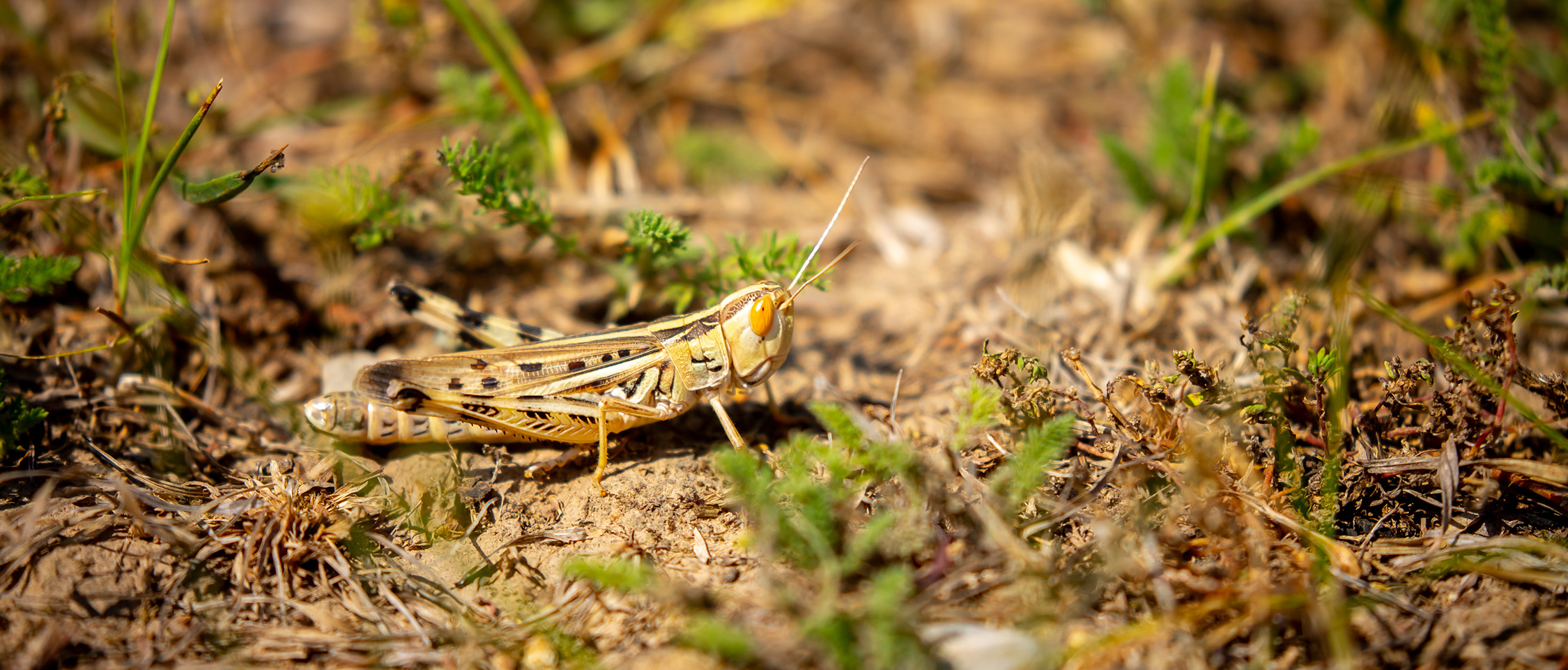
Walk across a pasture in a bad grasshopper year, and you’ll hear them before you see them. Hundreds of insects scatter with every step, springing out of the grass in all directions. A few grasshoppers are a normal part of the landscape, but a population explosion can frustrate farmers, ranchers and homeowners alike.
Grasshoppers can eat tremendous amounts of vegetation. They strip forage from pastures, damage gardens, defoliate young trees and feed on many row crops. In drought years, when forage is already short, heavy grasshopper pressure makes a hard situation worse.
You can reduce the damage. The challenge is knowing when control will work and when it is too late to make much difference.
Why are there so many this year?
Grasshopper numbers rise and fall from year to year, and weather plays a major role in whether they stay manageable or explode.
Warm, dry springs generally favor grasshopper survival. Females lay egg pods in undisturbed soil during late summer and fall. Those eggs stay in the ground through winter and hatch the following spring.
If the winter is mild and the spring stays dry, more young grasshoppers survive. Dry weather also suppresses many of the fungal diseases that normally help keep grasshopper numbers down.
By summer, millions of young insects may already be feeding across rangeland and pastures.
Timing is everything
One of the biggest mistakes landowners make is waiting until grasshoppers have fully developed wings before deciding to act.
Young grasshoppers, called nymphs, are much easier to control. They stay concentrated near where they hatched, can’t fly long distances and take much less insecticide if treatment becomes necessary.
Once they become winged adults, the picture changes. Adult grasshoppers move easily and can fly into treated areas from neighboring fields. Even if a treatment knocks down the local population, new insects may keep arriving all summer.
That is why many Extension specialists stress early monitoring instead of waiting until the damage is obvious.
How much damage can they cause?
Grasshoppers feed on hundreds of plant species. In pastures, they eat grass your livestock would otherwise graze. During severe outbreaks, they may also feed on broadleaf plants, garden vegetables, flowers and young shrubs.
In drought years, the damage shows even more because forage is already stressed. Grasshoppers often gather along field edges first, then move deeper into pastures as food runs short.
Young trees can suffer, too. Newly planted windbreaks, fruit trees and ornamental trees may lose a lot of foliage when grasshopper numbers are high.
What can you do?
No single solution eliminates grasshoppers, but several practices can reduce the damage.
Start with regular scouting. Walking fields every week in late spring and early summer lets you spot rising populations before serious feeding begins.
Good pasture management helps, too. Healthy, vigorous forage generally holds up to feeding better than drought-stressed or overgrazed pasture. Avoiding overgrazing leaves plants more leaf area to recover after insects feed.
Around gardens and homes, mowing tall weeds and unmanaged vegetation can reduce the places where grasshoppers feed and reproduce. It won’t stop an outbreak, but it can make your property less attractive to them.
Natural predators pitch in. Birds, wild turkeys, guineas, chickens, spiders, robber flies and praying mantises all eat grasshoppers. They rarely provide full control in outbreak years, but they help keep numbers lower in normal seasons.
Insecticides can work, but don’t treat them as an automatic solution. Treatment generally works best while most grasshoppers are still immature nymphs. By the time adults are flying, you may need repeated applications because new insects keep moving into treated areas.
Whether treatment pays often depends on how heavy the infestation is and how valuable the crop or pasture is. Extension recommendations commonly use population thresholds to help decide whether control is economically justified, rather than treating every field just because grasshoppers are present.
If you use insecticides, choose products labeled for the site, and follow all label directions on application rates, grazing restrictions and environmental precautions.
Once adult females start laying eggs in late summer, there is little you can do. Those eggs stay in the soil until spring, so early monitoring the next year matters even more after a big outbreak.
Grasshopper populations rarely stay at outbreak levels forever. Weather, predators, disease and natural cycles eventually bring numbers back down. In years that favor grasshoppers, though, producers who scout early and respond quickly usually fare far better than those who wait until the pasture appears to be moving.
No one can eliminate grasshoppers from the landscape, and no one should try. They are a natural part of the ecosystem and an important food source for many wildlife species. The goal is to hold damage to an acceptable level while protecting the long-term health of your pastures, crops and beneficial insects.
By the time grasshoppers are flying up with every step you take through the pasture, much of the damage is already done. The best defense starts weeks earlier, while the insects are young, populations are easier to manage and you have more options.
St Jo
TX 76265
USA
By Annette Bridges
After nearly fifty years of raising cattle, you would think we had seen it all.
Spring calves come and go in steady rhythm. Strong ones. Spotted ones. Long-legged ones. Some we remember. Most we don’t.
But on April 2, 2025, one calf captured our heart with his.
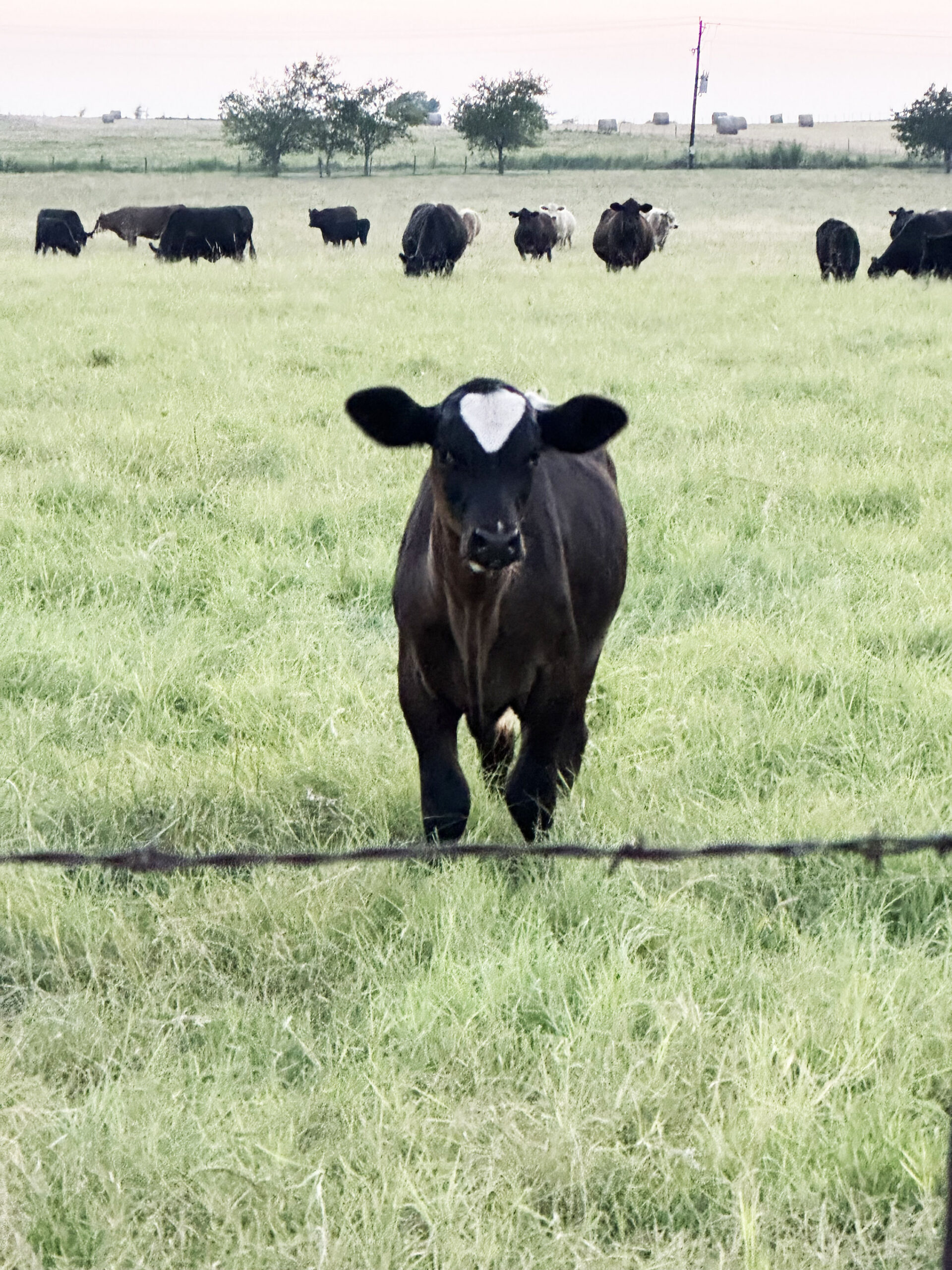
He stood beside his mama in the green spring grass, still unsteady on new legs, and right there in the center of his forehead was a perfectly shaped white heart.
Not a dot. Not a crooked patch. A heart.
I blinked. I tilted my head. I walked closer. Surely it was just the angle of the light. But no, it was there. Clear as day.
We named him Valentine.
His mother, Blackie, is the matriarch of our herd: tall, steady and wise in the way good cows are. She has raised strong calves year after year, and each one carries her little signature, a white tip on the tail. Valentine does too.
His sire, Jimbo, is our registered Black Angus bull, with a calm temperament and solid build. Between the two of them, Valentine has good bones beneath that charming marking.
As he’s grown, so has the heart. It hasn’t faded or blurred. If anything, it’s become more defined.
Strangers who see his photograph often ask if I edited it in. I didn’t. I wouldn’t know how if I tried.
John reminds me that hearts don’t add pounds at the sale barn.
He’s right, of course. Ranching is business. Calves grow, calves sell. That’s the rhythm.
But every now and then, something small interrupts the practical march of it all, a reminder that even in a life built on feed schedules, breeding charts and market reports, there is still room for wonder.
Valentine will soon leave our pasture, whether through private treaty or the auction ring. What I know is simple: after half a century spent welcoming new life into the pasture, I’ve never seen a calf take its first breath with a heart so boldly stitched on.
Maybe that’s the point. Some things don’t change the numbers. They just change you.
St Jo
TX 76265
USA
By NTFR Staff
By the end of summer, I’m usually ready to blame the weather for everything that went wrong in my garden. The heat was too intense. The rain came at the wrong time, or it didn’t come at all. The squash bugs were relentless, and the weeds somehow grew better than anything I planted on purpose.
All of that may be true, but this year I’ve also had to admit something else: some of my garden soil is tired.
After seasons of planting, watering, digging and walking through the beds, soil can become compacted, low in organic matter or out of balance. It may drain poorly after a heavy rain, then turn hard and cracked a few days later. Water may run across the surface instead of soaking in. Plants can stay small, develop pale leaves or struggle to produce even with regular care.
Healthy soil doesn’t have to be perfectly dark, loose or full of earthworms, but it should give roots access to water, nutrients and air. Improving it takes more than dumping on a bag of fertilizer and hoping for the best.
Starting with what the soil needs
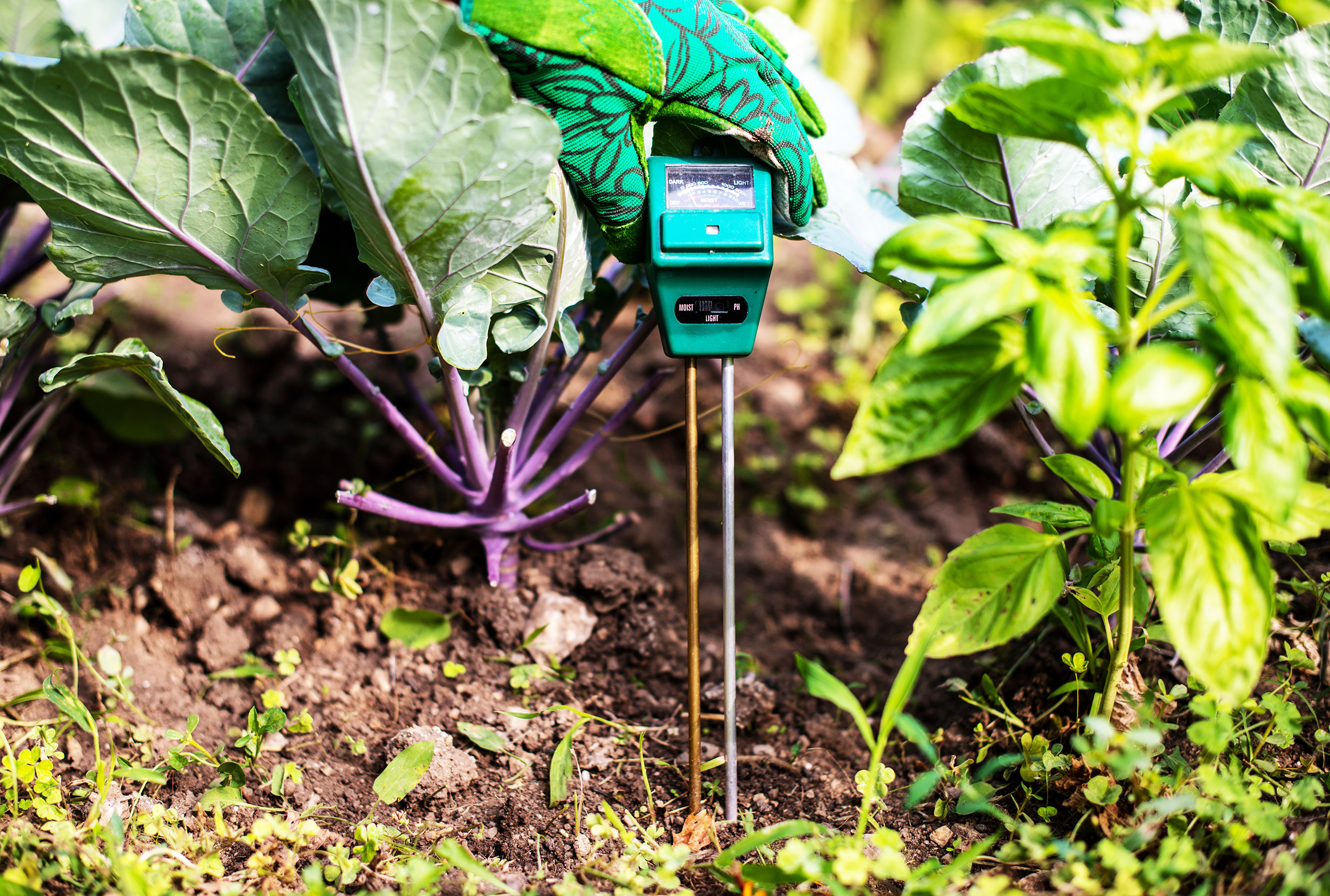
My first step is a soil test.
It isn’t the most exciting garden project, but it may keep me from spending money on products my soil doesn’t need. A soil test reports pH and nutrient levels, then recommends fertilizer based on what I plan to grow. Texas A&M AgriLife runs a soil-testing laboratory for gardeners and landowners, and local Extension offices can explain how to collect and submit a representative sample.
The important word is representative. Soil can vary from one side of a garden to the other, so a useful sample should combine soil from several spots in the same growing area. Problem spots that are clearly different should generally be tested separately instead of mixed into the main sample.
Until I get those results, I don’t need to assume every struggling plant wants more fertilizer. Too much fertilizer can damage plants, waste money and add to nutrient runoff. The problem may not be a shortage of nutrients at all. It could be the wrong pH, poor drainage, compaction or roots that can’t reach what’s already there.
Next, I’ll add organic matter, particularly finished compost. Organic matter improves the soil’s physical condition and makes many soils easier to work. In heavy soil, compost helps air and water move. In sandy soil, it helps the ground hold more moisture and nutrients.
Texas gardeners work with a wide range of soils, but Texas A&M AgriLife notes that almost any garden soil improves with organic matter. When you prepare a fall garden, that material should be well decomposed, not fresh or half-broken-down.
I’ve been guilty of thinking more compost is always better. It isn’t. Compost contains nutrients, and repeated heavy applications can eventually build up excessive nutrient levels. Apply finished compost with some thought, especially if it contains manure. A soil test can tell you whether the garden needs nutrients, organic matter or both.
For an established vegetable or flower bed, I can spread a modest layer of finished compost on the surface and gently work it into the top of the soil where needed. I don’t need to turn the whole garden upside down. Heavy tilling can break down soil structure, disturb beneficial organisms and leave a loose surface sitting on top of a compacted layer.
Protecting the beds
Compaction is one of my bigger problems, and I know exactly how it happened. I step into the garden to pull weeds, pick vegetables, fix irrigation and reach plants at the back of the bed. After enough trips, especially when the ground is wet, the soil packs down.
My fix won’t be a more powerful tiller. It will be better garden design. I can lay out permanent walking paths and keep my feet out of the planting areas. Beds should be narrow enough that I can reach the center from the edge. Limiting foot traffic protects the spaces where roots need loose soil, water and oxygen.
I also need to stop leaving soil bare.
Bare soil may look neat, but it takes the full force of pounding rain, runoff, erosion, weeds and moisture loss. In Texas heat, uncovered soil dries fast and forms a hard crust. Mulch protects it by reducing evaporation, moderating soil temperature and blocking the sunlight weed seeds need. Organic mulch also adds organic material as it breaks down.
Depending on the bed, I can use shredded leaves, clean straw, compost, grass clippings that haven’t been treated with herbicides or other suitable organic materials. I’ll keep mulch a few inches away from plant stems and tree trunks instead of piling it against them.
Mulch won’t solve every soil problem, but it makes the garden easier to keep up. Soil that stays evenly moist is less likely to swing between waterlogged and powder-dry. Fewer weeds mean less hoeing and pulling, which also means less disturbance around roots.
In beds I won’t plant right away, I may try a cover crop. Cover crops keep living roots in the soil, protect the surface and add organic material when they are cut or worked in. Some grow deep roots that can help loosen compacted ground, and legumes may add nitrogen through their partnership with soil bacteria. The right crop and planting time depend on the season and how soon I need the bed again.
I also plan to leave healthy roots in the ground when I can. Instead of pulling every finished plant and taking the attached soil with it, I can cut some plants off at the surface and let their roots decompose in place. Diseased plants and aggressive weeds still have to go, but healthy roots can become part of the soil’s organic cycle.
A long-term project
The hardest part may be accepting that I can’t fix tired soil in one weekend. Soil improves gradually. Compost decomposes, mulch thins, plants use up nutrients, and Texas weather keeps testing every garden plan I make. I’ll have to keep replenishing organic matter and keep checking the soil rather than treating it once and forgetting it. Oklahoma State University Extension describes healthy garden soil as an ongoing project built through composting, mulching, soil testing and other regular practices.
That takes some pressure off. I don’t have to create perfect soil before I plant another seed. I need to stop guessing, protect what I already have and make choices that leave the ground a little better than I found it.
This fall, my garden may still have hard spots, weeds and areas that need more attention. I’m not expecting an overnight transformation. I’m starting with a soil test, finished compost, protected planting beds and a good layer of mulch.
The garden spent the summer working hard. Now it’s my turn to give back some of what I’ve taken from it.




-

 Country Lifestyles4 years ago
Scott & Stacey Schumacher: A Growth Mindset
-
 Country Lifestyles10 years ago
Style Your Profile – What your style cowboy hat says about you and new trends in 2017
-
 Horsefeathers12 years ago
Mount Scott: Country Humor with David Gregory
-
 Country Lifestyles10 years ago
June 2016 Profile – The man behind the mic: Bob Tallman
-
 Outdoor11 years ago
Buttercup or Primrose?
-
 Country Lifestyles10 years ago
December 2016 Profile, Rusty Riddle – The Riddle Way
-
 HOME10 years ago
Grazing North Texas – Wilman Lovegrass
-
 The Natural Horseman9 years ago
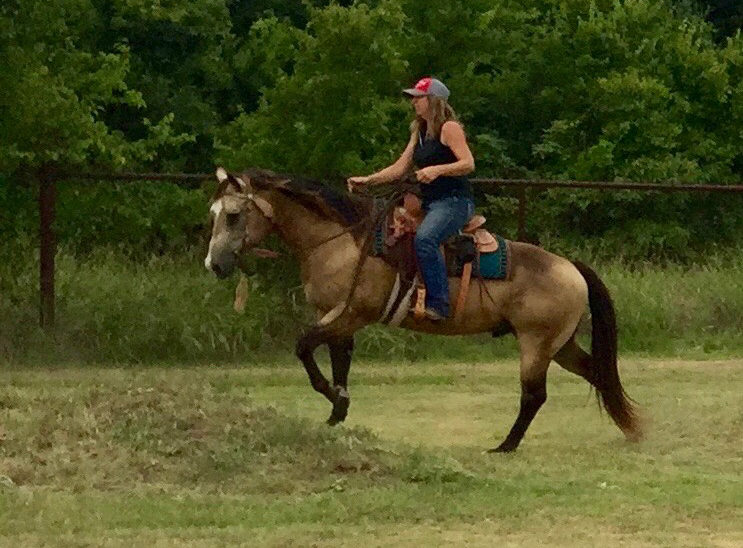
This is why we do what we do — RayeAnn and Cisco