
Country Lifestyles
Norris Dalton Bucking Bulls


By contributing writer Judy Wade
Norris Dalton raises bucking bull and operates heavy equipment. He could be described as modest, soft-spoken, successful, talented, and, most of all, unique. What makes him so unique? He is a paraplegic, conducts his business from a wheelchair, but that does not slow him down. Born and raised in Scottsville, Kentucky, where his dad was a horse trader and dozer operator, he is the only son with five sisters. He left home while a teenager and began working on a pipeline in Wyoming but eventually traveled all over the United States operating a back hoe and dozer.
May 31, 1991, his world changed dramatically. While in California he was running a dozer too small for the job he was given. The dozer tipped over and rolled over 600 feet down a hill with Dalton strapped inside. Airlifted to a local hospital, the diagnosis was broken ribs, punctured lung, broken collar bone, broken arm, head injuries, and spinal cord injury, resulting in paralysis of his legs. Eventually he was transferred home to Kentucky where he spent a year in hospital rehab.
When he was released, he acquired a truck specially equipped with hand controls and headed for Texas. He settled first in Ft. Worth but eventually made his way to Petrolia in 1999 where he purchased land and began buying bulls at sale barns, bulls with the potential to become bucking bulls. To read more pick up the June issue of North Texas Farm & Ranch.

By Ann Asher
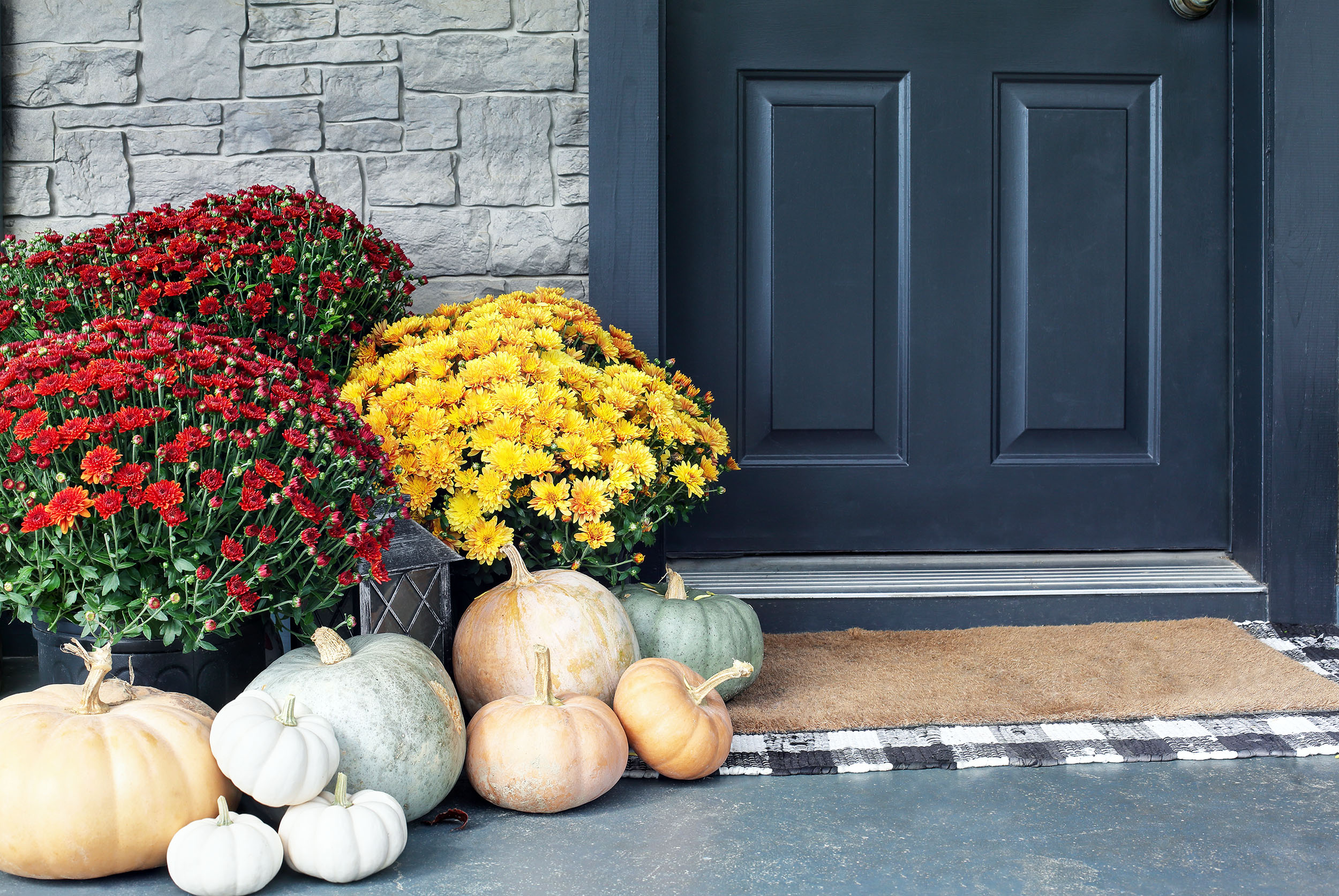
Long before the first pumpkin-spice sign appears in a store, pumpkins start showing up on porches. Some are carved, some are stacked beside mums and hay bales, and some stay right where they were placed until the first hard freeze turns them soft. The tradition feels thoroughly American, but its story crosses the Atlantic.
People in Ireland and other parts of the British Isles carved lanterns from turnips and other root vegetables long before pumpkins became the standard. The practice became tied to Halloween customs and stories of wandering spirits. Carvers hollowed out the vegetables, gave them faces and lit them from within.
Immigrants brought those traditions to North America, where they found a much better carving material. Pumpkins were native to the Americas and were grown here for food long before European settlement. Compared with a hard turnip, a large pumpkin was easier to hollow out and offered a much bigger surface for a face.
The pumpkin has an American agricultural story that predates Halloween by thousands of years. Indigenous peoples domesticated squashes in the genus Cucurbita and grew them for food long before European colonization. Early European settlers quickly adopted squash and pumpkins because they stored well and provided reliable calories.
By the 19th century, pumpkins were increasingly tied to American autumn imagery. They were harvest food, livestock feed and a symbol of rural abundance. American writers were already using them as symbols of country life and harvest. Washington Irving’s 1820 story “The Legend of Sleepy Hollow” famously ends with a shattered pumpkin, although it doesn’t describe a carved jack-o’-lantern. Later 19th-century newspapers and magazines increasingly connected carved pumpkins with Halloween celebrations. Halloween grew into a widely celebrated community holiday, and the jack-o’-lantern became one of its most recognizable decorations.
The porch pumpkin that never gets carved owes as much to harvest decorating as to Halloween. Corn shocks, gourds, apples and pumpkins once represented what had come out of fields and gardens. Today’s fall porch may be more decorative than practical, but it still borrows from the look of harvest.
The modern porch display blends several threads that developed separately: harvest decoration, Halloween lanterns and the pumpkin’s long place in American agriculture. That is why the same pumpkin can look perfectly at home beside a scarecrow in early October and become a jack-o’-lantern by the end of the month.
Commercial pumpkin production eventually reinforced the tradition. Growers selected varieties for carving size, strong stems, unusual colors and long display life as well as eating quality. The pumpkin patch became an attraction of its own, turning harvest into a family outing.
Oklahoma farms now sell everything from classic orange carving pumpkins to white, blue-gray and deeply ribbed heirloom types. The porch display may look modern, but it still depends on a crop bred and grown to handle fall weather better than most garden produce.
Pumpkins also fit the season unusually well. They keep for weeks when handled carefully, come in enough shapes and colors to satisfy any decorator and can move from porch to kitchen if they are edible varieties. Afterward, you can compost sound, undecorated pumpkins instead of sending them to the landfill.
One caution: don’t offer painted or chemically treated pumpkins to livestock or wildlife, and don’t dump even plain pumpkins in large quantities for wild animals. Local rules may also prohibit intentional wildlife feeding.
A pumpkin on an Oklahoma porch may look like nothing more than seasonal decoration. Behind it is a mix of Indigenous agriculture, European folk custom, immigration and American harvest culture. That is a lot of history for something we eventually cut a smile into.
By Beth Watkins
I have started this over and over.
Usually, when that happens, it’s because I can’t think of anything to say. This time, it’s because I have too much.
Too many memories. Too many feelings. A heart full of gratitude mixed with a sadness that feels a little silly when you consider I never actually knew Dolly Parton.
And yet, somehow, didn’t we all feel like we did?
When the news came that Dolly had died, a collective sadness seemed to settle over people from every walk of life. Country music fans, rock stars, grandmothers, little girls, people from the mountains and people who wouldn’t know which end of a cow the feed goes in.
Everybody had a Dolly story.
Mine begins in a little trailer house.
My sister and I shared a bedroom growing up, and although I couldn’t tell you exactly how old we were, I can still picture that room. It wasn’t much bigger than the full-size bed pushed against the wall. There wasn’t room for matching nightstands, reading chairs or any of the things Pinterest would now tell us a bedroom requires.
There was just enough room for two sisters.
And at night, my sister would sing me to sleep.
She has always had a beautiful voice, and the song that seemed to send me off to sleep best was Dolly Parton’s “Coat of Many Colors.”
I can still hear it.
Funny how memories work. I couldn’t tell you what color the curtains were or what was hanging on the wall. I couldn’t tell you what pajamas I had on or what we had eaten for supper. But more than fifty years later, I can close my eyes and hear my sister singing about a little girl whose mama stitched together a coat made from rags and told her the Bible story of Joseph and his coat of many colors.
Every stitch was sewn with love.
Back then, I only knew it was a pretty song that somehow soothed my little-girl soul. I didn’t know I was listening to a lesson.
A lesson about poverty without shame. About finding abundance in what the world might call lack. About the difference between what something costs and what something is worth.
Maybe that is why Dolly’s death feels strangely personal to so many of us.
Her songs found their way into bedrooms and kitchens, old pickups and beauty shops. They became part of weddings, funerals, childhoods and long drives home. Somewhere along the way, Dolly Parton became woven into the fabric of our lives.
Since her passing, I have seen one phrase repeated again and again:
Be like Dolly.
Be kind like Dolly. Love people like Dolly. Give like Dolly. Don’t judge people. Treat everyone with dignity. Stay humble. Stay true to who you are.
I understand exactly what people mean. Lord knows the world could use a whole lot more of that.
But I keep thinking… those ideas didn’t begin with Dolly Parton.
The Bible was here long before Dolly. The Ten Commandments were here long before Dolly. “Love your neighbor as yourself” was spoken long before somebody glued the first rhinestone onto a guitar.
And Dolly herself would have known that better than most.
She grew up dirt poor in the mountains of Tennessee, one of twelve children, in a family where faith wasn’t reserved for Sunday morning. She grew up singing in church, and throughout her life she spoke openly about prayer, God, forgiveness and her belief that the gifts she had been given came with a purpose.
She believed God had His hand on her life and that she was supposed to do something good with it.
I’d say she did.
Dolly didn’t spend her life preaching Christianity at people. She lived much of it in front of them.
She fed people. She helped people. She put books into the hands of millions of children who might otherwise never have owned one. She poured money back into the poor mountain community she came from. She stepped forward when disaster devastated families. She treated the powerful and the powerless with the same dignity.
And somehow, she became one of the most famous women in the world without deciding that made her better than anybody else.
She also seemed to understand something we have forgotten lately: Not every conversation has to become a political argument.
Dolly was asked plenty of times to weigh in on politics, and she repeatedly made it clear that she was an entertainer, not a politician. She had opinions, of course she did, but she didn’t seem to believe every opinion needed a microphone.
Well, mercy. Imagine that.
Today we can’t seem to buy tomatoes without somebody wanting to know how we vote. Dolly somehow managed to welcome people without first requiring them to agree with her.
Maybe that’s part of the void we feel now. We didn’t just lose a singer. We lost one of those increasingly rare people almost everybody had agreed we could simply love.
But I think we need to be careful here.
If we say, “Don’t let Dolly’s spirit die,” and all we mean is play her music louder, wear rhinestones, visit Dollywood and quote her funny sayings, then I think we’ve missed the best part of what she left us.
Honor her by doing what she did.
See people. Help somebody who can’t repay you. Give quietly. Speak kindly. Remember where you came from. Laugh at yourself. Use whatever God placed in your hands to make somebody else’s road a little easier.
And for heaven’s sake, sometimes keep your opinion to yourself.
Maybe the message isn’t really Be like Dolly. Maybe it’s this: Remember who Dolly was trying to be like: Jesus.
A woman who understood that she had been blessed, and therefore had a responsibility to bless somebody else. A light. And lights aren’t meant merely to be admired. They’re meant to help somebody else find their way.
Somewhere in my memory, there will always be a little trailer-house bedroom, a full-size bed pushed against the wall, and my sister’s beautiful voice singing a Dolly Parton song until her big sister drifted off to sleep.
I didn’t know then that the song would follow me through nearly every season of my life. Even now, when my sister and I take one of our sister trips and end up sharing a hotel room, I still make the same request:
Sing me my song.
And she does.
I didn’t know, lying in that little bed all those years ago, that the woman who wrote those words would one day leave such an enormous empty space behind.
But even through the sadness, I can’t help but smile. Somewhere beyond what we can see, I like to imagine Heaven’s choir sounding just a little sweeter now.
Dolly left a void here on earth, but she also left something behind that death cannot take away: the example of a life lived with faith, generosity, humor, humility and love.
Maybe we don’t keep her light alive by trying to become Dolly. Maybe we keep it alive by remembering what she knew all along:
The light was never hers to begin with. It came from God. She simply let it shine.
And now it’s our turn.
By Annette Bridges
After nearly fifty years of raising cattle, you would think we had seen it all.
Spring calves come and go in steady rhythm. Strong ones. Spotted ones. Long-legged ones. Some we remember. Most we don’t.
But on April 2, 2025, one calf captured our heart with his.
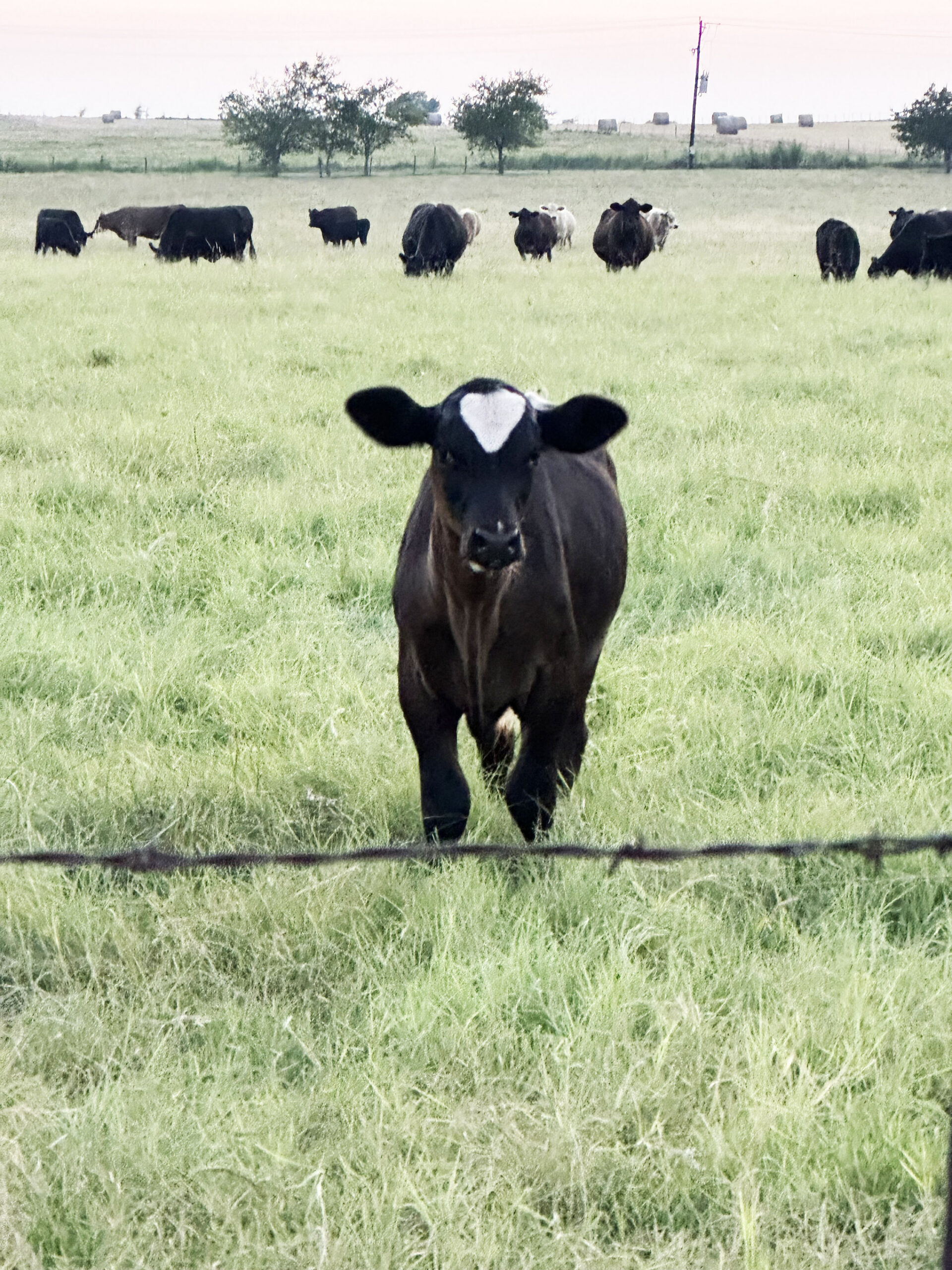
He stood beside his mama in the green spring grass, still unsteady on new legs, and right there in the center of his forehead was a perfectly shaped white heart.
Not a dot. Not a crooked patch. A heart.
I blinked. I tilted my head. I walked closer. Surely it was just the angle of the light. But no, it was there. Clear as day.
We named him Valentine.
His mother, Blackie, is the matriarch of our herd: tall, steady and wise in the way good cows are. She has raised strong calves year after year, and each one carries her little signature, a white tip on the tail. Valentine does too.
His sire, Jimbo, is our registered Black Angus bull, with a calm temperament and solid build. Between the two of them, Valentine has good bones beneath that charming marking.
As he’s grown, so has the heart. It hasn’t faded or blurred. If anything, it’s become more defined.
Strangers who see his photograph often ask if I edited it in. I didn’t. I wouldn’t know how if I tried.
John reminds me that hearts don’t add pounds at the sale barn.
He’s right, of course. Ranching is business. Calves grow, calves sell. That’s the rhythm.
But every now and then, something small interrupts the practical march of it all, a reminder that even in a life built on feed schedules, breeding charts and market reports, there is still room for wonder.
Valentine will soon leave our pasture, whether through private treaty or the auction ring. What I know is simple: after half a century spent welcoming new life into the pasture, I’ve never seen a calf take its first breath with a heart so boldly stitched on.
Maybe that’s the point. Some things don’t change the numbers. They just change you.




-
 Country Lifestyles4 years ago
Scott & Stacey Schumacher: A Growth Mindset
-
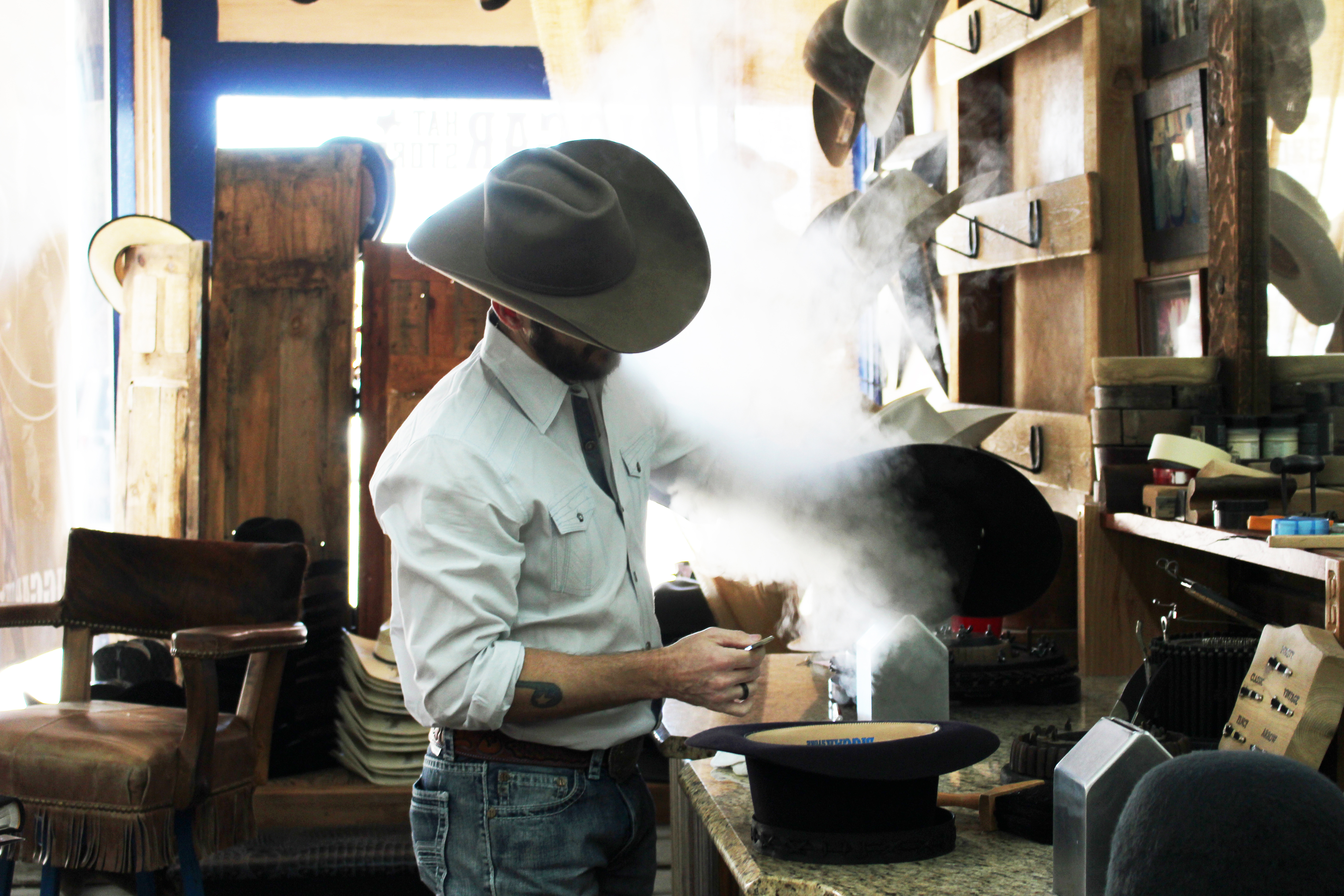 Country Lifestyles10 years ago
Style Your Profile – What your style cowboy hat says about you and new trends in 2017
-
 Horsefeathers13 years ago
Mount Scott: Country Humor with David Gregory
-
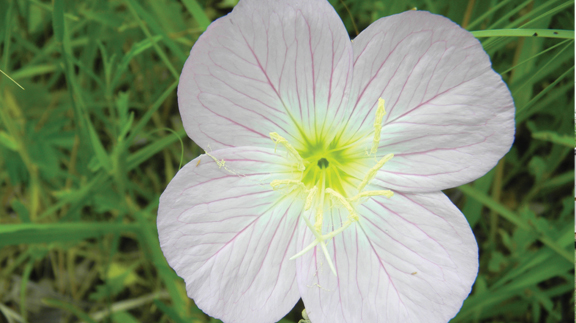 Outdoor11 years ago
Buttercup or Primrose?
-
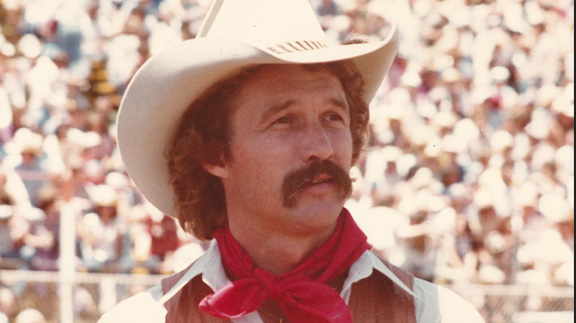 Country Lifestyles10 years ago
June 2016 Profile – The man behind the mic: Bob Tallman
-
 HOME10 years ago
Grazing North Texas – Wilman Lovegrass
-
 Country Lifestyles10 years ago
December 2016 Profile, Rusty Riddle – The Riddle Way
-
 The Natural Horseman9 years ago
This is why we do what we do — RayeAnn and Cisco